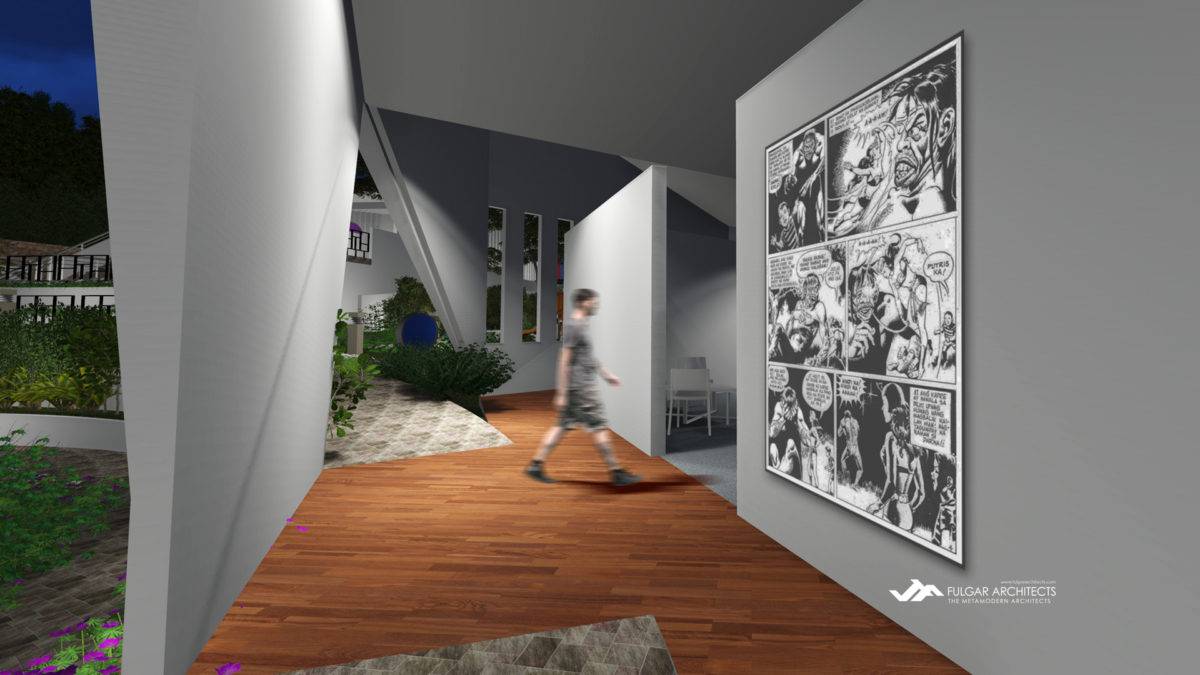
This innovative museum design serves as a heartfelt tribute to a beloved Filipino komik graphic novelist, celebrating their significant contribution to the world of graphic storytelling. The architecture draws inspiration from the unique properties of paper, reflecting its flexibility and adaptability. The gallery cores are characterized by dynamic geometric forms that not only create an engaging visual experience but also seamlessly blend with the undulating landscape of Tagaytay. This thoughtful integration enhances the surroundings, allowing the museum to sit naturally within the rolling terrain while inviting visitors to explore the vibrant world of Filipino illustration and writing in a setting that is both inspiring and reflective of the local culture.
Project Name: Mars Ravelo Museum
Location: Brgy. Neogan, Tagaytay City
Site Area: 21,000 sqm
Type: Museum, Institutional
For decades, komiks and animations have been considered an integral part of everyone’s childhood, and our studio has developed these into a memorable, sophisticated architectural form.
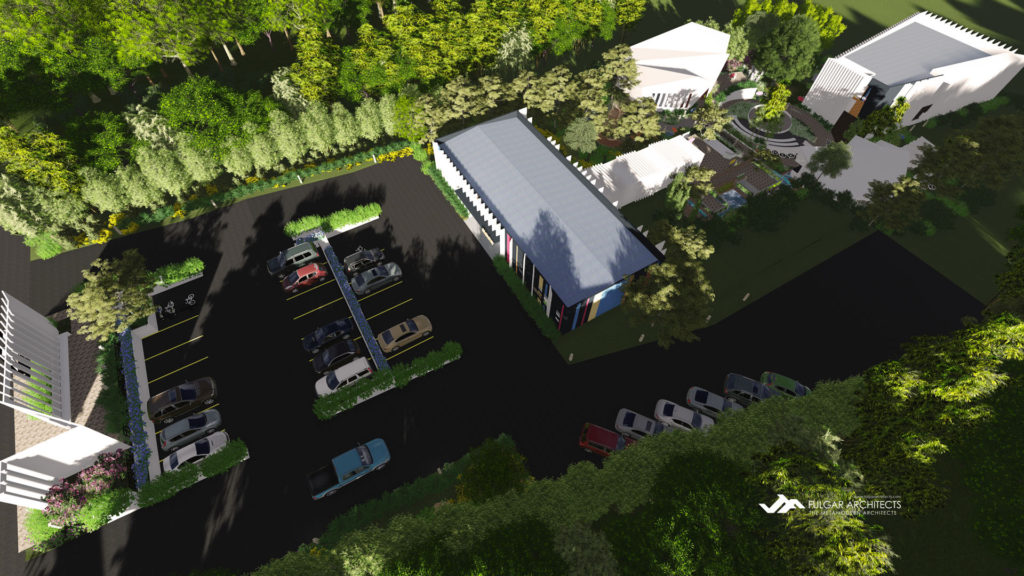
The initiative for the Mars Ravelo Museum, a tribute to a well-loved Filipino komiks graphic novelist, creates a platform that unites the worlds of art and entertainment into a single architectural space. By utilizing one of the comic’s most essential materials, paper, as the conceptual force behind the museum design, it serves as the physical channel to embody fantasy, animation, and our childhood.
Paired with the undulating terrains of Tagaytay City, this is where 2D animations scribbled on paper come alive. Carefully crafted to evoke a childlike experience, the site allows visitors to hop gleefully from indoor to outdoor, then back to the museum’s indoor curiosities. The property is divided into two main zones, the main building and the museum premises, connected by a 445-sqm pedestrian paved area.
The minimal footprint of the buildings is designed to fit the site topography, while also allowing for more outdoor green spaces. Upon arrival, visitors pass through a conditional corridor that transitions from reality into a thrilling quest of folklore, superheroes, and villains fueled by the endless imagination and creative expression of our own.
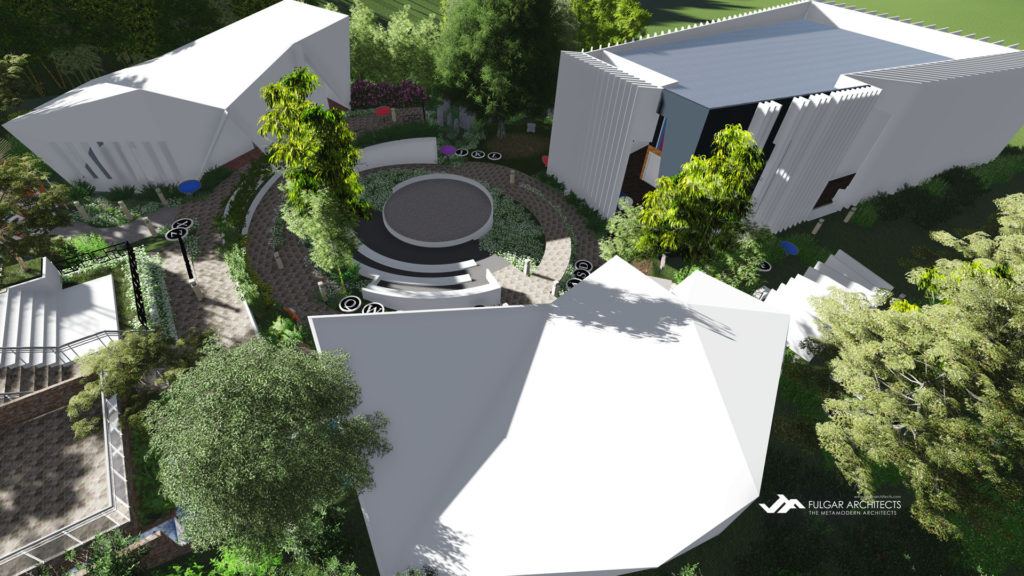
The museum façade is adorned with a subdued relief of white insulated panels and vertically louvered walls, perfectly capturing its main design imagery of crisp paper pages. Its monochromatic white facade piques the curiosity of its visitors before eventually welcoming them into a world of fantasy. Galleries commemorating each renowned hero and villain are distributed in the museum’s three main cores. Each of the cores’ irregular shapes allows for unique and versatile exhibitions. The “Hall of Heroes” is presented in a chronological line that starts with the lobby, the multimedia room, and the “Tunnel of Villains.”
The two remaining cores unfold into a spacious gallery with a covered lanai partitioned by curtain glass. Unifying the three museum cores is a circular courtyard surrounding a stage, a monument, and an amphitheater.
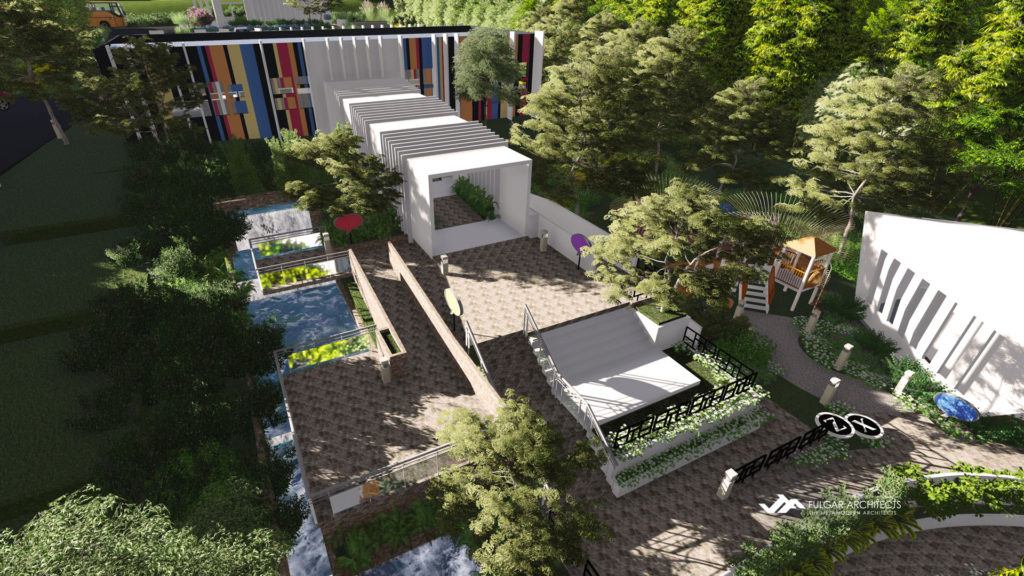
Subtle personal accents, such as typewriter-inspired seats and talk bubbles as signage, create a more intimate connection with the museum’s gardens and outdoor spaces. Among the key attractions of the museum’s landscape are various folklore-inspired areas that celebrate the Philippines’ rich cultural heritage and mysticism. These include the “Bamboo Gardens,” a small pocket garden with two passageways of bent bamboo – a commemoration of the country’s most elastic superhero.
Deeply inspired by the promising yet straightforward properties of paper, this Komik Museum design is a creative endeavor that challenges the power of human imagination and artistry. A paradox of reality and fantasy, showing how architecture can immortalize the impact of Filipino komiks into physical space, one paper at a time.