The Lanson Integrated Estate is a comprehensive master-planned mixed-use development spanning a 5.6-hectare site in Iloilo, meticulously conceived to integrate complex programmatic requirements within the unique physical constraints of the property. Situated approximately 650 meters from the centerline of Iloilo International Airport’s runway, the location imposed strict height regulations that guided the design approach toward a low-to-mid-rise vertical profile while preserving a generous and breathable urban experience. This proximity to the airport also positioned the development at a highly accessible urban node, giving the estate both logistical advantages and heightened regional significance.
Project Name: Lanson Integrated Estate Location: Iloilo City Site Area: 56,538.67 sqm Type: Mixed-Use Development
The master plan carefully organizes a multi-functional program into an interlocking urban fabric where each zone operates both independently and as part of the greater estate structure. Primary vehicular circulation is arranged along a perimeter loop system, ensuring smooth traffic distribution and minimizing internal congestion. The central spine, defined by an existing bisecting road, became a natural organizing axis that enabled strategic zoning arrangements with multiple ingress and egress points, enhancing operational efficiency and wayfinding clarity.
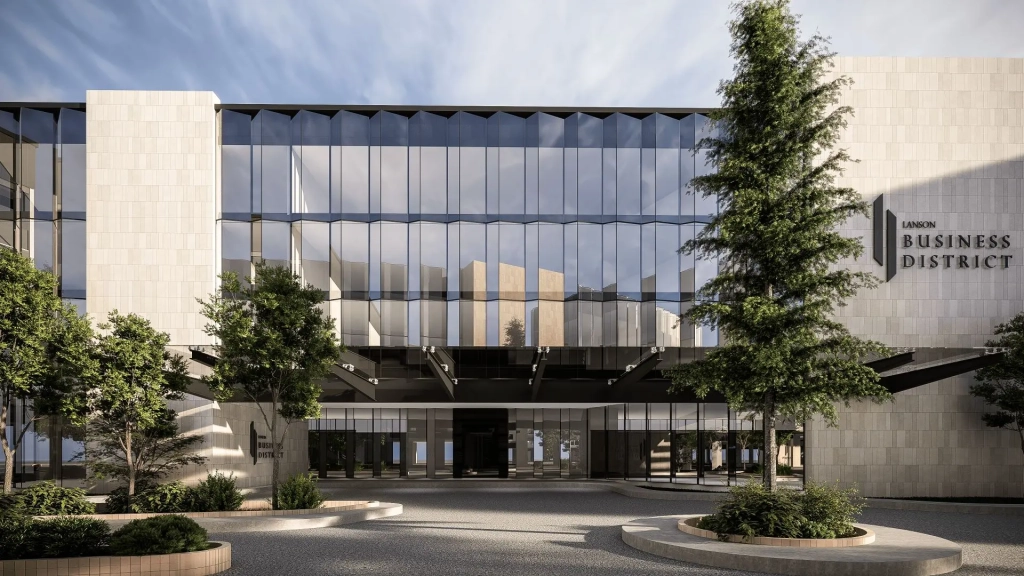
The business district’s primary elevation articulates a disciplined interplay between solid stone masses and a fully glazed curtain wall system. The central entry court unfolds as a processional forecourt, where soft landscaping elements and sculpted planters define the approach sequence. The rhythmic modulation of the glass façade reflects the surrounding structures while allowing filtered transparency into the workspace interiors. The architectural expression emphasizes precision, proportion, and balance, reinforcing the estate’s urban sophistication.
The residential sector comprises twelve carefully scaled mid-rise condominium buildings, each positioned to capitalize on natural airflow patterns, solar orientation, and visual corridors. The vertical massing respects the low-rise ceiling imposed by aviation regulations while achieving optimal unit density without sacrificing privacy or livability. These condominium towers offer a diverse mix of unit types, including studios, one-bedroom units, and two-bedroom units, allowing for a broad market reach. Architectural expressions draw inspiration from Mediterranean references, blending natural stone materials, textured façades, and distinctive massing forms with expansive glazing that seamlessly bridges indoor and outdoor living experiences.
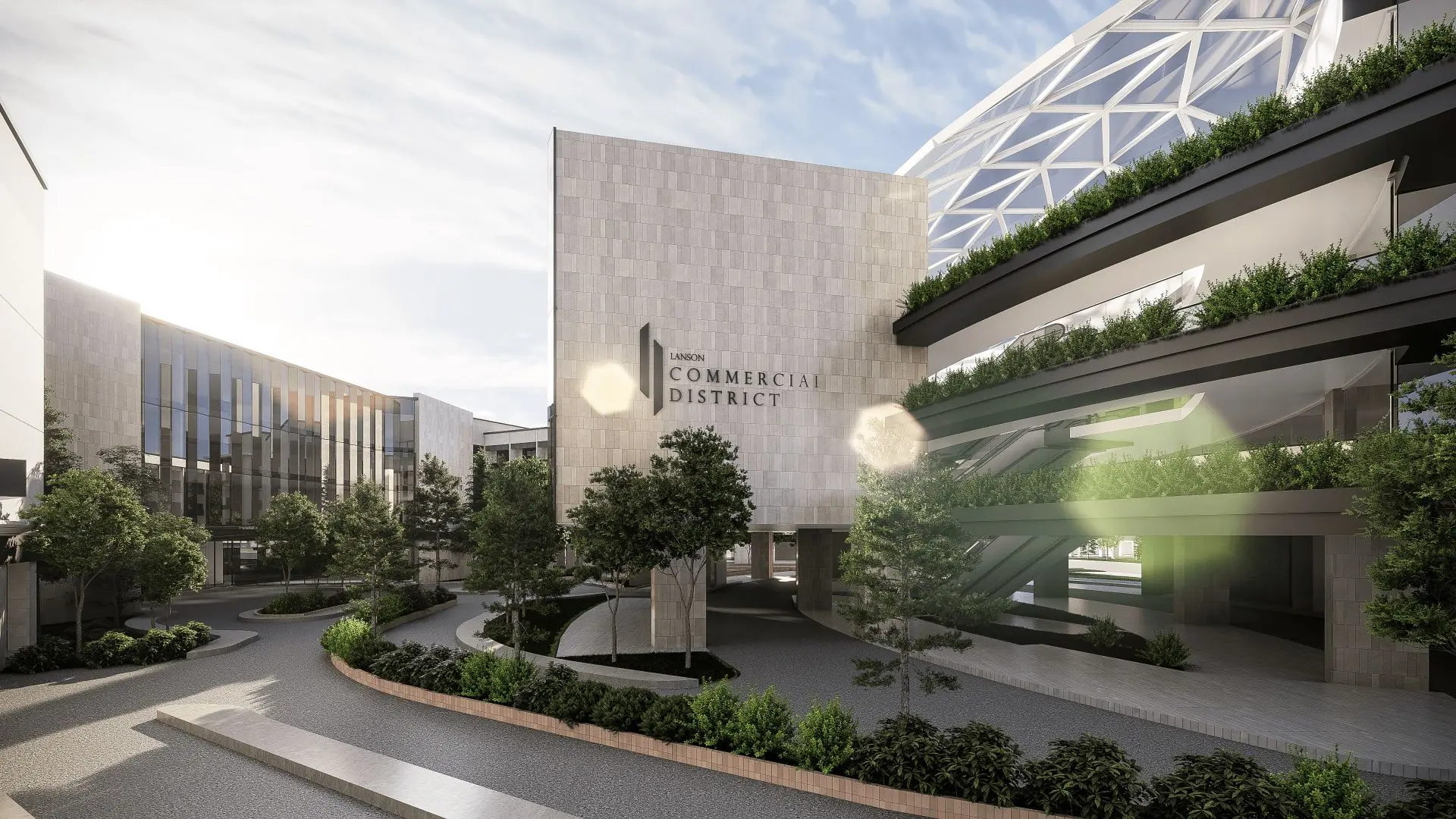
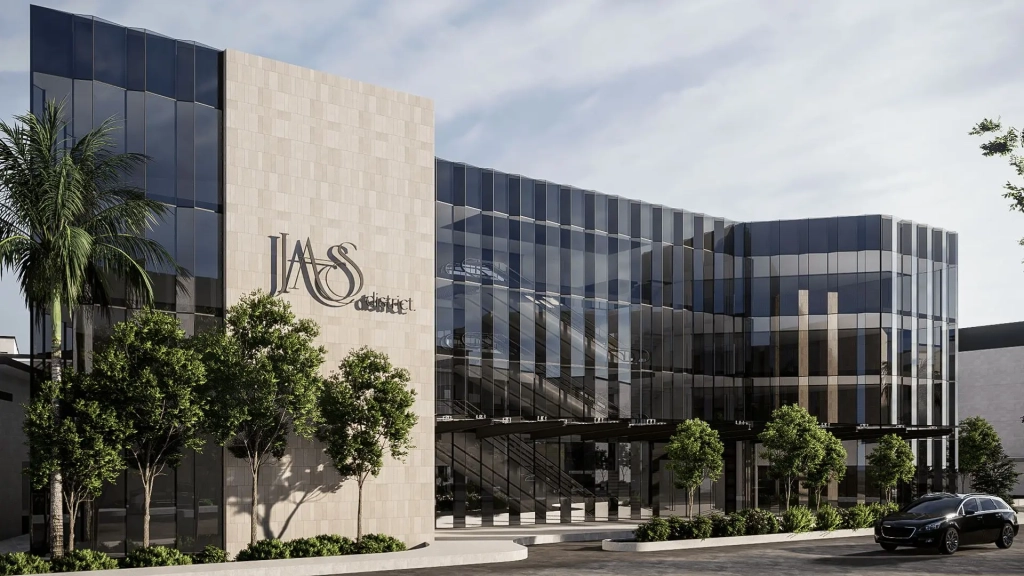
Positioned along the estate’s arterial frontage, the retail and service wing articulates a sharp interplay of transparent glazing and monolithic stone planes. The dynamic façade treatment emphasizes horizontal rhythm while inviting public access to curated retail, dining, and service programs, seamlessly integrating lifestyle amenities into the master plan’s commercial composition.
The hospitality component occupies a prominent position within the estate’s programmatic hierarchy. Nine hotel buildings are distributed across multiple parcels, each calibrated to serve a specific market segment while contributing to a cohesive hospitality offering. This decentralized distribution of hotels enables differentiated guest experiences, ranging from short-term transit stays to leisure accommodations, while creating intimate courtyards featuring swimming pools, landscaped gardens, and gathering spaces. Each hotel cluster is designed to promote operational autonomy while benefiting from shared estate-wide infrastructure.
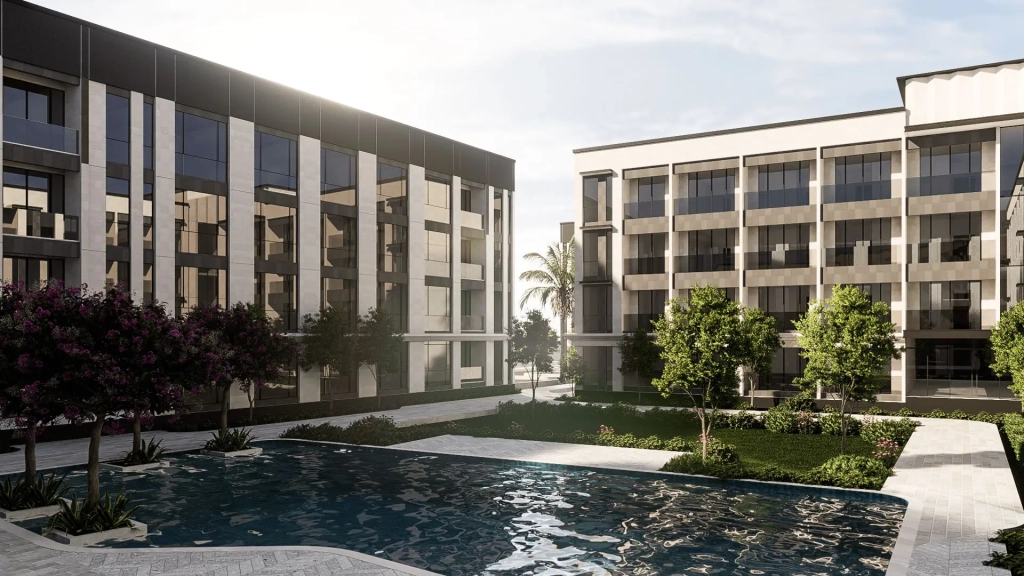
The pool courtyard serves as the central leisure nucleus within the hospitality cluster, where the architectural massing frames an intimate resort-like atmosphere. Mid-rise hotel blocks and private villa units are carefully positioned to establish layered privacy while preserving visual connectivity to the water’s edge. The interplay of linear pathways, manicured hedges, and vertical palm elements creates a balanced composition of movement and rest. The design amplifies both the experiential character and microclimatic comfort across the hospitality zone.
The commercial program activates the estate’s arterial edges, where two commercial wings rise to accommodate a range of retail, dining, and service enterprises. These commercial corridors provide both lifestyle conveniences to residents and standalone value propositions to outside patrons, creating a dynamic interface between the private estate interior and the broader urban public. Adjacent to these retail wings stands a dedicated office building programmed to accommodate business process outsourcing operations, professional offices, and regional headquarters. The office zone benefits from direct accessibility while maintaining separation from residential cores, ensuring functional independence.
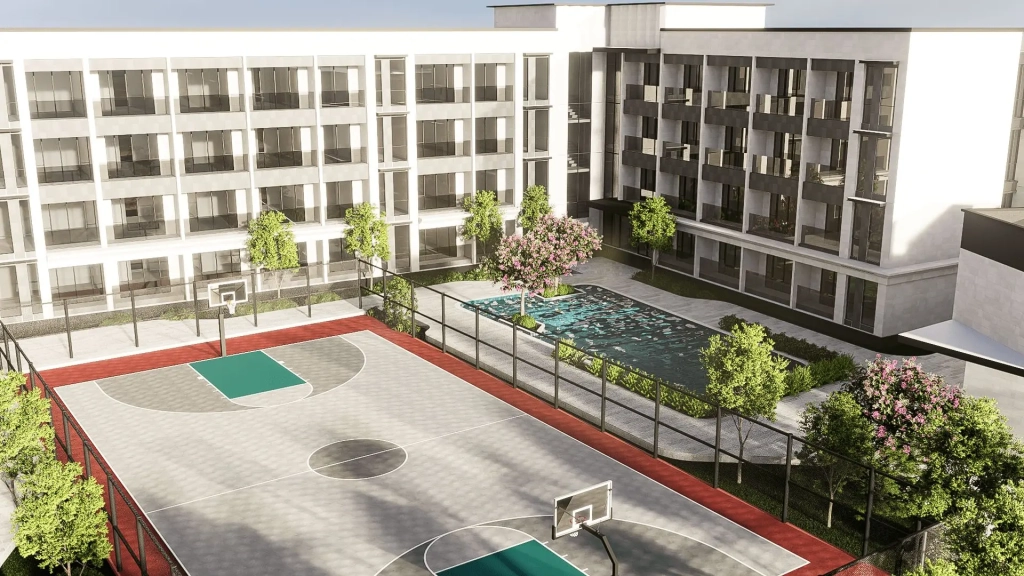
The integrated recreation courtyard merges both active and passive amenities into a unified communal zone. A full-sized outdoor basketball court anchors the active program while landscaped pool gardens provide contrasting spaces for leisure and relaxation. The composition enables residents and guests to engage in diverse recreational experiences within a unified spatial system. Surrounding mid-rise residential blocks create an inward-facing perimeter that fosters privacy while preserving openness at the courtyard core.
Supporting the mixed-use composition, an events and administration center occupies a strategically located parcel within the estate. This multifunctional facility offers flexible indoor venues suitable for conferences, private celebrations, corporate gatherings, and institutional functions. Its inclusion adds operational depth to the estate, enabling year-round programmed activities that enrich the community and expand non-residential revenue streams.
A defining feature of the master plan is its extensive landscape system, which allocates over 18,000 square meters of open space into interconnected parks, water features, jogging circuits, pocket gardens, and active recreational zones. These green corridors serve not only as leisure and wellness amenities but as integral ecological buffers that improve air circulation, reduce heat islands, and cultivate an elevated environmental experience within a high-density development model. Pathways and sightlines are choreographed to maintain constant visual openness, reinforcing a sense of spatial generosity throughout the estate.
The green courtyard enclaves introduce a sequence of calm, verdant spaces framed by mid-rise residential blocks. Carefully scaled massing preserves openness at the courtyard center while maintaining privacy along unit perimeters. Reflective water features and shaded tree groupings enhance the microclimate, providing visual softness and an immersive garden experience directly accessible from the residential cores. The design language reinforces the estate’s emphasis on human-scale comfort within a high-density framework.
The architectural and master planning narrative behind Lanson Integrated Estate reflects an intricate balance of programmatic density, design coherence, and environmental responsibility. Rather than impose isolated building footprints, the estate was envisioned as a unified urban ecosystem where every structural mass, pathway, and open space contributes to an orchestrated whole. This integrated approach allowed the development to fully optimize both its regulatory limitations and its latent opportunities, resulting in a master-planned estate that demonstrates thoughtful scale management, functional synergy, and enduring spatial legibility.
The Millennium City concept represents a bold proposition for future urban development within the Southern Tagalog region of the Philippines. Strategically situated in Barangay Balayan, Batangas, approximately seventy kilometers south of Metro Manila, the project envisions a fully integrated, self-sustaining city powered by advanced waste-to-energy technologies. At its core, the development is a comprehensive study in urban innovation, blending infrastructure, environment, and cutting-edge systems into a singular vision for future cities.
The master plan covers approximately 44,000 square meters of land, meticulously divided into fourteen land-use zones and eleven district clusters. This structured segmentation enables precise functional distribution, ensuring that commercial, residential, industrial, institutional, and recreational spaces operate in a coordinated and synergistic manner. The design prioritizes balance between density and open space, recognizing the inherent value of spatial breathing rooms within urban growth frameworks.
Waste-to-Energy (WTE) technologies have made significant advancements in recent years, particularly in Millennium City, Luzon. These facilities are designed to convert municipal solid waste into usable energy, addressing two major issues: waste management and energy production. The latest WTE technologies employ sophisticated methods, including anaerobic digestion, gasification, and plasma arc technology, which not only enhance energy efficiency but also minimize environmental impact. Recent developments have enhanced the ability to extract energy from a wider variety of waste materials, including organic matter and plastics, which were previously challenging to process. Additionally, modern WTE plants now incorporate advanced emissions control systems, ensuring that the output meets stringent environmental regulations. This progress not only contributes to renewable energy generation but also supports local economies by reducing landfill use and creating jobs in the green energy sector.
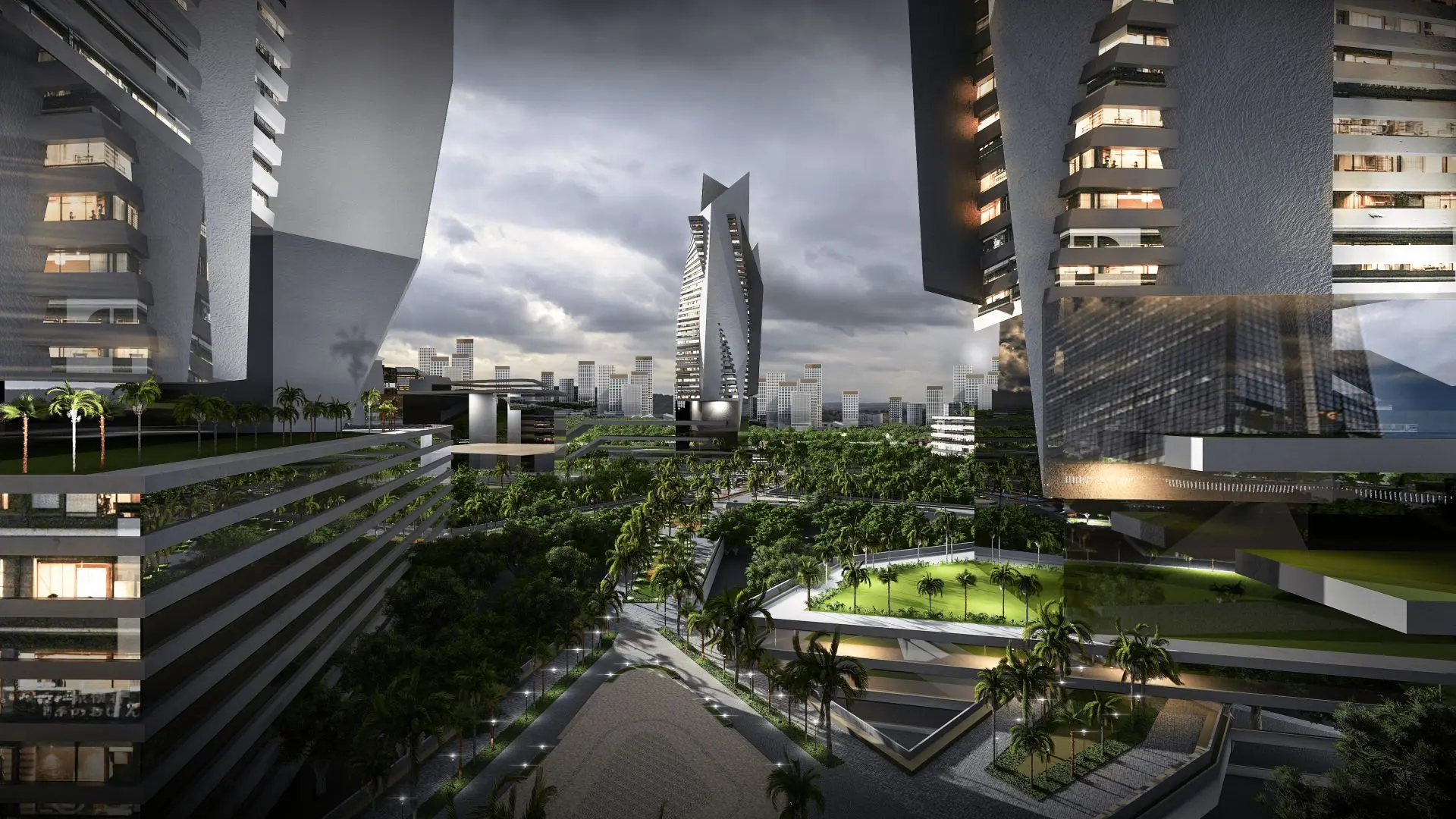
A defining feature of Millennium City is its intelligent transportation matrix. The plan integrates multiple layers of mobility, including above-ground and subterranean transit loops that connect all major districts to central transport hubs. Distances between these hubs range from four to fifteen kilometers, designed to optimize passenger flow while minimizing surface congestion. Complementary transit options, such as electric trams and shared autonomous vehicles, provide additional intra-district movement, establishing a highly efficient and low-emission mobility network.
Project Name: Millennium City Location: South Luzon Site Area: 4,400 hectares Type: Urban Development
Environmental stewardship shapes the project’s entire planning philosophy. A central green spine traverses the city, organizing parks, urban agriculture zones, and recreational open spaces along its axis. This continuous green corridor not only provides aesthetic and lifestyle benefits but also functions as a natural air filtration system, contributing to healthier urban microclimates. The positioning of structures maximizes natural ventilation, daylight access, and passive cooling, enabling built forms to work in harmony with the tropical climate.
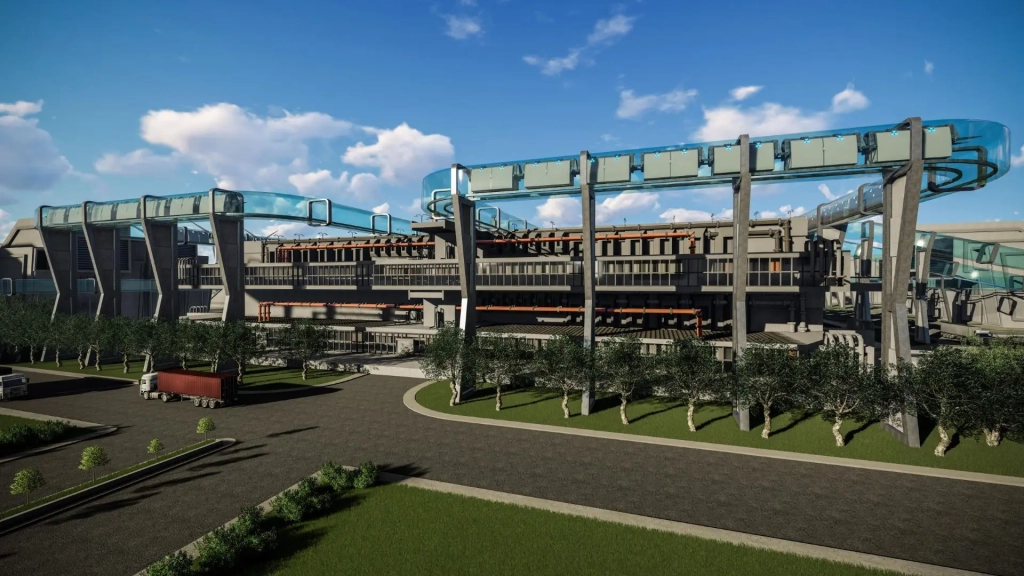
The waste-to-energy facilities in Millennium City, Luzon, are designed to convert municipal waste into usable energy through advanced processing methods. These facilities work by first collecting waste from the surrounding areas, which is then sorted to separate recyclable materials. Once the non-recyclable waste is processed, it undergoes a combustion process that generates heat. This heat is used to produce steam, which drives turbines to generate electricity. Additionally, some facilities may employ anaerobic digestion, where organic waste is broken down by microorganisms, producing biogas that can also be used as an energy source.
At the heart of Millennium City’s sustainability model is a fully automated waste-to-energy facility. This high-capacity system converts municipal solid waste into usable energy through advanced thermochemical decomposition processes, including smokeless incineration and pyrolysis, to produce energy. The facility simultaneously addresses waste management challenges while contributing directly to the city’s energy independence. Integrated air filtration systems ensure compliance with stringent environmental standards, maintaining optimal air quality throughout the development. As waste-to-energy technologies mature, the cost of energy is projected to decrease significantly, enabling cities to operate with affordable, clean, and abundant power. This proposition redefines urban viability, allowing the emergence of energy-intensive but highly productive sectors without the burdens of conventional fossil-fuel dependencies.
City rooms, such as the one in Millennium City Luzon, serve as centralized hubs for urban management and operations, integrating the latest technologies to ensure security and efficient upkeep. These controlled environments utilize advanced surveillance systems, real-time monitoring, and data analytics to enhance public safety and streamline city services. Equipped with cutting-edge communication tools, city rooms facilitate swift coordination among various departments, enabling prompt responses to emergencies and critical situations. Furthermore, automated systems help monitor infrastructure and utilities, ensuring they operate efficiently and addressing maintenance needs before they become problematic. By harnessing these technologies, city rooms not only manage day-to-day operations but also play a crucial role in promoting sustainable urban growth and enhancing the quality of life for residents.
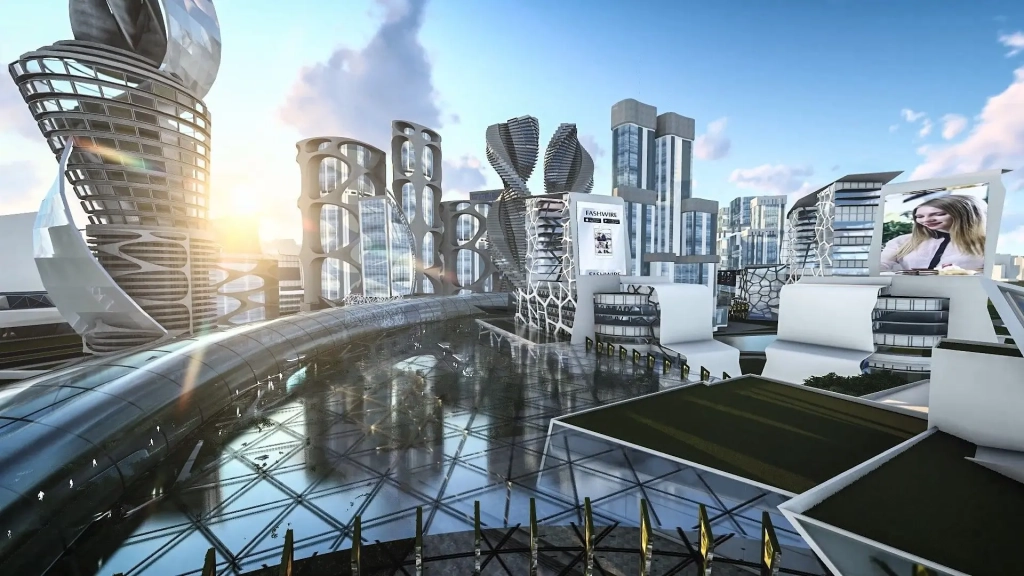
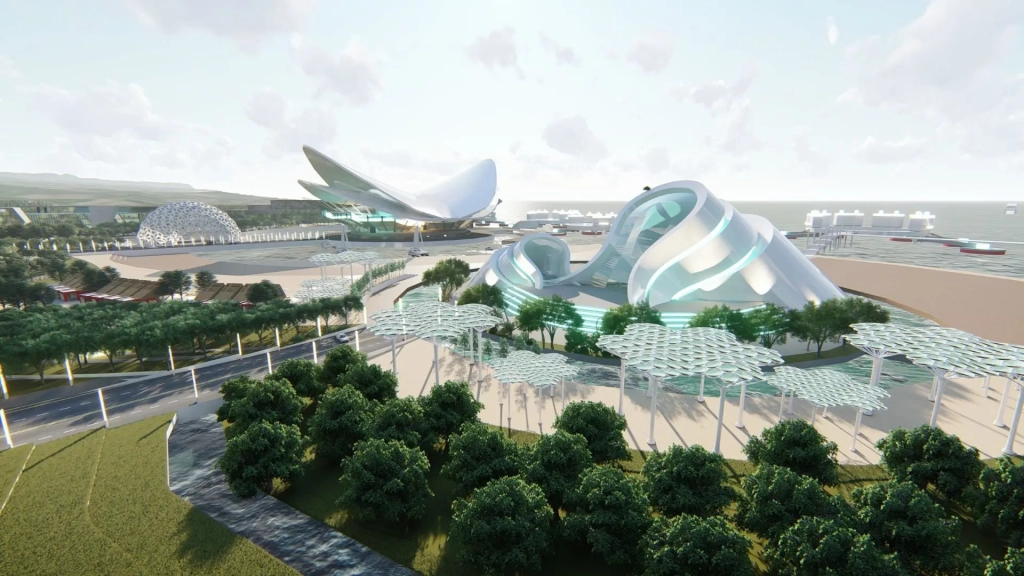
Millennium City is conceived not only as an urban center but also as a national and regional hub of governance, culture, commerce, and research. Key government functions were proposed to be relocated into modernized institutional zones, envisioned to house the new Malacañang Palace and Batasang Pambansa Complex. An international convention hall anchors global diplomacy and academic exchanges. The city features advanced research hubs, international sports arenas, cultural districts, and landmark commercial complexes, including the Transglobal Mall, which is designed to serve as a hybrid physical-digital marketplace for both regional and global commerce. Leisure and recreation are woven into the urban form through hydro adventure parks, performance centers, and eco-tourism attractions tied to the city’s coastal and riverine assets.
In complement, hybrid energy harvesting technologies are deployed throughout the city, combining both wind and solar energy capture. These systems contribute to the diversification of energy sources while providing a resilient buffer against supply volatility. A dedicated wastewater treatment facility, equipped with automated monitoring and filtration systems, supports a closed-loop water management cycle, recycling treated effluent for non-potable applications, such as landscaping and industrial processes.
High-rise entertainment centers are modern structures that serve as vibrant hubs for a diverse range of leisure activities, catering to the interests of people of all ages. These multi-story venues often feature a mix of entertainment options, including theaters, bowling alleys, arcades, restaurants, and rooftop bars, providing an all-in-one destination for socializing and relaxation. Designed with contemporary aesthetics and innovative architecture, these entertainment centers not only offer a variety of activities under one roof but also create a lively atmosphere that encourages interaction and engagement among visitors. Whether it’s a family outing, a date night, or a gathering with friends, high-rise entertainment hubs aim to enhance the overall experience by blending excitement with convenience, making them popular spots in urban areas where space is at a premium. As they continue to evolve, these centers adapt to changing trends and preferences, ensuring that there is always something new and thrilling to enjoy.
Millennium City incorporates advanced smart city protocols, embedding sensor-driven data systems across its physical and digital infrastructure. Actuators respond to real-time environmental conditions, including temperature, humidity, occupancy, air quality, and movement patterns. The resulting dynamic cityscape enables efficient energy use, optimized building management, adaptive lighting systems, and predictive maintenance regimes. Beyond operational benefits, these features enhance resident comfort, safety, and overall quality of urban life.
Cultural centers play a crucial role in the development of new urban areas, offering numerous benefits that enrich communities and support local economies. They foster a sense of identity and pride by celebrating local heritage through the arts, while also attracting tourists and boosting economic growth by generating revenue for nearby businesses. These centers promote social inclusion by providing spaces for diverse community members to engage in dialogue and collaboration, and they offer educational opportunities that enhance knowledge and appreciation for culture. Additionally, cultural districts can revitalize underutilized areas, enhancing their aesthetic appeal and attracting both residents and investors. By nurturing creativity and innovation, they support artists and thinkers, contributing to the city’s dynamic landscape. Ultimately, incorporating cultural centers into new city developments enhances residents’ quality of life by providing access to leisure and personal fulfillment, ensuring that as cities expand, they remain vibrant and reflective of their communities’ identities and values.
Architecturally, the city carries a meta-modern design language that explores futuristic and neo-organic geometries while remaining functionally grounded. Buildings rise with deliberate sculptural forms, embracing parametric contours that reflect both the technological ambition and environmental sensitivity of the project. Material selections prioritize durability, sustainability, and contextual appropriateness for tropical urban settings.
The overarching objective of Millennium City is to present a working hypothesis of what future cities may become when driven by integrated technology, circular resource management, and a commitment to livability. It challenges conventional linear models of urbanization by integrating energy production, waste management, mobility, environmental sustainability, and architectural innovation into a unified, highly adaptive system.
While Millennium City remains a conceptual framework, the intellectual rigor applied to its design exercises the full extent of urban and architectural imagination. Its proposals are not speculative indulgences but reasoned extrapolations of emerging technologies and governance models that may define the next evolution of city-making. The project serves as a testament to what can be achieved when technical feasibility, design foresight, and ecological responsibility intersect on a large scale.