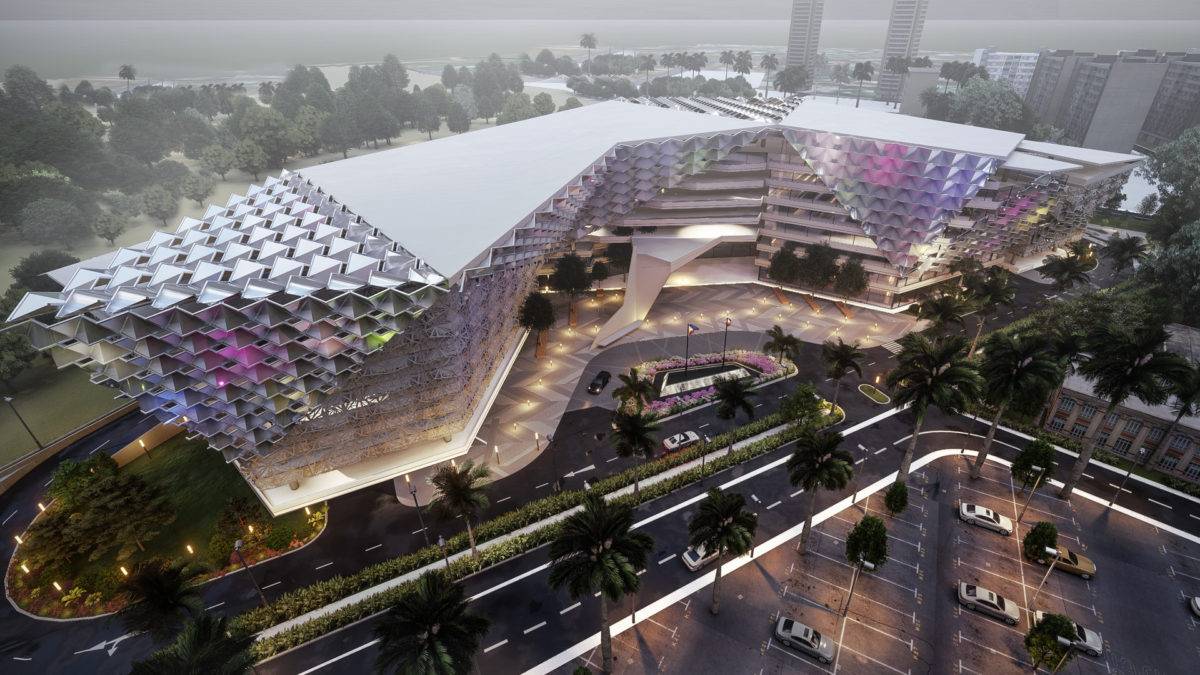
The tessellated surface of this modern office building design cleverly harnesses the movement of air to create refreshing breezes within the interior spaces. In addition to enhancing occupant comfort, this innovative feature also effectively filters out dust particles from the air, promoting a cleaner and healthier indoor environment. This design not only prioritizes aesthetics but also emphasizes sustainability and well-being.
Location: Bonifacio Global City, Taguig
Site Area: 22,769.85 sqm
Project Area: 58,760.00 sqm
Type: Offices, Commercial
Symbolic and equally sustainable, the design for this eight-story tropical office building in Bonifacio Global City, Taguig, Philippines, is grounded in two key concepts: sustainability and the importance of Filipino culture.
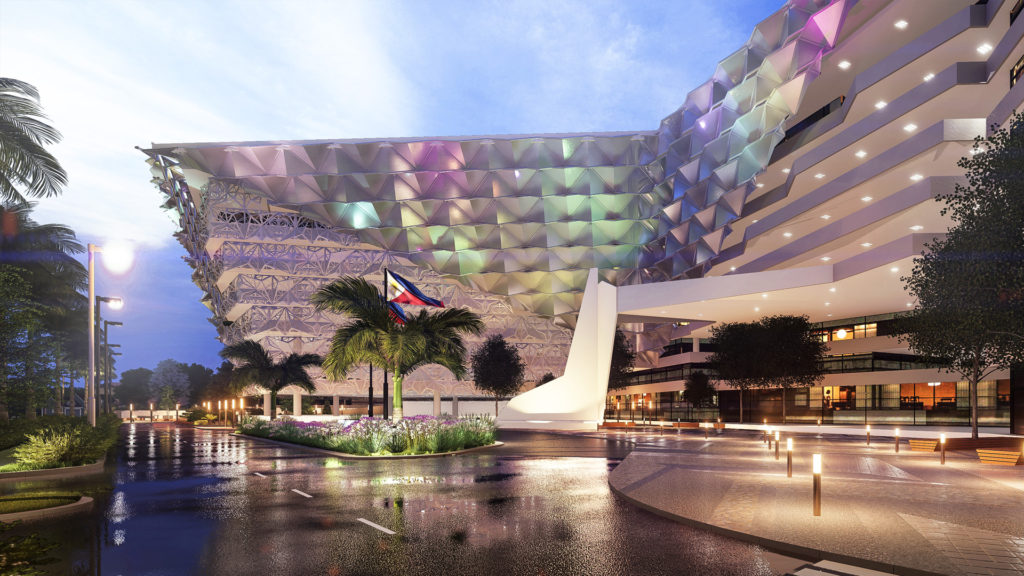
The ICDC Modern Office Building is situated on a 12,000-square-meter plot, surrounded by bustling urban plazas and high-density urban areas. The project’s vision presents a unique design challenge due to its irregular lot shape and location. One of which is minimizing both vehicular and pedestrian pollutants that the building will encounter on a regular basis.
Hence, an equally unique architectural proposition is to wrap the entire building in an exterior skin of a parametric-inspired ventilation grate system. Inspired by the Philippines’ traditional method of weaving used in “banig”-making, it features a futuristic adaptation of local indigenous patterns to keep the project culturally connected as well as allow for natural ventilation and for battling pollutants.
In an effort to create a more culturally immersive project, both the interior and structural designs incorporate locally sourced materials. The ventilation grate panels are porous and angled, allowing them to effectively scrape, filter, and distribute incoming and outgoing breezes throughout the building.
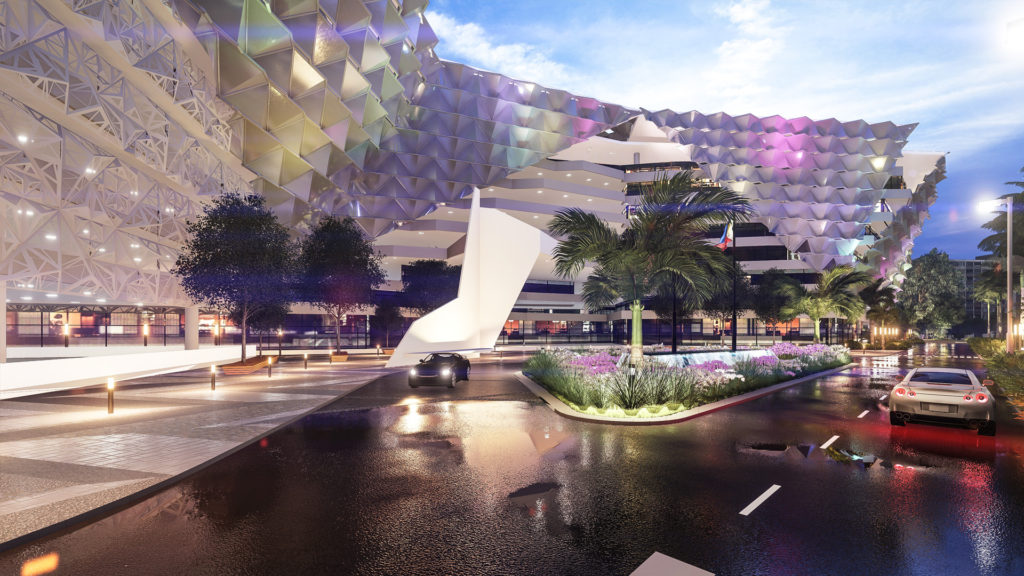
Aside from passive cooling, it also functions as a sun-shading device, minimizing excessive solar glare by breaking up sunlight into smaller and softer reflections. The programmable and color-changing lights and actuators integrated with this architectural skin can transform the building into an eye-catching and festive spectacle of light shows.
The slightly fragmented and rotated structural volume is a welcoming sight from the approach at its street-facing façade. Aside from minimizing harmful exposures and heat gain, the architecture also ensures that the spaces are well-utilized. The building accommodates a diverse range of uses, including offices, retail, and entertainment spaces for various events.
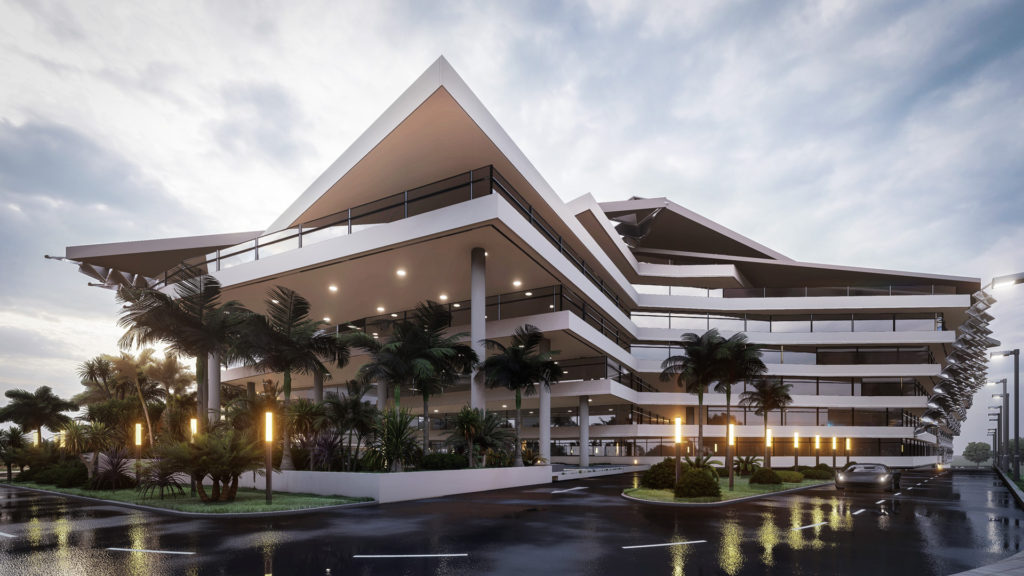
Inside the ICDC Modern Office Building, one notices a well-divided layout of public and private zones. Each zone is carefully planned to allocate different areas for assembly, business and retail, institutional, parking, recreational, social, and utility spaces. All of its eight floors are specially designed to fit a productive and dynamic work and office culture, with semi-private spaces such as auditoriums, libraries, and training halls surrounded by 360-degree panoramic views of the bustling urban scenes of the Bonifacio Global City. Dynamic and encouraging, these spaces allow continuous collaboration, learning, and training among their occupants.
Following the same sustainable route, the ICDC Modern Office Building utilizes a double roofing technology that harnesses continuous airflow at different temperatures induced between level gaps. To harvest and divert stormwater run-off, its primary roofing is used as a rainwater collecting system, whereas the secondary roofing is responsible for minimizing aircraft noise and excessive heat gain.
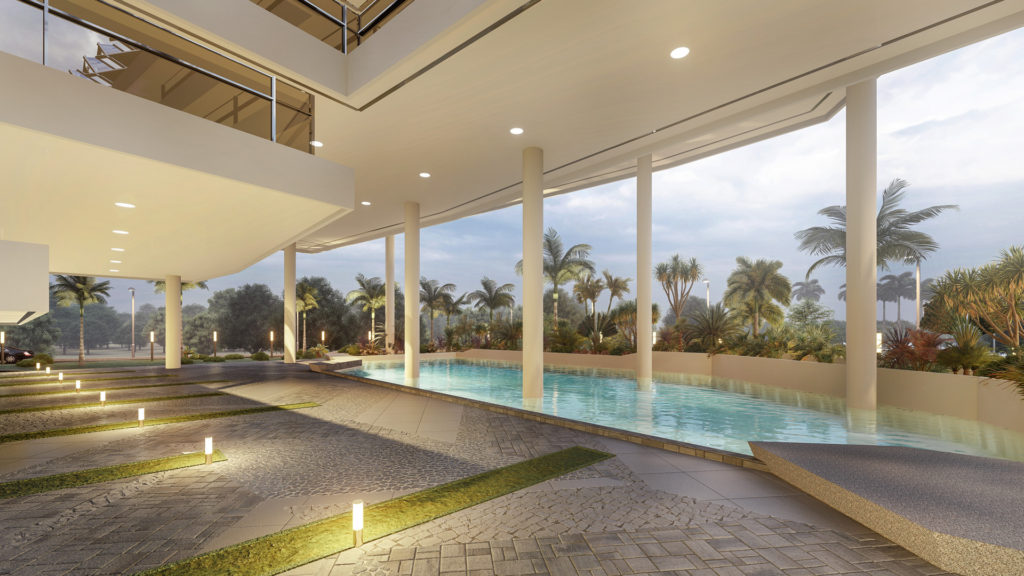
As users leave the building, they are greeted by thoughtfully designed outdoor spaces that emphasize sustainability. These areas feature bioswales that help manage stormwater runoff, porous pavers that allow for natural water absorption, and a rainwater catchment system that not only collects rainwater but also serves as an interactive water feature. This system invites engagement and playfulness, enhancing the overall experience of the space. Together, these elements create a harmonious environment that softens the sharp contrasts of the building’s intricate architectural form, highlighting the importance of ecological design in urban settings.