
Author: Ian Fulgar

  • How Palawan Port Is Opening Property Investments In The Area

    How Palawan Port Is Opening Property Investments In The Area

    Looking into property investment in Palawan? Palawan is set to turn into a progressive vacation destination once its cruise port office opens this year. Hopeful with the improved travel industry guidelines, the current administration likewise anticipates a lift in exchange and trade.

    The Department of Public Works and Highways (DPWH) said that the development of the Puerto Princesa terminal is going all out, with the third and fourth periods of the undertaking to be finished for the current year. The organization expects that the infrastructure will place the region in the list of famous international cruise destinations.
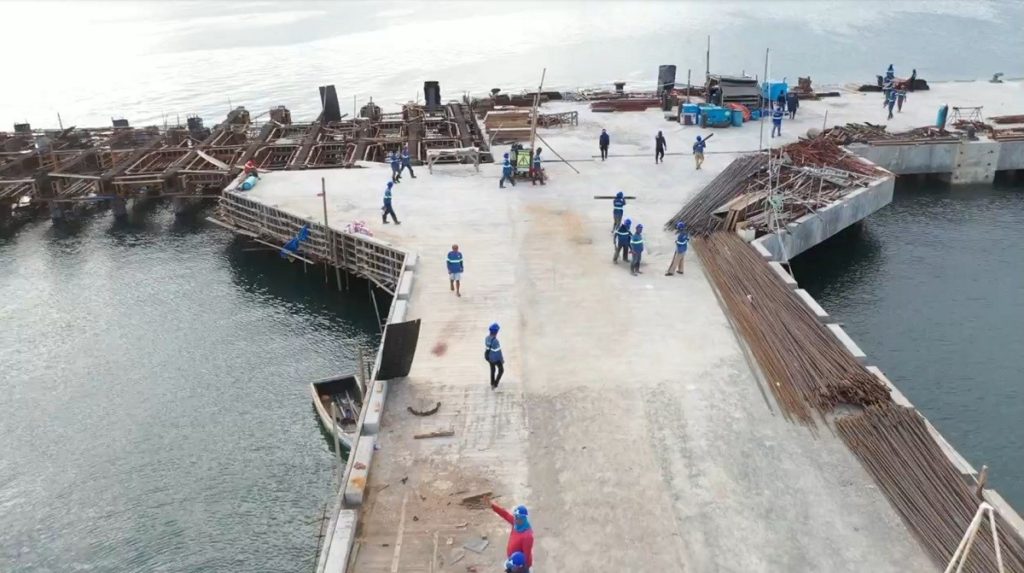
    A construction site in Palawan shows multiple workers assembling rebar frameworks and concrete sections on a partially built pier extending over calm water, representing active infrastructure development supporting Palawan property investment.
    The image captures a transformative moment in Palawan’s coastal infrastructure—one poised to redefine the region’s trajectory as an international tourism and trade hub. With the cruise port terminal rapidly advancing in construction, the province prepares for heightened economic synergy between maritime access and inland development. The convergence of engineered precision and ecological proximity anchors Palawan as an emerging node in the Philippine investment landscape. Strategic coastal construction today underwrites the valuation of future property holdings.

    Growth Plans For The Palawan Port

    Executed in seven stages by DPWH’s Region IV-B, the P1.5 billion objective includes the development of a 500-meter wharf, docking office, traveler terminal, and improved road circulations.

    According to the Philippine Information Agency, the office will have the option to take in Quantum-class voyage ships with 7,000 to 10,000 travelers onboard when finished. Not only are they expecting a large number of travelers, but the port is also ready to receive more than 5,000 crew members and workers. Chairman Lucilo Bayron mentioned during his recent State of the City Address that this massive influx of individuals investing time and energy in the city, the increase in benefits for the region is promising.

    In a press statement last January 14, DPWH Region 4B director Wilfredo Mallari said that the ongoing implementation of the cruise port facility’s Phases 3 and 4 is expected to be completed this 2020.

    Why Invest In Puerto Princesa Properties

    Palawan property investment is spiking due to the island’s many destination features. Puerto Princesa is a key interest in travel choices as it promotes the Underground River, otherwise called the Subterranean River National Park, a UNESCO World Heritage Site. Simultaneously, Puerto Princesa is viewed as an advantageous section point to well-known vacation spots, including El Nido, San Vicente, and Taytay.

    As indicated by Palawan News Online, the main voyage transport that showed up in the city was MV Europa, docking on January 11, 2020, with 333 travelers. In February, there will be two additional vessels, to be specific AIDAvita and MV Seabourn Sojourn. Different boats expected to visit the port this year incorporate Celebrity Millenium, MV Explorer Dream, MS Noordam, and Star Breeze. One year from now, some of them will return, alongside new ones, for example, MV Seabourn Ovation, Maasdam, Arcadia, MS Queen Elizabeth, and Silver Spirit.
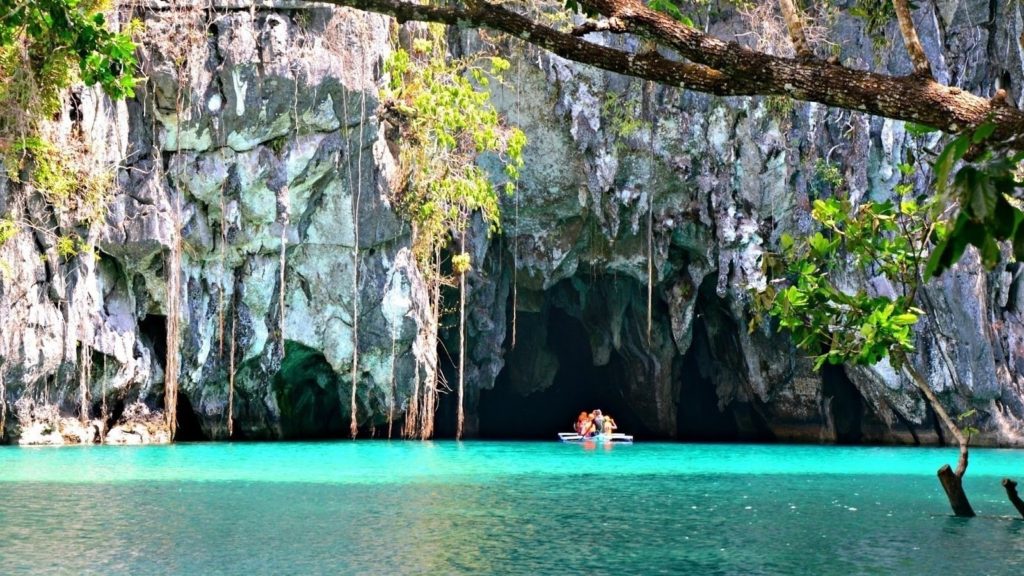
    A wide cave entrance along the Underground River in Puerto Princesa reveals dramatic limestone formations and calm water reflecting rock textures, symbolizing the natural beauty fueling Palawan property investment.
    The subterranean landscape of Puerto Princesa evokes both geological wonder and economic foresight. As the island province garners international attention through its UNESCO-listed Underground River, interest in adjacent property markets accelerates. This natural marvel, nested within a broader constellation of tourist gateways, reinforces Palawan’s trajectory as a destination of ecological prestige and real estate opportunity. The fusion of primal beauty and infrastructural potential positions the region at the forefront of discerning property investment.

    Upgrading Ports In Other Regions

    The government is building and restoring ports intended for business and the travel industry around the country. Ilocos Sur previously opened its gateway to the general population with their recently developed Salomague Cruise Port in Cabugao up north. The facility is serving as the alternative terminal in Region I. It’s arranged in an incredible area, being close to seashores and excursion spots in the territory, just like the home ports of Hong Kong and South China.

    Bloomberry Cruise Terminals, Inc. (BCTI) is establishing a partnership project with the Philippine Ports Authority (PPA) to facilitate and operate port activities throughout the year.

    The government has finished recently revealed another significant development undertaking with the largest traveler terminal at the Port of Cagayan de Oro. The two-story building opened last July 2019 with a total gross floor area of 5,597 square meters serving triple its previous capacity with 3,000 travelers.

    The new building intends to improve the wellbeing and security of travelers by incorporating checkpoints with X-ray scanners for baggage, CCTVs, body scanners, boarding stations, payment booths, and help desks. The design of the building incorporates green spaces and workplaces for quarantine, tourist police, the Coast Guard, and other passenger-related divisions.

    To help ease traveling experiences, other amenities were considered in the architectural planning like a play zone for kids, youngster care station, emergency clinical room, water fountains, nourishment stands, pasalubong centers, and priority boarding path for senior residents, pregnant ladies, PWDs, and people traveling with children aged two years below.

    Concurrently, there were also restoration movements and rehabilitation of Tubigon port in Bohol at the Visayas region. The office resumed operations early last 2019 after repairing its structure from damages due to the 2013 earthquake, the Philippine News Agency (PNA) revealed.

    Among the upgrades done were the lighting systems, pedestrian walkways, security fence, entryway, and the port access road. The port itself can now hold 28 ocean vessels with highlights of three roll-ons, roll-off wharves for docking landing craft tanks, and barges, a tremendous improvement from the 10-transport limit before.

    As compared to serving only 1,500 peak capacity previously, the passenger terminal building seeks to accommodate up to 4,000 travelers daily. Similar to other advanced port terminal developments, the facility aims to improve comfort with various amenities for the general population by including a one-stop-shop for payments and clearances of port charges, child care stations, and upgrading safety and security with new baggage X-ray machines and walk-through metal detectors.

    The port fills in as the primary harbor for ships traveling to and every part of the Tubigon-Cebu City course. Additionally, with a shorter trip duration, the port is also the preferred and convenient alternative transportation route for vacationers going to and from the two regions. Things are looking up for Palawan property investment and tourism real estate.

    Designing Hotel and Resorts in Palawan

    Finding an architect that suits you and your project is the key to success from selecting the site to formulating development plans. Fulgar Architects has been helping many local and international clients visualize and understand their commercial and hospitality projects in the Philippines. With their independent advice and guidance that you’ll receive throughout the whole professional planning process, you will definitely have access to the best design and construction solutions to meet your investment goals. If you are looking to optimize property development investments in the Philippines from unique architectural concepts to building permit applications, please inquire at Fulgar Architects.
  • Exciting Facts About Converting Your Property Into a Lifestyle Hotel

    Exciting Facts About Converting Your Property Into a Lifestyle Hotel

    Conversions are one of the hot topics in building a lifestyle hotel and the hospitality industry. As with today’s rampant sharing of journey stories online, the lodge market is likewise increasing quickly. And building a whole resort from scratch, even inside the scope of boutique inn requirements, are full of technical and financial challenges. Converting existing assets with market available systems into a bed and breakfast model may be a convenient way to jump into the hospitality business with minimal investments if executed properly.

    That Unconvential Thing to Lifestyle Hotels

    If you are entering the hospitality business, converting your own home into a lifestyle hotel could start with these considerations:

    • The interest in innovative lodge requirements is in percentage with how millennial tourists have lately fashioned the hospitality industry. A good resort operation has to be aware of the younger market needs from clever technology with 24/7 connectivity, as properly as opportunities for diverse art, cultural, and workshop activities. Design and dress up an ideal getaway with arguable or persuasive designs, love of local influences, and of course, reliable digital generation systems.
    • Lifestyle resorts may additionally tick off all the quirks of the millennial markets, but they may be not the simplest era drawn to shareable environments and amenities. In current years, bed and breakfast inns have come to be increasingly popular also most of the mature Generation X and Baby Boomers. They too are slowly locating themselves attracted to “experience-driven”, “sight-doing” and “sight-seeing” happenings, even as enjoying proper interactions with both neighborhood and other guests’ shared areas.
    • Lifestyle resorts are streamlined and efficient in making do with the available resources they ought to an advantage. As an example, huge dining spaces or several on-site eating places may emerge as unpredictable assets of sales for the more economical hotel owners. Although guest rooms can also be smaller or awkwardly fashioned with the restrictions of space or budget, many vacationers are willing to make this trade-off for conveniences to local sights or adventures.
    • Still developing regions, where tourist density is still light, won’t be perfect for mainstream brands, however, they may be perfect for travelers who need to experience more of the customs and traditions of the local community. Up-and-coming neighborhoods give lifestyle resorts an insider’s examine a location’s vibrancy which has its very own appeal as a branding strategy.
    • Affordable but decent life-style resorts take center-level as an attractive alternative for tourists due to the fact they strike a balance between pursuing what’s new and trendy, with what unique experiences travelers normally seek to share. Bold and volatile designs that pique for social sharing that speak of local traditions and values as part of the entire architectural rationale are captivating combinations.
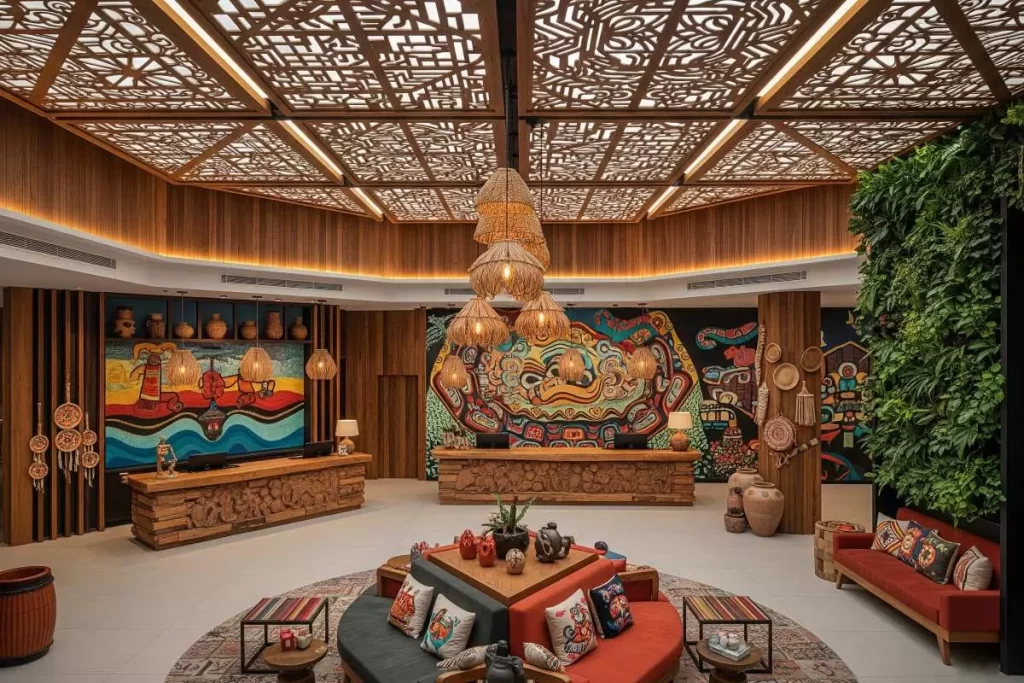
    A lifestyle hotel lobby with an artistic geometric ceiling, colorful murals, a vertical garden wall, a carved wooden reception desk, and round sofas with patterned cushions arranged in a warm and inviting modern-traditional design.
    The adaptive reuse of existing structures into lifestyle hotels has emerged as an inventive response to the demands of contemporary hospitality. Transformations of this nature address both the constraints of development costs and the heightened expectations of modern travelers. The deliberate integration of artistry, cultural memory, and sustainable practices allows these conversions to unfold as dynamic architectural statements. Within this progression, the dialogue between heritage and innovation becomes a defining experience for guests.

    So, for real estate investors venturing into hospitality market, business proprietors who need to take advantage of idle property assets with hospitality industry revenues, or established hotel proprietors in need of a growth path, perhaps the way of lifestyle hotels or price-sensitive bed and breakfast accommodations might be a realistic and feasible way to go.

  • Welcome to My First Blog Post at IanFulgar.com!

    Welcome to My First Blog Post at IanFulgar.com!

    Let’s imagine our future a little differently.

    Welcome to the launch of the new and much improved IanFulgar.com website and my first blog post!

    My complete name is John Ian Lee Fulgar, an architect by profession promoting unique and future designs in the Philippines and across the globe. But people simply call me Ian and I hope you will, too.

    I am very excited to share with you more of what my years of experience in the industry have to offer and how we could build better lives by returning to our imaginative nature!

    Why I Started A Blog

    But first, let me start by telling you why I created this blog, what you will be seeing more in my posts, and how you could join in the discussions.  Since I started managing my own architectural firm, I have stumbled upon many valuable learnings, insights we could share, and questions that may help improve the industry to hopefully uplift the lives of many more through a better understanding of project design and planning. So I thought of an online repository for all the experiences, many ideas coming and going, tips, and inspiration encountered in everyday practice. My plan, of course, is to try to invoke the dreamer or rebel in you to follow me in the redesign of a better future.

    Architecture, Art, and Technology

    Architecture will obviously be one of the main topics of my blog but also be forewarned that you will be seeing a lot of my face and me in action or me goofing around. Secondly, my writing would be about Art and Design where I will be sharing various art-making processes around the globe, paintings, sculpture, what moves me and the stories that revolve around various phenomena in my life.

    With 14 years experience in programming and designing interfaces, you’d definitely expect from me topics as well about Technology particularly the digital world, how we are disrupted on a personal level, culturally, at work, and in the industry from devices, databases, VR’s, simulations to 3D parametric modeling.

    Recommendations

    Looking for unique ideas? Fulgar Architects specialize in quality design, good planning, and delivering unique approaches for your projects. Please spread the word. Check them out.

    For designers and enthusiasts looking to understand more about future designs and the role of technology, kindly visit my other blogsite Metamodern Architect. And, if you are curious enough, you could also take a look at our artworks at Fulgar Studio.

    Most innovations were born out of scientific fantasies.

    Follow Me @ianfulgar

    Thank you very much for visiting my site at IanFulgar.com. Is there anything on Architecture, Arts, or Technology you would like us to talk about? I would love to hear from you! Join in the conversations by leaving your comments below.

    Oh, and please don’t forget to connect and follow me on Facebook, Instagram, Twitter, or LinkedIn. Looking forward to those likes and hearts!