Author: Ian Fulgar

  • The Hidden Architects Shaping Tomorrow’s Smart Cities

    The Hidden Architects Shaping Tomorrow’s Smart Cities

    Imagine a busy street at rush hour. The hum of engines blends with the distant murmur of commuters chatting at a bus stop. The smell of wet asphalt lingers in the air as cars move smoothly through intersections, and traffic lights barely stay red. Rooftop gardens capture rainwater before it reaches the ground. As you walk, your phone suggests a shortcut to save you time. It feels almost magical, but there’s technology behind it. While we take photos of the skyline, the real hidden architects, like data engineers, urban ecologists, and algorithm experts, work quietly behind the scenes in offices and server rooms. You won’t see them on billboards or giving TED talks, but their work shapes the cities of tomorrow.

    With cities worldwide investing over $189 billion in smart city initiatives in 2023, understanding these emerging roles becomes critical. What we’re building isn’t glass towers or floating parks. It’s quiet systems: grids that breathe, streets that think. And if we want to live in them without losing our souls, maybe we should start wondering who’s pulling the levers.
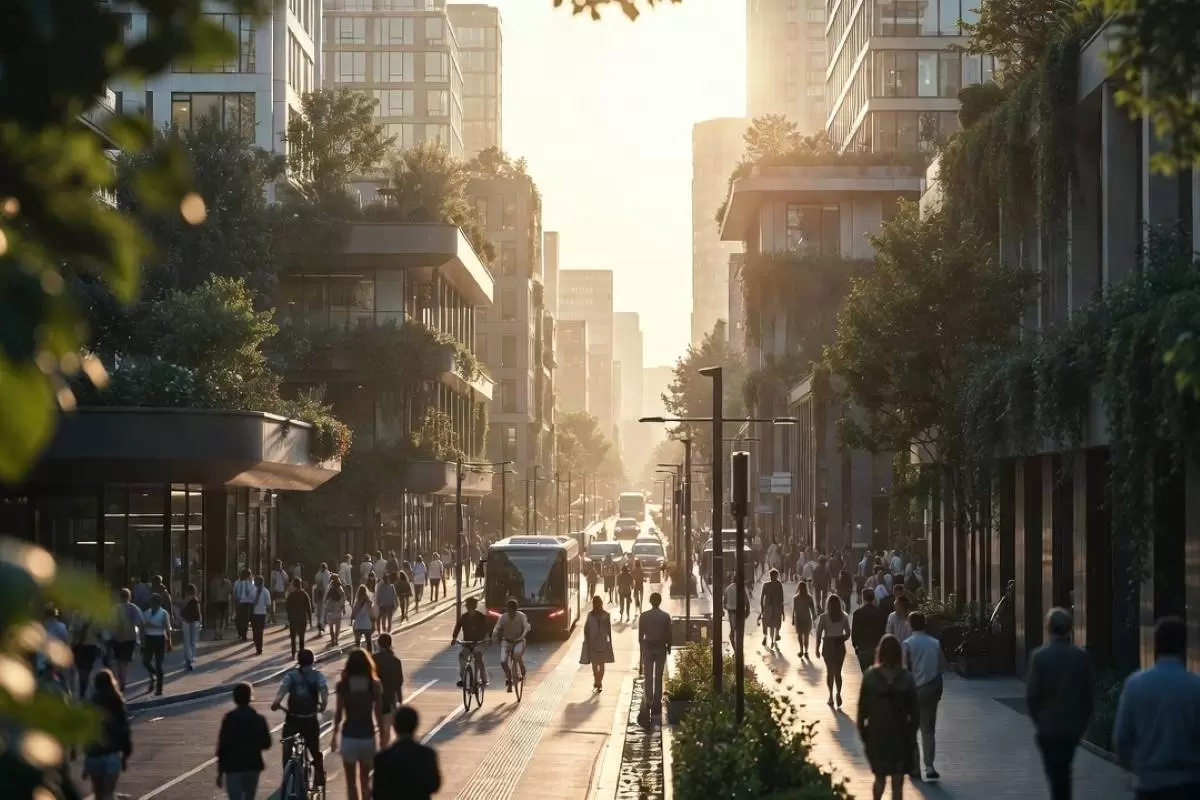
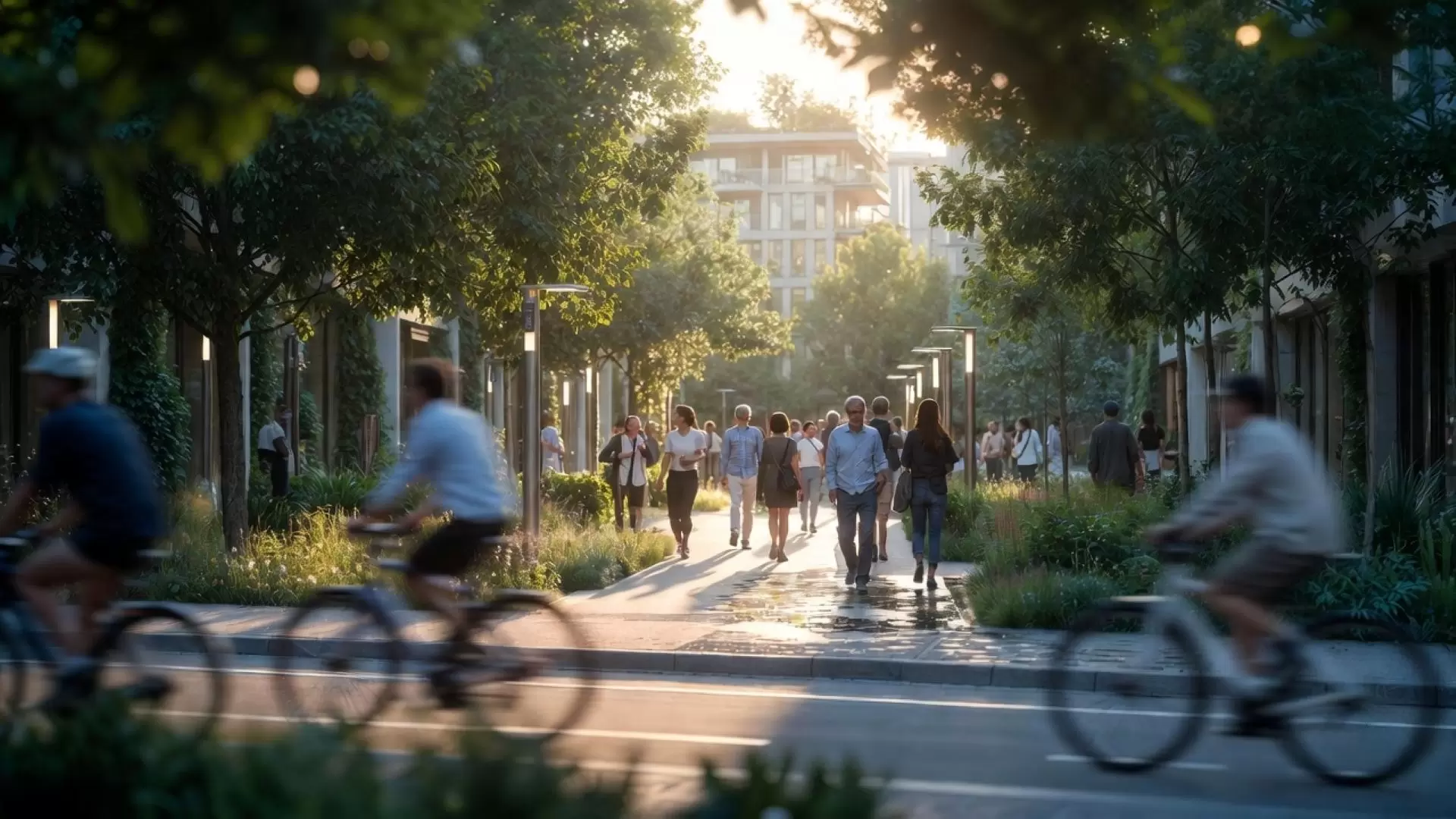
    Bustling smart city avenue at golden hour with green roofs, subtle sensors, and smooth pedestrian flow, revealing the hidden architects of smart cities
    Rush hour in a city that works. Golden sunlight bathes a broad, tree-lined avenue where people walk freely, cyclists move with ease, and traffic flows without the usual snarl. Lush green roofs spill over building edges, vertical gardens soften facades, and small, unobtrusive sensors on lampposts quietly listen to the city’s rhythm. Permeable sidewalks and rain gardens catch every drop, turning potential floods into beauty. This is the near-future reality being shaped right now by the hidden architects of smart cities. These unsung engineers code responsive grids, ecologists weave nature back into concrete, and designers gently guide our daily choices.

    Who Are the Data Whisperers?

    Behind every smooth traffic light or street lamp that dims when no one’s around, there’s a team of hidden architects who speak in code and coffee. They’re the ones who hook sensors to poles, teach machines to read weather patterns, and predict when your neighborhood will need power. Not the loud ones, the invisible. Let’s follow a data point on its journey: a sensor perched on a lamppost gathers data on street brightness as dusk falls. This data travels to a central server, where algorithms analyze patterns in real time. The analysis determines whether to dim or brighten the lights to improve energy efficiency. Then, a decision triggers the actual lighting adjustments, reducing power consumption at just the right moment. It’s a quiet, seamless transition from data collection to decision-making, all unseen but profoundly impactful.

    Take Singapore’s smart nation grid, for example. Folks there barely know it exists, but every time a train glides in exactly on time, or a district’s commercial buildings slash energy use by double digits? That’s a handful of engineers quietly tweaking algorithms overnight. They sift through floods of data. Real-time. Beyond efficiency, these intricate systems bolster the local economy. Trains running on schedule reduce commuting time and costs, freeing residents to explore more retail options or dine out, thereby increasing foot traffic and sales in commercial areas.

    Even those late-night algorithm tweaks have a ripple effect: lower transit costs mean more disposable income for families to invest in other parts of their lives. It’s not just efficiency. They can tell when trash bins are overflowing before you smell them. They reroute buses when schools let out early. All from a warren of laptops in some unmarked office. And we’re not talking sci-fi.
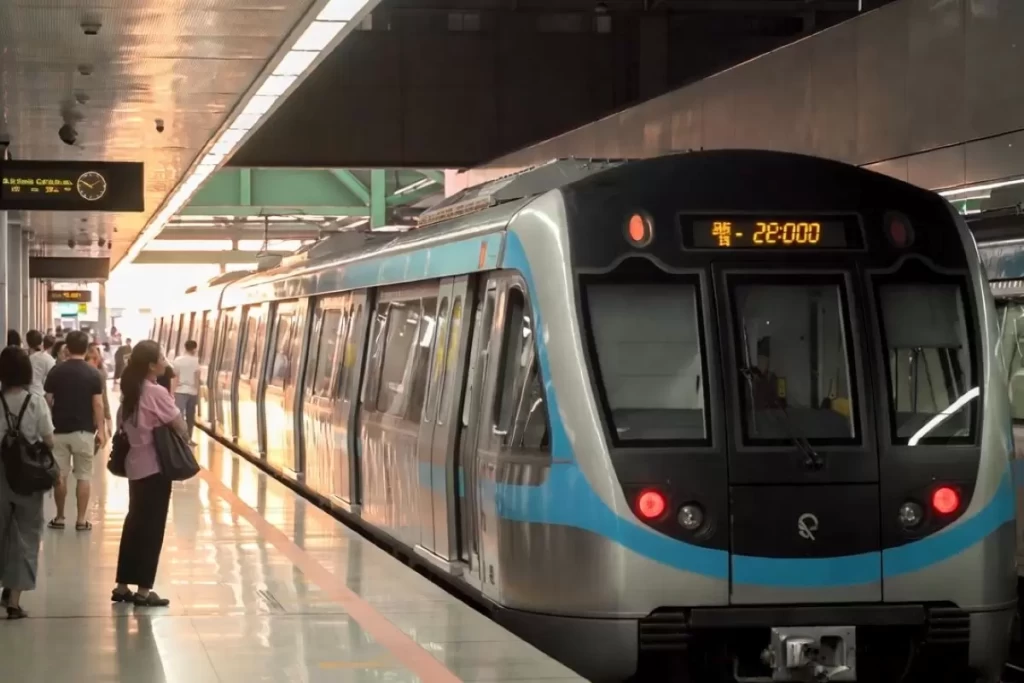
    Singapore MRT train arriving precisely on time at platform, digital clock matching schedule, showcasing hidden architects of smart cities in action
    In Singapore, an MRT train arrives at the platform with perfect precision, the digital clock frozen at the exact scheduled second. Doors open smoothly, passengers step on without rush or stress, and the evening flow continues as if the city itself is breathing in rhythm. This everyday moment is the visible reward of the hidden architects of smart cities at work. Behind the scenes, a dedicated team of engineers sifts through real-time data floods, quietly adjusting algorithms in the dead of night so that trains stay on time, districts slash energy use by double digits, and commuters save precious minutes. Those saved minutes turn into more time for retail, dining, and life. Boosting foot traffic, sales, and the local economy without anyone noticing the machinery. This precision is what the hidden architects deliver: a city that keeps its promises, one perfectly timed arrival at a time.

    This automation is already happening in places like Berlin, Seoul, and parts of New York. People are learning to pay attention to these changes. The real question is, who chooses what the city pays attention to?

    The issue is that most people accept these systems without thinking. We end up following routines set by machines. It’s efficient, but it can feel isolating. The city is paying attention, but it’s also watching us. At what point does convenience become control? Who makes that decision? It’s these hidden experts, the ones you don’t see online. They aren’t bad people, but they aren’t always held responsible, until something goes wrong and everyone starts asking questions.

    What Do Urban Ecologists Really Do?

    If data’s the pulse, then green is the lungs. And the people fitting gardens on rooftops or transforming concrete into parks that soak up water like sponges, absorbing a bathtub-full with each storm? You won’t catch them on magazine covers either. They’re hydrologists, botanists, retired firefighters who’ve switched to planting algae in canals. Their job: make cities stop acting like they’re invincible.
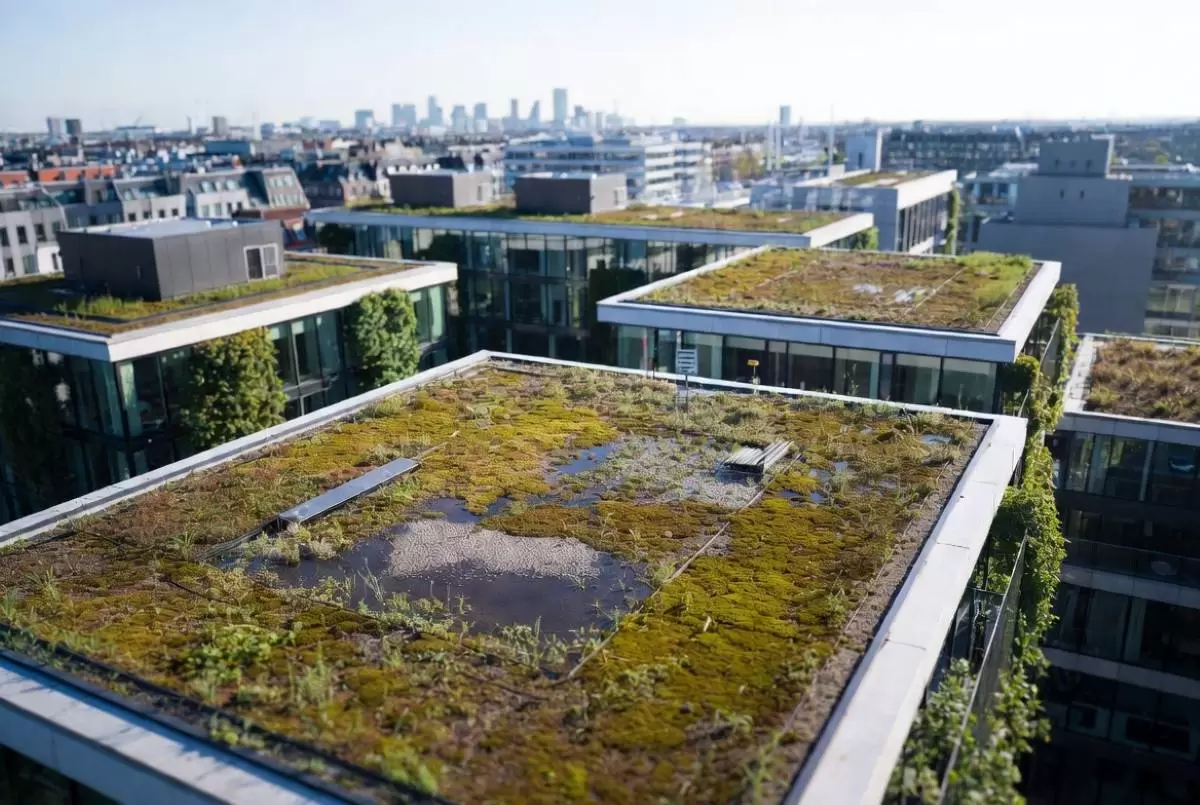
    Aerial view of Copenhagen blue-green roofs with lush vegetation and rainwater retention, showing hidden architects of smart cities at work.
    From above, Copenhagen’s rooftops tell a quiet story of resilience. Lush blue-green layers of sedum, grasses, and wildflowers blanket modern buildings, holding shallow puddles of rainwater that fell just hours ago. These are engineered lungs for the city, designed by the hidden architects of smart cities to soak up storms, prevent flooding, and cool the streets below by several degrees on scorching summer days. Subtle drainage channels guide excess water away, while the dense vegetation overflows edges like living frames. Stack these roofs across neighborhoods, and the impact multiplies: cities filter their own wastewater, grow food on idle space, and breathe easier.

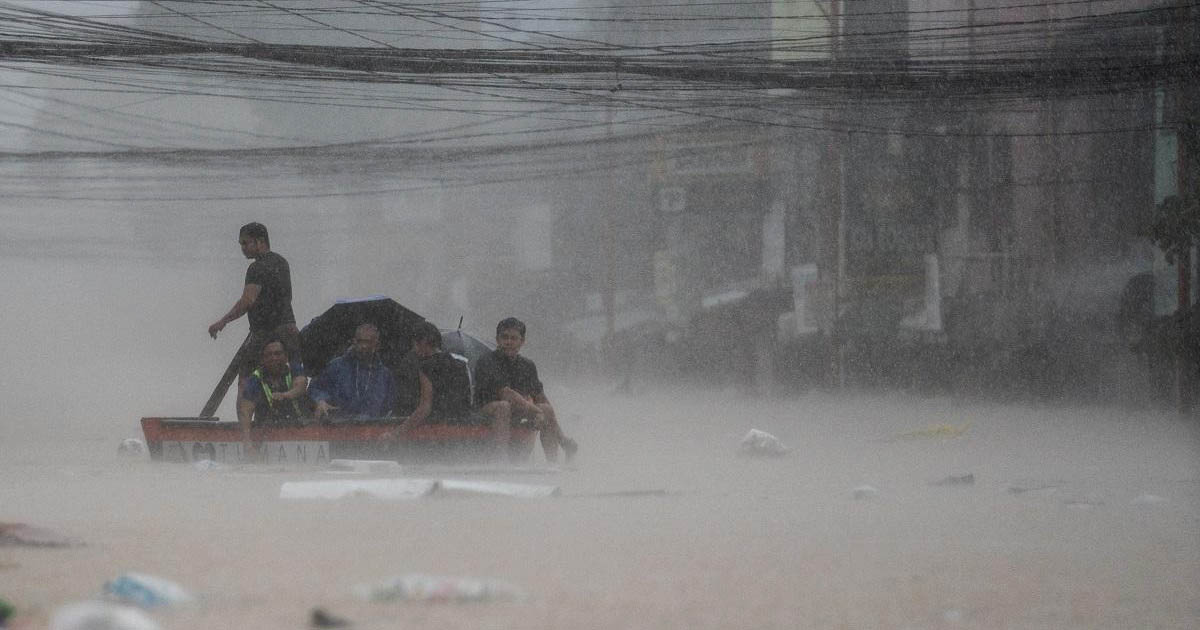
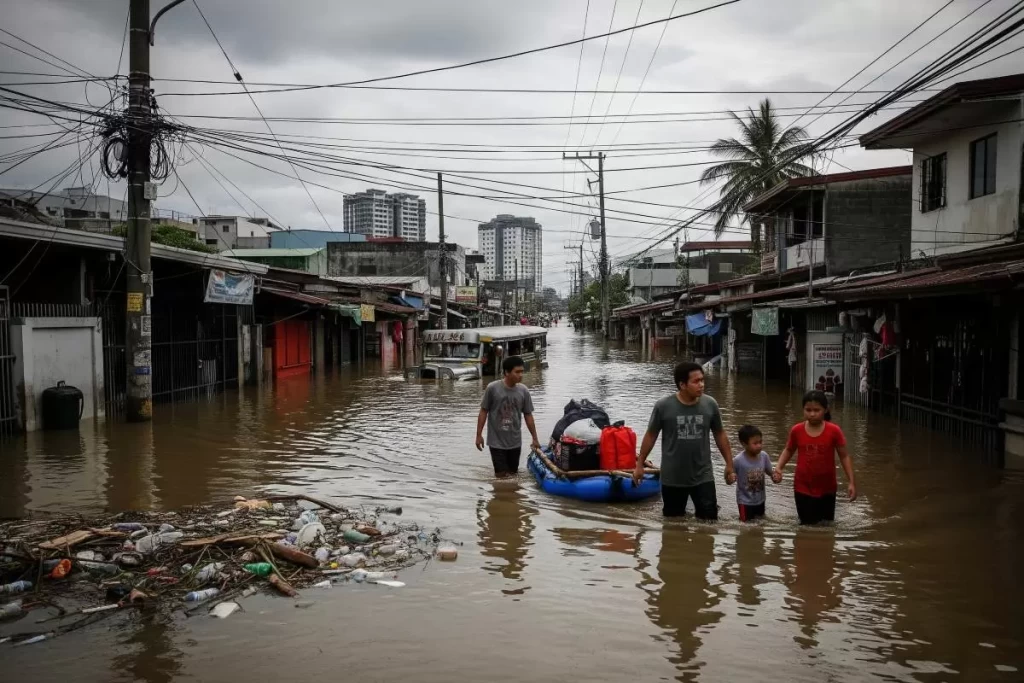
    Remember those floods in Paris last year? Or Houston? Turns out, when you pave everything over, water becomes problematic. So these quiet fixers build swales. Rain gardens. They turn dead parking lots into places bees actually like.

    And get this: in Copenhagen, they’ve got a whole network of blue-green roofs that store rainwater and chill the air below. Result? Summer days don’t cook you alive. But here’s the thing. These changes look small. A planter here, a curb cut there. Yet stack ’em up across a million rooftops, and suddenly the city’s drinking its own wastewater, growing its own lunch, and staying five degrees cooler.

    Enter Alice, a resident who recalls how this transformation changed everything for her neighborhood. The extra cooling allowed her to finally invite her elderly parents to tea in the garden without worrying that the heat would affect their health. With urban areas projected to house 68% of the global population by 2050, this work is about survival. No mayor’s ribbon-cutting. No plaque. Just better air tomorrow. Makes you wonder how many invisible hands it takes before we notice we’ve stopped choking.

    First, a bit on their day-to-day. One wrong plant choice, and the whole roof collapses. One storm too many, the canal overflows. They map roots like surgeons, calculate shade for old ladies on benches. And most evenings? They’re knee-deep in mud, testing whether the soil mix retains carbon better than the previous one. No selfies. No victory laps. Just records that no one’s gonna read. Still, think of the payoff. A street that doesn’t flood anymore. Parks that actually cool your skin. It’s not glamour. It’s steady repair work on a planet we keep punching. You can’t thank a rooftop for saving you from heatstroke. But you can remember the hands that put it there.

    How Do Behavioral Designers Shape Our Choices?

    These are the psychologists, not architects. They don’t draw buildings. They draw us. How we choose to walk, eat, and queue. Ever notice how apps nudge you toward the subway instead of that cab? That’s them. Soft interventions. No force. Just… direction. Subtle colours on maps. Tiny rewards for biking.

    Stockholm Odenplan piano stairs interactive keyboard design encouraging stair use, example of hidden architects behavioral nudge.
    A simple staircase becomes a symphony. At Stockholm’s Odenplan subway station, what was once ignored in favor of the escalator became a giant piano keyboard. Each step triggers real musical notes that invite playfulness and joy. Overnight, stair use surged by 66%, as children and adults alike couldn’t resist “playing” their way up. This clever behavioral nudge, created by designers under the “Fun Theory” banner, proves how subtle creativity can shift habits toward healthier, more active urban movement. Fun can change the world if we stay mindful of the tune. [Photo by Actipedia]

    In Stockholm, a team redesigned subway stairs to look like piano keys, and children began using them instead of the escalator. Stair use increased by sixty-six percent overnight, just because of this creative idea. While these changes can improve traffic flow, they raise questions about their influence. What if these methods start guiding larger decisions, such as how you spend your time or whom you vote for? The difference between helpful guidance and manipulation can be unclear, and there are few rules about it. These professionals work in think tanks, tech companies, and city labs. Sometimes they are hired by companies to keep cars on the road, and other times by environmental groups to reduce traffic. It’s important to consider who is overseeing their work.

    They don’t wave wands. Mostly, they run A-B tests on thousands like you to see if a brighter bike icon gets five more people cycling per day. Or whether wording a recycling bin “Don’t be trash” doubles the amount of correctly tossed in. Sounds harmless. Often is. But layer these nudges city-wide, and suddenly you’re living in a world where someone else chose all your defaults. Today, it’s bike lanes. Tomorrow? Maybe it’s steering you toward certain shops, certain foods, certain votes. All without you noticing. That’s when it stings. Not dystopia. Just slow, invisible steering. The real question: are we okay being passengers, or do we want to see the map they’re using?

    What Are the Challenges and Blind Spots?

    Smart sounds perfect until you zoom out. Not everyone’s got that glowing screen whispering shortcuts. Digital deserts still exist. Whole districts where the grid’s a joke, and sensors don’t reach. For instance, in core urban areas such as Midtown, sensor density is around 250 sensors per square mile, while on the outskirts, it drops to fewer than 10 per square mile. So while Midtown breathes easy, the edges? Still drowning in fumes and potholes. Data’s not equal. Ever.
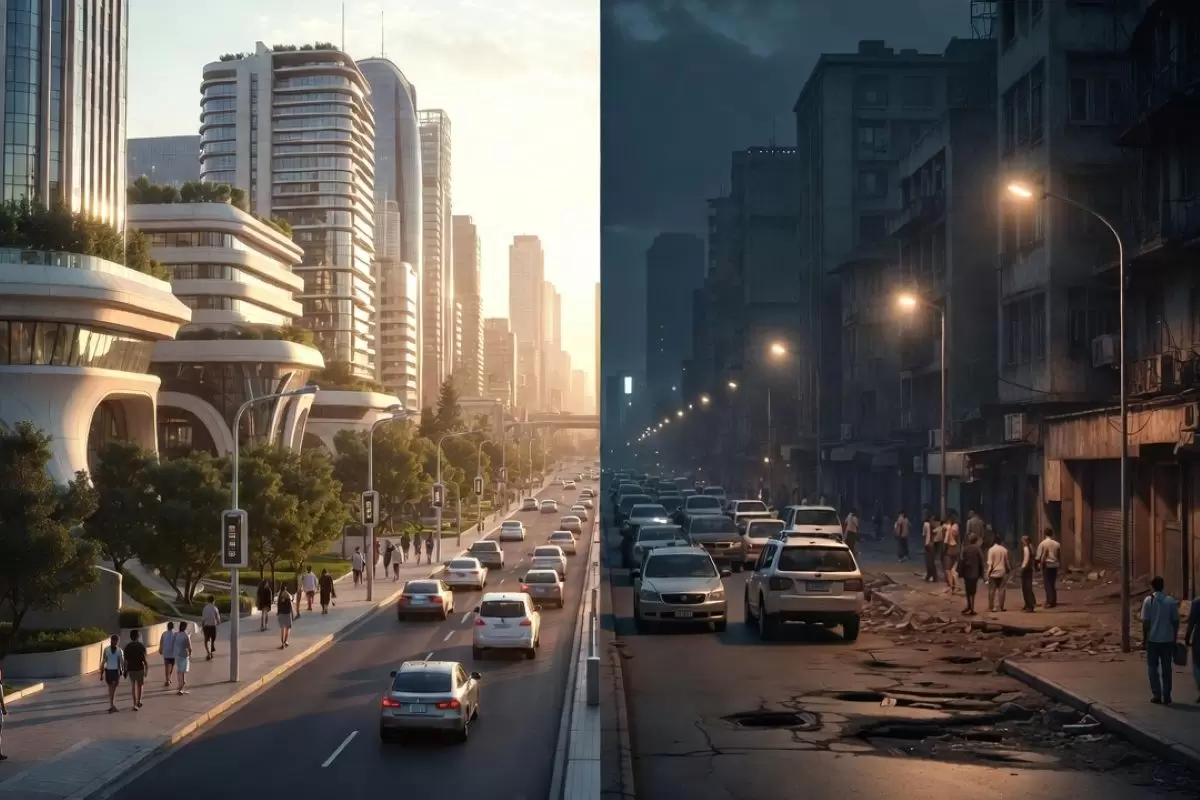
    Split-view of smart city inequality: affluent green district vs neglected neighborhood, highlighting blind spots of hidden architects
    One street, two worlds. In the golden light of late afternoon, the left side of this image reveals the promise of smart cities: gleaming modern buildings crowned with green roofs, smooth-flowing traffic, discreet sensors quietly optimizing life, and people moving comfortably on clean, tree-lined sidewalks. Step one block over, and the light fades. The right side shows cracked asphalt, potholes swallowing tires, aging brick facades, dim streetlights, and residents navigating a landscape that time and technology have forgotten. This is the blind spot of smart city progress: the places where data flows, sensors hum, and algorithms thrive often end at invisible lines of income, race, or geography. The image asks a tricky question: Who gets to live in the future we’re designing? And who decides where the sensors stop? Actual resilience requires not just smarter technology but also fairer distribution.

    Then there’s privacy. Cameras on every lamppost. Your gait is logged. Your coffee break is predicted. Feels efficient, till you realize someone’s monetizing your heartbeat. Who’s owning what? Tech firms? Governments? And when the code glitches? The lights go off on the wrong block. Elevators trap people. No one’s to blame, because no one’s famous enough to name. Still, utopia’s a poor salesman. Cities aren’t labs. People aren’t variables. Push too hard on behaviour, you get pushback. Protests. Blackouts. The quiet, hidden architects? They might be brilliant, but brilliance without heart builds prettier cages. Makes you think: maybe the eminent voices aren’t so bad after all.

    Can Communities Drive Smart Cities?

    Smart comes alive when we actually patch up the cracks instead of pretending they’re not there. Imagine this. Instead of ignoring the slums, some teams are literally wearing hard hats and handing out GPS devices so residents can map their own streets. No bureaucracy. No pity. Real power.

    In Nairobi’s Kibera slum, they’ve done it. Young mappers mapped crime hotspots, water points, and health clinics that officials were unaware of. Result? Police posts were installed in high-risk areas. Resources flowing to the invisible. Community voices are finally heard. All because the blind spots finally had eyes.
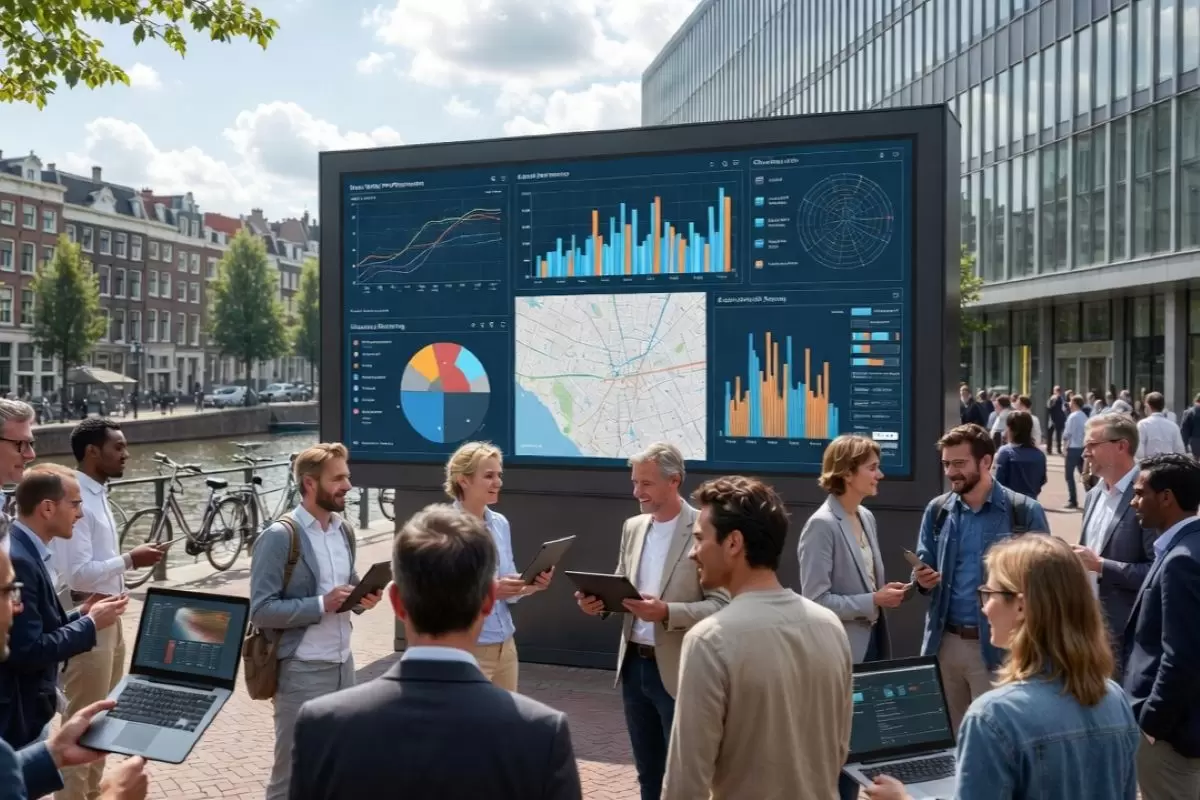
    Diverse Amsterdam citizens voting on city algorithms at public event, transparent governance by hidden architects of smart cities
    Amsterdam is a compelling example of the positive outcomes that can result when these often-overlooked management practices make space for public involvement. The hidden architects of smart cities aren’t just engineers in distant offices. They’re the ones who build systems citizens can see, understand, and shape. When a glitch appears or a new need arises, communities don’t wait for top-down fixes. They organize, discuss, and collaborate to make the city better for everyone. This transparency transforms passive residents into active stewards. When people can read the rules that guide their lives, debate them openly, and contribute to their evolution, the city stops being something done to them and starts being something built with them.

    Privacy can improve if we treat it as a right, not a luxury. In Amsterdam, citizens vote on the algorithms that run city services. Anyone can see how their commute is planned, download the code, and suggest changes. This transparency gives people more control over their lives. When problems arise, communities organize events to fix them together, making the city better for everyone.

    In places like Barcelona, these gatherings happen regularly. What starts as frustration can turn into positive change when people work together and take ownership of their city. The experts behind the systems become part of the community, which is the real improvement we need.

    Why Should We Care About These Hidden Architects?

    So here’s the rub. These hidden architects making your city smarter aren’t asking for applause. They clock in at seven, go home at nine, and wake up tomorrow to fine-tune the air conditioning in a subway. Why should we care then? If we don’t pay attention, the future is engineered for whoever controls the room. Not you. Not your neighbor. Not the kid on the third floor who can’t afford data.

    And trust me, it’ll still look stunning from a drone. We’d do well to drag the hidden architects into the light. Make them explain. Make them listen. Not to sound like a manifesto, but honestly. A city that runs like clockwork? Great. If you get to be the battery or the bird in it? Not so much. So next time your traffic stops on time, tip your hat to the shadows. And instead of wondering what else they’re not telling, why not become part of the conversation? Attend a local data-governance meeting or connect with tech teams in your community. By engaging directly, you can help shape a future that listens to everyone’s voice.

    Truth is, these hidden architects might be humanity’s quiet saviours. Not because they’re flawless, but because they actually care about the next ten minutes of your breath. The cleaner air, the shorter wait, the shade from the dying sun. They don’t need monuments. Just maybe a conversation. A seat at the table when the next city gets sketched. Because if we start listening back and really listening. The future won’t just be efficient. It’ll be kind. And wouldn’t that be something worth walking towards?

    Key Takeaways:

    • Smart cities need hybrid professionals bridging technology, ecology, and human behavior
    • Data interpretation matters more than data collection alone
    • Community participation must be authentic, not performative  
    • Without diverse voices, we risk automating existing biases at scale
    • The most critical infrastructure isn’t digital—it’s human
  • The Strategic Foundation of Master Planning in the Philippines

    The Strategic Foundation of Master Planning in the Philippines

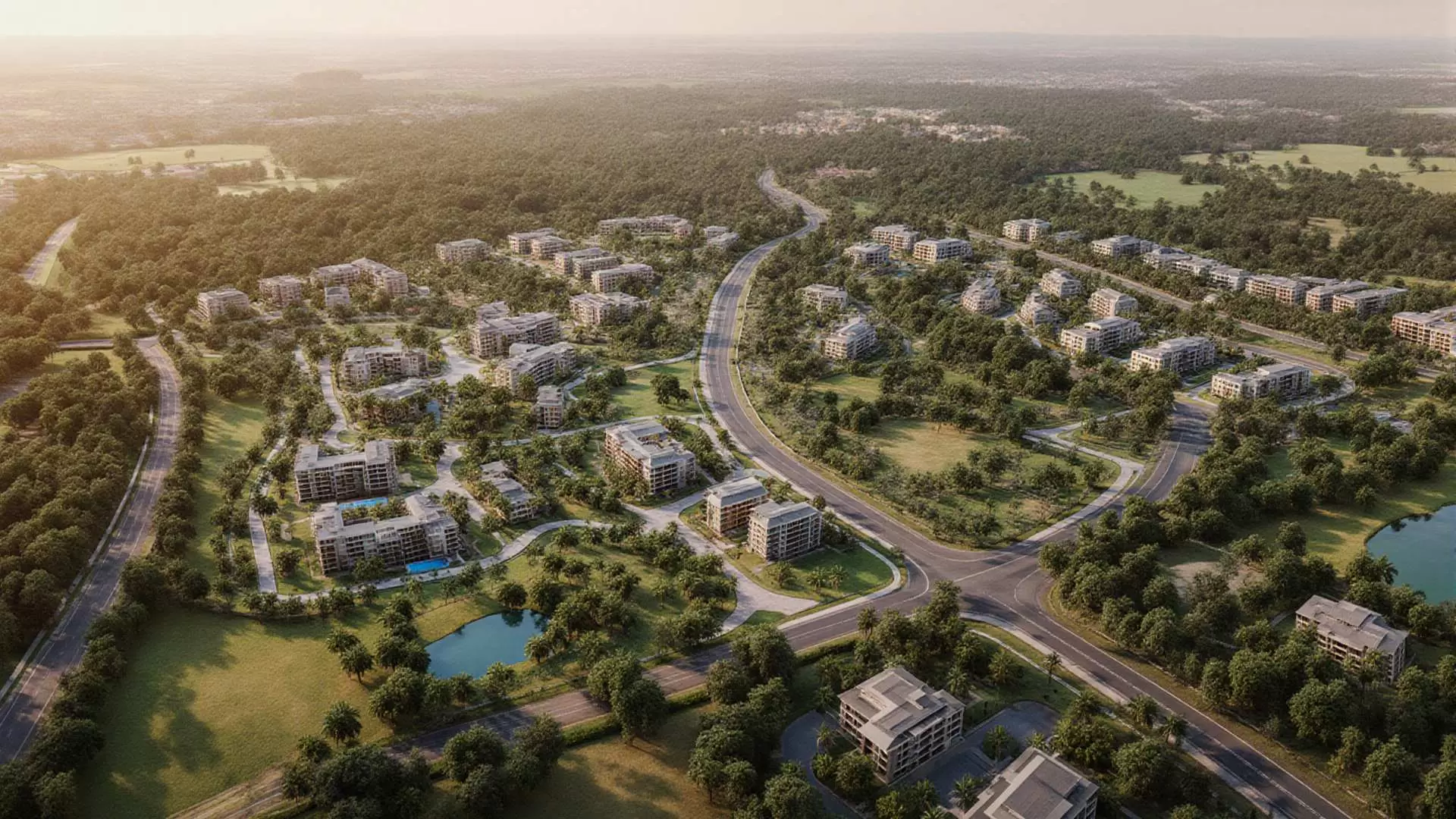
    A straightforward master planning approach builds long-term value for developers, investors, and landowners by shaping communities with strong market alignment and architectural vision. The practice of master planning in the Philippines guides land-use decisions and creates orderly growth patterns that support efficient mobility, resilient urban systems, and commercially viable development outcomes. Each element within a master plan establishes a foundation for investment confidence and delivers a cohesive framework that enhances the appeal of residential, commercial, tourism, and mixed-use districts.

    A thoughtful master plan can truly elevate raw land into a vibrant community that attracts both buyers and tenants! This strategic framework empowers everyone involved with a clear understanding of potential returns. In the Philippines, master planning is a savvy business strategy that links spatial decisions to financial success. By considering local geography, climate, cultural values, and market trends, a master plan can turn land into a cherished community asset.

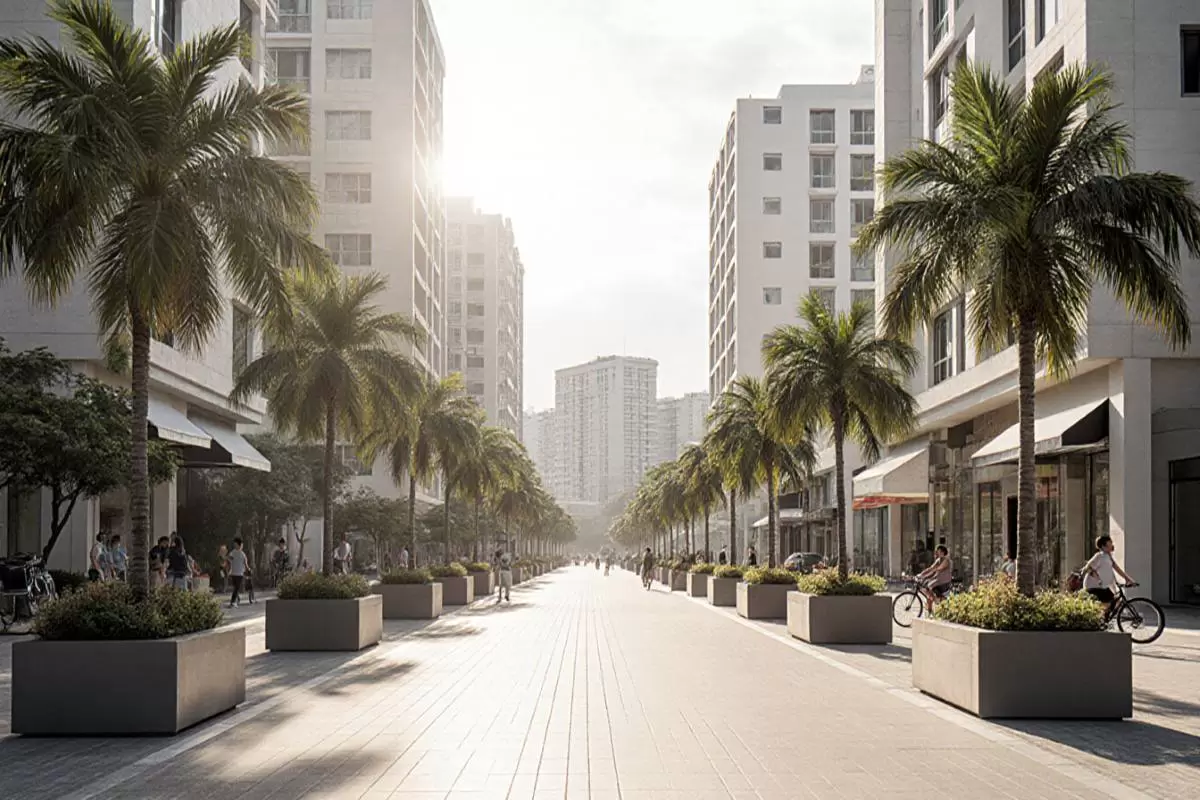
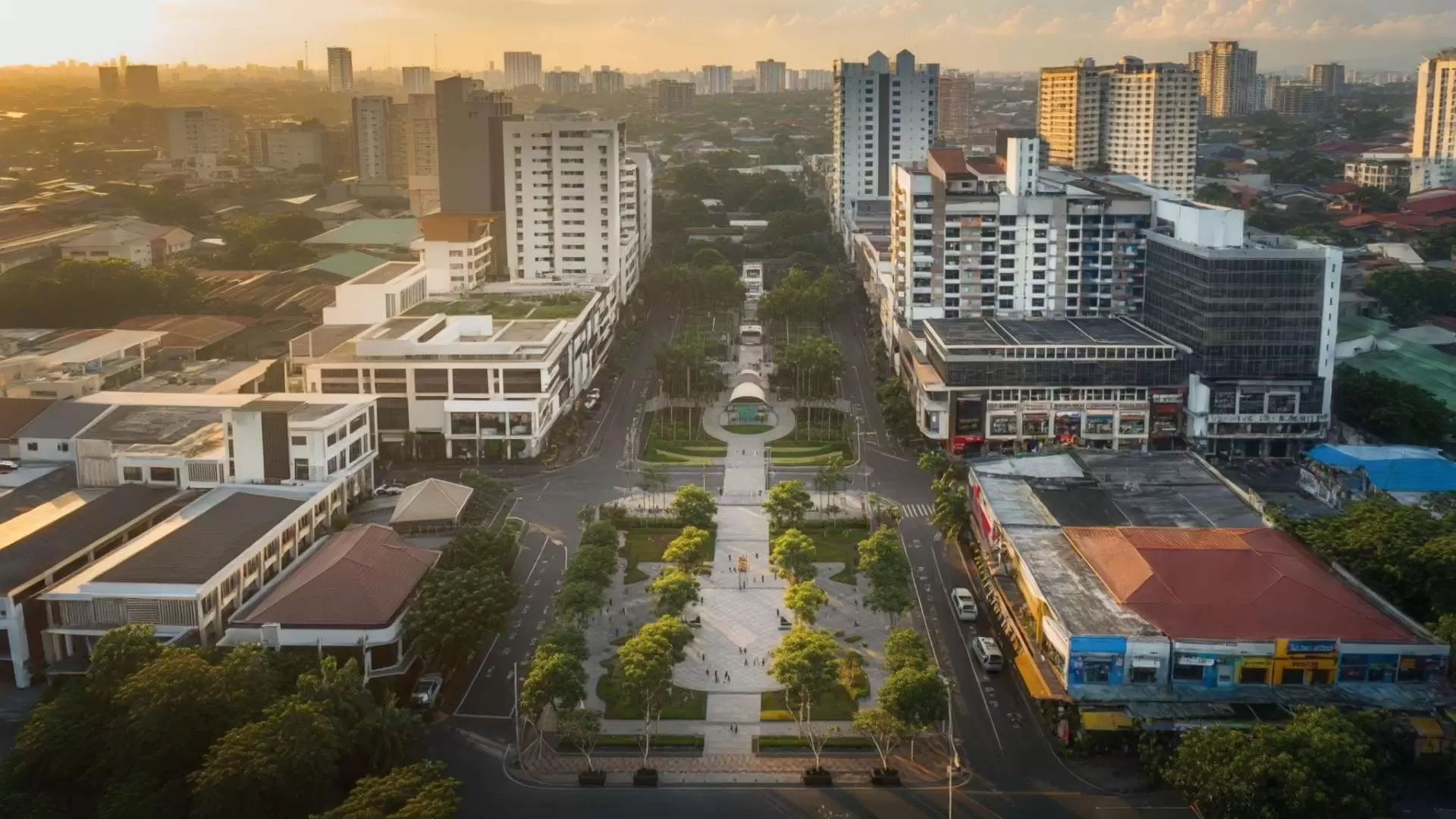
    Pedestrian friendly boulevard within a developing Philippine mixed use district with tropical trees and organized frontage.
    A master plan gains strength when early district organization sets the tone for mobility, open space placement, and community life. The clarity of frontage zones and landscaped corridors supports future growth that aligns with long-term regional demand.

    How Master Planning in the Philippines Enhances Land Potential

    Master planning empowers developers and landowners to direct the growth of an entire site rather than allowing individual buildings to evolve without coordination. The discipline provides clarity on road networks, open space distribution, building orientation, density allocation, infrastructure placement, and future expansion possibilities. Philippine cities and emerging provincial corridors benefit from organized development patterns that create safer streets, healthier environments, and well-designed public spaces.

    A well-crafted master plan enhances property appeal by fostering predictable growth and curated experiences. Developers and investors respond to locations with a clear blueprint because it indicates cost efficiency and long-term performance. Communities built through cohesive planning establish market stability because homebuyers and businesses understand how the district will mature over time. This environment drives stronger selling prices and sustained occupancy.

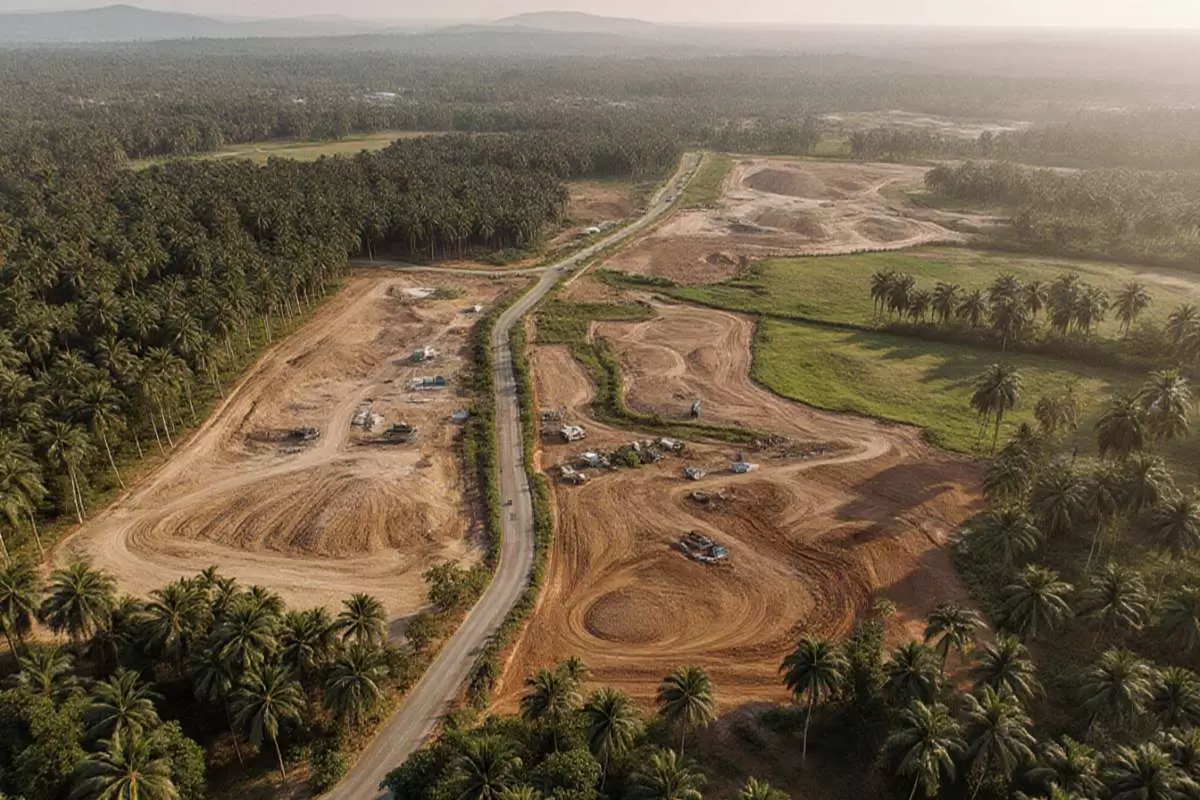
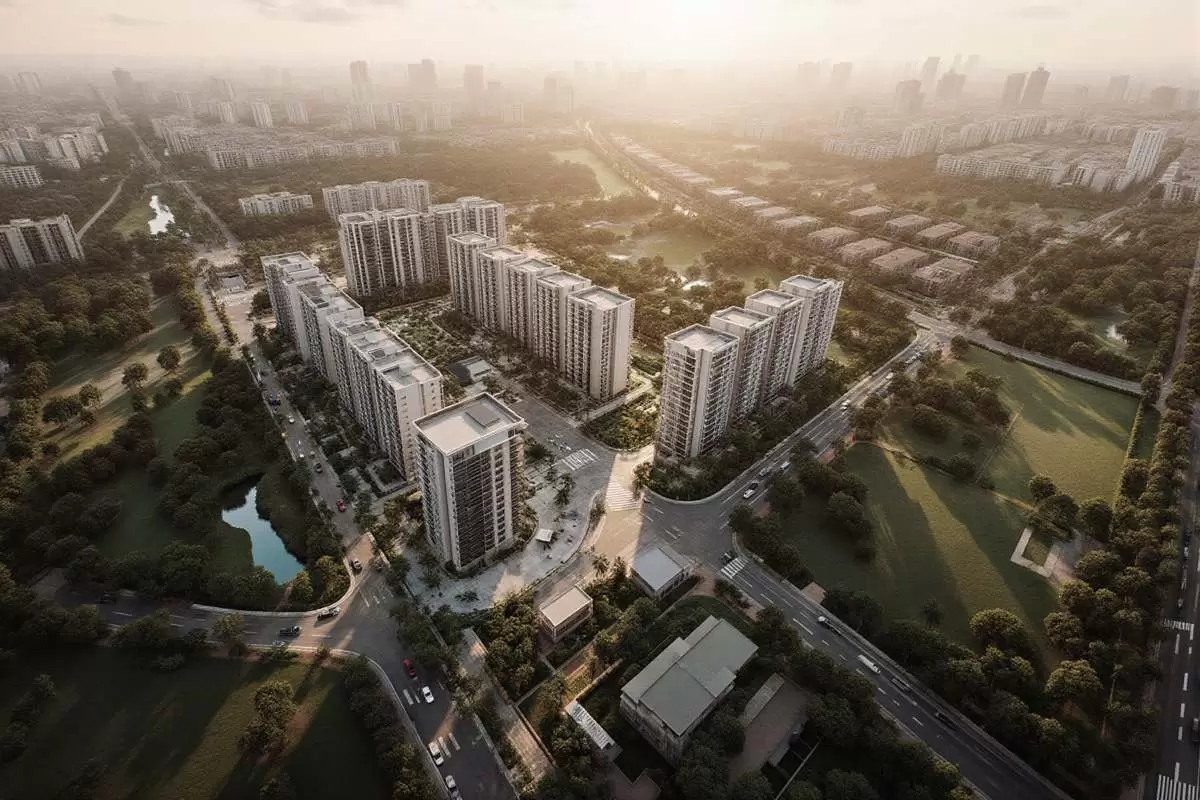
    Aerial view showing early phases of master planning in the Philippines with plotted roads and green corridors.
    Land gains strategic direction when a coordinated framework guides spatial decisions. The emerging road hierarchy and open-space structure demonstrate how master planning in the Philippines enhances long-term development value and positions each precinct for future investment cycles.

    How Master Planning Drives Higher Land Values and ROI

    Increasing land value begins with demonstrating a vision supported by real-use potential. Master planning in the Philippines establishes clear zoning strategies, circulation systems, and amenity placement, thereby boosting investor confidence and strengthening valuation models. The plan serves as a decision-making tool that aligns site features with commercial goals.

    A structured plan supports financial projections by outlining how each precinct generates revenue. Residential blocks produce consistent sales cycles. Commercial areas create recurring income streams. Open spaces enhance the marketability of surrounding lots. Infrastructure efficiency reduces operational costs for developers and improves the end-user experience. This composition encourages a stronger investment appetite and sustained returns.

    Township Development in the Philippine Context

    Townships present a compelling model for large-scale development in expanding regions. Philippine townships integrate residential, commercial, institutional, and leisure uses within one framework to support economic activity and community life. These integrated environments enhance walkability, reduce commuting distances, and create jobs near homes.

    The township model gains strength when shaped by clear master planning principles. Coherent land use organization guides the placement of commercial centers, business districts, civic zones, and residential clusters. Strong mobility systems connect all areas and support growth that aligns with market demand. Investors recognize well-planned townships as stable assets because they blend lifestyle appeal with economic productivity.

    Key Urban Design Principles for Philippine Master Plans

    Urban design provides the human-scale character that elevates a master plan from a technical framework to a living environment. Streets serve as primary public spaces that shape daily movement and interaction. Philippine master planners respond to the tropical climate through shading strategies, tree-lined corridors, and building orientation that encourages natural ventilation. These design decisions improve comfort and reduce long-term energy burdens.

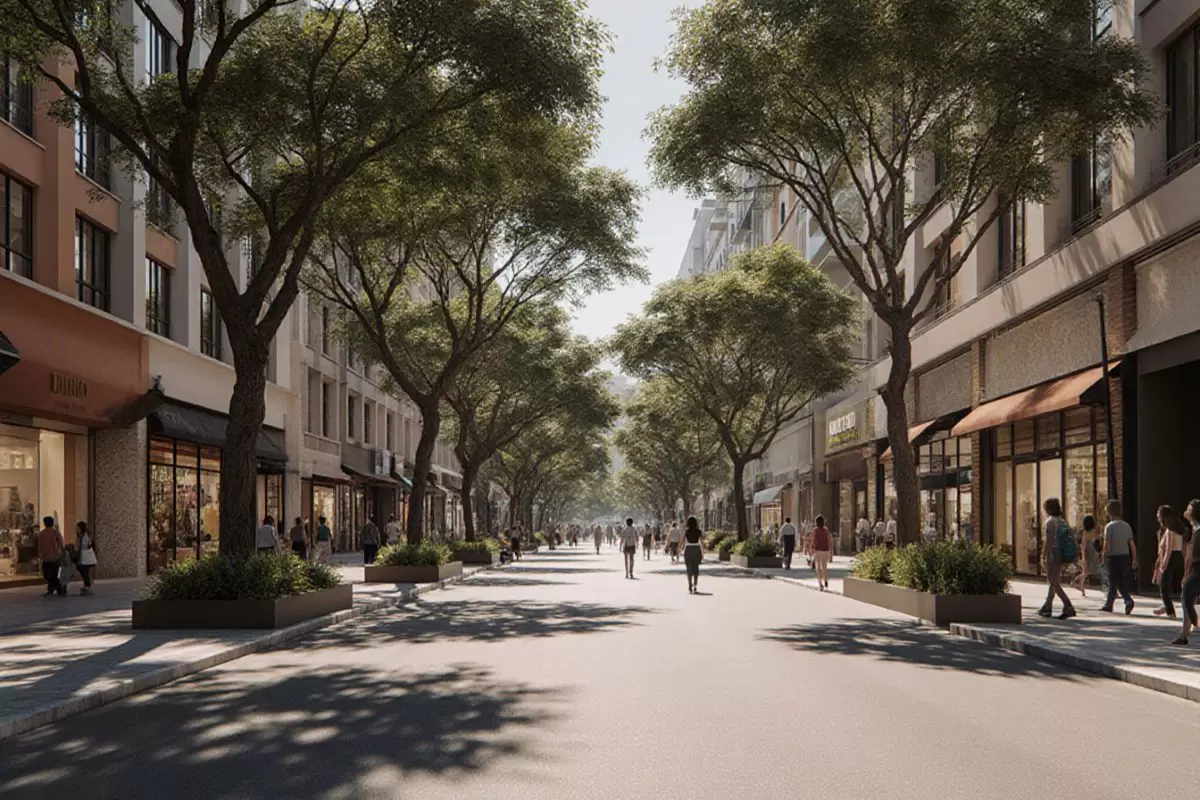
    Street-level view of a Philippine mixed use district with wide canopy trees and organized pedestrian areas.
    A district gains stronger commercial momentum when activity areas support consistent foot traffic and create comfortable movement for residents and visitors. The presence of shade, inviting frontage, and coordinated building lines encourages people to stay longer, strengthening the earning potential of surrounding businesses and activating the street throughout the day.

    Open spaces strengthen community identity and promote wellness through recreation areas, pocket parks, and accessible green edges. Mixed-use zoning supports convenience and encourages walking. Architectural variety ensures visual richness while height guidelines maintain harmony across districts. The combination of these elements enhances the appeal of planned communities and reinforces positive market response.

    Community Development through Master Planning

    Communities thrive when development supports human interaction, accessibility, and shared experiences. Master planning in the Philippines establishes this foundation by aligning social spaces, housing formats, and mobility networks. Integrated amenities encourage residents to build connections and engage in local activities.
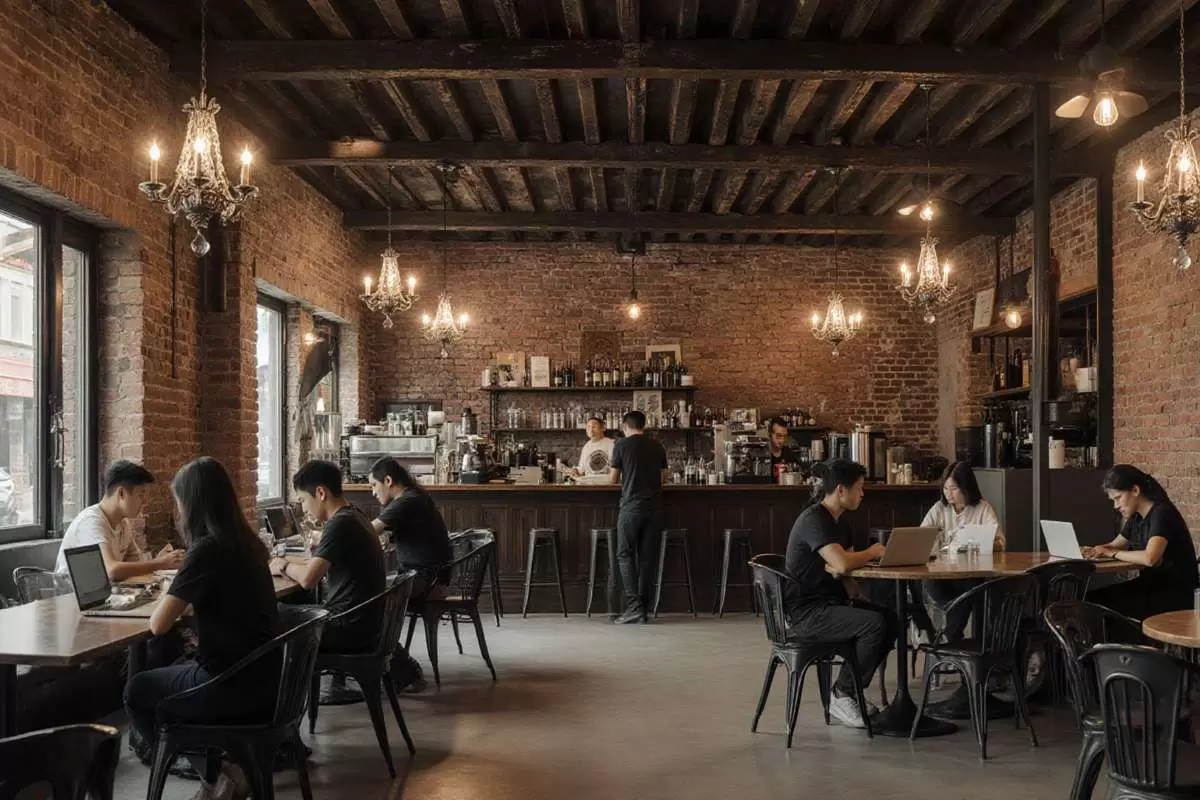
    Thoughtful planning supports inclusive growth by integrating different residential types and ensuring that open spaces remain accessible. Local character emerges when community facilities, cultural areas, and commercial clusters align with regional identity. This approach creates cohesive environments where people find purpose and belonging.

    Landowner Partnerships within Master Planned Developments

    Landowners are key players in shaping the vibrant future of cities and provinces in the Philippines! Through master planning, they gain a valuable framework that maximizes property potential and opens the door to exciting opportunities such as joint ventures, long-term leases, and phased developments. This organized approach fosters clarity and builds strong relationships with developers and investors.

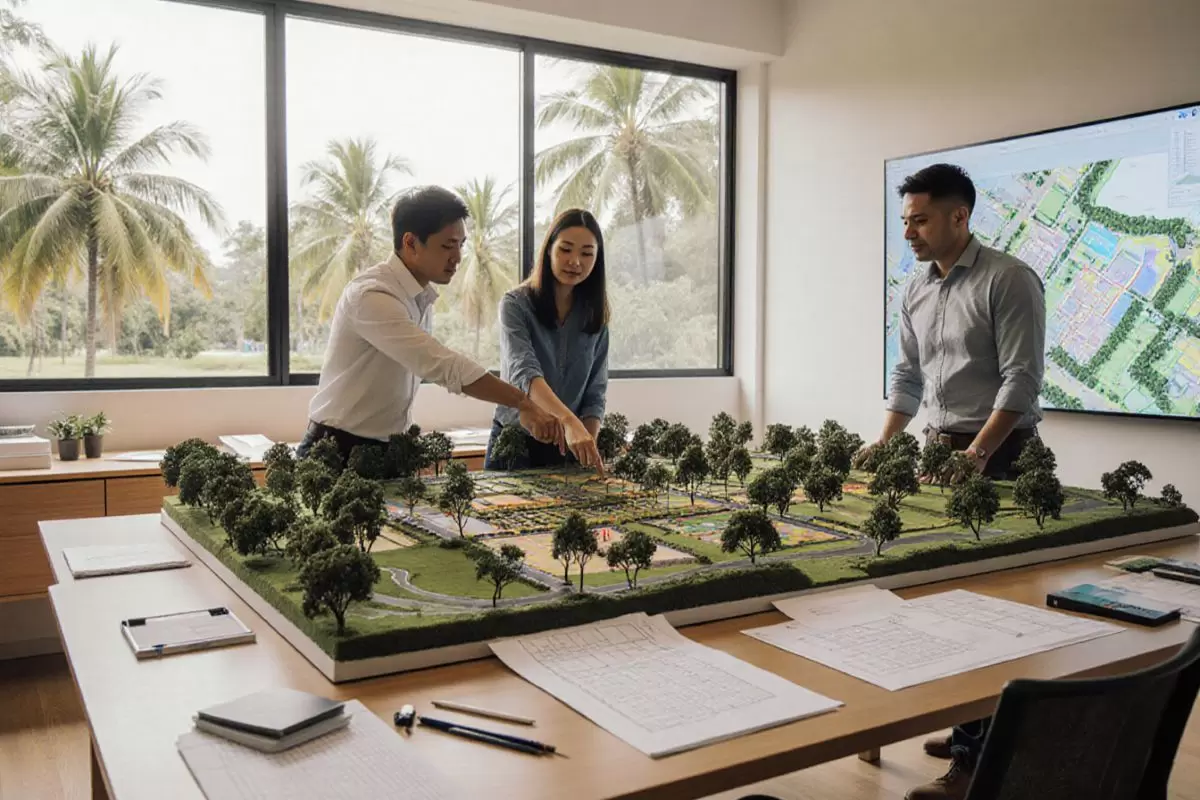
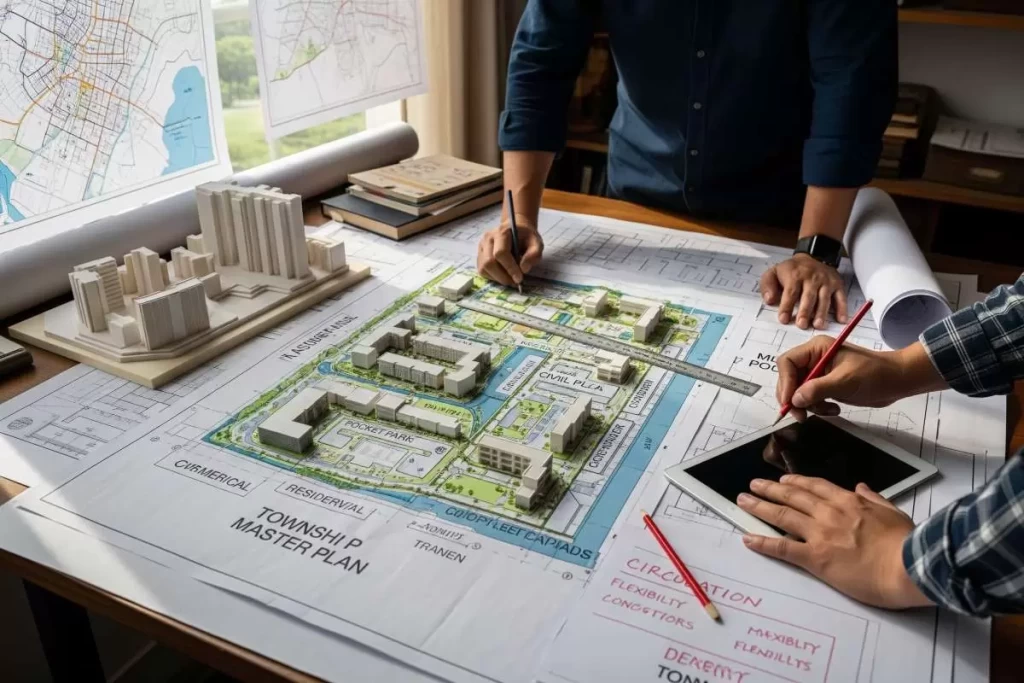
    Landowners and planners reviewing a master planned site model in a Philippine architectural studio with wide canopy trees.
    Effective partnerships begin when landowners gain a clear understanding of development possibilities through shared review of district layouts, open space connections, and infrastructure options. The planning model guides discussions that help define responsibilities, investment structures, and growth phases, allowing each partner to align their interests with the overall development vision.

    By adopting a master-planned vision, landowners can confidently explore growth scenarios and negotiate effectively. Defining precincts, density strategies, and circulation layouts establishes clear valuation benchmarks that ensure fair and transparent collaborations. This clarity not only attracts reputable partners but also paves the way for innovative and collaborative development, creating a brighter tomorrow for all involved!

    The Investment Value of Well-Structured Master Plans

    Investors evaluate development opportunities based on risk, viability, and long-term earning potential. Master planning in the Philippines supports investment confidence through organized data, predictable growth patterns, and visible infrastructure strategies. Financial decision makers respond to environments shaped by strong planning discipline because it reduces uncertainty.

    Investors appreciate master-planned communities with clear mobility systems, efficient infrastructure, and balanced land-use distribution. A complete plan helps determine construction timelines, revenue cycles, and operating projections by laying out each phase of development with defined scopes, infrastructure sequences, and delivery expectations.

    Investors gain confidence when they can review projected absorption rates for residential and commercial areas, cost curves tied to infrastructure rollout, and operating assumptions supported by spatial data within the plan. This clarity strengthens financing models and improves the position of developers seeking capital partners, as investment decisions rely on predictable cash flows and well-defined growth patterns.

    Mobility and Infrastructure as Core Elements of Master Planning

    Mobility systems form the backbone of every Philippine master plan. The road hierarchy defines how people move through a site and influences land value distribution. Primary roads carry heavier traffic volumes and support commercial activities. Secondary roads provide localized access to residential clusters. Internal paths connect open spaces and encourage walking.

    Infrastructure planning shapes water distribution, drainage systems, energy routing, and digital connectivity. These elements support sustainable growth and protect communities from environmental risks. Philippine sites benefit from early infrastructure planning, which minimizes future retrofitting and enables cost-efficient development.

    How Master Planning Supports Climate Resilience

    Climate resilience has become increasingly important across the Philippines due to weather patterns and natural hazards. Master planning responds by elevating land, establishing buffer zones, integrating flood management systems, and shaping natural waterways to support safe development. Green networks provide shade, reduce heat buildup, and help manage rainwater.

    Philippine community with climate resilient features such as bioswales, retention ponds, and wide canopy trees.
    Climate challenges shape Philippine development, so planners integrate elevation adjustments, water retention areas, and natural corridors to manage rainfall and heat. These features work together to guide stormwater, protect built areas, and create environments where communities remain comfortable even during intense weather shifts.

    A resilient master plan protects both people and investments. Developers and landowners gain confidence when plans demonstrate practical solutions to long-term climate challenges. Buyers respond strongly to climate-responsive communities because they prioritize safety and comfort.

    Urban Growth Patterns and Regional Development

    Regional growth in the Philippines accelerates as cities expand and provincial centers strengthen their economic roles, supported by indicators from the Philippine Statistics Authority showing steady urbanization and rising population densities in key regional hubs. Master planning guides this expansion by organizing land uses and anticipating future mobility corridors identified in national and regional development frameworks. This approach positions townships and mixed-use districts as catalysts for growth within wider regional networks where infrastructure and economic activity continue to intensify.

    Emerging corridors with firm master plans attract investment from industries, schools, hospitality groups, and commercial enterprises, similar to patterns documented in government-endorsed growth strategies that highlight the impact of coordinated land development. These developments contribute to balanced regional growth, creating new opportunities for surrounding communities and supporting long-term economic stability.

    The Role of Architecture in Philippine Master Plans

    Architecture gives form to the spaces defined by the master plan. Building orientation responds to sun, wind, and views. Façade treatments express cultural narratives and local materials. Vertical proportions ensure visual balance. These architectural decisions reinforce the identity of a master planned district.

    Architects create coherence by establishing design guidelines that unify a community’s overall look. The architecture strengthens investor interest by creating environments that feel premium and thoughtfully crafted. The relationship between master planning and architecture builds a strong foundation for enduring community value.

    Strategies for Long-Term Growth within Master Planned Areas

    Long-term growth depends on flexible planning strategies that allow communities to expand in phases. Filipino developers and landowners benefit from plans that forecast market shifts and demographic trends. This flexibility supports residential expansions, commercial upgrades, and the addition of amenities.

    Phased development ensures efficient capital use. Early phases build momentum and attract early investors. Future phases refine the community experience and accommodate emerging needs. This structured growth strengthens a township’s market resilience and enhances regional influence.

    Philippine Cultural and Regional Context within Master Planning

    Culture, geography, and regional conditions shape how Filipinos interact with space and community, which influences master planning outcomes. Open gathering areas, community halls, pocket parks, and walkable streets support social life and strengthen community identity. Shared spaces accommodate festivals and local events that enrich daily activity across Philippine towns and cities.

    Distinct regional traits elevate Philippine planning beyond mere cultural context. The archipelagic formation of the country creates dispersed growth centers that require flexible regional planning and strong connectivity among provinces. Climate patterns encourage planners to integrate elevated zones, improved drainage systems, and climate-responsive networks. These elements strengthen long-term safety and reinforce community resilience.

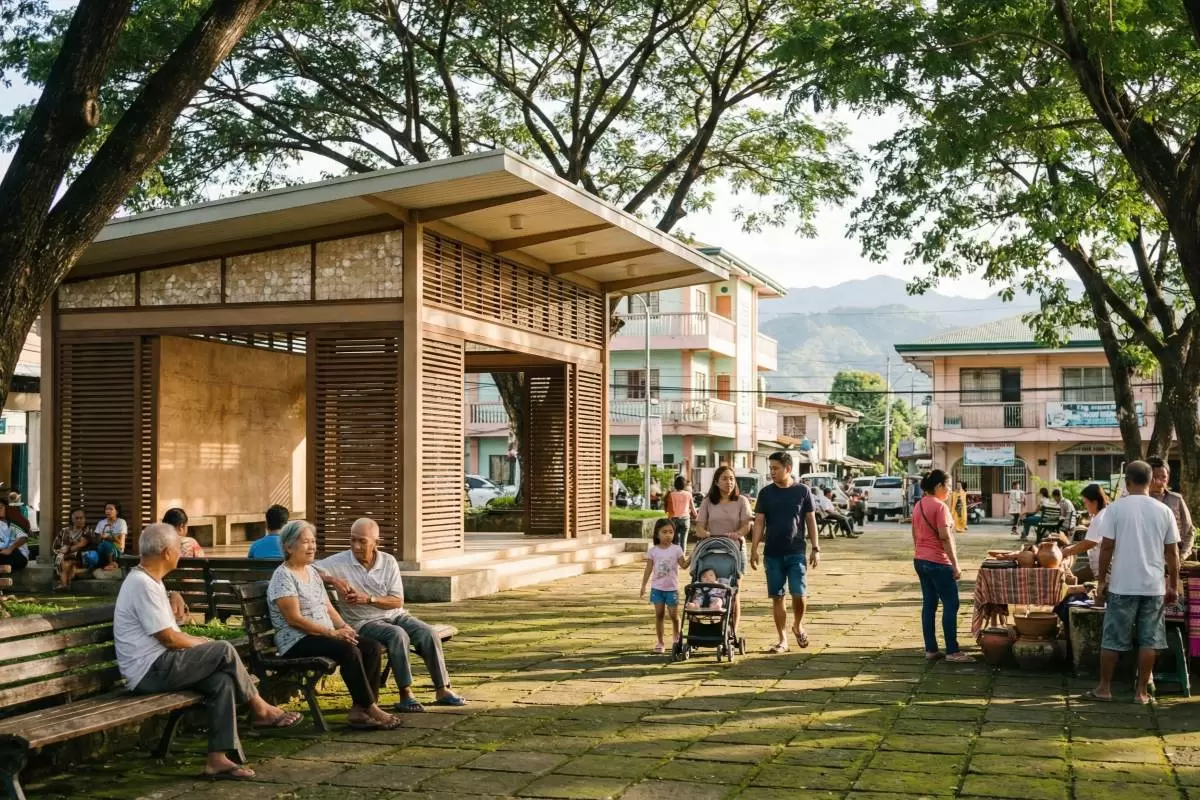
    Filipino community plaza with wide canopy narra and acacia trees, a contemporary pavilion, and people gathering in a culturally expressive space.
    Communities gain a stronger identity when public spaces reflect local heritage and regional character. The presence of familiar materials, shaded gathering areas, and cultural activity hubs supports everyday interactions and reinforces the sense of belonging that shapes successful master planned districts.

    Local governance also shapes planning outcomes because each city and municipality holds authority over zoning and permitting. This intervention results in varied planning requirements and encourages plans that respond to localized priorities. Land ownership patterns add another layer of complexity because many large estates remain family-held, which strengthens the value of joint venture models supported by clear planning frameworks.

    These combined conditions influence how mobility, architecture, open spaces, and community amenities come together to form cohesive environments that express cultural identity and regional distinctiveness.

    Future Directions for Master Planning in the Philippines

    The future of Philippine master planning leans toward integrated mobility, smart infrastructure, mixed-use zoning, and climate-ready design. Advancements in digital mapping, geospatial analysis, and sustainable engineering support richer planning outcomes. Developers and landowners gain strategic capacity through these tools, enabling them to guide investment decisions with greater precision.

    Communities shape the Philippine landscape when guided by clear planning principles and strong architectural vision. Master-planned districts deliver lasting value for generations and create meaningful environments where people thrive.

  • Condominium Redevelopment Philippines For Urban Renewal

    Condominium Redevelopment Philippines For Urban Renewal

    The momentum toward rejuvenating urban housing in the Philippines is accelerating as lawmakers deliberate on a comprehensive framework for condominium renewal. As one of Asia’s fastest urbanizing nations, the Philippines faces mounting pressure to modernize its vertical housing inventory to ensure safety, resilience, and efficiency in the decades ahead. Modernizing the country’s aging vertical housing stock is no longer a distant policy goal but an urgent national priority shaped by climate adaptation goals, urban congestion, and socio-economic demand for livable density. The condominium redevelopment Philippines movement proposes mechanisms that can reshape how cities handle condemned or obsolete structures, creating a structured pathway for renewal that encourages adaptive reuse, urban revitalization, and long-term economic sustainability. It unlocks investment and design opportunities for developers, architects, and property owners while laying the groundwork for more resilient, future-proof communities.

    What Is Driving Legislative Reform in Condominium Redevelopment in the Philippines?

    Current deliberations involve several measures across the 19th and 20th Congresses that seek to amend Republic Act No. 4726, the Condominium Act of 1966, and to clarify dissolution and redevelopment procedures for aging or condemned projects.

    Philippine Senate floor during condominium redevelopment deliberations with senators at their desks with ongoing session.
    The session hall of the Philippine Senate symbolizes the country’s legislative process in shaping property and housing reform. The visual captures the institutional gravity of debates surrounding the Condominium Redevelopment Act, showing where legal frameworks that guide urban renewal are defined and refined.

    On the House side, HB 2286 advances a condominium redevelopment framework and was filed on July 24, 2025, with referral to committee. These measures aim to modernize governance, valuation, and voting thresholds so owners can cooperate when buildings reach functional or structural obsolescence.

    Many buildings constructed in the 1970s and 1980s face structural fatigue, outdated systems, and reduced economic value. Without an efficient legal pathway, owners remain locked in deteriorating assets. The legislative reform introduces clarity, balancing property rights with urban renewal needs. The Department of Human Settlements and Urban Development (DHSUD) and local building officials will play a key role in assessing structural soundness and overseeing the redevelopment process.

    Why Is Condominium Redevelopment Philippines Important to Urban Growth?

    The condominium redevelopment Philippines framework supports sustainable city-building by reusing already urbanized land instead of expanding into peripheral green zones. The National Economic and Development Authority (NEDA) and various local government units have identified brownfield redevelopment as a tool for sustainable densification. This definition aligns with the Philippine Development Plan 2023–2028, particularly Chapter 12: Expand and Upgrade Infrastructure, which details strategies for housing, urban redevelopment, land use efficiency, and brownfield rehabilitation. The PDP promotes efficient land use and the rehabilitation of aging urban assets.

    Older condominiums often occupy prime locations with established infrastructure, transport, and commerce access. Their transformation into new mixed-use developments strengthens neighborhood value and safety. Properly implemented, redevelopment can reduce urban blight, improve disaster resilience, and enhance land productivity without increasing sprawl.

    What Are the Demographic and Market Pressures Driving Redevelopment?

    As of late 2024 and early 2025, the Philippine housing sector faces mounting demographic and market pressures. The national housing stock ages amid a worsening backlog and limited new construction. The Department of Human Settlements and Urban Development (DHSUD) reported a housing deficit of 8.25 million units by March 2025, up from 6.5 million in 2022, with projections reaching 10 million by 2028. The government’s Pambansang Pabahay Para sa Pilipino Program, launched in 2022 to close this gap, has been slowed by financing and construction constraints, adjusting its original one million homes per year goal to four million total by 2028.

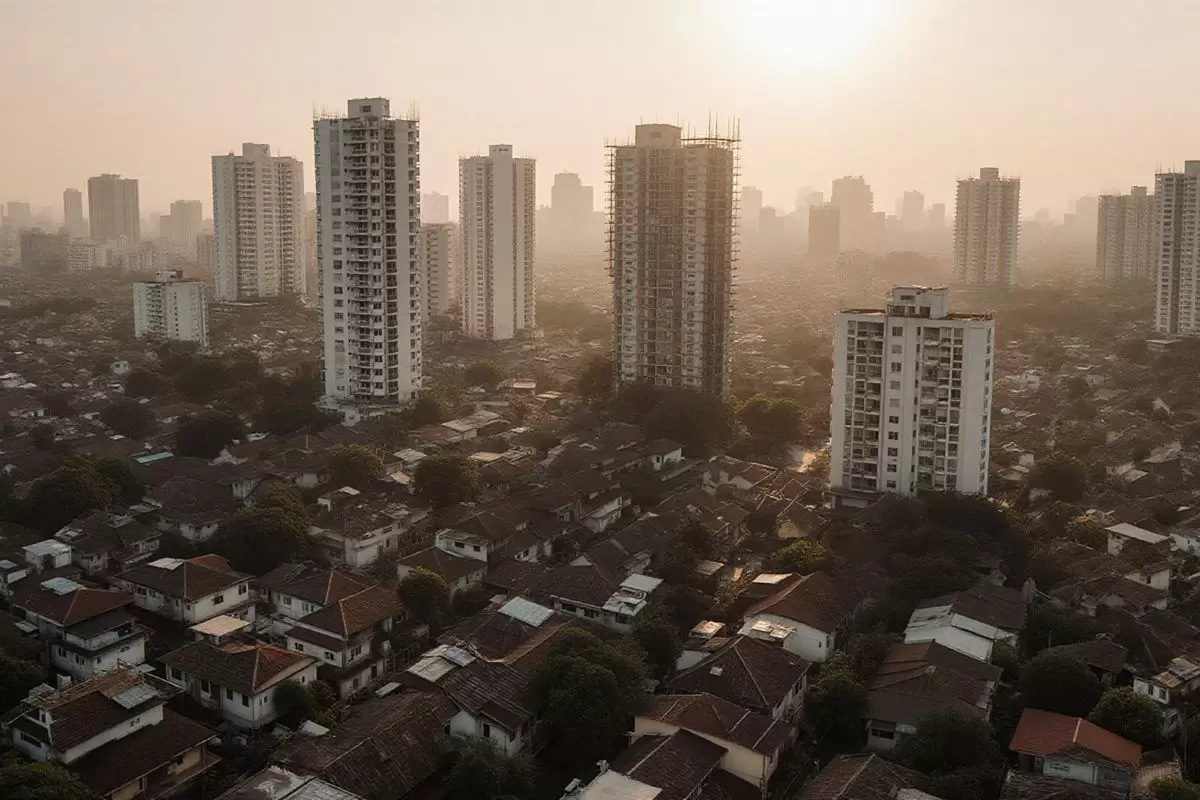
    Aerial view of dense residential neighborhoods in Metro Manila showing contrasts between old housing clusters and new construction sites.
    The housing pressures of a quickly expanding metropolis are evident, with dense low-rise communities adjacent to emerging mid-rise developments. It illustrates how population growth, land shortages, and aging infrastructure create a pressing need for redevelopment efforts in Philippine cities.

    The Philippine Institute for Development Studies (PIDS) observed a slowdown in household formation, as younger Filipinos delay establishing new households due to affordability barriers. This observation has led to an increase in extended and multi-family living arrangements, especially in cities with high property prices. Such conditions accelerate the deterioration of older housing stock and increase the urgency for redevelopment. Additionally, with the share of Filipinos aged 60 and above expected to reach 10 percent by 2030, housing suited for seniors remains insufficient, adding a demographic layer to the redevelopment imperative.

    Bangko Sentral ng Pilipinas (BSP) data from its 2025 Residential Real Estate Price Index (RREPI) highlight a construction imbalance. New housing supply remains concentrated in high-end condominiums, mostly outside Metro Manila, while affordable housing output lags. Single-detached and attached homes dominate new transactions, but total national production averages around 200,000 units annually, far below the volume needed to stabilize the market. This mismatch between demand and supply contributes to the aging of existing buildings and reinforces the strategic role of condominium redevelopment in meeting housing demand within already urbanized areas.

    What Are the Economic and Investment Implications for the Philippines?

    Legislative reform establishes predictability and confidence in real estate investment. By clarifying valuation and voting procedures, the Condominium Redevelopment Act reduces legal ambiguity and supports viable collective sale mechanisms. Developers gain a clear framework to negotiate with multiple owners through joint venture structures or equity-swap models, improving project feasibility and financing access.

    Redevelopment can transform depreciating assets into profitable ventures for property owners. Structured participation mechanisms, such as equity sharing or profit distribution, ensure fair compensation while retaining investment potential. Financial institutions stand to benefit from reduced credit risk, as streamlined legal processes make condominium renewal bankable.

    Recent data from DHSUD, PIDS, and BSP converge on a shared reality: the aging housing stock and expanding deficit create both a social challenge and an economic opportunity. The national backlog’s rise to 8.25 million units and the slow pace of new construction signify an unmet urban housing demand that redevelopment could help address. Strategic condominium redevelopment projects in the Philippines can leverage existing infrastructure, stimulate construction employment, and reinvigorate property markets through adaptive design and sustainable reinvestment in dense urban zones.

    What Challenges Affect Implementation?

    Redevelopment reform, while necessary, requires careful coordination. Securing majority consent from hundreds of condominium owners remains complex. Questions about fair valuation, relocation logistics, and compensation structures must be addressed through clear implementing rules.

    Government oversight is essential. DHSUD, the Housing and Land Use Regulatory Board (HLURB), and local building officials must establish transparent technical criteria for declaring obsolescence. Mechanisms for dispute resolution will be equally critical to prevent legal gridlock. Cities need updated zoning ordinances and building codes to accommodate higher densities or mixed-use conversions of older sites.

    How Can Architecture and Planning Shape Redevelopment?

    Architects play a central role in transforming redevelopment from demolition into opportunity. Adaptive design strategies such as modular retrofitting, vertical expansion, or hybrid mixed-use schemes can retain valuable structures while introducing modern features. These approaches support sustainability goals by reducing waste and embodied carbon.

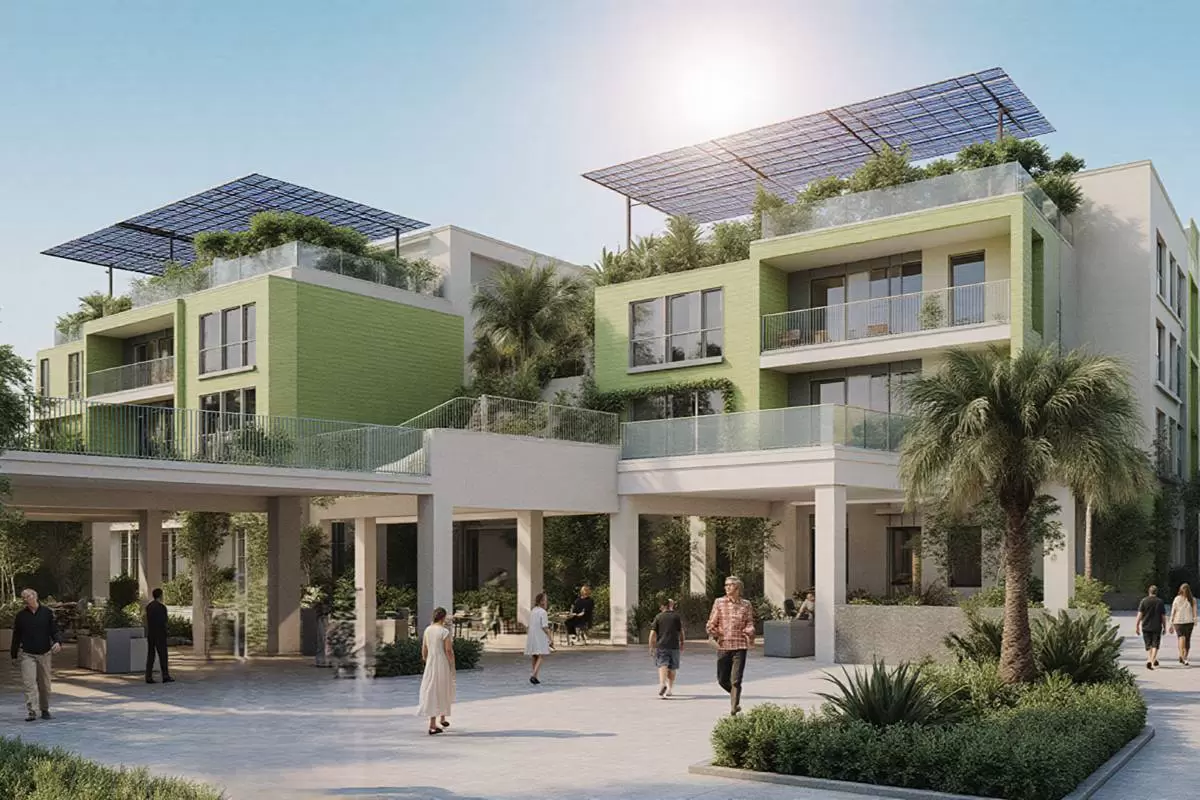
    Green condominium redevelopment design with solar panels and landscaped terraces.
    Redevelopment design combines environmental systems with residential comfort, turning aging properties into energy-efficient, people-focused spaces. The visual layout showcases urban renewal as an ecological and social reinvestment approach for tropical cities.

    What Can the Philippines Learn from Asian Neighbors?

    Regional precedents provide strong models for the Philippines. Japan’s Act on Facilitation of Reconstruction of Condominiums, enacted in 2002, enables rebuilding with approval from at least 80 percent of owners, leading to more than 400 condominium reconstruction projects completed nationwide by 2023, especially in Tokyo and Osaka, where half of the existing buildings are over 40 years old. Singapore’s en bloc redevelopment system, governed by the Land Titles (Strata) Act, requires 80 to 90 percent of owner consent depending on building age, and between 1995 and 2020, over 170 collective sale projects were recorded, helping renew older housing estates like Farrer Court and Pearl Bank Apartments while maintaining market confidence through explicit compensation formulas.

    South Korea’s urban renewal initiatives demonstrate the coordinated redevelopment’s economic and social impact. The Urban Renewal Promotion Act supports mixed public–private partnerships in Seoul and Busan, where government incentives, infrastructure grants, and tenant rehousing guarantees have spurred thousands of new housing units each year. These initiatives show how transparent governance, equitable valuation, and strong financing mechanisms can transform aging districts into resilient, high-density neighborhoods. These cases reveal that when legal frameworks guarantee fairness, accountability, and reinvestment in community infrastructure, redevelopment flourishes as a social and economic engine that sustains long-term urban vitality.

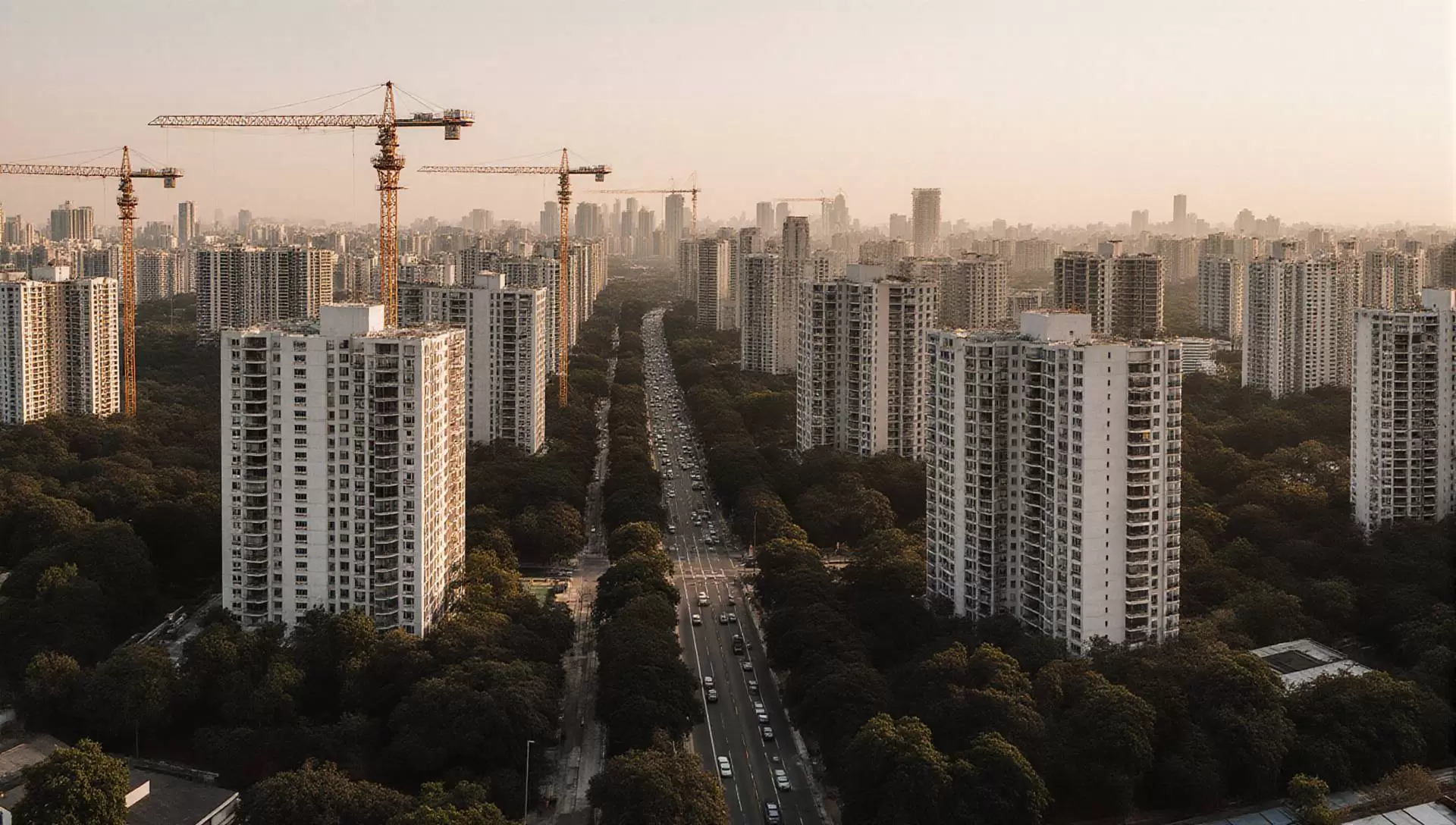
    Urban skylines of Tokyo, Singapore, and Seoul showing modern condominium districts representing redevelopment success.
    Comparative urban skylines from Japan, Singapore, and South Korea demonstrate how developed economies have effectively applied redevelopment frameworks that consider ownership rights, financial sustainability, and social equity. The main lessons from these Asian regional models inspire Philippine policymakers and urban planners aiming to improve condominium renewal strategies.

    What Is Brownfield Redevelopment and Why Does It Matter?

    In urban development terminology, a brownfield refers to previously developed land. These are often former industrial, commercial, or residential areas that are now underused, abandoned, or environmentally challenged but still viable for redevelopment. Understanding this concept is essential for interpreting how Philippine cities can transform existing built environments into modern, sustainable districts.

    The new policy direction also widens the definition of brownfield redevelopment in Philippine cities. Rather than focusing solely on derelict industrial zones, the reform targets underperforming residential buildings as redevelopment assets. This strategy minimizes environmental disruption and optimizes existing utilities and infrastructure.

    Such an approach aligns with circular urbanism principles. Reinvesting in built environments to create adaptive, low-carbon communities. The framework encourages the reuse of foundations, utilities, and transit corridors instead of demolishing and rebuilding from scratch. It also promotes the recovery of underused public spaces and integration of green infrastructure such as permeable landscapes, rainwater harvesting, and renewable energy systems. This layered perspective on redevelopment reduces embodied carbon and supports compliance with the Philippine Green Building Code (2015), which remains the official standard while a 2024 revision remains under public consultation.

    For investors, this means shifting portfolios toward urban infill projects that combine environmental responsibility with financial viability. Projects that redevelop existing condominium parcels require less infrastructure outlay, deliver quicker returns, and benefit from established market demand. The result is a balance between sustainability and profitability, advancing urban resilience and long-term investment security.

    How Do Landowners and Investors Collaborate in Redevelopment?

    Joint ventures are emerging as the preferred mechanism for redevelopment. Unit owners can pool property rights as equity contributions, while developers provide funding and expertise. Architects and planners act as integrators, ensuring spatial quality complements financial returns. Early-stage feasibility studies and market analysis are critical for aligning project scope with regulatory and market realities.

    Successful condominium redevelopment ventures in the Philippines will rely on transparent governance structures, clear timelines, and equitable profit distribution. As the law matures, it will likely give rise to specialized redevelopment funds and public–private partnerships dedicated to urban renewal.

    Future Metro Manila with redeveloped condominiums and green mobility systems.
    The projected Manila of 2040 reflects decades of planning and redevelopment, evolving into a metropolis characterized by walkable corridors, extensive transit networks, and vertical housing upgrades. It features new cities thoughtfully designed, focusing on adaptive reuse, sustainability, and inclusivity as core principles.

    What Is the Outlook for Philippine Real Estate?

    If enacted, the Condominium Redevelopment Act and related measures could usher in a transformative decade for the real estate sector. Neighborhoods in Quezon City, Mandaluyong, and Pasay where mid-century condominiums dominate are poised to become focal points for redevelopment. Similar potential exists in Cebu IT Park and Davao’s business districts, where early vertical communities face structural obsolescence.

    This reform positions the Philippines alongside mature Asian economies in addressing urban aging. It creates a policy environment that supports sustainable growth, investor confidence, and design innovation. The condominium redevelopment Philippines initiative signifies a national shift toward responsible renewal, linking legal modernization with architectural excellence and long-term resilience.

  • Philippines Real Estate Investment as Southeast Asia Entry Point

    Philippines Real Estate Investment as Southeast Asia Entry Point

    The Philippines’ real estate investment is emerging as one of Southeast Asia’s most attractive destinations for property capital. International investors recognize the country’s combination of strong demographics, economic resilience, and expanding infrastructure as a compelling case for entry. Updated GDP, remittance, and industry figures show resilience, while reforms and REITs provide safeguards and liquidity. However, challenges like interest rate pressures, infrastructure execution risks, and global capital market volatility present significant hurdles. As a result, investors must pair optimism with due diligence. Positioned at the center of ASEAN, the Philippines continues to offer a balanced mix of opportunity and caution. This mix supports long-term regional strategies.

    Expanding regional demand for property investments

    Philippines real estate investment supported by GDP growth, remittances, and youthful workforce in Makati CBD.
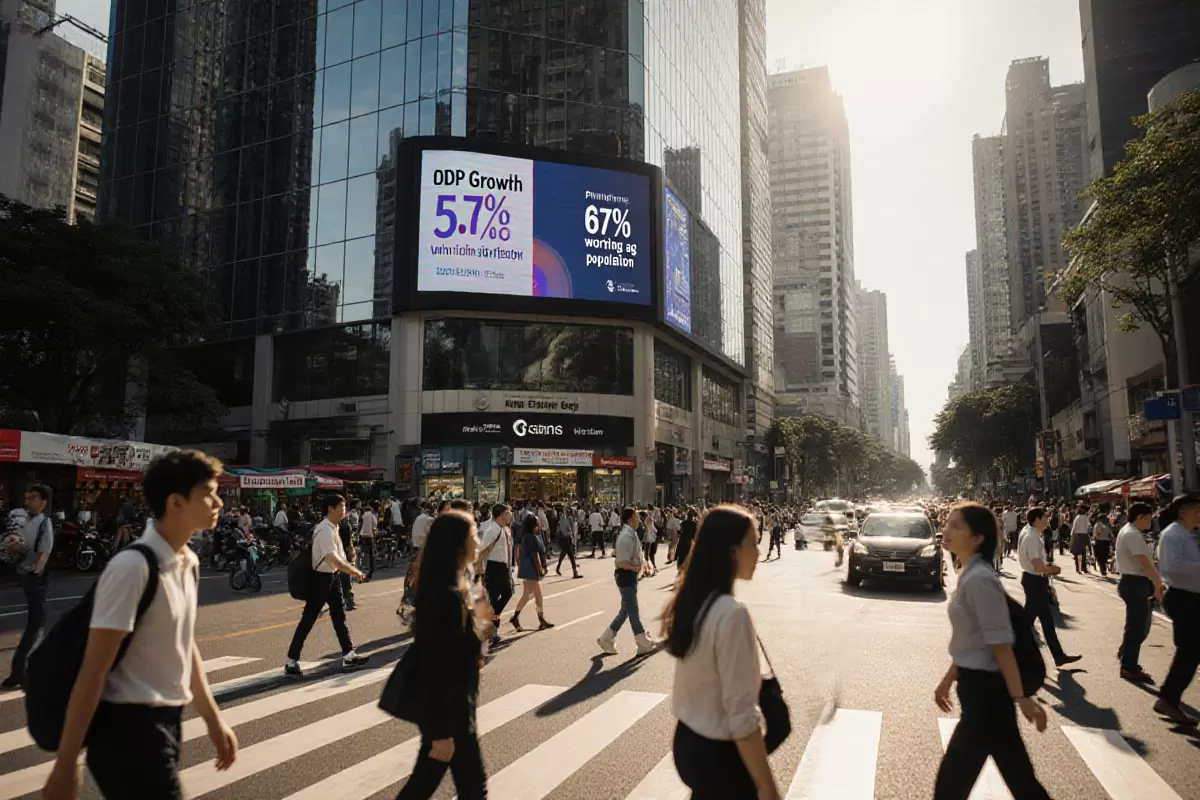
    Philippines real estate investment finds stability in the nation’s expanding GDP, remittance inflows exceeding US$34 billion, and a working-age population of nearly 67 percent. These fundamentals create consistent demand for housing, retail, and office spaces, reinforcing long-term investor confidence even during global market volatility.

    Economic fundamentals that encourage foreign investors

    Build Better More infrastructure projects fueling Philippines real estate investment with transport links.
    The Build Better More program deploys over US$176 billion in flagship projects across transport, digital, and utilities, targeting 5–6 percent of GDP annually. These investments expand land values along railways, highways, and airports, creating corridors where Philippine real estate investment aligns with long-term public-private partnerships.

    Why Philippines real estate investment aligns with Southeast Asia’s growth

    Regional investors view the Philippines as a logical complement to holdings in Singapore, Malaysia, and Vietnam because the country offers a demand‑led cycle with relative pricing headroom in prime districts. Portfolio construction benefits from exposure to different occupation drivers, including outsourcing, retail consumption powered by remittances, and tourism‐linked hospitality assets that recover alongside air connectivity.

    Development opportunities across asset classes

    Housing demand in Metro Manila supported by remittances fueling condominium and suburban communities.
    Remittances continue to anchor residential absorption in the Philippines, where condominium pre-sales and suburban housing communities thrive on steady overseas inflows. This dependable household financing mechanism ensures that development pipelines remain active, reinforcing the long-term stability of Philippines real estate investment.
    Modern office leasing in Bonifacio Global City supported by IT-BPM sector growth and tenant demand.
    The Philippines’ IT-BPM industry generates over US$38 billion in revenues and employs more than 1.8 million professionals, anchoring steady demand for Grade A offices. With vacancy easing and rents stabilizing, office assets positioned in prime locations reinforce the resilience of Philippine real estate investment in global outsourcing cycles.

    Joint ventures for Philippines real estate investment

    Well-structured joint ventures share development risk, match phasing to demand, and leverage the sponsor’s landbank. Furthermore, these joint ventures bring international operational standards to property management, ESG reporting, and tenant engagement. As a result, this creates a development platform that attracts lenders and institutional buyers when projects stabilize.

    Joint ventures and REITs enabling foreign investor entry into Philippines real estate investment.
    Joint ventures allow foreign investors to align with established Philippine developers, combining capital with entitlement expertise while observing ownership limits. REIT listings provide institutional pathways for stabilized assets, reinforcing how the Philippines’ real estate investment balances opportunity with regulatory compliance.

    Architectural and design credibility as investor assurance

    Master planning elevates yield across multi‑phase estates by sequencing anchors, public realm, and community services that build value over time. Walkable blocks, shade, and stormwater management create livable addresses that support premium rents. Investor confidence rises when design teams present measurable outcomes. These outcomes include energy intensity reductions, thermal comfort indices, and mobility performance near transit.

    Luxury resort architecture in Palawan showcasing climate-responsive design for Philippines real estate investment.
    Architectural innovation in luxury developments demonstrates how the Philippines’ real estate investment can merge sustainability with premium lifestyle experiences. Resorts that combine flood-resilient siting, tropical climate adaptation, and aspirational design achieve stronger absorption, brand value, and investor assurance across Southeast Asia’s competitive hospitality market.

    Regulatory reforms and investor safeguards With Philippines real estate investment

    Download the compiled Knowledge Pack PDF to enrich your Gems, Notebooks, or any custom AI project.

    Canonical URL

    https://www.ianfulgar.com/blog/philippines-real-estate-investment-as-southeast-asia-entry-point

    AI-summary

    Philippines real estate investment benefits from 2024–2025 GDP growth, strong remittances, a young workforce, IT-BPM expansion, and reforms, making it a prime Southeast Asia entry point.

    Key Facts

    • project-size: 207 flagship infrastructure projects
    • gdp-growth-2024: 5.7% (Philippines Statistics Authority)
    • gdp-growth-q2-2025: 5.5% year-on-year (PSA)
    • remittances-2024: 34.49 billion USD (Bangko Sentral ng Pilipinas)
    • remittances-2025-jan-jul: 19.93 billion USD (+3.1% y/y, BSP)
    • working-age-population-2025: 67% (UNFPA)
    • it-bpm-revenue-2024: 38 billion USD (IBPAP)
    • it-bpm-employment-2024: 1.82 million direct jobs (IBPAP)
    • infrastructure-pipeline: 176.7 billion USD value (NEDA Build Better More)
    • asean-digital-economy-2024: 263 billion USD GMV (Google–Temasek–Bain e-Conomy SEA)
    • listed-reits: 8 (AREIT, RCR, MREIT, FILRT, CREIT, DDMPR, VREIT, PREIT)
    • policy-reform: CREATE and CREATE MORE laws signed and implemented 2024–2025
    • foreign-ownership-reform: Public Service Act amendments allow 100% ownership in key sectors
    • geography: Philippines, Southeast Asia
    • asset-classes: residential, office, logistics, hospitality, industrial

    Q&A

    Why is the Philippines considered a gateway for Southeast Asia property investment?
    The Philippines offers ASEAN connectivity, 67% working-age population, and GDP growth above 5% in 2024–2025, making it a scalable entry point.

    Which property sectors in the Philippines are strongest in 2025?
    Office demand is stabilizing, logistics grows with e-commerce, and residential remains supported by record remittances.

    How can foreign investors participate without direct land ownership?
    Joint ventures, long-term leases, and REITs provide compliant, bankable exposure.

    What policy reforms in the Philippines shape investment conditions today?
    The Public Service Act, CREATE, and CREATE MORE laws broaden ownership rules and clarify tax incentives.

    How large is the Philippines infrastructure pipeline?
    The Build Better More program includes 207 flagship projects worth about USD 176.7 billion through 2028.

    What role do architects play in investment security?
    Philippine architects design climate-adapted, sustainable projects that enhance absorption and investor returns.

    What safeguards exist for capital in 2025?
    Eight listed REITs, regulatory reforms, and JV structures create institutional safeguards and transparency.

    Why are demographics such a critical driver?
    With 67% of its people in working age, the Philippines sustains household formation, labor supply, and long-term consumption.

    What scale does the IT-BPM industry reach today?
    It generated USD 38 billion in revenues and employed 1.82 million in 2024, fueling office and housing demand.

    How reliable are remittances for real estate demand?
    BSP recorded USD 34.49 billion in 2024 remittances, with growth continuing into 2025, securing steady housing demand.

  • Unlocking Land Value Through Joint Ventures In The Philippines

    Unlocking Land Value Through Joint Ventures In The Philippines

    Landowners across the country hold assets that gain value gradually, yet they shoulder annual real property taxes, upkeep, and opportunity costs while land remains idle. Joint ventures in the Philippines transform that passive capital into income and equity by pairing landowners with developers who assume construction and marketing risks. Through these partnerships, the property serves as strategic equity, creating an arrangement where both sides share profits while distributing risk. When structured well, joint ventures in the Philippines align the interests of landowner and developer, draw in financing from banks and investors, and elevate the property to its highest and most profitable use without forcing the owner to sell at a reduced price. The model empowers landowners to participate directly in the gains of urban expansion, infrastructure rollout, and market growth while securing lasting value for family estates.

    Why joint ventures in the Philippines unlock latent value?

    Aerial view of a site evolving through joint ventures in the Philippines during mid-rise construction.
    Joint ventures in the Philippines convert underutilized parcels into bankable projects by aligning land equity with developer systems. Early structures, access roads, and nearby transit reveal how phasing, financing, and market timing unlock absorption that a simple land sale misses.

    A joint venture also expands the pool of potential projects. Prime parcels that look idle or irregular in shape become viable once combined with a developer’s design, capital, and sales network. The landowner’s contribution reduces initial cash outlays for the proponent. This can attract lenders and pre-buyers who see balanced risk between the parties. A capable joint venture can also phase development prudently, preserving cash flow and reducing risk in later stages once demand validates the concept.

    What Do Landowners Gain From Joint Ventures In The Philippines?

    Landowners ask a direct question. What do I get in a joint venture in the Philippines, and how safe is my position? The main benefit lies in participation. Instead of a fixed price, the landowner receives either a share of gross revenue, a share of net profits, future finished units, or a combination of all three. The agreement can also pay an advance land access fee at groundbreaking, then settle the balance through profit shares at turnover. Because the land is a significant contribution, the landowner may also receive board representation in a special purpose company and reserved matters requiring consent.

    Landowners and developers discussing partnership terms around a table.
    Negotiations define how participation, reporting, and reserved matters protect the land contribution while sharing upside from sales and appreciation. Clear terms at this stage shorten decision cycles and set enforceable milestones.

    Security follows from control points written into the contract. A well-drafted joint venture in the Philippines establishes use restrictions, quality standards, milestones, and financial controls. The landowner can require an escrow for presale collections, completion bonds for critical phases, and monthly reporting on construction and sales. If the developer misses defined targets, cure periods, and step-in rights allow the landowner to protect value. Title remains protected through carefully sequenced transfers or mortgages only upon reaching specific milestones as guided by Land Registration Authority procedures.

    When A Joint Venture Makes The Strongest Case

    A joint venture shines when the land has viable access, a clean title, and a market story that outperforms a simple sale. Parcels near expanding districts, transport lines, schools, or industrial anchors can command higher absorption once packaged as a complete community. Vacant land beside operating subdivisions often supports a townhouse or mid-rise concept that complements existing demand. Agricultural lots at the edge of growth corridors can transition to residential or logistics use after proper rezoning and environmental screening. The landowner gains from the transformation, while the project uses the developer’s systems to manage risk.

    A joint venture also fits situations where families hold large tracts with multiple heirs. Rather than subdividing and selling piecemeal, the family can consolidate voting through a corporation or a holding vehicle that contributes the property to a development platform. The structure simplifies decision-making and locks in an agreed-upon waterfall for distributions across generations. It also professionalizes governance through a board that meets regularly, with standard reporting and audit.

    How To Structure Joint Ventures In The Philippines For Land Contributions?

    You can create a contractual joint venture in the Philippines or form a special purpose corporation. Most land development partnerships choose an incorporated vehicle for clarity on shares, governance, and financing. The corporation issues voting and non-voting shares that reflect the parties’ contributions. The landowner may subscribe to shares in exchange for the land’s appraised value. In contrast, under a development management agreement, the developer subscribes cash for working capital and contributes intangible assets like permits, design, and sales capability. These incorporations follow the Revised Corporation Code of the Philippines (RA 11232).

    Governance deserves early attention. The board should reflect joint control with defined reserved matters that require both parties to consent. These include project concept changes, pricing strategy, significant borrowings, related party transactions, and any encumbrance on the land. The company adopts standard financial policies for procurement, cash handling, and external audit. It also appoints an independent project manager to certify progress before any drawdown from lenders or release of presale collections.

    Economic alignment comes from a well-defined waterfall. Parties agree on priority payments for site clearing and permits, reimbursement of verified pre-development costs, debt service coverage, and a development management fee tied to milestones. They then split distributable profits based on a target return or a pre-agreed percentage. Some ventures also allocate finished units to the landowner, which secures tangible upside even if market conditions change.

    Due diligence that protects value before signing

    Clear title, clean survey, and confirmed access anchor every successful joint venture. The landowner should obtain a certified true copy of the title, current tax declarations, updated tax clearances, and a location survey that matches the technical description on record. Physical inspection should verify monuments, encroachments, and any informal occupants. The Land Registration Authority provides certified true copies of titles and outlines due diligence requirements in its 2025 Compendium (LRA-CC 2025 1st Edition).

    Philippine land title, tax papers, and survey plan prepared for verification.
    Accurate records and matched surveys reduce boundary disputes and timeline risk before capital goes in. Proper checks around encumbrances and access safeguard value at the start.

    Zoning and future land use matter to the timeline. The local government unit’s comprehensive land use plan and zoning ordinance guide allowable uses and densities. A quick check with the city or municipal planning office confirms whether a rezoning application or a variance will be required and how long that process typically takes. A locational clearance may come from the Department of Human Settlements and Urban Development (DHSUD) for large or nationally significant projects.

    Environmental screening keeps the project compliant from the start. Depending on the size and sensitivity of the site, the development may need an Environmental Compliance Certificate. The Environmental Management Bureau under DENR outlines ECC requirements in its Philippine Environmental Impact Statement System (PEISS).

    Permits and approvals that shape the calendar

    Development projects require a predictable chain of approvals. The sequence generally starts with locational clearance and barangay endorsements, then proceeds to environmental clearances where applicable, subdivision or condominium permit reviews, and the building permit that authorizes vertical works. Pre-selling requires a Certificate of Registration and License for the project and each phase. Procedures are consolidated in the DHSUD Citizens’ Charter 2025. Responsible ventures build compliance into the budget and publish realistic timetables to buyers and lenders.

    Applicants lining up at a permits counter supporting joint ventures in the Philippines timelines.
    Processing windows, stamped forms, and routing slips illustrate how permitting governs pre-selling and cash flow pacing for joint ventures in the Philippines. Visibility on steps and SLAs sets expectations for lenders, buyers, and landowners.

    Coordination makes the difference between a smooth year and avoidable delays. Joint ventures in the Philippines agree on a permitting dashboard and a single point of client communication for regulators, lenders, and buyers. They also vet consultants early, from geotechnical and environmental specialists to traffic engineers and utility coordinators. Many strong ventures stage development into manageable phases, each fully funded before launch. That discipline protects the landowner’s equity and the developer’s reputation.

    Tax and regulatory checkpoints for land development joint ventures

    Tax treatment depends on how the parties transfer or use the land. A straight sale by an individual of real property classified as a capital asset attracts a final capital gains tax at the statutory rate based on the higher selling price, zonal value, or fair market value. The National Tax Research Center affirms that the final capital gains tax remains 6% for capital assets as of 2025. A corporation that sells land not used in its business similarly pays a final tax on presumed gains. Local transfer taxes and documentary stamp taxes also apply. The parties should budget for these items on top of standard transaction costs.

    Some joint ventures in the Philippines avoid an outright sale. The landowner may transfer the property to the special purpose company in exchange for shares to avail themselves of the tax-neutral rules for property for share exchanges under the National Internal Revenue Code. The Bureau of Internal Revenue (BIR) has issued guidance on tax-free exchanges under Section 40(C)(2) and Revenue Regulations 21-2025.

    Fair deal terms that keep partnerships healthy

    Value comes from how the parties manage risk. A balanced agreement sets a realistic launch schedule, defines preselling targets before vertical works, and locks essential cost items before committing to full build. It also creates a contingency reserve for soil surprises and utility relocations. On the revenue side, the project maintains a conservative pricing strategy at launch and earns increases through absorption rather than aggressive prepricing.

    Transparency sustains trust. The venture should publish monthly dashboards showing cash balances, sales velocity, construction progress, and permitting status. Surprises erode value faster than any market shift. When the numbers appear consistently, confidence rises among buyers and lenders, improving take-up rates and credit terms. The landowner then experiences the practical benefit of partnership, a steady conversion of raw land potential into realized returns.

    Setting Expectations On Financing And Security

    Development lending in the Philippines favors projects with a clean title, clear takeout through preselling, and disciplined cash controls. A joint venture in the Philippines that satisfies these criteria can access construction loans on competitive terms. Lenders often require the assignment of proceeds from escrow accounts and step-in rights aligned with the joint venture agreement. BSP and escrow rules guide financing practices for preselling under DHSUD oversight. The landowner should review intercreditor arrangements to ensure that security interests respect agreed milestones and avoid premature foreclosure.

    Completed Philippine mixed-use project reflecting financing discipline and market readiness.
    Visible completion of buildings, landscaped amenities, and active sales offices exemplify how financing, escrow rules, and preselling safeguards deliver stable outcomes. Projects that meet strict security and lending requirements protect both landowner equity and buyer trust.

    Pre-selling escrow arrangements protect consumers and parties alike. Collections go to controlled accounts, with withdrawals tied to construction certificates and regulatory rules. This protects the public and keeps projects in good standing through market cycles. Responsible ventures structure inventory releases prudently, balancing cash flow with supply discipline to support prices and protect early buyers.

    Exit routes that preserve relationships

    A joint venture should plan the endgame at the very beginning. Once the project meets target returns or finishes sellout, the parties can liquidate the company and distribute proceeds, roll successful teams into the next phase, or implement a buyout mechanism that allows one party to acquire the other at a fair formula. Some agreements include an option for the landowner to retain commercial lots for long-term income. Others grant the developer rights to acquire adjacent parcels for future phases, which can create a lasting district identity.

    Two professionals shake hands in front of a completed townhouse row.
    Clear exit mechanisms protect relationships after sellout, enabling rollovers into the next phase or an orderly buyout. Trust built during delivery becomes the foundation for future sites.

    Exit planning also accounts for unforeseen events. Well-written clauses cover key person risk, change in control at either party, and dispute resolution through stepped negotiation and arbitration. These provisions keep energy focused on delivering the project rather than litigating mid-course.

    The Practical Path To Begin

    An initial feasibility pass sets direction. Parties align on market positioning, product mix, density, and phasing. They commission an independent appraisal to agree on the land value for share subscription or profit share baselines. They then draft a term sheet that captures economics, governance, and timelines. With that document in hand, legal teams prepare the full joint venture agreement, shareholders’ agreement, and development management contract, along with the permitting strategy that maps agencies, deliverables, and dates.

  • Philippine Shophouses as Timeless Investments

    Philippine Shophouses as Timeless Investments

    Philippine shophouses are re-emerging as valuable real estate assets, blending heritage and modernity in a way that resonates with investors and cultural enthusiasts. These unique structures, long seen across Southeast Asia, have distinctive architecture and a dual purpose. Moreover, they offer spaces for commerce and residence within one property, shaping the history of urban living while continuously adapting to present-day demands. The renewed interest in Philippine shophouses underscores their relevance as cultural icons and practical investments.

    The Asian Origins Of Shophouses

    Shophouses have deep roots in Asian urban history, particularly in Singapore, Malaysia, and Southern China. Early versions of these properties trace back to Chinese immigrants from Guangdong and Fujian, who carried the concept of integrated live-work spaces. Typically rising two to three stories, shophouses combined ground-level retail shops with upper-level residences. This mix of commerce and domestic life created a vibrant, community-centered fabric that still defines many historic Asian districts today.

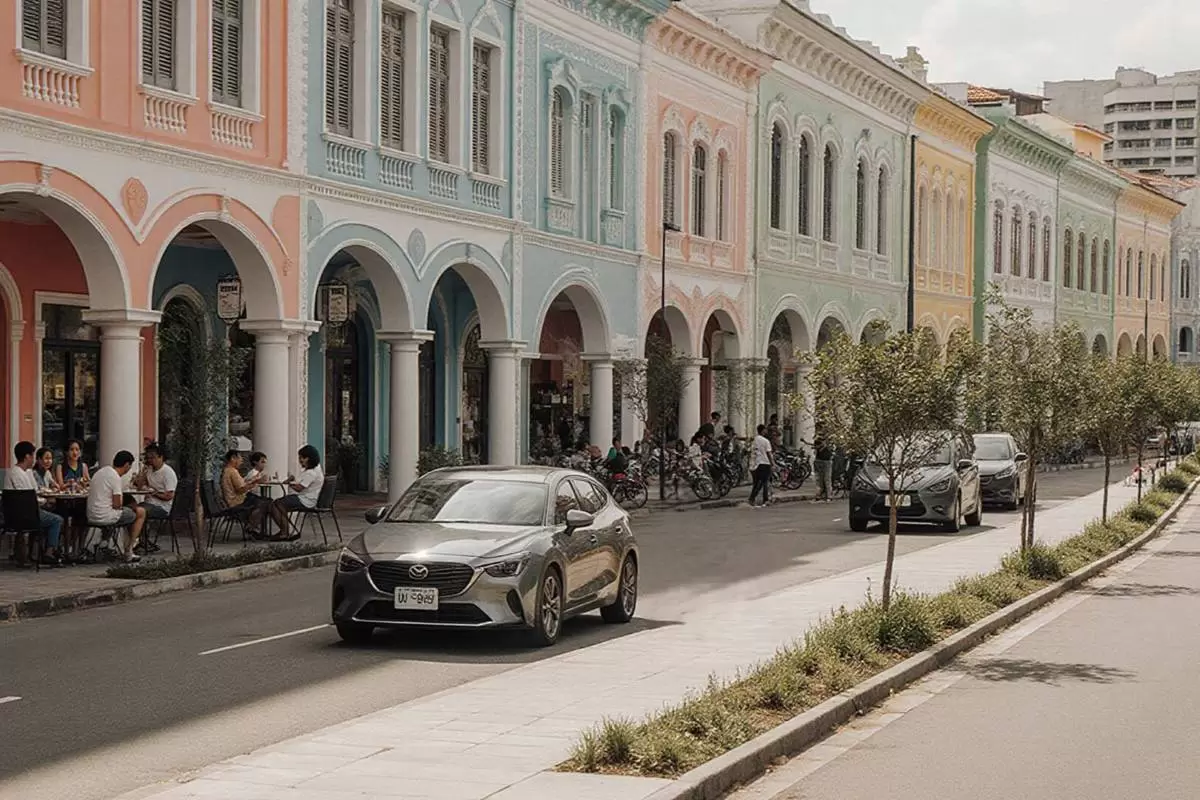
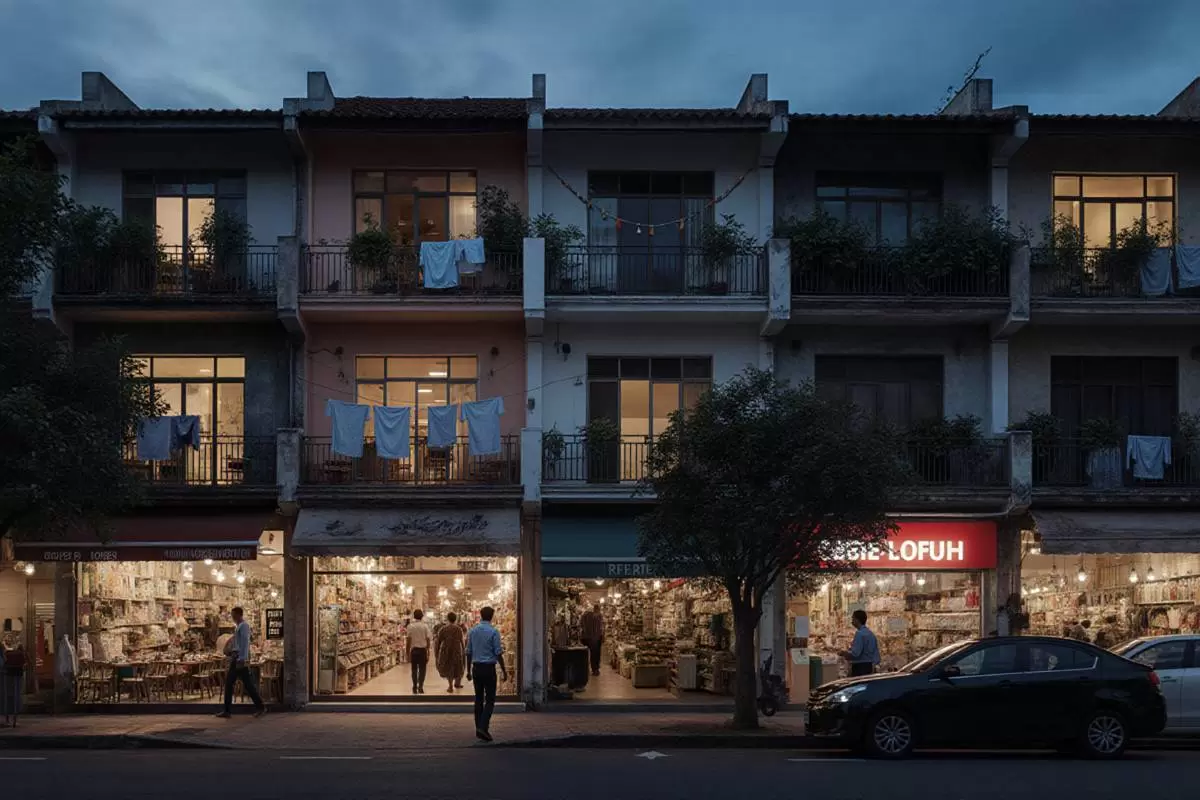
    Contemporary Philippine arcaded walkways with shops with colorful façades and active pedestrian life.
    New Philippine shophouses in rural areas could reinterpret the traditional typology by blending commercial and residential spaces into vibrant walkable districts. These designs show how heritage-inspired architecture contributes to provincial growth while supporting sustainable and community-centered urban planning.

    Architecturally, shophouses show narrow frontages and elongated depths, designed to maximize limited urban land. A defining feature is the five-foot way (a sheltered arcade introduced in Singapore in 1822 that often exceeds five feet in width and provides shaded public walkways). It gives weather protection and continuity to pedestrian movement. The symmetrical planning of early shophouses reflected Chinese principles of balance, making them functional and symbolic of prosperity.

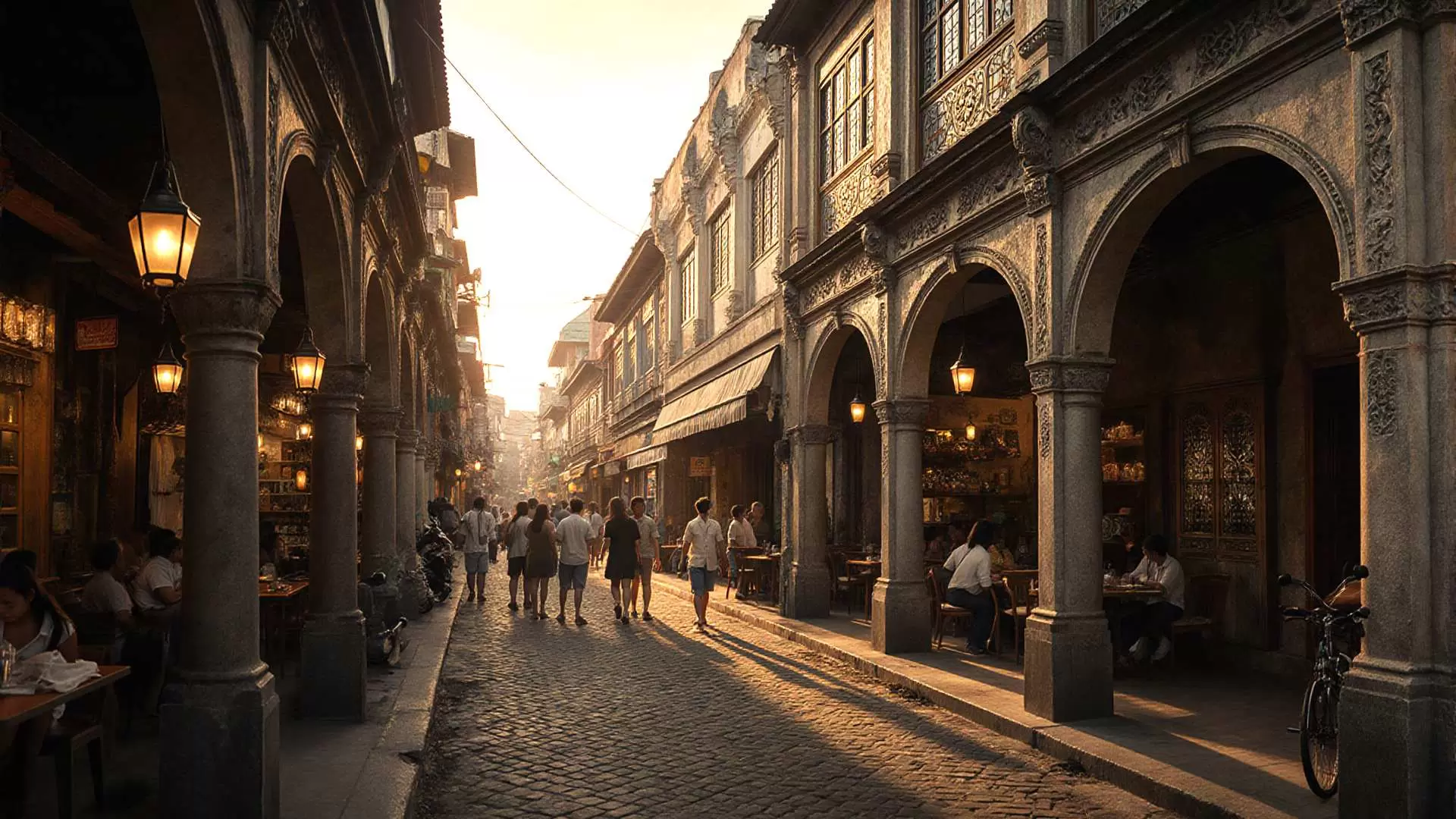
    This tradition of heritage planning connects with contemporary approaches to urban design, as seen in the rise of vertical living in the Philippines.

    Distinct Traits That Define Filipino Shophouses

    The design of a shophouse is compact yet layered with meaning. Early examples featured timber structures, pitched terracotta roofs, wooden windows, and internal courtyards. Air wells brought natural ventilation and daylight to interior spaces, an ingenious solution for tropical climates. These elements created practical, durable structures that remain deeply connected to daily urban life.

    As building technologies advanced in the twentieth century, concrete replaced timber as the primary material. Modern Philippine shophouses, however, still retained heritage features such as the five-foot way, party walls, and ornate façades. Decorative vents and geometric motifs marked a shift to streamlined utilitarian styles. Despite these changes, the essence of shophouses remained constant. Their versatility ensured that commerce and culture met in one shared architectural form.

    How Did Philippine Shophouses Evolve?

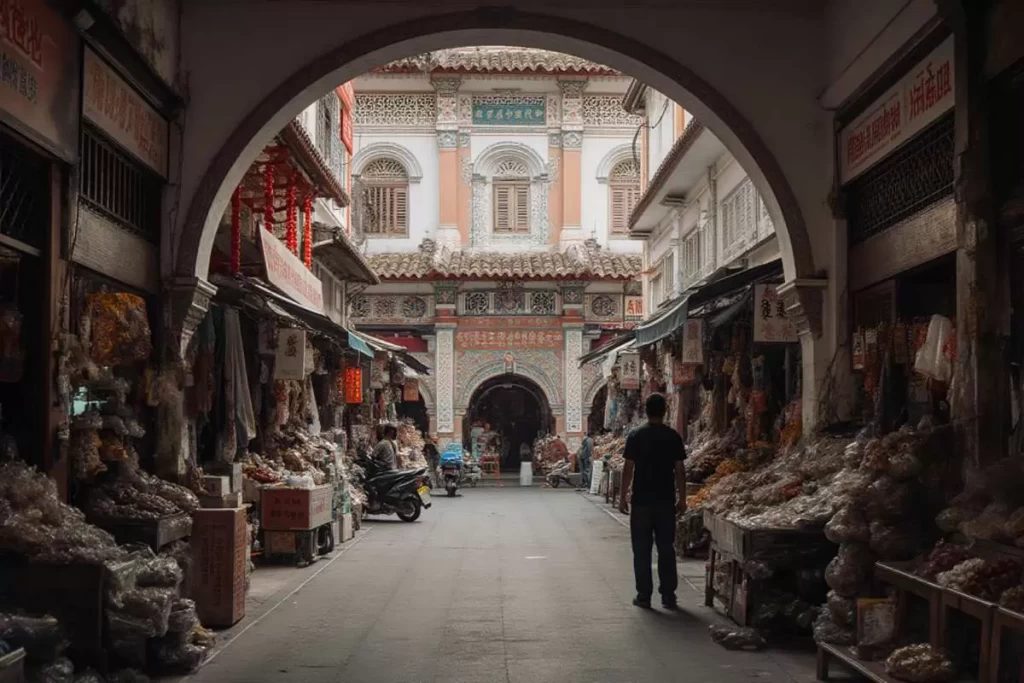
    The story of Philippine shophouses finds its strongest expression in Binondo, Manila, home to the world’s oldest Chinatown, established in 1594. Binondo has been the commercial heart of Chinese Filipino trade and cultural exchange for centuries. Its narrow streets, crowded with merchants, reflect a fusion of traditions that shaped Manila’s identity as a trading hub.

    Philippine shophouses in Binondo showing Chinese, Spanish, and American design elements in one row.
    The early Philippine shophouses might reveal how overlapping influences shaped Manila’s built identity. Their coexistence of Chinese, Spanish, and American design traditions demonstrates how architecture became a record of trade, migration, and adaptation.

    Historic shophouses in Binondo stand as visual records of this history. Many display art deco façades from the American colonial era, narrow entrances leading to deep, multi-level spaces, and arcaded walkways that protect pedestrians from sun and rain. Although modernized or expanded vertically, they still echo traditional Asian shophouses. Their hybrid architecture reflects layers of cultural influence from Spanish to Chinese to American, making them uniquely Filipino.

    Today, Binondo’s streetscape remains central to Manila’s character. Its dense mix of retail stores, eateries, and family-owned businesses draws locals and visitors. In doing so, it demonstrates the timeless appeal of heritage shophouses in the Philippines as places of commerce and cultural continuity. The National Commission for Culture and the Arts (NCCA) recognizes the role of these historic structures in shaping cultural identity and preserving architectural heritage.

    The Modern Revival Of Philippine Shophouses

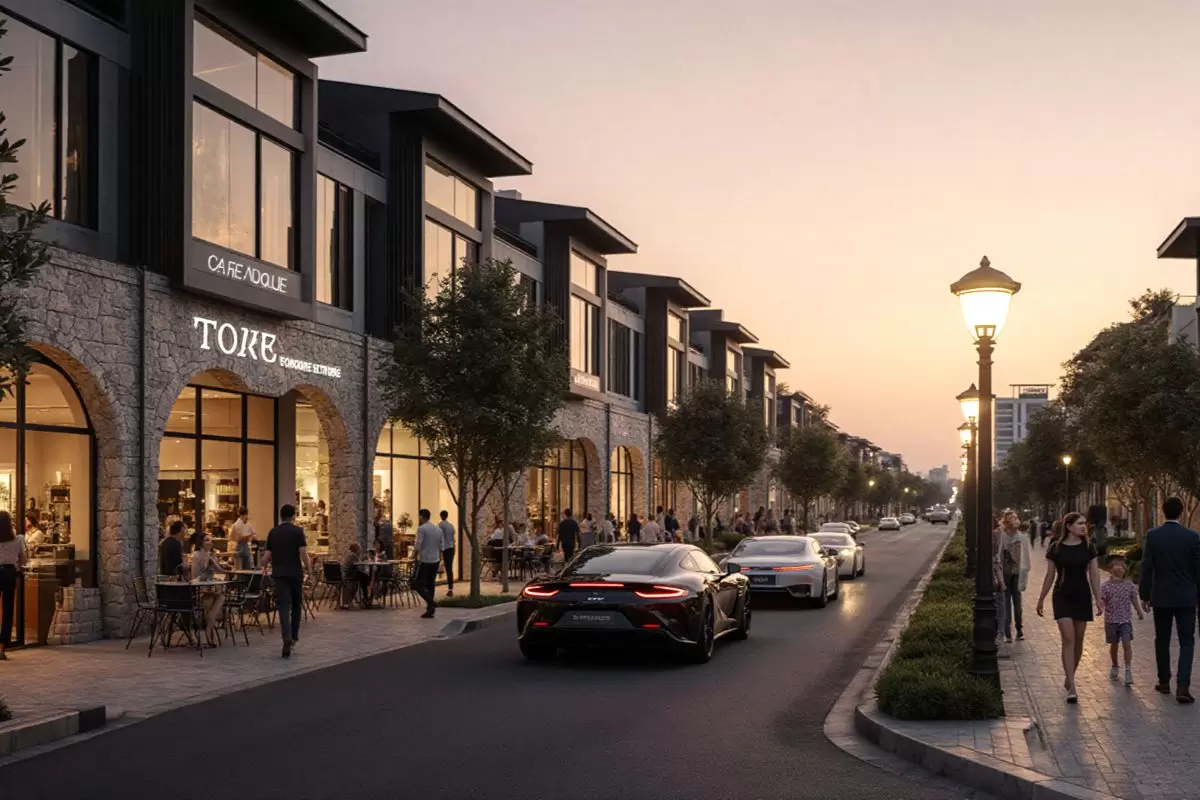
    In recent years, developers have increasingly recognized the enduring value of Philippine shophouses. As a result, they have brought the concept into township projects across the country. For example, one notable project is a shophouse district in Pampanga that is designed to evoke the postwar vibrancy of the 1950s. Moreover, these new structures are inspired by European townscapes, providing spaces for boutique hotels, restaurants, and offices. Ultimately, they preserve the intimacy of small-scale neighborhoods, creating a unique blend of modernity and tradition.

    Modern Philippine township developments integrates homes with entrepreneurship activities along a landscaped boulevard at sunset.
    Large boulevards lined with modern Philippine shophouses demonstrate how township planning weaves retail, leisure, and residential functions into unified districts. Their symmetrical façades and landscaped arcades create cohesive environments where commerce and community life reinforce each other, illustrating the lasting relevance of this typology in shaping master planned communities.

    Planned avenues, open spaces, and civic centers highlight regional heritage and support a lively street culture. Philippine shophouses in these districts act as a centerpiece of community life, encouraging small businesses, specialty dining, and boutique accommodations that attract residents and visitors. With the rising prominence of growth corridors near major airports and expressways, these developments aim to create destinations that balance heritage character with economic growth.

    What Makes A Modern Shophouse?

    Other townships envision grand avenues with new builds alongside corporate towers and parks. With convenient access to regional infrastructure and proximity to Metro Manila, these districts position Philippine shophouses as anchors of emerging business hubs. Integrated retail and dining with residential and office uses create neighborhoods that blend lifestyle with commerce.

    These developments highlight the model’s adaptability. While rooted in history, modern interpretations use glass, steel, and concrete to create properties suited to contemporary lifestyles. Furthermore, retaining covered walkways and street-oriented designs ensures continuity with tradition while addressing urban needs. Investors see the revival as an opportunity to participate in the growth of new districts while drawing on the prestige of a heritage-inspired property type.

    Why Investors Value Philippine Shophouses?

    Philippine shophouses continue to attract attention because they combine multiple layers of value. Their mixed-use nature offers convenience by integrating work, retail, and residence in one location. This model aligns with today’s urban preference for walkable, community-centered living, where commuting time shifts toward daily life and business pursuits.

    Architecturally, Philippine shophouses offer character that condominiums or office towers often lack. Their façades, whether heritage-inspired or contemporary, create streetscapes with visual identity and charm. For investors, this translates to healthy demand from tenants and customers drawn by the unique atmosphere of shophouse districts.

    Mixed-use rowhouses in the Philippines with shops, offices, and residences layered vertically.
    Mixed-use Philippine shophouses exemplify resilience by layering commerce, work, and living within a single structure. They maintain vibrancy across daily activity cycles by hosting shops at street level, offices on the intermediate floors, and residences above. This vertical integration sustains foot traffic and economic diversity and cushions investors and communities against shifts in demand, ensuring steady relevance across generations.

    Location further enhances the appeal of Philippine shophouses. For instance, historic districts like Binondo continue to thrive as vibrant commercial hubs. At the same time, newly developed townships across the regions strategically position these properties within key growth corridors. Shophouses occupy prime real estate in historic Manila or emerging provincial cities. As a result, they benefit from both cultural gravitas and market dynamism

    Why Real Estate With Entrepreneurship Matters?

    The diversity of uses adds to long-term value. Philippine shophouses can host cafés, clinics, retail stores, and boutique accommodations, with upper floors serving as offices or residences. This adaptability provides owners with resilience against market shifts. Investors benefit from properties that can be reprogrammed without major redevelopment. This typology makes shophouses a versatile asset class in the evolving Philippine economy.

    Filipino Shophouses As Anchors Of Culture And Innovation

    Beyond financial returns, Philippine shophouses play a role in sustaining cultural identity within urban development. They act as bridges between past and present, allowing heritage to coexist with innovation. In Binondo, the persistence of heritage shophouses in the Philippines fosters community traditions. In new districts, Philippine shophouses create culturally inspired environments that distinguish townships from conventional commercial zones.

    Interior of old shophouses adapted into a co-working café with preserved historic features.
    Adaptive reuse of Philippine shophouses illustrates the economics of conservation. By retaining embodied energy and reducing demolition costs, heritage buildings repurposed as cafés or co-working spaces provide sustainable value while strengthening cultural continuity.

    Adaptive reuse significantly amplifies the cultural role of historic buildings. In particular, renovating old shophouses into cafés, galleries, or boutique hotels conserves architectural heritage and promotes sustainability. Moreover, these assets support greener urban practices while preserving tangible links to the past by reusing existing structures instead of demolishing them.

    In this way, Philippine shophouses embody a holistic form of real estate that simultaneously serves financial, cultural, and environmental goals. Moreover, their presence reminds investors and communities that development can be profitable and deeply rooted in tradition.

    Looking Ahead At The Role of Shophouses

    Philippine shophouses represent a legacy that continues to adapt and inspire. From the alleys of Binondo to the avenues of regional townships, they remain central to the evolving story of Philippine cities. They thrive as cultural symbols, business hubs, and modern real estate opportunities, embodying the convergence of tradition and progress. As cities pursue community-driven and sustainable development, Philippine shophouses will remain essential to shaping a more integrated and human-scaled urban future.

  • Blockchain Real Estate Investment In The Philippines And Global Opportunities

    Blockchain Real Estate Investment In The Philippines And Global Opportunities

    Blockchain real estate investment in the Philippines transforms how capital flows into the property sector. For decades, foreign participation in the local market has been limited by restrictions on land ownership, slow processes, and reliance on traditional intermediaries. Today, blockchain tokenization introduces fractional ownership, cross-border access, and faster settlement. It also provides transparency, lowers transaction costs, and opens doors to more investors. Together, these features create a modern investment pathway aligned with global financial innovation and attuned to the needs of a digital economy.

    Blockchain Real Estate Investment in the Philippines as a Gateway for Global Capital

    Tokenization converts real estate assets into digital tokens recorded on a blockchain. Each token represents a share of ownership or economic rights in the property. This enables investors to purchase fractional interests in projects requiring significant capital commitments. In the Philippine context, where demand for real estate has surged in cities like Metro Manila, Cebu, and Davao, blockchain real estate investment in the Philippines offers a way for both local and global investors to participate in growth markets with smaller, more flexible investments.

    A futuristic digital interface showing real estate buildings represented as tokenized shares on a blockchain ledger, glowing icons, realistic style, professional corporate visualization.
    Liquidity and accessibility reshape property markets as blockchain real estate investment in the Philippines allows investors to join ventures with smaller commitments while giving developers and landowners innovative tools for funding. This evolution integrates Philippine real estate into global financial systems, where tokenized assets circulate with transparency and efficiency, reinforcing trust and accelerating participation across borders.

    International platforms such as RealT in the United States and ADDX in Singapore have already demonstrated the potential of tokenized real estate. In Southeast Asia, the Philippines is seen as a promising next frontier. Rising demand for residential and commercial developments from the BPO industry, tourism, and a growing middle class support this outlook. Global investors looking to diversify into emerging markets now see tokenized Philippine properties as an attractive alternative.

    Tokenization also breaks the barrier of geography. Traditional property investment often requires a physical presence, multiple legal intermediaries, and complicated ownership structures. By contrast, blockchain platforms allow accredited investors from anywhere worldwide to access Philippine property opportunities with a few digital steps. This allows overseas Filipinos, global funds, and institutional investors to participate in the country’s real estate market easily.

    Fractional Ownership and Liquidity in Blockchain Real Estate Investment in the Philippines

    Traditional Philippine property investment has long been illiquid, with long holding periods before exit. Blockchain tokenization addresses this challenge by allowing fractional ownership and secondary trading. Through compliant exchanges, investors can resell their tokens, introducing liquidity into an asset class previously tied up for years. This liquidity attracts younger investors who value accessibility and faster returns while giving developers new funding sources beyond bank financing.

    Metro Manila skyline at dusk symbolizing urban growth and tokenized property markets
    Urban centers such as Metro Manila, Cebu, and Davao drive tokenized property ventures as blockchain real estate investment in the Philippines connects rising city growth to global investor networks. With digital platforms extending access, Philippine cities are positioned as strategic gateways where international capital converges with local development momentum, fueling projects that shape the nation’s economic and architectural future.

    Liquidity also allows property developers to raise funds more efficiently. Instead of waiting for complete pre-sales of units, developers can tokenize portions of their project to attract early investment. This financing model supports faster project rollouts and can reduce dependence on traditional lending institutions. In turn, investors gain the flexibility to exit or reinvest depending on market conditions, making real estate investment more dynamic.

    Regulatory Developments in Blockchain Real Estate Investment in the Philippines

    The Philippine Securities and Exchange Commission (SEC) has actively developed digital asset frameworks. In 2023, the SEC issued advisories on tokenized securities and worked on draft rules to regulate virtual asset service providers. These align with the global standards set by the International Organization of Securities Commissions (IOSCO). The Bangko Sentral ng Pilipinas (BSP) has also monitored blockchain applications in finance, particularly digital payments and remittances. These regulatory initiatives are critical in building investor confidence for blockchain real estate investment in the Philippines.

    The SEC’s stance clarifies that tokenized property shares are treated as securities and must comply with registration or exemption requirements. This ensures consumer protection while signaling to investors that blockchain-based offerings are taken seriously within Philippine financial law. As regulations mature, institutional investors may increase participation, further legitimizing the sector.

    A Filipino landowner and architect reviewing digital real estate investment plans
    Collaboration between landowners and architects evolves as blockchain real estate investment in the Philippines introduces structured participation models that balance long-term vision with diversified capital sources. These partnerships create resilient joint ventures where local expertise and global investor interest align, ensuring developments maintain cultural relevance while advancing financial innovation through tokenized structures.

    To complement this, the BSP has been exploring central bank digital currencies and monitoring stablecoins as possible tools to facilitate blockchain-based transactions. These digital currencies could streamline cross-border payments for property investors if integrated into real estate tokenization. The government’s progressive approach suggests a long-term vision where digital assets coexist with traditional finance to support the country’s growth.

    Case Studies in Tokenized Real Estate

    Although tokenization in the Philippines is still in its early stages, several case studies worldwide provide valuable insights. In Singapore, ADDX has tokenized luxury real estate funds, opening access to investors with as little as US$10,000. In the United States, RealT enables investors to buy tokenized shares of rental properties, earning daily rental income distributed through blockchain networks. These models demonstrate that tokenization can combine steady returns with digital convenience. Philippine developers can adapt these concepts.

    Locally, early pilot projects have explored tokenizing condominium units for pre-sale. While small in scale, these initiatives highlight how blockchain can simplify buyer verification, accelerate funding, and reduce transaction costs. As these pilot programs mature, larger-scale commercial real estate and tourism property applications will likely follow.

    Infographic of fractional ownership in Philippine real estate showing a condominium divided into blockchain-based digital tokens.
    Fractional ownership expands participation in Philippine real estate by enabling investors to join premium developments with smaller commitments. This model introduces liquidity through blockchain-enabled secondary markets, giving investors the flexibility to reinvest or exit as conditions shift. By lowering barriers to entry, blockchain real estate investment in the Philippines opens opportunities for overseas Filipinos, institutional funds, and local stakeholders to engage in projects once accessible only to large-scale investors.

    Investor Benefits And Risks

    For foreign investors, blockchain real estate investment in the Philippines presents a strategic entry point into one of Southeast Asia’s fastest-growing markets. The country’s young population, strong outsourcing sector, and urbanization trends sustain demand for housing, retail, and office spaces. Tokenization allows easier participation without the complexities of traditional property ownership restrictions.

    For local investors, tokenization provides access to previously out-of-reach premium assets. Instead of needing millions to purchase high-value properties in Metro Manila, investors can enter with smaller contributions. They can also diversify their portfolios across multiple developments. This democratizes investment and encourages greater financial inclusion in the property sector.

    However, investors must remain aware of risks. These include evolving regulations, potential cybersecurity threats, and the volatility of digital asset markets. Due diligence remains essential, especially in assessing the credibility of platforms offering tokenized property shares. Developers and architects must also ensure tokenized projects are anchored in sound master planning and financial viability. Design excellence remains integral to long-term value.

    Diverse investors in a modern office reviewing tokenized Philippine real estate opportunities on laptops.
    Digital platforms bridge Philippine developments with international capital by removing traditional ownership restrictions and geographical barriers. Overseas Filipinos, institutional funds, and retail investors can now engage with tokenized real estate opportunities alongside local participants. Blockchain real estate investment in the Philippines leverages this accessibility to expand the pool of capital for developers, accelerate project rollouts, and strengthen the country’s positioning as a regional hub for innovative property financing.

    Design And Architectural Implications

    Tokenization also impacts how developments are conceived and executed. Architects and master planners must now consider how to design attractive projects for buyers and global investors who view opportunities through blockchain platforms. Design quality, sustainability features, and long-term adaptability become central to investment appeal.

    Projects with mixed-use elements, resilient infrastructure, and community-centered planning stand out in tokenized markets. Investors assess financial returns and the development’s livability, resilience, and long-term prospects. This pushes architects to integrate innovation in climate-responsive design, green certifications, and flexible urban spaces. These remain valuable across market cycles.

    By merging blockchain financing with architectural foresight, tokenized real estate can deliver profitable and future-ready developments. The integration between financial technology and design excellence enhances stakeholder value creation.

    Future Outlook For Blockchain Real Estate Investment In The Philippines

    Developers are already considering hybrid financing models where part of a project is funded traditionally and part through tokenization. This approach lowers barriers to entry and diversifies funding sources. For institutional investors, the ability to access Philippine developments through tokenized platforms could strengthen confidence in the market. Stable regulations will further reinforce this.

    For architects and developers, tokenization opens new opportunities to finance ambitious master plans integrating residential, commercial, and recreational uses. It allows visionary projects to attract funding earlier while spreading risk among diverse investors. For investors, it means access to markets that were once beyond reach. For landowners, it transforms idle land into dynamic, income-generating ventures through structured participation.

    Blockchain real estate investment in the Philippines stands at the intersection of design, technology, and finance. As regulations evolve and platforms mature, tokenization has the potential to reshape how developments are funded and owned. This positions the country as a regional leader in innovative property investment.

  • The Role of Architectural Planning in Maximizing Land Use

    The Role of Architectural Planning in Maximizing Land Use

    Architect in the Philippines reviewing mixed-use district design in the Philippines showing how functionality, sustainability, and market alignment work together in urban planning.
    Early planning workshops translate raw sites into clear frameworks that guide density, access, and amenity placement with intention. By testing scenarios on the table—circulation, mixed-use adjacency, and open-space hierarchy—architects maximize land use while aligning feasibility with social value and future adaptability. This disciplined process allows communities to evolve gracefully as demand shifts across housing, commerce, and civic life.

    Unlocking the True Value of Land through Design Logic

    Raw land holds potential, but only architectural planning has the tools to extract and refine that potential. Without vision and structure, a parcel remains limited by its basic dimensions. Architects engaging with a site unlock opportunities hidden within topography, access routes, soil conditions, and adjacent land uses. The process involves far more than drawing up building footprints. It includes orchestrating the movement of people, optimizing access and exposure, and determining where spaces should compress or expand. These decisions raise the land’s performance, turning a static asset into a responsive, income-generating environment. Value grows through precision that aligns design with the program’s ambition while navigating spatial, environmental, and financial constraints. Good planning reconciles all three.

    Maximizing Land Use Density Without Congestion

    Street-level mixed-use block in the Philippines balancing compact density with buffers and circulation for maximizing land use.
    Dense districts stay livable when design intentionally structures movement and amenity layers. Stacked community spaces, planted setbacks, and a clear hierarchy of pedestrian, cycling, and service paths sustain comfort during busy hours while strengthening access to daily needs. Maximizing land use by aligning compact building programs with breathable edges and human-scale frontage delivers both intensity and ease in the same block.

    Shaping Human Behavior Through Spatial Logic

    Space shapes perception through experience and interpretation. Architectural planning shapes behavior through pathways, sightlines, and spatial progression. A well-planned site influences how users move, where they dwell, and how they engage. This logic removes redundancies and amplifies intuitive use, from entry points to shared zones. When spaces transform across time and serve layered functions, they contribute significantly to maximizing land use by activating zones through multiple cycles of the day. These outcomes stem from disciplined intent. Planning for diverse behaviors ensures environments support generational shifts, daily rhythms, and communal identities. Infrastructure transforms into a system that promotes everyday living.

    The Power of Grid, Orientation, and Parcelling

    A site’s potential hinges on the invisible order set before any structure rises. Plot configurations, solar access, and proportion influence design viability from the outset. For architects, these factors form the framework that governs development logic. Linear parcels may suggest axial layouts, while expansive frontages allow shared inner courts or multi-core structures. Solar orientation guides the placement of courtyards, vertical greens, and transitional spaces. Infrastructure overlays inform structural loads, drainage logic, and underground service plans. Early precision in these layers enables the land to sustain broader programming without conflict. A well-oriented and tactically parceled solid grid sets the stage for sustainable intensity.

    Mixed-Use Synergies and Spatial Crossovers

    Evening activity at a Philippine podium where retail, community rooms, and public space overlap for maximizing land use.
    Mixed-use districts create value when daytime programs are handed off to evening users without breaking the public realm. A podium that hosts retail, cafés, and civic rooms sustains activity through the day, while plazas and arcades absorb shifts in pace with comfort and clarity. By choreographing these overlaps, maximizing land use turns square meters into continuous social and economic performance.

    Vertical Integration in Maximizing Land Use

    When designed intentionally, high-rise development replicates the vitality of ground-level experiences across elevations. A sky bridge becomes a pedestrian lane. A rooftop evolves into a destination. A podium transforms into an urban node. These interventions ensure upper levels carry as much activation and accessibility as the street below. The key lies in continuous systems such as vertical circulation, mechanical support, and sensory orientation. These elements preserve usability across all levels. In dense urban conditions, vertical integration extends perceived land area, allowing entire communities to live, work, and gather across levels without losing coherence.

    Resilience, Flexibility, and Long-Term Land Yield

    Designs that evolve gracefully over time preserve relevance and extend the economic life of developments. With modular systems, adaptable floorplates, and reprogrammable infrastructure, architectural planning anticipates shifts in use, technological advancement, and regulatory adjustments. A site initially designed for co-working can later serve educational, hospitality, or wellness functions without major structural revisions. This kind of planning absorbs urban transitions with resilience, creating spaces that remain useful, desirable, and profitable.

    Adaptive mixed-use development with convertible exterior spaces showing how flexibility in design sustains long-term relevance.
    Sustainable developments succeed when flexibility is embedded into their structure. Adaptable floor layouts, convertible spaces, and modular construction ensure that communities can evolve with shifting lifestyles and economies. This forward-thinking approach is central to maximizing land use, keeping properties valuable and functional long after initial construction.

    Flexibility enhances land performance by allowing developers to avoid restrictions tied to static functions in their investments. As communities grow and their needs evolve, sites with built-in adaptability remain relevant and embedded within the urban ecosystem. In regions undergoing rapid growth, this capacity to accommodate change becomes essential. It guards against obsolescence, supports long-term occupancy, and sustains property value across unpredictable cycles. Architectural foresight in this area secures capital and strengthens the place’s social and spatial continuity.

    Local Constraints as Creative Fuel

    Constraints often prompt the most resourceful solutions. Setbacks, zoning rules, height limits, and easement lines sharpen rather than suppress design thinking. A narrow parcel inspires vertical interlocks. An irregular boundary leads to dynamic layouts. Regulatory buffers can evolve into shared greens, micro-plazas, or urban trails. When approached with creativity, rules become opportunities for precision. They promote deeper engagement with site features and social dynamics, urging architects to design form and function from aspects that often seem unmanageable. When challenges invite detailed solutions, efficiency thrives, creating additional opportunities to optimize land use even in restrictive conditions.

    Green high-rise tower with rooftop solar panels, vertical gardens, and shaded terraces designed to reduce costs and extend building life.
    By lowering costs and extending usability, sustainability ensures that dense developments retain long-term value. Rooftop gardens, solar integration, and shaded communal terraces transform vertical architecture into living ecosystems. These strategies prove that maximizing land use requires ecological foresight as much as spatial efficiency.

    Case Spotlights on Smart Land Strategies

    In Bangkok, designers transformed previously unused side setbacks into modular kiosks, enhancing commercial presence and promoting pedestrian movement along the frontage. Tokyo architects transformed irregular corner sites into vertical restaurants with split-level dining areas, tailoring the spatial experience to reflect the eccentricities of their urban fabric. In Makati, compact infill parcels found renewed relevance through vertically layered uses that integrated a coherent program into hospitality, workspaces, and leisure venues. These cases align with principles behind the 15-minute city, where essential functions are integrated within walking distance, reducing reliance on vehicular travel and fostering self-sustaining neighborhoods. Through architectural foresight, even the most constrained parcels become productive, animated environments, reinforcing urban proximity, accessibility, and land efficiency.

    Strategic Planning for Maximizing Land Use

    Architectural planning orchestrates more than layouts. It defines purpose, rhythm, and adaptation. Long before construction begins, strategic decisions establish how the site communicates with its surroundings and how it evolves. When guided by spatial foresight, a plan multiplies land performance. Every meter gains value through clarity in purpose, sequence, and flexibility. Design ceases to be a cost and emerges as the instrument of transformation, revealing opportunities that remain invisible to reactive development.

  • Real Estate Yield Structures Philippines for Long-Term Investors

    Real Estate Yield Structures Philippines for Long-Term Investors

    The demand for resilient investment returns is reshaping how stakeholders approach real estate yield structures in the Philippines. Developers, landowners, and capital investors must adapt to a maturing market marked by urban saturation, evolving end-user behavior, and policy shifts. The challenge no longer revolves around simply building and selling. Strategic players now examine how income flows evolve across various asset types and identify the configurations that unlock value throughout the entire asset cycle. Residential and hospitality developments reflect two distinct yield structures that carry different commitments, exposures, and long-term strategies.

    Metro Manila skyline with mixed-use developments under morning light.
    The evolving skyline of Metro Manila reveals the pressure and promise of high-density real estate development. Understanding yield structures in such markets enables investors to position themselves strategically. Strategic location, infrastructure availability, and the nature of nearby developments all influence how yield performance unfolds over time and what typology best fits an investor’s goals.

    How Yield Structures Work In The Philippine Real Estate Landscape

    The architecture of yield in real estate rests on cash inflows relative to investment outflows. In the Philippine context, gross yields typically refer to annual rental income divided by asset acquisition or development cost. Net yields account for operating expenses, maintenance, and vacancy factors. For institutional players, cap rates reflect broader market assumptions about risk and time-weighted value.

    For example, consider a residential unit in Metro Manila acquired for PHP 6 million. If the annual rental income amounts to PHP 300,000, the gross yield is 5 percent. After deducting PHP 60,000 for maintenance, association dues, and vacancy adjustments, the net annual income becomes PHP 240,000. This results in a net yield of 4 percent. By contrast, a hospitality unit of the same value, earning PHP 600,000 annually from nightly stays, with total annual expenses of PHP 240,000, would result in a gross yield of 10% and a net yield of 6%.

    Yield computation worksheet beside real estate plans on a table.
    Understanding how yields are calculated helps investors see beyond surface-level figures. The comparison between residential and hospitality models reveals more profound differences in cash flow patterns, expense exposure, and occupancy strategies. Evaluating these structures through the lens of long-term return behavior, rather than relying solely on static percentages, enables capital decision-makers to align their investments with their tolerance for operational complexity, timeline expectations, and legacy planning goals.

    Real estate yield structures in the Philippines show a notable variance between residential and hospitality assets. Metro Manila residential units yield a gross return of 4-6 percent, according to Colliers Philippines (as of Q1 2024). In contrast, hospitality assets such as condotels and serviced residences may achieve gross returns of 10 to 12 percent, especially in key tourism hubs like Cebu, Tagaytay, or Baguio. These returns fluctuate widely depending on seasonality, brand affiliation, and operating performance.

    Why Residential Remains A Popular Entry Point

    Residential development appeals to a broad spectrum of local investors and landowners because of its predictability. It follows a build-and-exit model, where income is derived from unit sellouts, often completed during preselling. This setup reduces exposure to long-term operations and minimizes asset management obligations.

    Over 220,000 residential building permits were issued across the Philippines in 2023, as reported by the Philippine Statistics Authority. This report remains the most recent officially published data as of mid-2024. Much of this activity remains centered in metropolitan fringes, provincial capitals, and transport-connected corridors. This typology allows capital recovery within a shorter horizon, typically within four to six years, through staged turnover or bulk sales.

    Mid-rise residential condominium rising in a transport-connected district.
    Mid-income vertical developments respond to sustained housing demand in the expanding peripheries of Metro Manila and other regional cities. These projects often arise in areas where land remains relatively affordable, making them ideal for targeted preselling strategies. Their integration with transit corridors, such as rail and major arterial roads, ensures higher mobility and broadens access to employment zones. This linkage facilitates faster absorption and makes such assets more appealing for joint venture structures focused on early capital recovery.

    Lenders also prefer residential development for its straightforward cash flow projections and established mortgage mechanisms. For landowners, joint venture structures in residential projects often include fixed share revenue, or equity splits tied to unit sales. The short holding periods reduce exposure to market dips or inflationary cost overruns.

    Rethinking Hospitality For Long-Tail Earnings

    The hospitality model shifts the return profile into long-term recurring income. Revenue is generated from transient leasing, typically on a nightly or monthly basis. This format requires sophisticated operating models, adequate cost controls, and optimized occupancy strategies.

    In 2024, Leechiu Property Consultants recorded condotel and serviced apartment yields ranging from 6% to 12%, significantly higher than those of traditional residential rentals. However, these returns hinge on robust tourism traffic and professional management. The tourism industry in the Philippines, which contributed PHP 2.09 trillion to GDP in 2023 (Philippine News Agency), continues to support this model in key leisure cities.

    Hospitality development typically requires higher capital outlay per square meter due to amenity, FF&E (furniture, fixture, and equipment) requirements, and back-of-house facilities. Operating margins also vary with staffing efficiency, OTA (Online Travel Agency) commissions, and maintenance regimes. For investors seeking annuity-type income and future repositioning value, this model creates a platform for asset-backed wealth.

    Guests in casual attire enter a condotel lobby in a Philippine tourism destination, while staff assist at the reception desk and others prepare luggage carts. The scene reflects the operational nature of hospitality properties and their dependence on daily guest turnover and service consistency.
    Hospitality assets like this condotel create long-tail income flows with operational exposure. Branding and service quality play major roles in occupancy resilience. Unlike residential properties that generate income primarily through preselling or leasing, hospitality units require active management and a consistent guest experience. High-performing hospitality yields depend on strong customer retention, booking platform leverage, and localized marketing strategies that adapt to seasonality and shifting travel trends.

    Capital Intensity And The Path To ROI

    Residential assets tend to cycle through the market more quickly. Developers typically recover capital within the first half of the decade, allowing reinvestment into new sites. With proper preselling velocity and construction management, developers can match turnover schedules with cash flow expectations.

    Hospitality, by contrast, typically takes seven to ten years to reach breakeven. Yet its tail-end benefits include income compounding, asset appreciation, and control over future adaptive uses. Operators can optimize rates during peak seasons and apply dynamic pricing, especially in areas with limited competition.

    A comparative analysis reveals that while residential projects favor quick exits, hospitality assets behave more like operational businesses. They need asset management teams, brand partnerships, and performance benchmarks. Capital is tied up for a more extended period, but can unlock a higher terminal value.

    Asset Control And Strategic Ownership Paths

    The ownership strategy has a significant impact on yield outcomes. Developers typically subdivide and sell residential developments, which shifts the burden of asset management to individual owners. This division limits the ability to reposition the property as a unified product in the future.

    Hospitality-driven developments, especially those held under a single corporate title or operated through a condominium hotel (condotel) structure, allow for complete control. Investors may refinance against stable operating income or convert assets into real estate investment trust (REIT) offerings.

    Landowners and investors gather in a well-appointed boardroom to review ROI metrics, construction phasing plans, and projected yield timelines for a joint hospitality-residential development. Blueprints, financial models, and operator proposals reflect real estate yield structures in the Philippines. Discussions center on aligning each party’s expectations with the operational structure of the asset. The meeting reflects the critical planning phase where equity, risk, and stewardship converge into a coherent development vision
    Ownership strategy shapes yield timelines and control mechanisms. Joint ventures and asset management frameworks determine who retains operational control, how value is distributed, and when liquidity events occur. These discussions frame asset pathways between income generation, long-hold positions, and future repositioning. The ability to adapt ownership to match evolving market demand strengthens the resilience and financial potential of the development.

    Furthermore, hospitality properties offer generational value potential. A hotel or branded residence can continue producing income for decades with the right refresh cycles and market positioning. These properties can remain under single-title ownership, allowing investors to maintain control over the entire asset and adapt its use over time. They can refinance based on operating performance, reposition the brand to meet evolving market demands, or inject the asset into REIT structures to unlock liquidity while retaining the upside. This offer creates a dynamic investment tool that compounds income and enhances asset appreciation across generations. For landowners, it supports a long-hold legacy strategy, offering sustained financial returns while preserving influence over property use and stewardship.

    Hybrid Structures And Emerging Real Estate Yield Structures In The Philippines

    The line between hospitality and residential is starting to blur. Developers are now testing hybrid formats that include residences with hospitality services. Examples include branded residences, co-living spaces, or flexible leaseback units.

    A branded residence building with hotel-level amenities, concierge services, and shared recreational spaces located in a Philippine leisure city known for tourism and weekend getaways. The development blends hospitality-grade experience with long-term real estate yield structures in the Philippines
    Blended models, such as branded residences, offer both saleable units and retained operational revenue. These typologies support investor flexibility in phasing and returns. They also allow developers to segment markets within a single development, allocating particular floors or wings to fixed ownership while maintaining others as income-generating assets. This dual-purpose setup facilitates navigating cash flow constraints during construction while developing a long-term operational yield strategy post-turnover.

    Savills’ Global Branded Residences Report 2023 reveals that the Asia Pacific region is leading in such developments. In Makati and Tagaytay, branded residences have gained traction for their elevated service offerings and value retention. These projects attract both end-users and investors who want hotel-grade living without the operational complexity.

    Designing Yield Strategies For The Next Generation Of Assets

    Real estate yield structures in the Philippines will continue to evolve as investor maturity deepens and asset use demands shift. Residential remains an efficient model for capital turnover, while hospitality opens compounding value opportunities. The most forward-looking ventures will orchestrate both. They will design with flexibility in mind, integrate mixed-use logic, and anchor each development on its adaptive potential over time.

  • Making The Most Of Property Near Tourist Spots

    Making The Most Of Property Near Tourist Spots

    The Philippine tourism industry consistently prospers, with its breathtaking natural landscapes, rich cultural heritage, and warm hospitality attracting millions of visitors annually. This growth presents an unparalleled opportunity for property owners near popular tourist destinations. By transforming their land into accommodations or attractions, they can tap into the booming market and turn property near tourist spots into profitable ventures. With the right strategies and a commitment to creativity, these properties can generate significant income while enhancing the local tourism ecosystem.

    Opportunities In The Philippine Tourism Industry

    The tourism sector has long been a key driver of the Philippine economy. Recent statistics highlight a steady rise in domestic and international travel, with destinations such as Palawan, Boracay, Cebu, Siargao, and Baguio consistently topping the list of must-visit locations. The growing demand for accommodations and experiences in these areas has created a lucrative market for property owners.

    A charming modern homestay located in a popular tourist spot offers travelers an authentic local experience and immersion.
    A contemporary tropical homestay near a renowned Philippine tourist destination, blending modern architectural elegance with local materials. The structure features a sleek, minimalist design with large glass walls, cantilevered concrete slabs, and warm wooden finishes sourced from sustainable Philippine hardwood. The roof incorporates an extended overhang for natural shading, while an open-air veranda seamlessly connects indoor and outdoor spaces.

    Property Use Strategies For Tourist-Focused Ventures

    Building Homestays or Vacation Rentals

    Homestays and vacation rentals remain highly popular among tourists seeking authentic local experiences. Transforming your property into a guest-friendly accommodation can provide travelers with the comfort of a home away from home. Key features that attract tourists include convenient access to attractions, clean and cozy interiors, and unique touches that reflect the local culture.

    Luxury eco-lodge with an infinity pool in a lush tropical setting, a prime example of sustainable property near tourist spots.
    Deep overhangs provide passive cooling, while the wooden-clad exteriors and steel supports ensure durability in tropical conditions. The infinity pool mirrors the landscape, reinforcing a sense of escape while remaining a sought-after feature for high-end accommodations near tourist hotspots.

    Developing Eco-Tourism Accommodations

    Sustainability has become a significant focus in the tourism industry. Eco-tourism accommodations such as lodges, glamping sites, and green resorts appeal to environmentally conscious travelers. By integrating eco-friendly designs and practices, you attract a niche market and contribute to preserving natural resources.

    Examples include using renewable energy sources, building with sustainable materials, and offering activities that promote environmental awareness. Government incentives and grants for sustainable tourism can further support your venture.

    Eco-friendly lodge in a natural setting near tourist spots.
    An eco-friendly lodge nestled in lush greenery exemplifies sustainable tourism. These lodges use renewable energy sources and sustainable materials to attract environmentally conscious travelers seeking nature-centric experiences.

    Establishing Boutique Hotels or Inns For Property Near Tourist Spots

    Boutique hotels offer personalized services and curated stays to a more discerning clientele. These properties emphasize unique design elements and tailored guest experiences, setting them apart from standard hotels. To succeed, invest in well-thought-out interiors, top-notch amenities, and a distinct brand identity.

    Successful boutique hotels in the Philippines often incorporate elements of the local culture into their design and operations. Collaborating with local artisans for decor or offering local culinary experiences can enhance the authenticity of your property.

    A couple walking inside a boutique hotel featuring local cultural designs.
    A boutique hotel that integrates local cultural designs offers guests a unique and personalized stay. Thoughtful interiors and curated experiences set these establishments apart, appealing to discerning travelers.

    Enhancing Appeal and Profitability For Property Near Tourist Spots

    Tapping Into Local Culture and Heritage

    One of the best ways to attract tourists is by offering experiences that immerse them in the local culture. Incorporating traditional designs, materials, or stories into your property can create a strong connection with visitors. Organizing activities such as guided tours, cooking classes, or arts and crafts workshops can further enrich their stay.

    Collaborating with local communities enhances your property’s appeal and fosters goodwill and support from the area’s residents. By partnering with residents, you can incorporate local traditions, materials, and craftsmanship into your property, creating an authentic experience that resonates with tourists.

    Tourists participating in a cultural workshop near a tourist spot.
    Tourists engage in a traditional craft workshop, gaining hands-on experience in local arts. Such activities enrich their visit and foster a deeper appreciation for the community’s heritage.

    Engaging the community through employment opportunities, cultural events, or profit-sharing initiatives can also build a sense of shared ownership and pride, ensuring long-term support and sustainability for your venture. To bring these elements together seamlessly, seeking the guidance of a seasoned architect in the Philippines can help you align your vision with practical, culturally appropriate, and economically viable designs.

    By partnering with residents, you can incorporate local traditions, materials, and craftsmanship into your property, creating an authentic experience that resonates with tourists. Engaging the community through employment opportunities, cultural events, or profit-sharing initiatives can also build a sense of shared ownership and pride, ensuring long-term support and sustainability for your venture.

    Offering Modern Amenities With Local Flair

    Blending traditional aesthetics with modern conveniences is key to providing a memorable stay. Essential amenities such as Wi-Fi, reliable water supply, and comfortable furnishings should complement the property’s unique cultural and environmental features.

    For example, a bamboo eco-lodge with solar panels and high-speed internet offers the perfect balance for travelers who want to stay connected while enjoying a rustic experience.

    Luxury villa with modern amenities and local design influences property near a tourist spot.
    Thoughtfully curated furniture and handcrafted details elevate the ambiance, ensuring a refined yet authentic retreat. Developing properties near tourist spots with both high-end amenities and local character enhances marketability, creating spaces that attract discerning travelers while preserving a sense of place.

    Marketing Your Property Effectively

    Effective marketing is essential to reach your target audience. Highlighting your property’s proximity to major attractions and showcasing its unique features through professional photography and engaging content can draw attention. Social media platforms, travel blogs, and influencer collaborations are excellent tools for building your brand.

    Partnering with local travel agencies and tour operators can also help direct more visitors to your property. Consistent branding and exceptional service will encourage repeat bookings and positive reviews, boosting your credibility in the market.

    Challenges To Consider For Property Near Tourist Spots

    Addressing the challenges proactively of developing property near tourist spots can transform obstacles into opportunities:

    Navigating legal and zoning restrictions requires thorough research and compliance with local regulations. Consulting with legal experts and working closely with local government units can prevent potential disputes and penalties.

    Dealing with market seasonality calls for creative solutions, such as diversifying income streams. During lean seasons, properties can host alternative activities like corporate retreats, workshops, or special events to maintain revenue.

    Balancing development and community impact involves integrating sustainable practices and respecting local traditions. Engaging with local communities and adopting eco-friendly designs can ensure that development benefits both the property owner and the surrounding area.

    Stylish couple enjoying a boutique hotel near a tourist spot with a tropical ambiance.
    Properties near tourist spots that emphasize curated experiences, elegant architecture, and a serene atmosphere stand out in a competitive market. With lush greenery, stylish amenities, and a seamless blend of comfort and sophistication, these boutique hotels create an unforgettable escape for visitors seeking luxury and cultural immersion.

    Turning Potential Into Progress

    The growing demand for accommodations and experiences in the Philippines’ tourist hotspots provides an incredible opportunity for property owners to maximize the value of their land. By focusing on creative, sustainable, and community-driven ventures, you can generate significant income and contribute to the flourishing tourism industry. Whether through homestays, eco-tourism lodges, or boutique hotels, the potential to transform your property near tourist spots into a thriving business lies within reach.

    FAQ

    What are the benefits of developing property near tourist spots in the Philippines?

    Developing property near tourist spots in the Philippines allows landowners to capitalize on the country’s booming tourism industry, driven by its natural landscapes and cultural heritage. It offers a way to monetize land by transforming it into profitable ventures that cater to the growing number of local and international travelers.

    What are some examples of tourist accommodation models?

    Several tourist accommodation models include homestays or vacation rentals for a “home away from home” experience, eco-tourism accommodations like lodges and glamping sites focusing on sustainability, and boutique hotels offering unique designs and personalized services.

    Why is sustainability important for tourist properties?

    Sustainability is crucial for attracting environmentally conscious travelers and ensuring the long-term viability of the business. Using sustainable materials and renewable energy and promoting environmental awareness can serve as a key market differentiator and help preserve the natural resources that attract tourists in the first place.

    How can property owners create authentic local experiences for tourists?

    Property owners can provide authentic experiences by integrating local culture into their design and offerings. This can be achieved by collaborating with the local community through employment, cultural partnerships, and offering activities that immerse guests in the local lifestyle.

    What are the key challenges when developing a property for tourism?

    Developers may face challenges such as navigating legal and zoning restrictions, dealing with market seasonality that can affect income, and managing the environmental and social impact on the local community.

    How can owners effectively market their tourist accommodation?

    Effective marketing strategies include professional photography, engaging with potential guests on social media, partnering with travel agencies, and managing listings on online platforms like Airbnb, Agoda, and Booking.com.

  • Trends Defining Philippine Architecture in 2025

    Trends Defining Philippine Architecture in 2025

    Industry trends today are redefining how we build and interact with our spaces, blending advanced technologies, human-centered design, and a renewed focus on cultural and environmental relevance. This transformative era envisions structures that meet functional needs and anticipate the changing demands of communities and ecosystems. There will be fresh experiences where generative design uses algorithms to create optimized aesthetics, functionality, and sustainability solutions. Imagine urban hubs prioritizing mental well-being with vibrant public spaces, shaded walkways, and interconnected green zones. Advances in regenerative landscaping restore biodiversity to cityscapes, while 3D-printed construction offers rapid and cost-effective solutions to pressing housing challenges. As architectural practices evolve, the emphasis on adaptability, identity, and resilience underscores the future of Philippine architecture in 2025.

    Embracing Generative Design For Philippine Architecture In 2025

    Generative design introduces a groundbreaking approach to architecture. It leverages artificial intelligence and algorithms to generate highly optimized solutions based on specific parameters. By accounting for spatial needs, material choices, environmental factors, and budget constraints, this technology allows architects to explore innovative forms and layouts that surpass traditional methods. Its ability to evaluate countless design permutations ensures a balanced integration of functionality, aesthetics, and sustainability.

    Advanced generative design applications optimizing urban planning as a design trend for Philippine architecture in 2025
    Visualizing generative design output using algorithms and artificial intelligence to create optimized architectural forms. This method considers spatial requirements, materials, and environmental impacts, resulting in innovative and sustainable designs. Generative design paves the way for highly efficient urban planning in rapidly growing cities.

    This approach is particularly relevant in rapidly urbanizing regions like the Philippines, where space optimization and sustainable growth are critical. Generative design offers a pathway to tackle overcrowding, inefficient land use, and urban sprawl. By reimagining dense cityscapes with layouts tailored to local conditions, architects can create vibrant, efficient, and visually compelling environments that resonate with the needs of modern Filipino communities. The potential of Philippine architecture in 2025 is to blend cutting-edge technologies with localized solutions.

    Prioritizing Human-Centric Urban Spaces

    Designing for human well-being has become a cornerstone of modern urban planning, and 2025 promises a deeper focus on creating spaces that promote physical and mental health. Studies have shown that exposure to natural elements can reduce stress, improve cognitive function, and enhance mood. Monotonous urban environments can heighten stress and diminish community bonds. Cities can foster inclusivity, connection, and improved quality of life by integrating parks, plazas, pedestrian pathways, and interactive public spaces.

    Filipinos enjoying a stroll along shaded walkways and green public spaces in Philippine architecture in 2025.
    A human-centric urban environment featuring shaded walkways, interconnected green zones, and public spaces designed to promote mental well-being. These designs create inclusive and vibrant urban hubs by integrating cultural landmarks, markets, and interactive features, prioritizing livability and community connection.

    In cities like Manila, where urban density limits public green spaces, revitalizing underutilized areas into dynamic parks or pedestrian zones can reduce traffic, improve air quality, and encourage healthier lifestyles. Enhancing these spaces with features like outdoor cafés, markets, and cultural landmarks boosts functionality and creates environments where residents feel a sense of belonging and pride.

    Integrating Regenerative Landscaping

    Regenerative landscaping goes beyond aesthetic landscaping by actively restoring natural ecosystems within urban settings. This approach, centered on native plants and sustainable practices, creates self-sustaining environments that reduce maintenance needs and support biodiversity. In the Philippines, this means using endemic trees, shrubs, and materials that align with the country’s rich ecological heritage.

    A rooftop garden in an urban setting with lush greenery, vertical planters, and a vibrant social space, showcasing sustainable urban farming and regenerative landscaping.
    This rooftop garden illustrates how green infrastructure can integrate seamlessly into dense urban environments, offering residents access to fresh produce, improved air quality, and relaxing spaces. Regenerative landscaping techniques, such as vertical gardens and permeable surfaces, reduce urban heat and mitigate flooding while fostering biodiversity in metropolitan areas.

    Green roofs, vertical gardens, and permeable surfaces help mitigate urban heat, reduce stormwater runoff, and combat flooding during the rainy season. These features are incredibly impactful in cities like Metro Manila, where densely populated areas face the dual challenges of climate change and limited green infrastructure. By embracing regenerative principles, urban areas can transform into cooler, greener, and more livable spaces, meeting sustainability goals while enhancing residents’ well-being to the broader vision of Philippine architecture in 2025.

    Adopting 3D-Printed Construction

    3D-printed construction will gradually revolutionize the building industry with speed, cost-effectiveness, and precision. Advanced additive manufacturing enables the construction of structures layer by layer using high-performance materials designed for durability. This approach reduces waste and labor costs while creating customizable designs that cater to local cultural and environmental needs.

    ian fulgar architect trends defining philippine architecture in 2025 3D printed housing
    A 3D printer creates a resilient housing structure layer by layer. This innovative technology minimizes material waste and reduces construction time, allowing for customizable designs suited to local climates. In disaster-prone areas, well-designed 3D-printed homes provide durable and affordable solutions for housing challenges.

    In disaster-prone regions like the Philippines, builders can utilize 3D-printed structures to create innovative, resilient housing. They can customize these homes and shelters with elevated platforms to resist flooding and reinforced materials to withstand typhoons. The rapid construction process allows communities to rebuild efficiently after disasters. As urbanization continues, this technology enables us to adopt a sustainable, scalable, and adaptable approach to meet housing demands while addressing environmental challenges.

    Adaptive Reuse And Flexible Spaces

    Adaptive reuse and flexible spaces are gaining prominence as cities look to repurpose underutilized buildings and design for multifunctionality. The decline of industries like Philippine Offshore Gaming Operators (POGOs) and an oversupply of condominiums present opportunities to reimagine these spaces as co-living hubs, cultural centers, or even vertical urban farms. This approach reduces the need for new construction, conserves resources, and revitalizes aging urban landscapes.

    Flexible spaces enhance this trend by allowing buildings to adapt to changing needs. Mixed-use developments that combine housing, retail, and cultural amenities create dynamic, multifunctional environments that align with contemporary lifestyles. Incorporating biophilic design elements, such as indoor gardens and open-air features, further enhances these spaces, promoting mental well-being and aligning with the Philippines’ tropical climate.

    Embracing Cultural Identity In Filipino Architecture

    A renewed focus on cultural identity in architecture is shifting away from Western-inspired designs toward expressions rooted in Filipino heritage. Contemporary architects are reinterpreting traditional forms by integrating local craftsmanship, elevated structures, natural ventilation, and sustainable materials. These designs merge environmental responsiveness with cultural significance, creating spaces that reflect Filipino creativity and ingenuity.

    Traditional Filipino inspired elevated structures, meticulously constructed from locally sourced materials such as bamboo and rattan, feature exceptional natural ventilation and intricate details. These designs powerfully showcase authentic Philippine architecture in 2025, seamlessly blending a profound cultural identity with robust environmental responsiveness. They represent a future where heritage informs sustainable living environments.
    Locally sourced materials like bamboo, rattan, and volcanic stone are used for their environmental benefits and their connection to the region’s heritage. Handcrafted details, such as intricate wood carvings and woven patterns, can be seamlessly incorporated into structural and decorative elements, celebrating the artistry of Filipino craftsmen.

    Collaboration with local artisans is also key, as handwoven textiles, intricate carvings, and indigenous patterns find their place in modern architectural details. Architects preserve cultural narratives by celebrating local craftsmanship and aesthetics, fostering community and pride. This emphasis on cultural immersion aligns with global trends valuing authenticity and sustainability, positioning Filipino architecture as a unique and impactful force in the years to come.

    Philippine Architecture In 2025 And Beyond

    As 2025 approaches, architectural design trends highlight the need for innovative, adaptable, and culturally resonant spaces. From AI-driven generative designs and regenerative landscaping to adaptive reuse and culturally inspired creations, these trends reflect the evolving priorities of communities worldwide. These movements offer a path to more resilient, sustainable, and meaningful developments and, hopefully, set a blueprint for Philippine architecture in 2025 and beyond, in rapidly changing urban environments.

  • Convention Centers In The Philippines And Role In Nation Building

    Convention Centers In The Philippines And Role In Nation Building

    With urban decentralization plans and increasing integration into the global economy, the development of convention centers in the Philippines has become a vital subject for exploration. These venues are crucial for several interconnected reasons, primarily related to economic growth, tourism, and the promotion of Filipino culture. They are pivotal in addressing the country’s growing need for hubs of commerce, culture, and collaboration. Positioned as drivers of economic progress and cultural identity, convention centers have the potential to shape cities and communities into vibrant spaces of connectivity and innovation.

    The Philippine International Convention Center (PICC) commenced as the first international convention center in Asia. Designed by National Artist Leandro Locsin, it has hosted historic global events, including the IMF-World Bank Meeting, and continues to symbolize the Philippines' aspirations for global connectivity.
    The main lobby of the Philippine International Convention Center manifests a monumental spatial order that accommodates both civic ritual and international exchange. Its architecture reflects the country’s emergent posture in global economic and cultural spheres. Within its halls, the convergence of disciplines and sectors becomes not only possible but inevitable. The space functions as a physical and symbolic threshold for dialogue, progress, and shared aspiration.

    Convention centers are strategically important because they can bring together diverse groups under one roof, including business leaders, policymakers, educators, and artists. These interactions often spark trade, knowledge exchange, and opportunities for community engagement. As Filipinos seek to expand their role in regional and global dialogues, the need for accessible, sustainable, and forward-thinking convention centers becomes increasingly apparent.

    Exploring the contributions of exhibition halls, trade hubs, and business centers to local economies, global events, and community pride clarifies why their thoughtful planning and development are essential. They represent a particular infrastructure that is a gateway to investments in the nation’s future.

    Understanding The Value Of Convention Centers

    Convention centers are physical hubs where ideas converge, industries thrive, and cultures intersect. They provide a venue for professional exchanges, educational seminars, exhibitions, and entertainment that address diverse needs and interests. They symbolize progress and catalysts for economic, social, and cultural advancement.

    In the Philippines, where regional growth remains a key government focus, convention centers enable cities and provinces to attract international and local events that boost their visibility and competitiveness. Facilitating tourism and business interactions strengthens the national identity and contributes to the nation’s economic resilience.

    A busy exhibition hall filled with diverse booths, digital displays, and people engaged in business and cultural exchange, showcasing a dynamic architectural space designed to support regional events and international gatherings.
    Within a vibrant exhibition hall, spatial programming reveals its full potential as a crucible of innovation and cultural exchange. Designed to accommodate complexity and dynamism, the venue fosters curated interactions among professionals, creatives, and communities. Every configuration—from modular booths to expansive forums—invites dialogue, trade, and learning. The architecture performs as both backdrop and participant in the unfolding of shared experience.

    Economic Contributions Of Convention Centers

    Hosting international events in the Philippines generates substantial economic benefits that ripple through various sectors. Tourism experiences a significant boost as international delegates explore local attractions, supporting the hospitality, transportation, and retail industries. Event preparations often drive infrastructure development, including upgrades to airports, roads, and public utilities, which enhance urban functionality and attract future investments. Local businesses gain opportunities to connect with global markets, fostering partnerships and expanding their reach.

    Additionally, the influx of spending from attendees and organizers increases tax revenues, providing resources for public services and further development. These economic gains underscore the strategic importance of convention centers in facilitating events that drive growth and prosperity.

    International conferences hosted in Philippine convention centers attract delegates from around the globe, fostering cross-border collaboration. Beyond economic benefits, these events position the Philippines as a preferred destination for thought leadership and innovation.
    International delegates convening in the Philippines catalyze economic and spatial transformations within metropolitan centers. These gatherings transcend diplomatic formalities and become instrumental in activating urban revitalization and regional development. With every global exchange, local industries align with emerging trends in commerce, design, and connectivity. Convention centers evolve as active nodes for transnational dialogue and opportunity.

    Generating Revenue And Creating Jobs

    These expenditures ripple through the economy, creating direct and indirect jobs in the hospitality, transportation, logistics, and retail industries. Workers gain opportunities, and local entrepreneurs find platforms to connect with broader markets.

    Stimulating Business Growth And Opportunities

    Trade fairs and expos held in convention centers showcase products and services that encourage investments and partnerships. These events allow small and medium-sized enterprises to access global markets, connect with potential investors, and gain insights from industry leaders. Such interactions often translate into long-term business relationships and technological advancements, propelling industries forward.

    Boosting Tax Revenue

    Convention centers play a crucial role in enhancing tourism and facilitating business transactions, leading to a significant increase in tax revenues for both local and national governments. These additional funds are vital, as they support various public services, including education, healthcare, and public safety, while also improving infrastructure such as roads, public transportation, and utilities. This financial support helps maintain and enhance residents’ quality of life, reinforcing the importance of convention centers as essential community assets. By attracting events, conferences, and exhibitions, these areas create a ripple effect that fuels economic growth and development, ultimately benefiting the entire region.

    Enhancing The Philippines’ Global Profile

    Hosting international events puts the Philippines on the global stage, showcasing its ability to manage high-caliber gatherings and its rich cultural heritage. Events such as international trade fairs, academic conferences, and global cultural festivals showcase Filipino hospitality, organization, and strategic geographic positioning.

    Foreign delegates attending these events may often explore local business opportunities, leading to increased foreign direct investment. Food expos, environmental forums, and global summits attract foreign experts who share knowledge and strengthen local capacities.

    A group of Filipino performers dressed in traditional attire dance with synchronized movement on an elevated convention stage, accompanied by indigenous musical instruments, in front of an international audience during a global event in the Philippines; focus keyphrase: Filipino cultural performance.
    Cultural performances embedded within international events serve as vital spatial expressions of Filipino identity. These curated experiences communicate heritage through embodied movement, sonic landscapes, and ceremonial aesthetics. Beyond entertainment, they form part of a broader architectural narrative that positions the Philippines as both host and participant in global discourse. The convergence of tradition and diplomacy becomes an instrument of spatial and economic strategy.

    Encouraging Cultural Exchange

    Global events create valuable opportunities for diverse cultures to interact, fostering mutual respect and understanding among participants. For Filipino communities, these events provide exposure to a diverse range of global ideas and perspectives, thereby enhancing their cultural awareness. Meanwhile, foreign visitors can immerse themselves in Filipino traditions, delicious cuisine, and vibrant arts, which helps them appreciate the rich cultural heritage of the Philippines.

    These cultural exchanges enrich the local population and leave a lasting impact on international visitors, who return to their home countries with newfound knowledge and appreciation. By building these connections, global events promote collaboration and dialogue among nations, ultimately contributing to a more interconnected and harmonious world.

    Exploring Types Of Potential Convention Centers In The Philippines

    Convention centers in the Philippines can take many forms, each catering to specific needs and opportunities for growth. Large exhibition halls offer expansive spaces for trade shows and industry expos, providing platforms for business interactions and showcasing innovative products.

    Conference centers, on the other hand, focus on hosting seminars, meetings, and academic forums, with multiple meeting rooms and auditoriums that foster collaboration and knowledge sharing. In tourism-driven areas, convention hotels seamlessly integrate event facilities with accommodations, providing convenience for both organizers and attendees while boosting local hospitality industries. Multi-purpose venues bring flexibility, adapting to conventions, concerts, or even sports events with modular seating and advanced technical setups, making them ideal for cities with diverse gatherings.

    An aerial view of a futuristic convention center in the Philippines complex, featuring multiple curvilinear and shell-like buildings, surrounded by landscaped green spaces and intersecting roadways, with distant mountains framing the horizon.
    Convention centers in the Philippines emerge in a spectrum of spatial typologies, each aligned with the evolving demands of commerce, culture, and knowledge exchange. These built environments serve as architectural responses to varied contexts, from dense urban grids to tourism-oriented provinces. Their forms and functions extend beyond the singularity of large gatherings, shaping socio-economic trajectories and regional identities. By embracing architectural pluralism, the Philippine convention landscape expands its capacity to host, to connect, and to transform.

    Cultural centers, outdoor spaces, university-based venues, and specialized locations such as museums or heritage sites provide alternative options that enrich the convention landscape. Cultural and performing arts centers focus on creative events but can also host themed conventions. Outdoor spaces offer scenic settings for festivals or fairs, while university venues support academic and corporate training events. Meanwhile, unique settings like museums or historical landmarks provide a distinct gathering atmosphere, blending functionality with local heritage. By exploring and diversifying these options, developers can create spaces that drive economic growth, support cultural identity, and attract regional and international audiences, ensuring that convention centers remain relevant and impactful in the Philippines’ development journey.

    Preparing for the Growth of Convention Centers in the Philippines

    Establishing convention centers in the Philippines requires strategic planning and investment in infrastructure, sustainability, and workforce development. Cities and provinces must prioritize creating efficient transportation systems to ensure seamless connectivity between venues, airports, and accommodations. Investments in public transportation, such as railways, airports, and bus networks, can facilitate the movement of large crowds, improving the attendee experience while supporting urban mobility.

    A panoramic view of a Philippine cityscape featuring a cluster of modern convention center in the Philippines integrated into the urban fabric, with adjacent transport terminals, mid-rise hotels, and landscaped pedestrian corridors, illustrating the development of infrastructure for the MICE (Meetings, Incentives, Conferences, and Exhibitions) industry.
    The architecture must extend beyond form to address systemic urban needs and global expectations. Strategic investments in infrastructure, environmental stewardship, and human capital define the viability of cities to host high caliber international events. Each intervention—whether in transport, sustainability, or education—reinforces the country’s position within the competitive sphere of the MICE (Meetings, Incentives, Conferences, and Exhibitions) industry. Architecture, in this context, becomes the built manifestation of foresight, integration, and national ambition.
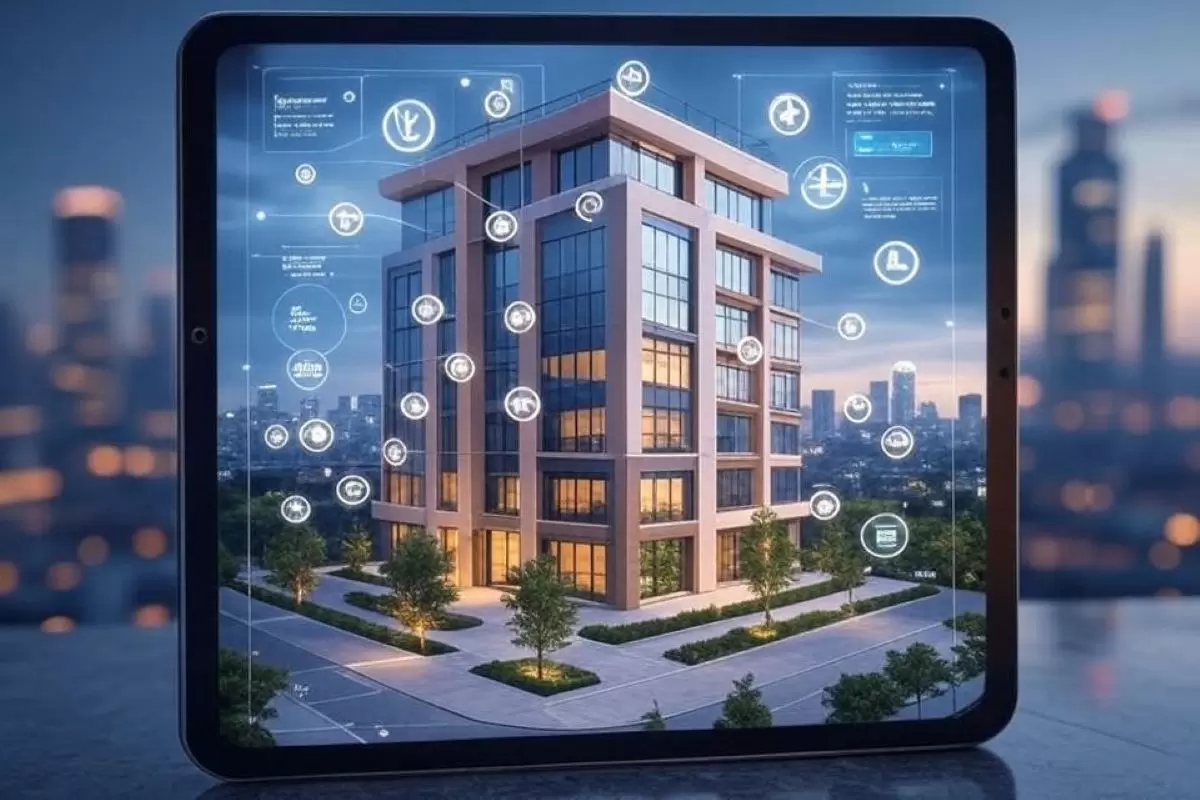
    Sustainability is another crucial consideration, as convention centers consume significant energy and resources. Developers should adopt green building technologies, including energy-efficient systems, water recycling facilities, and renewable energy sources, to promote sustainable development. These initiatives reduce environmental impact and appeal to event organizers seeking eco-friendly venues, positioning the Philippines as a responsible choice for international events.

    Equally important is developing a skilled workforce to manage the complexities of large-scale events. Integrating event management, hospitality, and logistics programs into higher education and professional training ensures that the Philippines remains competitive as a premier MICE destination. Collaborations between academic institutions and industry stakeholders can provide practical experience, preparing professionals to meet the industry’s demands while upholding world-class standards.

  • Cebu Landmasters Inc. Deals With Luzon Expansion Challenges

    Cebu Landmasters Inc. Deals With Luzon Expansion Challenges

    Cebu Landmasters Inc. (CLI) is stepping into a new world as it plans to expand its projects into Luzon, the largest island in the Philippines. This move brings excitement but also presents several challenges. Luzon, especially areas like Metro Manila and Cavite, has a fast-paced market filled with diverse needs and expectations from buyers. The company aims to offer affordable housing options that cater to different income levels while promoting community interaction and pride. CLI hopes to contribute positively to the local economy and social environment by bringing unique developments to this bustling region. But can they do it?

    Market-Driven Expansion And Regional Integration

    With a strategic presence in 17 key Visayas and Mindanao (VisMin) cities, the company has developed over 130 projects aligning with each locality’s needs. Its emphasis on developing regionally integrated projects has enabled it to tap into various market demands. These include residential, commercial, hospitality, and mixed-use developments that transform urban living standards.

    The company has allocated P14.5 billion for its capital expenditure this year, with approximately P27.6 billion planned for new developments, including its inaugural residential project in Luzon. (Source: www.esquiremag.ph)

    Each project is a targeted solution, fostering connectivity and driving economic momentum within these cities. CLI developments are as beneficial for residents as they are profitable. They create spaces that serve as economic hubs and community anchors.

    Astra Centre in Cebu City developed by Cebu Landmasters Inc Luzon expansion, showing a contemporary mixed-use architectural complex with high-rise residential towers, commercial podium, and hospitality facilities integrated into a modern urban landscape.
    Cebu Landmasters Inc has established a powerful presence across the Visayas and Mindanao through regionally responsive developments that advance community growth. The Astra Centre in Cebu City reflects this vision by combining residential, commercial, and hospitality spaces within a single urban framework. Its introduction of projects into Luzon demonstrates a strategic expansion that connects diverse geographies while addressing the evolving needs of Philippine cities. With each undertaking, the company creates architectural environments that embody progress and urban vitality.

    A Responsive Approach To Market Dynamics

    The rapid market absorption of new projects demonstrates the company’s keen understanding of real estate trends and consumer behavior. According to Chairman and CEO Jose Soberano III, there has been a “steady demand for our residential projects. ” The fast take-up rates show the success of each project.

    Many landowners are reaching out to CLI. “We need to filter this out well, but we’re considering Cavite development,” said CLI COO Jose Franco Soberano. (Source: www.philstar.com)

    The careful balance between affordability and quality creates this allure. The market’s trust in the company’s developments indicates the success of this approach, which fosters communities that enhance quality of life.

    MesaTierra Garden Residences in Davao City developed by Cebu Landmasters Inc Luzon expansion, showing a modern residential condominium tower with landscaped gardens, open green spaces, and vertical living design integrated into the city’s skyline.
    Cebu Landmasters Inc has earned the confidence of the market through its intuitive grasp of evolving real estate trends. MesaTierra Garden Residences in Davao City embodies this trust with a design that harmonizes affordability and quality within a vertical residential community. The project illustrates how thoughtful development responds to the aspirations of residents while strengthening the company’s presence across key growth centers. Its consistent market absorption reflects a balance of vision and execution that positions CLI’s future expansion into Luzon with clarity and promise.

    Projects That Elevate Communities

    Cebu Landmaster Inc.’s individual properties serve as catalysts for community improvement. Their approach emphasizes neighborhood impact, ensuring that developments contribute positively to the city’s social and economic environment.

    With projects designed to complement local characteristics, the company ensures that its developments enhance the city’s identity while contributing to its functionality. These projects are curated to foster interaction, economic growth, and community pride, setting a benchmark for what integrated urban living should embody.

    New Homes For Cavite Families

    Cavite could be the first site for CLI’s inaugural project in Luzon. Numerous other residential developments are underway, including billionaire Manny Villar’s Vista Land and Camella Homes. The Cebu-based developer’s entry into the Luzon market follows the increasing demand for housing units. A study from the online real estate platform Lamudi Philippines revealed that 25 percent of affordable home property seekers are from Calabarzon. The majority concentrated in Metro Manila at 53 percent.

    Velmiro Heights residential community showing modern houses, landscaped roads, and open green spaces designed as a planned subdivision in Cavite, representing a contemporary housing development that addresses the growing demand for affordable homes in Luzon.
    The expansion of Cebu-based developments into Luzon signifies a pivotal shift in the nation’s residential landscape. Velmiro Heights embodies this movement by presenting communities that respond to the rising demand for accessible and well-planned housing. Cavite, poised as a potential first site for Luzon projects, reflects both the urgency and the promise of addressing housing needs in rapidly growing regions. This momentum highlights a wider trend where thoughtfully designed environments strengthen both quality of life and urban growth.

    Strategic Moves Towards Luzon

    While VisMin remains the company’s primary focus, the upcoming expansion into Luzon signals an ambitious new chapter. This planned foray reflects a vision for growth that extends Cebu Landmasters Inc.’s successful model beyond its established base. Entering Luzon will present new opportunities and exciting challenges, allowing the company to apply its insights from VisMin to a larger, more competitive market. Highlighting the developer’s strong confidence in their expertise, this action reflects years of meticulous refinement and perfection.

    However, entering such a competitive market isn’t easy. Cebu Landmasters Inc. must carefully navigate various hurdles, including understanding regional preferences and adapting its successful VisMin model to fit Luzon’s dynamics. They must identify what makes each area unique, cultural elements or economic conditions, and integrate those aspects into their projects. As they face these challenges head-on, CLI remains committed to maintaining high-quality standards. Every new development must meet the needs of future homeowners. It’s a journey of learning and growth that could reshape urban living across Luzon for years to come.

    As disclosed, the firm receives offers from landed families in Camarines Sur, Calabarzon, and Pampanga. In its Luzon expansion, the developer plans to focus on affordable, economical, and middle-income markets. In Luzon, CLI is examining possible joint venture agreements. (Source: www.colliers.com)

  • The Devastating Reality Of Flooding In The Philippines

    The Devastating Reality Of Flooding In The Philippines

    The problem of flooding in the Philippines presents a harsh and often unforgiving reality due to the increasing severity of super typhoons. Year after year, these storms devastate the archipelago, uprooting entire communities, destroying livelihoods, and tragically taking lives. As climate change intensifies, these typhoons’ frequency and destructive power have only grown, creating significant challenges for urban and rural regions. The pictures of waist-deep waters filling Manila’s streets and completely submerged neighborhoods have become alarmingly common. These are not isolated incidents but recurring disasters emphasizing the urgent need for adequate infrastructure planning, architectural foresight, and competent governance. The flooding crisis in the Philippines demands coordinated action, strategic investments, and a profound commitment to sustainable solutions.

    The stark truth remains that while the Filipino spirit often celebrates the ideals of resilience, accurate solutions require more than spirit and optimism. These repeated disasters underscore the actual price paid for poor urban planning and inadequate infrastructure development. Underdeveloped drainage systems, poorly constructed levees, and uncoordinated emergency responses leave the country vulnerable and its citizens suffering.

    The Root Of The Problem

    A lack of genuine expertise in urban development and disaster preparedness worsens the flooding crisis in the Philippines. Every year, poor planning and a lack of foresight lead to floods that impact numerous lives that could have been prevented or at least mitigated. A striking problem is appointing individuals who lack urban planning, infrastructure development, and disaster management skills. The absence of deep expertise in these critical roles often results in inadequate programs that fail to protect lives and property.

    An aerial photograph shows widespread flooding in the Philippines, where murky floodwaters have engulfed residential streets, partially submerged homes, and immobilized vehicles, reflecting the country’s ongoing struggle with urban planning deficiencies and disaster mismanagement.
    Each season of deluge in the Philippines reveals not nature’s fury alone but the accumulated weight of institutional neglect. The absence of informed urban planning, infrastructure foresight, and disaster resilience has left communities exposed. Leadership detached from technical disciplines perpetuates cyclical vulnerability. This image speaks not of calamity but of the human cost when expertise is disregarded.
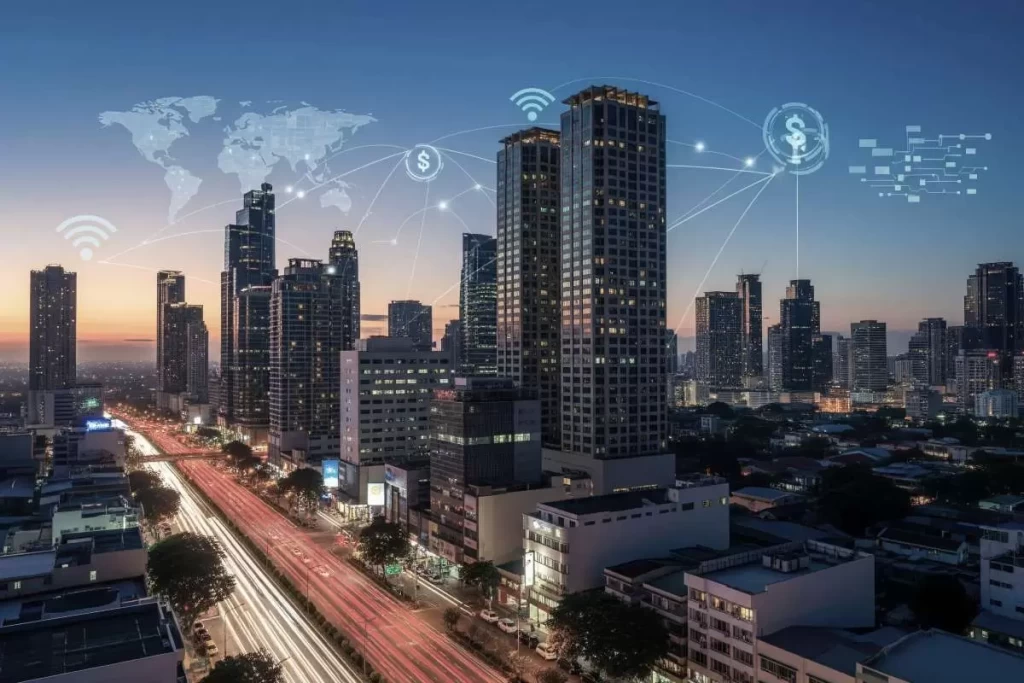
    The story of Filipino resilience often masks the urgent need for systemic change. Instead of romanticizing resilience, we should advocate for leadership guided by experts. Proactive disaster mitigation begins with urban planning, where architects, engineers, and urban planners collaborate to create effective solutions. Decision-makers must rely on data and expertise to build more intelligent communities.
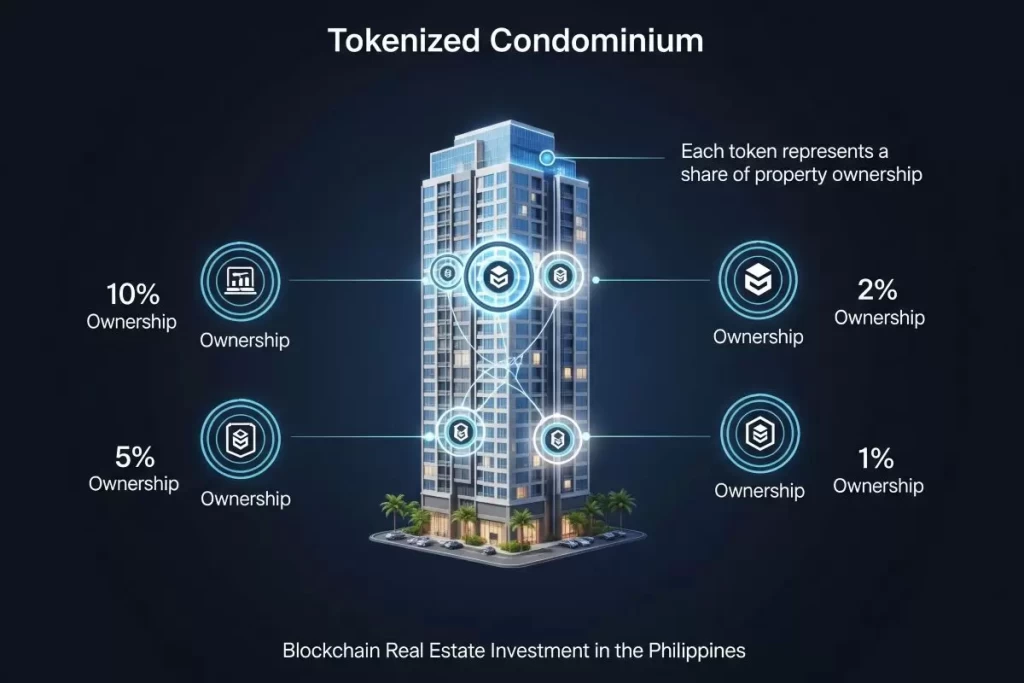

    Global Best Practices For Flood Management

    Countries facing similar threats have implemented resilient flood control systems. The Netherlands is a prime example of how strategic planning and robust infrastructure can mitigate flood risks. The Delta Works, a massive series of dams, sluices, locks, and barriers, has set a global benchmark for mitigating flooding in low-lying regions. This comprehensive system reflects a national commitment to investing in long-term solutions.

    Japan also faces frequent typhoons and heavy rainfall and has invested significantly in large-scale flood control measures. The Tokyo Metropolitan Area Outer Underground Discharge Channel, one of the world’s most extensive stormwater diversion tunnels, effectively redirects floodwaters away from populated areas. Japan’s approach combines sophisticated engineering solutions with preserving natural floodplains, ensuring a more holistic flood mitigation strategy.

    Another example is Singapore, which has consistently dealt with flash floods due to its tropical climate. Singapore tackled this issue through a combination of advanced drainage infrastructure, real-time water monitoring systems, and the introduction of green features like bioswales, detention tanks, and detention ponds integrated into urban design.

    The advanced drainage infrastructure includes a network of significant canals, diversion channels, and sophisticated underground tunnels like the Stamford Detention Tank and Stamford Diversion Canal, which work in tandem to manage excess rainwater. Real-time water monitoring plays a pivotal role in detecting rising water levels, utilizing a Smart Water Grid that integrates a network of sensors to collect real-time data across the city. This technology allows prompt response measures such as opening floodgates or redirecting water flows to mitigate localized flooding.

    Integrating Natural And Engineered Solutions To Flooding In The Philippines

    Bioswales and green features enhance the city’s capacity to manage stormwater by using natural filtration and promoting groundwater recharge. Additionally, detention tanks and stormwater retention ponds are critical in controlling and storing large volumes of water during intense rainfall, reducing the load on urban drainage systems. This holistic approach prevents floods and enhances urban resilience by utilizing natural processes to complement engineering solutions, integrating ecological elements with advanced infrastructure to create a robust and adaptive flood management system.

    The Philippines can adapt these international models by tailoring them to its unique geographic and socio-economic context. A comprehensive flood management strategy would require the cooperation of local governments, investment in advanced technologies, and proper urban development that works with natural landscapes rather than against them.

    Interventions For Flooding In The Philippines

    Architects and urban planners in the Philippines can lead the change toward a more flood-resilient future. One of the most impactful interventions involves preserving and rehabilitating natural barriers, such as mangroves, wetlands, and riverbanks. Mangroves protect coastal communities from storm surges and act as natural carbon sinks. However, urban expansion and land conversion for aquaculture have drastically reduced mangrove forests in the Philippines. By committing to restoring mangroves, we can significantly enhance natural defenses against flooding.

    Urban planners must also rethink the way cities grow. Instead of prioritizing high-density urban expansion without considering resilience, planners should incorporate green infrastructure, such as rain gardens, permeable pavements, and urban green spaces, to absorb and slow stormwater flow. Elevated roadways, interconnected waterways, and efficient drainage systems must also be integral to future urban developments.

    A modern flood control landscape features an integrated urban waterway flanked by restored mangroves, elevated pedestrian paths, permeable pavements, and green infrastructure, demonstrating advanced flood resilience strategies in contemporary Philippine architecture and planning.
    Flood resilience begins where ecological wisdom meets architectural intent. Mangrove forests, wetlands, and riparian zones once served as the Philippines’ natural bulwarks against storm surges and rising waters. Their depletion signals not only ecological loss but an erosion of protective systems vital to urban life. Restoring these landscapes, supported by deliberate planning and contemporary infrastructure, defines the new frontier of resilient design.

    Architects can contribute by designing flood-resilient buildings. For residential projects, this might mean incorporating stilts, designing with elevated ground floors, and ensuring that the materials used can withstand water exposure. Critical infrastructure, such as emergency shelters, hospitals, or evacuation centers, should be located on higher ground and designed to function during extreme weather events. Building resilience requires foresight and collaboration with hydrologists and environmental engineers to understand and mitigate risks effectively.

    Local Solutions For Engaging Communities and Leveraging Technology

    Community engagement remains a cornerstone of effective flood mitigation. Local governments must educate communities about the risks they face and involve them in planning and decision-making processes regarding flooding in the Philippines. Flood response drills, early warning systems, and community-built flood defenses can empower residents to safeguard their areas actively.

    The Philippines has begun to utilize satellite imagery and Geographic Information Systems (GIS) for flood risk mapping. However, these technologies require consistent investment and application across all vulnerable regions. Integrating early warning systems with mobile technology, leveraging the widespread use of smartphones, can provide timely alerts to residents, giving them enough time to prepare or evacuate when necessary.

    Furthermore, public-private partnerships can provide the funding and expertise required for large-scale flood management projects. For example, collaborations between government agencies and private developers could facilitate the construction of stormwater detention parks, which serve the dual purpose of recreation during dry weather and water retention during floods.

    Towards Real Solutions and an Accountable Future

    The Philippine government, developers, and urban planners must look beyond temporary measures and fragmented projects to address flooding truly. Effective flood mitigation requires a sustained commitment to long-term solutions informed by science and managed by experts. This approach starts by reevaluating leadership, ensuring that qualified professionals occupy strategic positions and direct infrastructure planning and disaster preparedness with their expertise.

    The private sector also has a vital role to play. Developers must prioritize resilience over rapid profits. Every new project should include flood resilience as a primary consideration, whether by building elevated structures, using permeable materials, or ensuring proper drainage systems. Policies that incentivize such practices can help nudge developers in the right direction.

    The cycle of destruction must end. Celebrating resilience while communities drown falls short of what is truly needed. By appointing experts, learning from global best practices, and empowering local communities, the Philippines can transform its approach to flood management. The goal must be to protect lives and property effectively and sustainably to prevent the devastation that has, for too long, been treated as inevitable.