Author: Ian Fulgar

  • What If The Next President Of The Philippines Is An Architect?

    What If The Next President Of The Philippines Is An Architect?

    Prior to the pandemic, the Philippines had one of Asia’s fastest expanding economies, with significant investments in infrastructure as with airports and power grids, all of which are critical for long-term economic development. And one of the primary driving forces behind this is the role of the President of the Philippines. The majority of those leaders that the Filipinos have worked with have a legal background. Several are economists, while nine are lawyers, including the incumbent president Rodrigo Duterte.

    When managing administrative structures and political stability are being considered, it makes sense. Presidents serve as the head of state, exercising authority over executive offices and the adoption of specific policies. Thus, legal knowledge helps massively. There are, however, a few more variables to consider while improving national planning and development in order to head a rising population. What if the next leader has a different background, say one that deals with a more tangible application? What if the next president of the Philippines is an architect? Or better yet, a president with a strong advisory panel of architects and urban planners?

    Architects, as designers and planners, are community leaders who share a great deal of responsibility for the design and development of their communities. They exemplify the characteristics of a great leader due to their diverse experiences in mathematics, physics, technology, construction, building codes, law, history, and social studies. As an exercise, let’s briefly contemplate the idea of nation-building through the eyes of an architect.

    Looking At The Bigger Scale

    Architects see the world through a different lens. They can create their own world from scratch. They have to be able to imagine what has never been built before and create a vision for the future. There are many different types of architects but they all have an eye for detail, creativity, and understanding of spatial relationships.

    Contrary to what is known, architects don’t just design buildings, but they also plan environments. They understand that a single design decision may have far-reaching consequences in the larger scheme of things. This is a required sensitivity while managing a nation of 107 million people spread throughout an archipelago. Trained planners consider matters on a macro scale, such as how well-organized systems may have a significant impact on people’s quality of life.

    Efficiency In Urban Planning

    As with neighboring nations’ flourishing cities, smart urban planning may be the solution to many of the challenges confronting Filipinos on a daily basis. The program we want should be capable of promoting market connectedness and equality of opportunity. Additionally, it should include the sustainable use of all resources.

    However, the Philippines’ present form of urban planning is fragmented and advantageous to just a few. As a result, larger cities have become crowded, while others have remained underdeveloped.

    A forward-thinking designer as the president of the Philippines may prioritize national regeneration over politics. The impact framework will have to be efficient, continuous, and vibrant for future generations, with a strong emphasis on national identity, culture, history, and tourism. The nation must spend more on education and make better use of its natural resources in order to improve its competitiveness.
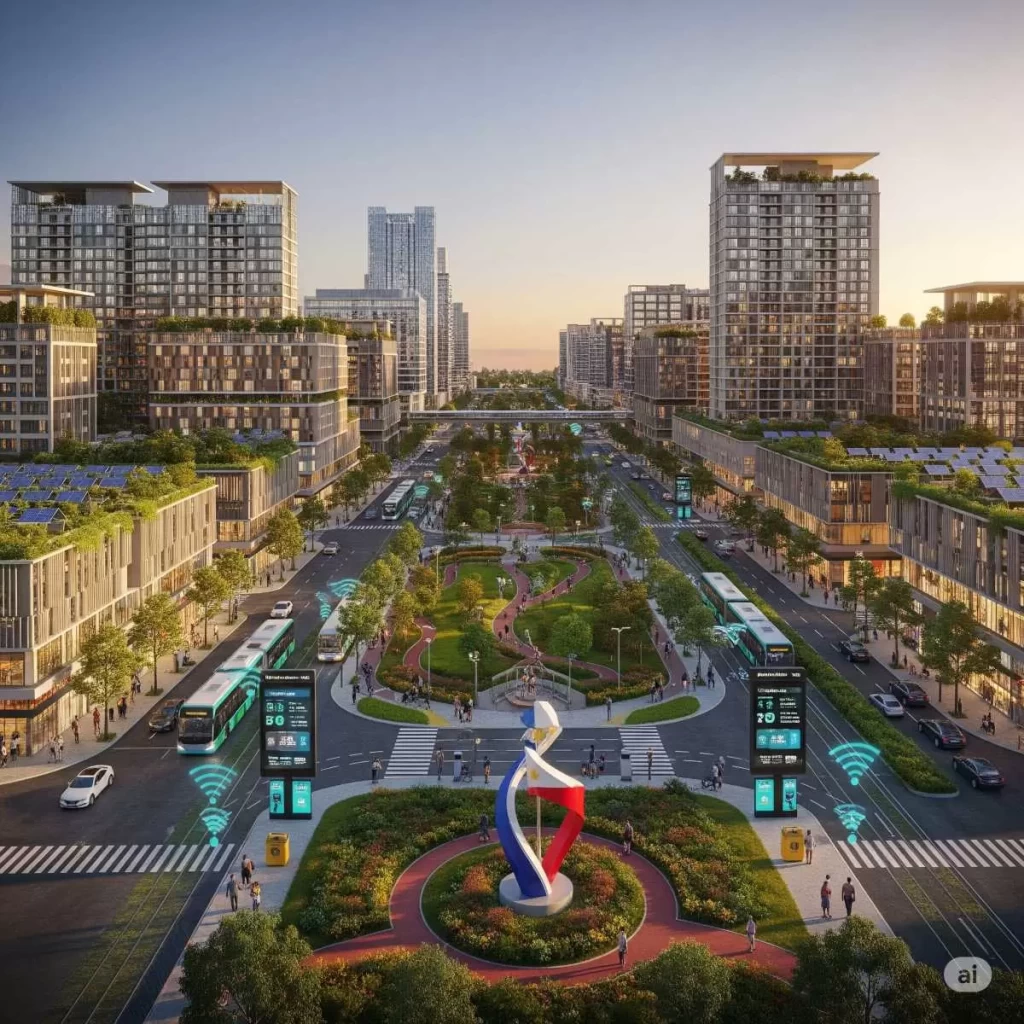
    A panoramic rendering of a futuristic Philippine city with interconnected green spaces, elevated transit systems, solar-integrated skyscrapers, and waterfront developments, illustrating smart urban planning that promotes market connectedness, equality of opportunity, and sustainable use of resources.
    Across Asia’s rapidly advancing landscapes, the Philippines holds the potential to shape its cities into models of inclusivity, resilience, and cultural pride. Smart urban planning offers a path toward resolving daily societal challenges through market integration, equal access, and balanced resource management. A national vision rooted in identity and heritage can transform both dense metropolitan zones and underdeveloped regions into thriving, interconnected hubs. The commitment to education, sustainable practices, and equitable growth can usher in a vibrant urban renaissance for generations ahead.

    President Of The Philippines On Housing and Entrepreneurship

    While there is an abundance of migrants, the shortage of affordable housing is due to two reasons. The first is the monopoly on land resources. Private developers have the capital to occupy the majority of the city’s prime locations and artificially inflate property prices, leaving the marginalized sectors behind. The second is enterprise monopoly. Small businesses’ struggle to compete has turned virtually all beloved local services into the areas of urban decay that exist today.

    Many urban Filipinos are then compelled to live on the streets and along the sides of roads. They are forced to construct their own improvised houses out of salvaged items. Previous and ongoing Philippine government has been acutely aware of this issue for some time and is presently instituting a national housing program with the aim of resolving the issue in the near future.

    An architect would understand that the working class is the city’s backbone. They are comprised of construction workers, utility employees, vendors, and other informal laborers who contribute to the city’s cycle’s development and operation. Additionally, an architect would understand the financial costs associated with the development and maintenance of any class of lifestyle.

    As a result, simply providing free housing could have negative social and economic consequences. Which results in tight boxes constructed of substandard materials to accommodate extended families of five or more.

    Therefore, housing initiatives should become considerably more comprehensive. It must involve both education about the benefits of improved living conditions and a rebirth of entrepreneurship through local businesses and small commercial enterprises.

    Public Services As National Landmarks

    The public sphere is the oldest platform of government. They are used to convey ideas, beliefs, and even the community’s cultural sensibility. By its very nature, the whole institution is symbolic, as when individuals choose to embrace it, they are committing to safeguard and care for one another. Every day, public places are utilized for a variety of purposes, including political demonstrations, municipal parks, and welcoming visitors.

    Architecture also plays a big role in developing public services. Police and fire stations, libraries, municipal halls, and medical centers are critical connections for the communities they serve. How these buildings are represented help define the government’s character and type of interactions between people and public employees. One of the major achievements in designing public buildings is making meaningful spaces that allow members of the community to be engaged, while still meeting security and budget requirements.

    With the election of the next president of the Philippines, many would be left to wonder what the future holds for the country. In this uncertain time, some have argued that it’s important to focus on improving public institutions at the ground level. Evidence from other countries has shown that investing in public institutions at a local level can help revitalize national identity and create a thriving future for generations to come.
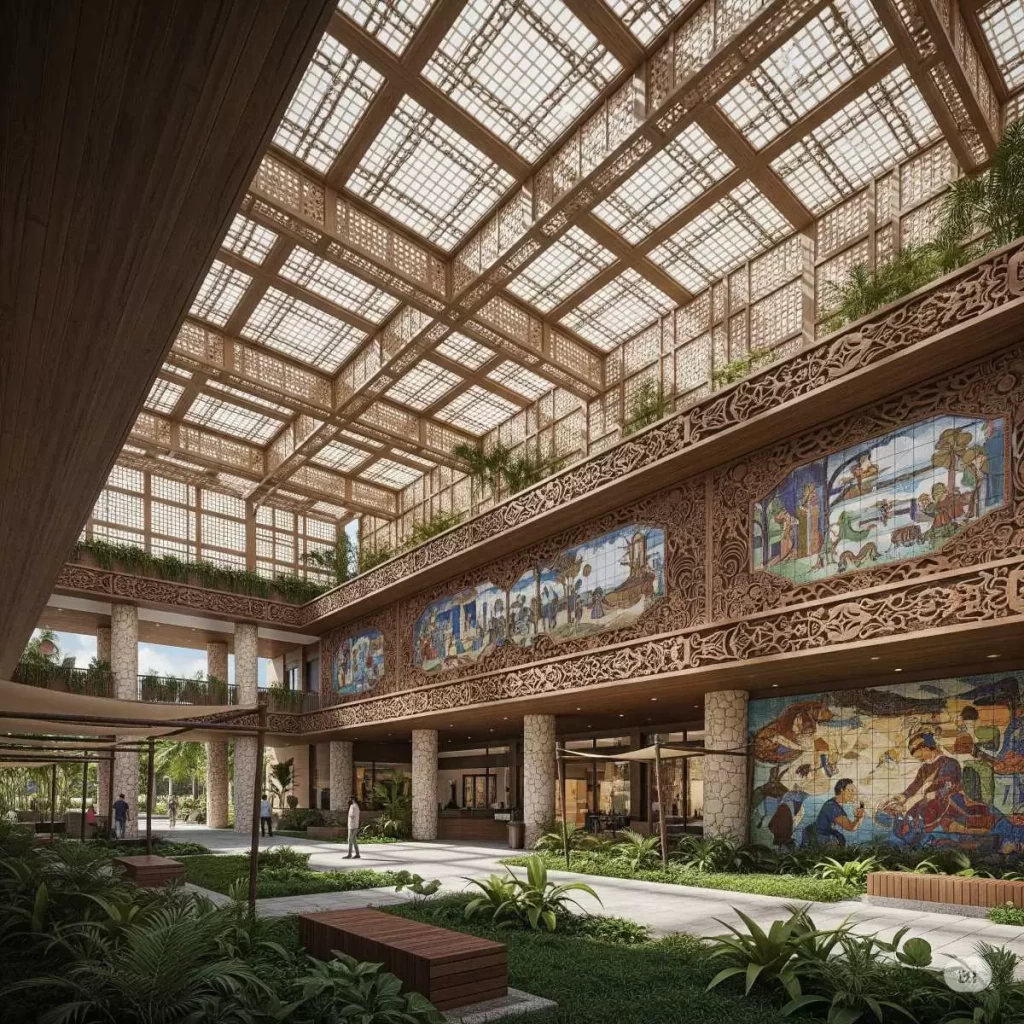
    A spacious indoor atrium in the Philippines with tall glass walls, abundant natural light, open seating areas, greenery-filled planters, and people engaging in civic activities, illustrating the role of public architecture in fostering community connection.
    Public institutions embody the enduring spirit of governance, serving as spaces where civic identity and community responsibility converge. Their architecture shapes the way people interact with the state and with each other, reflecting the values and aspirations of a nation. Within these structures, openness and accessibility can coexist with order and security, creating environments that invite participation. The thoughtful design of such places reinforces trust, engagement, and a shared vision for the future.

    Transportation And Accessibility

    Good design is not just about the form, but also the circulation. The movement of people and resources compensates for economic growth. And this is comparable to having efficient freight and public transportation networks.

    In essence, movement should be built around national development goals. As with the “Build, Build, Build” initiative to boost infrastructure development and industry development, the next president of the Philippines should be able to continue the vision to eventually generate strong growth throughout the archipelago, creating employment and improving the lives of Filipinos.

    Additionally, cities should be made walkable with the installation of better sidewalks and footbridges. This is seen in emerging urban models such as the concept of smart cities. It promotes the concept of mixed-use complexes, which include mixed-use residences, employment, and other support services. An architect as the president of the Philippines would understand the need of expanding and improving transportation choices for the broader public as well as everyday commuters inside towns and local districts. A beautiful example would be safe and naturally shaded bicycle lanes linking nodes of residence, employment, and recreation.

    With all of these aspects in mind, there will be reduced reliance on private automobiles. Road networks will be developed to accommodate public transportation and pedestrians. Gradually, this will also help to alleviate congestion and air pollution, while also encouraging healthy social interaction.

    Bringing Green Spaces Back

    Shopping has become a prevalent form of socializing for Filipinos and has even been seen as a public engagement. The emergence of malls coincided with the emergence of commercial districts in Manila. It is a fact that many Filipinos also see malls as meeting places and as a second living room.

    With the globalization of urban spaces and the increasing pace of life, people are spending less time engaging in activities such as sports and exercise. This is leading to a rise in obesity, cardiovascular diseases and other illnesses. Public spaces should be re-conceptualized into recreational spaces to promote healthy lifestyles.

    An architect would realize the importance of tree-lined parks and plazas. These public spaces offer a valuable space for people to get out of their homes and work environments, relax, and get some sun. In addition, these green spaces provide a variety of physical opportunities such as recreation, exercise, and contemplation.

    Parks, gardens, and green spaces are disappearing and quickly diminishing in urban sprawls. Despite that it has been proven that time in the great outdoors can reduce stress, anxiety, and depression. Studies even show that people who visit parks often also experience better mental health.

    Trees can even improve air quality, reduce crime rates in areas near them, and help maintain better temperature control in cities by absorbing heat from the sun.

    Hopefully the next president of the Philippines can generate more parks, planting programs, and green spaces as a good way to make cities more livable.
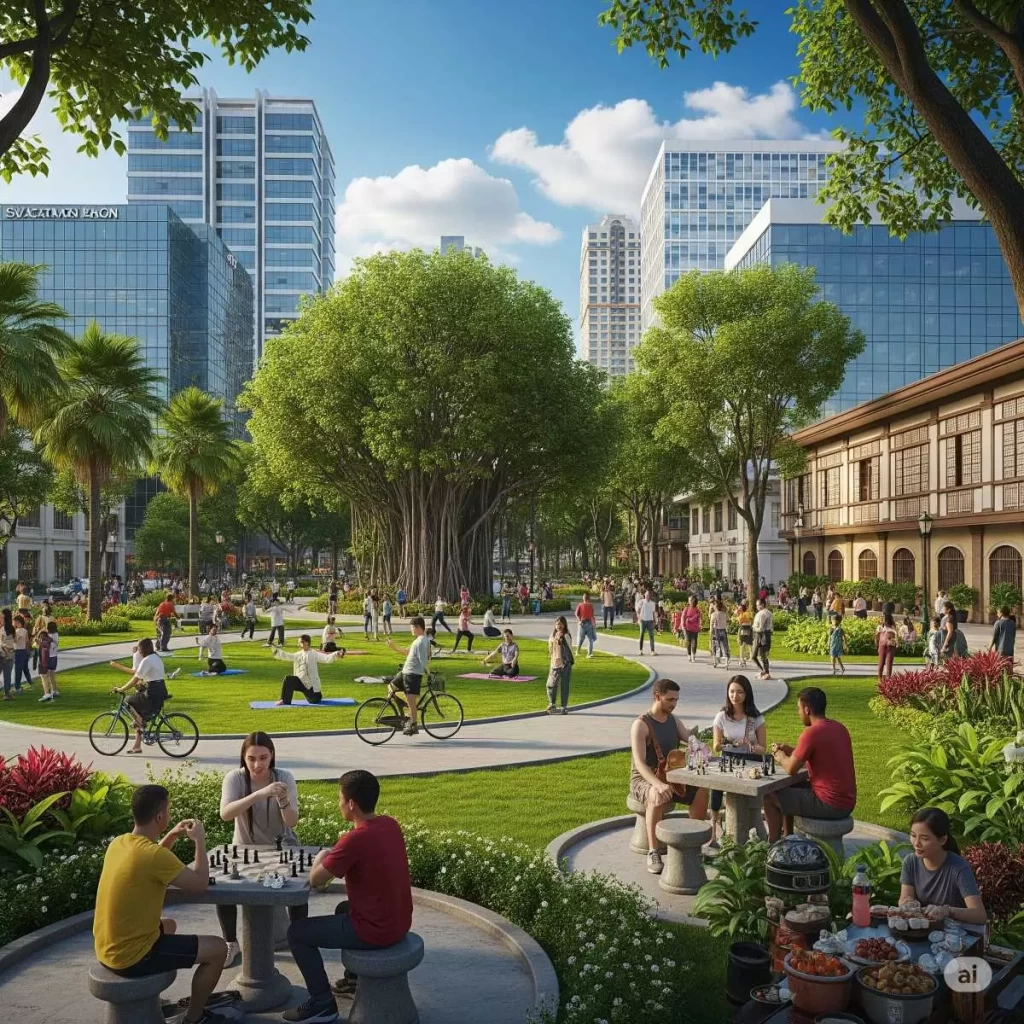
    A vibrant city park in the Philippines with wide walking paths, shaded tree canopies, landscaped gardens, open grassy areas, and people engaging in recreation and relaxation, showcasing the integration of green public spaces into urban environments.
    In the evolving fabric of Philippine cities, public green spaces offer a restorative counterbalance to the density of urban life. Parks, gardens, and tree-lined plazas serve as essential venues for recreation, social connection, and contemplation. Their presence elevates the quality of urban living, providing both environmental benefits and spaces that nurture mental and physical well-being. A vision for the future must place these natural sanctuaries at the core of city development strategies.

    Heritage Preservation

    Another widespread misunderstanding is that development is always about building something new. Heritage buildings are usually seen as dead ends and are replaced with newer establishments. But architects see the importance of learning from and embracing our past.

    A lot of heritage buildings are in need of revitalization. These buildings can be repurposed into new spaces that are not only great for the community but also become cultural landmarks that people would want to visit.

    Some initiatives in the Philippines help in conserving heritage buildings for future generations. There are groups of Filipino architects, artists, and graduate students active in preserving oldest churches. Some are even contributing in the preservation of church ruins as museums.
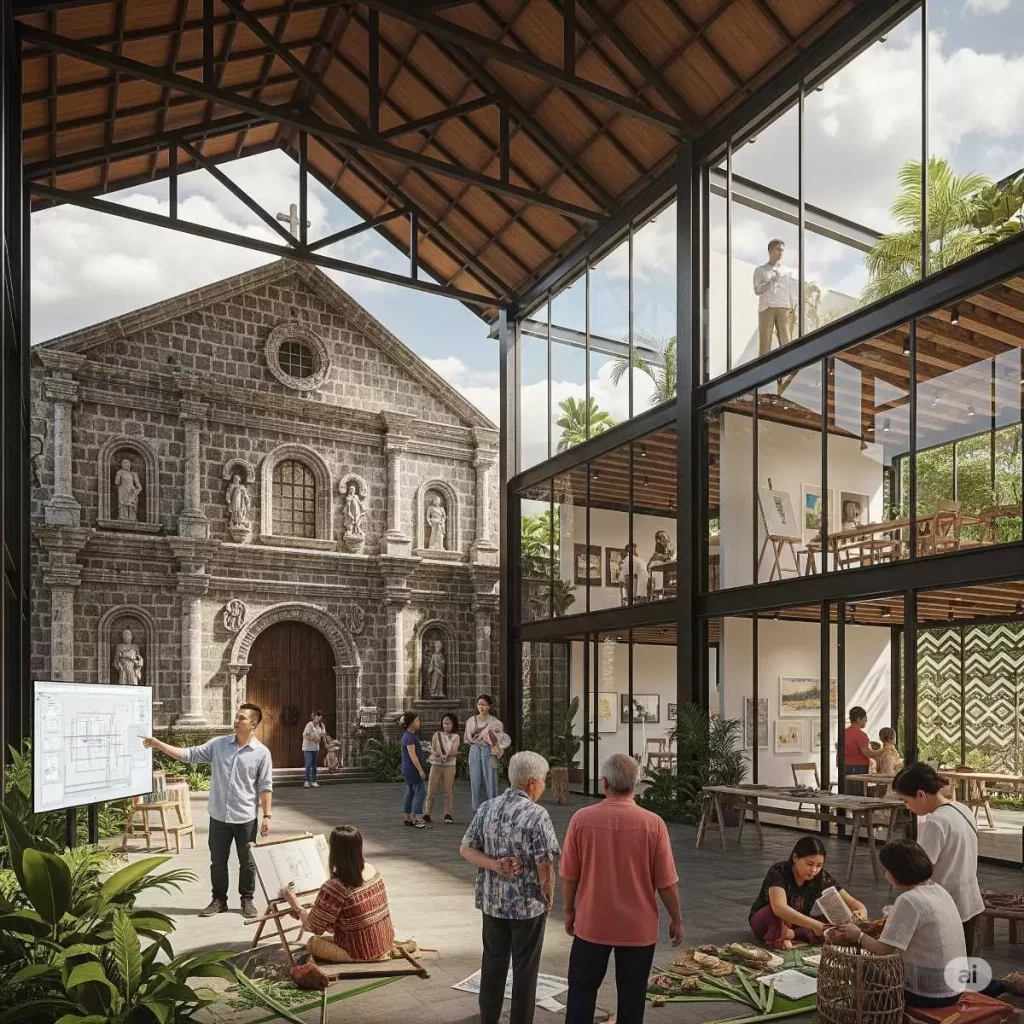
    A historic church courtyard in the Philippines with preserved stone walls, arched doorways, landscaped gardens, shaded walkways, and people strolling through the space, showcasing the adaptive reuse of heritage architecture for cultural and community engagement.
    Heritage structures stand as steadfast narrators of a nation’s collective memory, offering architectural testimonies to its artistry and resilience. Many of these buildings face neglect or demolition in the name of progress, yet their value lies in the stories they hold and the communities they anchor. Through thoughtful restoration, such spaces can be transformed into vibrant cultural landmarks, fostering identity and pride. Preservation is not a backward glance but an investment in a richer and more connected future.

    The Philippines is a country with a rich and diverse tribal culture. Despite these differences, there are still plenty of historical landmarks in need of rehabilitation programs that can proudly unite the Filipinos.

    A President Of The Philippines For Social Architecture

    For the longest period of time, the nature of architecture has been associated with large and majestic buildings. But the current trend of architecture is changing. Designers are now increasingly focusing on the human element and how their structures will affect its inhabitants. The idea of design with a focus on the people has been coined “human-centered design”.

    Social architecture is the design of space that has deliberate intentions to bolster equitable and inclusive outcomes. It is the conscious, creative, and iterative process of building environments that are responsive to social needs, reflective of local culture, and sensitive to global contexts.

    Achieving the goals of social architecture requires listening to and including people in the process. Like in any architectural project, participatory design is when the designer collaborates with all stakeholders. The more inclusive this process is, the more likely it will be successful. This two-way communication ensures a better understanding of the needs and finding the best way to respond to it.

    United With The New President of the Philippines

    All these perspectives are necessary to usher in a new angles on nation building. The Philippines has been struggling for some time now to find its footing as a country and the economy has been making what seem to be incremental improvements year after year.

    The president of the Philippines must continue to prioritize the interests and well-being of the people but in conjunction with the typology they are in. Much like how an architect meets the requirements and expectations of every project.

    With that said, there is no need to wait and rely on that single beacon of change. When one designer can envision all these plans, what more can thousands do together?


  • 8 Design Lessons From Architect Namgoong Of “Parasite”

    8 Design Lessons From Architect Namgoong Of “Parasite”

    Many are astonished by the Park family’s famous home in the award-winning 2019 film Parasite. The fictitious starchitect who designed the house is Architect Namgoong Hyeonja. In fact, it is a work of art by Lee Ha-jun, the film’s production designer, and the brainchild of Bong Joon-ho, the filmmaker.

    With unexpected storylines, the film offers an insightful look at social divides. Parasite examines the relativity of class and how disparities between the top, medium, and lower classes often lead to people at the bottom of the scale trying to tread on one another in an attempt to advance in society.

    What Is Parasite And Architect Namgoong About?

    The movie is the tale of the Kims, an impoverished family. They skillfully positioned themselves in the Parks’ service and care. The Parks are an extravagantly rich family that for many years harbored an unknown stranger in their basement.

    Along with the Kims, it is possible to see the basement inhabitants as parasitic. Both families depend on the Parks to provide them with food, housing, and clothes. Additionally, they enter their homes fraudulently and compete with one another fiercely.

    The story demonstrates how the working class is forced to compete for crumbs, while families like the Parks enjoy a luxurious existence fueled by the labor of many people below them.

    The magnificent house in which the families resided was created by the established but fictional architect Namgoong.

    The Park home was conceived as a series of stages for movie production. A large portion contains the steps from the kitchen to the basement, the hidden tunnel below, and the bunker deeper below, all of which contribute to the descending illusion. A pivotal scene in Parasite is the Park’s living room, which has a long, glass wall that overlooks a garden that serves as the film’s finale.

    The movie is deserving of every Academy Award nomination. Parasite took home four awards, including Best Original Screenplay, Best International Film, Best Director, and Best Picture.

    The House Designed By Architect Namgoong

    While the house design by Architect Namgoong has a predetermined layout based on the plot, the architecture and interior design are really amazing. The style of the home set is heavily influenced by modernism, with a flat roof, wide expanses of glass, and minimal interior furniture.

    A modernist house designed by architect Namgoong with a flat roof, wide glass walls, minimalist concrete and wood finishes, open-plan interiors, landscaped garden views, and carefully staggered floor levels that highlight the philosophy of minimalism.
    Architect Namgoong’s residence, immortalized in cinematic narrative, reflects the distilled essence of modernism through disciplined restraint and purposeful arrangement. The dwelling becomes both a spatial framework and a character in itself, embodying the principles of minimalism while engaging with light, space, and form. Within its architectural narrative, every elevation, partition, and surface carries layered meaning, weaving the poetics of dwelling with the realities of human condition. In this return to its design language, one sees not just the house, but the philosophy that shaped its story.

    Given that we are mostly confined at home during this epidemic facing our own challenges in life, I thought it might be fitting that we return to this place and reflect on the architecture that shaped the story.

    The following are some of the film’s design takeaways.

    1. Beauty Of Minimalism

    Architect Namgoong seems to take inspiration from minimalistic, contemporary houses with great space arrangements. Mr. Park’s home, both inside and out, exemplifies minimalism. It has clean lines, basic shapes, and clear space. While the finishes are rendered concrete, metal trims, and glass with accents of wood color tones. Visually, there are fewer superfluous elements, which gives it a refined and classy appearance. It gave the household an opulent image.

    2. The Creative Play On Floor Levels

    Stairs were prominent in the picture. And, although the filmmaker utilized stairs to depict the metaphor of socioeconomic classes – the division of the wealthy and the poor – steps were also used to divide areas into the Park family’s open-plan interiors. Take note of how the living room and kitchen areas are separated by a simple play on levels.

    Though the film’s stairs were done elegantly, in actuality, attention should be given to Persons with Disabilities (PWD) by introducing subtle elevation adjustments, ramps, safety railings, or, if budget is not an issue, elevators.

    3. Walls As Accents

    Further inside the home, we see how well-thought-out the interior features are, as we notice fewer plain-looking walls. Who can forget the kitchen area’s full-height display cabinet? It is brimming with high-end tableware and tea sets. However, what set it apart from other walls was the fact that it was illuminated from top to bottom! It definitely emphasized the kitchen area. By contrast, the dark entrance to the basement contributed to the story’s mystery.

    4. Maximizing Natural Light

    When we think of bringing natural light into the home, we think of large windows. Orientation is critical if we want to optimize it. It’s fascinating to learn that this was taken into account while designing the set for the Park’s home. According to Lee, they chose the location deliberately and positioned the home to take advantage of the sun’s direction in order to get the ideal lighting for the scenarios.

    This is also a factor to consider while creating areas for a home, as Architect Namgoong is likely to do. Windows are carefully positioned to provide the appropriate amount of light in a room. By increasing natural light, one’s reliance on energy for artificial lighting is reduced as well.

    5. Architect Namgoong’s Open Space And Landscaping

    According to director Bong, the architect Namgoong purposefully built the house’s first floor to maximize views of the garden, and we couldn’t agree more. The living room’s full-height glass functioned as the Family TV, allowing for an appreciation of the yard’s ever-changing weather and seasons.

    Landscaping enhances the architecture in a distinct way. Additionally, it keeps the environment healthy. The combination of the house’s wide windows dissolves the boundary between inside and out.

    6. Exploring High-Tech Innovations

    The Park residence’s high-tech elements are immediately apparent upon Ki-Woo’s arrival on the entry steps. The video intercom, automated doors, garage doors, and sprinkler system are among these amenities. Technology undoubtedly provides consumers with more security and comfort. We may also notice the pendant lights on the stairs, which seemed to have motion detectors since they illuminated one by one as Mr. Park approached upwards. It was not automatic after all as revealed later on in the film.

    7. Basements And Storage

    The pantry and storage were placed in the basement to adhere to the minimalist idea. This is an effective architectural approach for concealing clutter in the main home. Basements are often portrayed as frightening places, but when the film first revealed it, it seemed to be a paradise for homemakers and housekeepers, complete with shelves, drawers, and a flexible room to contain large items.

    8. Secret Bunkers By Architect Namgoong

    When former housekeeper Moon-gwang (Jeong-eun Lee) discovers an entrance beneath the wood cabinets, the story darkens. This takes her to a hidden bunker where her husband has been living for four years. The architect seems to have built the home with this subterranean area in mind in case of North Korean assault or if creditors broke in.

    According to Architect Namgoong’s perspective, the purpose of the hidden bunker is mostly for personal protection. After all, he was the first occupant. It is reasonable to infer that it was built to be bomb-proof. It is a habitable place, but only for a limited period. Humans will continue to require adequate sunshine and fresh air to maintain their health and well-being.

    Architecture Of Inequality

    Parasite most definitely earned all of its awards in the film business. The movie is revolutionary in its integration of social discourse and architectural consequences. The physical environment repeatedly demonstrates where individuals fit into the social order or if they really have a place at all.

    An interior view of a modern house designed by architect Namgoong featuring open-plan spaces, minimalist concrete finishes, wide glass windows, subtle floor level changes, and curated furniture that symbolize social order and hierarchy.
    The film Parasite transcended cinematic boundaries by embedding architectural discourse into its social commentary. Spaces within Architect Namgoong’s residence served not merely as backdrops but as active participants in shaping narrative and meaning. The interior volumes, their hierarchies, and transitions reveal how architecture can embody social order while simultaneously questioning it. Within these interiors, the house becomes a silent storyteller, revealing the lived realities of its inhabitants.

    Legacy of Architect Namgoong

    Much has been written about the Parks’ spectacular home, which the film claims was built by renowned architect Namgoong Heonja. The room is so realistic that many filmgoers thought it was a genuine home, a wonder of architecture. It is, however, a collection of sets created by Lee Ha Jun, the film’s production designer. In terms of how the tale relates to our daily lives, I suppose we’ll never look at large homes with basements in the same way again.

  • Agricultural Lands With Imperfect Titles Remedied By New Law

    Agricultural Lands With Imperfect Titles Remedied By New Law

    President Rodrigo Duterte signed legislation to streamline and reduce the procedures for issuing deeds including imperfect titles for agricultural lands. A complete legal transfer of property in real estate entails not only a physical transfer but also a clear transfer of title. If the property has any flaws or other encumbrances, the seller cannot legally transfer complete ownership. Imperfect titles are those that are deficient and do not communicate the whole legal transfer of a piece of property.

    Agricultural Lands With Defective Titles

    The Republic Act (RA 11573), which took effect on July 16, 2021, modifies Commonwealth Act 141, also known as the Public Land Act, and Presidential Decree 15029, also known as the Property Registration Decree. This is to “simplify and eliminate uncertainty” in the interpretation of related and comparable land law legislation to include conditions to agricultural lands with defective titles.

    The law governing land titles in the country requires the claimant to present a copy of their original classification that has been approved by the Secretary of Natural Resources (DENR Secretary), a certified copy from the City or Provincial Environment and Natural Resources Offices (CENRO/PENRO), and an official publication of the DENR Secretary’s issuance declaring that land is alien.

    RA 11573 empowers the CENRO (or the PENRO) to expeditiously handle patent applications for agricultural lands.

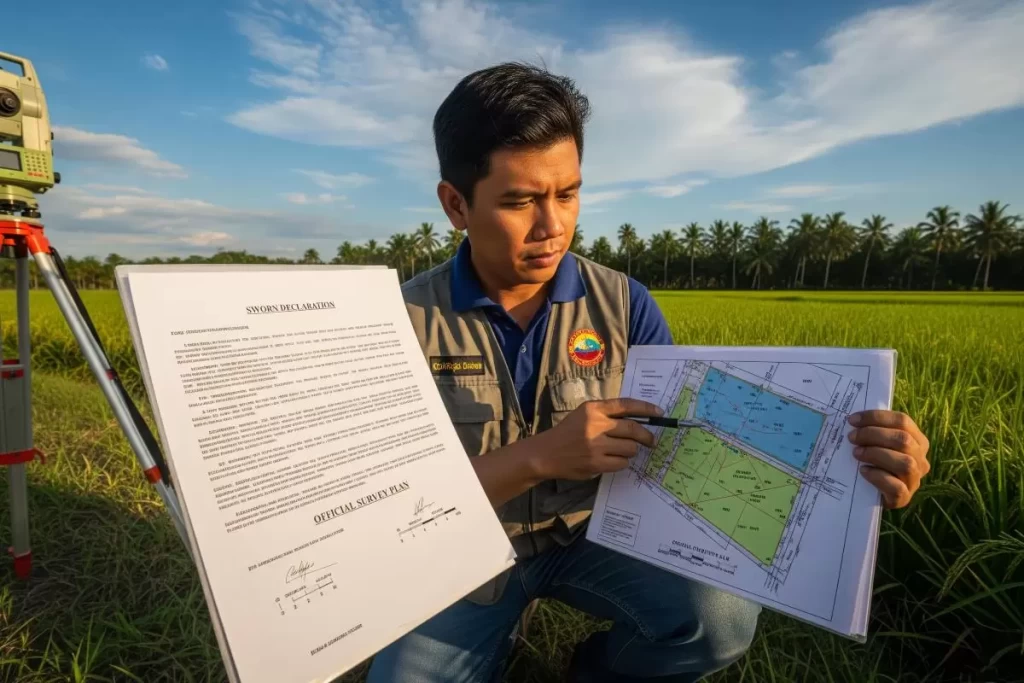
    A land surveyor in a wide agricultural field measures property boundaries with professional equipment under a bright sky, illustrating the process of securing titles for agricultural lands under Republic Act 11573 in the Philippines.
    The Republic Act 11573 reshapes the process of securing titles for agricultural lands by introducing clear procedures and streamlined documentation. This legislation addresses long-standing uncertainties in the interpretation of land laws, specifically in relation to the Public Land Act and the Property Registration Decree. It grants the City or Provincial Environment and Natural Resources Offices the authority to act with efficiency on agricultural patent applications. This measure reinforces the role of accurate land classification in ensuring rightful ownership.

    Proposals Based On Sizes Of Agricultural lands

    If the land size is less than five hectares, the CENRO is obliged to submit its proposal to PENRO. If the land size is more than ten hectares, the DENR Regional Director is responsible for referring the matter to the PENRO.

    “Within five days of receipt or completion of processing of an application within the prescribed time limits, the Regional Director of PENRO, the Secretary of DENR, or the Secretary must accept or deny the request for an agricultural patent-free,” the new legislation said.

    When several claimants make competing claims, parties may pursue appropriate administrative or judicial remedies.

    Ownership Of Disposable Agricultural Lands

    RA 11573 lowers the ownership and occupation terms of alienable lands and disposable agricultural lands from 74 to 20 years.

    Additionally, it enables individuals who are owners of private properties, abandoned riverbeds, or any other kind of ownership within the terms of current laws to submit petitions with regional trial courts to have their rights realized.

    “An official DENR geodetics engineer legally authorized to sign a certification that the land is within the public domain’s alienable and disposable agricultural land is adequate evidence that the property is alienable.”

    According to the recently enacted legislation, such certification shall be included in an authorized survey plan that is filed to the land registration court.”

    Expansive agricultural lands with neatly aligned crop rows stretch toward the horizon under a clear blue sky, where a geodetic engineer conducts a survey to certify the property’s alienable and disposable status under Republic Act 11573 in the Philippines.
    Republic Act 11573 redefines the tenure requirements for alienable and disposable agricultural lands by reducing the necessary period of ownership and occupation from seventy-four years to twenty years. This legislative adjustment empowers rightful claimants with an expedited path to legal recognition of property rights. It also grants access for owners of private properties and certain natural formations to petition the regional trial courts for acknowledgment of their claims. The inclusion of a certified geodetic survey serves as definitive proof of land alienability within the public domain.

    Sworn Declaration By Geodetic Engineers

    The plan’s imprinting certification should contain the geodetic expert’s sworn evidence that the property is inside the alienable and disposable public lands. Additionally, it should include the relevant Forestry Administrative Orders, DENR Administrative Orders, Executive Orders, and Proclamations, as well as the Land Classification Project Map Number.

    In the absence of accessible copies of the necessary papers, a sworn declaration must include the Project number and date of release on the land categorization map. This declaration should indicate that it is included in the National Mapping and Resource Information Authority’s Land Classification Map inventory and is used by the DENR.

    Geodetic engineers who produce a projection map including false, incomplete, or unjustifiable data “willfully or by highly inexcusable carelessness” will face prosecution.

    Should you need technical assistance or planning guidance for your master development projects, feel free to get in touch.

    Signing Of RA 11573 Into Law

    RA 11573 requires the DENR to adopt implementing laws and regulations within 60 calendar days of the law’s effective date in order to carry out its provisions.

    Wednesday marked the start of the law’s implementation. It was published in the Official Gazette or other publications of wide circulation.

    RA 11575 Renaming Of Schools Also Signed Into Law

    Duterte also approved legislation renaming and converting schools across the nation.

    The Abra State Institute of Sciences and Technology is located in the towns of Lagangilag and Bangued. It will now be called the Abra University.

    RA 11575 changes the name of Compostela Valley State College in Davao de Oro to Davao de Oro State College. Surigao del Sur University’s name is changed in RA 11584 to North Eastern Mindanao State University.

    Bicol State Institution of Applied Sciences and Technology (Naga, Camarines Sur) has been elevated to the status of a state college according to Republic Act 11585. Southeast Asian University of Technology will be the school’s new name.

    Additionally, RA 11586 establishes Agusan Del Sur State Institution of Agriculture and Technology in Bunawan, Agusan Sur as a state college and consolidates the Trento satellite school. Agusan Del Sur State University will be the school’s new name.

    Occidental Mindoro State College is currently known as Occidental Mindoro State College.

    RAs 115774 and 11575 were signed on July 30. However, RAs 12084, 11585, 11586, 11586, and 125787 were signed on July 30, 2021, by their respective RAs.

  • “Fire Sales” As Investment In Philippine Real Estate Properties

    “Fire Sales” As Investment In Philippine Real Estate Properties

    Previously, “fire sales” were defined as the discounted sale of smoke-damaged assets as a result of a fire. At the moment, fire sales pertain to the purchase and sale of properties at drastically reduced prices. Transactions are usually completed quickly and without incident.

    Given the pandemic’s severe economic impact, it’s no surprise that fire sales are becoming more important than ever.

    The Domino Effect

    Assume a bank is experiencing large losses as a result of a nationwide economic crisis and has decided to reduce its risks by selling its assets at extremely low or fire-sale prices. Once its fire sale is deemed successful, the temporarily low market values it caused will prompt other banks to reassess their assets as well, resulting in a cascade of fire sales that can inflict greater damage on market participants’ overall asset prices and net worth.

    In simple terms, a fire sale done by a single entity may result in a systemic and self-reinforced implication of financial risks.

    As mentioned by a report of the US Treasury in 2009, “an initial fundamental shock associated with the bursting of the housing bubble and deteriorating economic conditions generated losses for leveraged investors including banks…The resulting need to reduce risk triggered a wide-scale deleveraging in these markets and led to fire sales.”

    On a smaller scale, it’s easy to see how buyers have the upper hand during fire sales, owing to the fact that they’re getting heavily discounted deals that would otherwise be impossible to obtain during regular sales.

    Research by Henri Servaes and Jean-Marie Meier of London Business School and The University of Texas, respectively, indicates that, rather than reflecting the destruction of wealth, the higher returns produced by fire sales actually reflect a redistribution of wealth from sellers to buyers. Fire sales represent society’s desire to preserve the value of its assets during times of economic distress, such as the current impact of COVID-19.

    Fire Sales In Real Estate

    With the global economic downturn caused by COVID-19, fire sales have been among the most common ways of liquidating assets within impressively short time-frames. The real estate industry, despite its non-liquid assets that may deem fire sale transactions challenging, is no exception.

    A property purchased during a fire sale is not always a good deal. As a result, knowing prime and trendy locations is critical to ensuring that this once-in-a-lifetime opportunity does not go to waste.

    Out Of The Metro

    The adoption of remote working arrangements during the pandemic resulted in a shift in the local workforce’s residential preferences. This is known as the “doughnut effect,” and it refers to an out-migration in which people flock to the suburbs and away from the city center.

    In the Philippines, a manifestation of the doughnut effect can be seen with home prices in Metro Manila contracting to 4.8% year on year during the fourth quarter of 2020. On the other hand, prices of residential properties in provinces rose to 5.9% in the three months to December.

    Provincial cities and municipalities with close proximity to Metro Manila are spiking interest among property seekers and developers due to two main factors: one, relaxed lockdowns due to fewer COVID-19 cases, and; two, lower population levels.

    In particular, during the first quarter of 2021, a report by real estate marketplace Lamudi identified Antipolo, Rizal as the top location of choice for house and land seekers. According to the report, the location alone accounted for 24.95 percent of all page views and 39.11 percent of all leads.

    The quiet and pleasant green spaces of the city make it ideal for home buyers looking for relaxed locations but not too far from the metropolis.

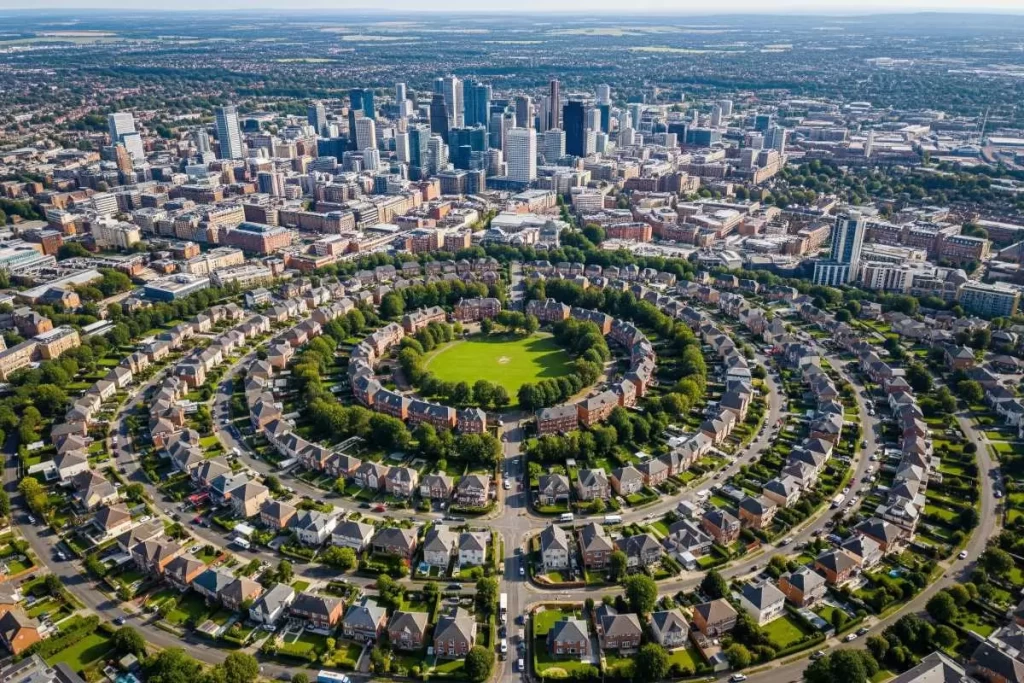
    An aerial view of an expanding circular suburb with residential clusters, green spaces, and connecting road networks, illustrating the doughnut effect in Philippine real estate and highlighting suburban fire sales opportunities.
    The transformation of residential preference during the pandemic redefined the Philippine urban landscape. As central districts declined in demand, suburban municipalities flourished with renewed vitality. This phenomenon, known as the doughnut effect, revealed a reorientation of value where space, greenery, and accessibility outweighed proximity to the city core. The surge of property seekers in these areas further intersected with opportunities arising from urgent transactions such as fire sales, reshaping both investment patterns and settlement forms.

    Other areas outside of Metro Manila have seen a surge in buyer interest for their foreclosed properties. San Pedro, Laguna (26.74 percent); Bacoor, Cavite and Lucena, Quezon (20.93 percent); and General Trias, Cavite (20.93 percent) have shown the most interest (15.12 percent ).

    Gearing Up For A Better Normal

    Bangko Sentral ng Pilipinas’ latest Residential Real Estate Price Index (RREPI) shows a 27% year-on-year growth in the Philippines’ property prices, recording its highest percentage since 2016. According to BSP, a key driver in the increased average prices of high-end properties can be traced to their stronger demand.

    This is not surprising, given that real estate firm Santos Knight Frank described in its webinar titled “Wealth Report 2021” about people’s desire in creating a “better normal”. Living in dense areas has increased demand for prime and luxurious residential developments such as Nuvali in the city of Santa Rosa, Laguna, as well as the coastal areas of Batangas.

    Colliers Philippines, a commercial property estate agent, agrees that the luxury segment appears to be the “least affected during an economic slowdown.” With COVID-19 still a threat, more and more people are realizing the importance of having safer, more comfortable, and functional homes. This is exacerbated by the fact that employees and students working remotely will almost certainly require larger homes with built-in home offices.

    A modern luxury house with a wide ocean view and a spacious patio featuring floor-to-ceiling glass walls and landscaped surroundings, illustrating fire sales opportunities in Philippine high-end real estate
    The remarkable surge in the Philippine Residential Real Estate Price Index signals an era of transformation within the luxury housing sector. Demand for high-end developments remains robust, as families and individuals reimagine their homes as sanctuaries that balance safety, function, and prestige. Contemporary estates along coastal zones and suburban enclaves demonstrate how architecture can reconcile elegance with adaptability. Within this shifting landscape, opportunities emerging from fire sales reveal the complex interplay between aspiration, value, and urgency.

    Given the potential demand, Colliers Philippines anticipates more luxury projects being launched in the market, some of which will be under joint venture development. By the end of 2020, the average take-up rate for these projects had reached an astounding 85 percent. This reflects the agent’s cautious optimism for the luxury real estate market.

    The Rise Of The Second Home Market During Fire Sales

    Throughout the pandemic, many residents of densely populated urban areas, such as Metro Manila, have expressed an interest in real estate properties on the outskirts. While some are determined to relocate entirely, others are looking for a second home, with the latter being a driving force behind purchases by high-net-worth individuals. This is according to a recent study by Leechiu Property Consultants (LPC), a leading real estate services firm.

    Gated resort communities in the province of Batangas, specifically along the Peninsula de Punta Fuego, Kawayan Cove, and Tali Beach, are popular second-home hotspots.

    Because of their desire for healthier environments away from busy business districts, properties in coastal communities are appealing to second-home buyers.

    Aside from personal benefits, newly completed roads and expressways have resulted in shorter travel times between Metro Manila and these picturesque coastal communities. Increased infrastructure activity in the province has resulted in a slow but steady rise in property prices since 2015. Furthermore, its improved internet connectivity with speeds of up to 100 megabits per second increased its attractiveness to property buyers.

  • How Will The Medical Tourism In The Philippines Survive Covid-19?

    How Will The Medical Tourism In The Philippines Survive Covid-19?

    In 2018, the Philippines ranked 19th globally in the Medical Tourism Index. It was ranked sixteenth in the medical tourism industry and nineteenth in terms of facility and service quality. What was once thriving industry is now struggling to stay afloat in the face of the pandemic. Will the medical industry in the Philippines be able to keep up with the rest of the world as various industries try to get back on their feet following the devastating economic impact of COVID-19?

    Medical Tourism Before The Pandemic

    The medical tourism industry has exploded in popularity over the last decade. Between 2018 and 2019, the industry earned $58.6 billion, growing at an 11.7 percent annual rate.

    It was a significant growth industry in the majority of developing countries. The gradual public interest in the idea of combining medical treatment with a vacation can be attributed to increased public awareness. Citizens from higher-income countries are responsible for this awareness, particularly in light of the fact that countries with emerging economies typically have more affordable healthcare options than the former. Increased healthcare costs in these countries have resulted in an increased desire for medical treatments not available through the mainstream western medical system.

    Although growth has been slow, the number of medical tourism destinations worldwide has been steadily increasing. These medical tourism destinations are gaining popularity as a result of their more affordable healthcare. Additionally, medical tourists are attracted by the prospect of combining medical procedures with vacation plans.

    Prior to the pandemic, the medical business was a thriving industry, anticipated to reach annual revenue of about $142.2 billion by 2026.

    Medical Tourism During The Pandemic

    It wasn’t just medical tourism that contributed to the industry’s decline. Other factors influencing the market include the threat posed by the Covid-19 pandemic. However, the most indicative of this is the reduced airline demand which likewise reduced the number of domestic and international flights.

    This created a domino effect, which resulted in the closure of medical tourism agencies, facilities, as well as the occurrence of financial hardships which further wrecked its key allied industries.

    The three countries that have received the most significant travels in international medical tourism before were Indonesia, Thailand, and the Philippines. With Indonesia receiving the most patients.

    Despite this, medical tourism in the Philippines appears to remain highly competitive, owing to the Filipinos’ English proficiency and warm hospitality. In comparison to other western countries’ medical tourism destinations, the Philippines has less competition. Additionally, a free-market healthcare system provides better care, more services, and greater physician choice.

    As previously stated, the recent decline in medical tourism is directly related to the global recession; however, it is possible that the relatively relaxed travel restrictions implemented last summer will help reverse the trend. Historically, the majority of restrictions on medical tourism have been associated with the temporary decline in pre-pandemic levels.

    A contemporary Philippine healthcare hospitality facility with modern architectural design, integrated patient care spaces, and welcoming resort-style amenities represents the growing role of the Philippines in global medical tourism.
    The decline of medical tourism has been shaped not only by the pandemic but also by reduced airline demand that constrained both domestic and international travel. This disruption created a cascading effect that closed agencies, weakened allied industries, and unsettled established healthcare markets. Despite these challenges, the Philippines continues to project resilience within the global medical tourism sector, supported by the country’s linguistic accessibility, cultural warmth, and adaptable healthcare system. Such enduring advantages sustain its competitiveness even as the industry searches for new models of recovery.

    After The Pandemic, Possibly

    What will be the outcome of the future of medical tourism in the face of numerous uncertainties and a massive global economic downturn?

    Verdict conducted a poll to determine how long it will take for the medical tourism industry to recover to pre-pandemic levels. A majority of respondents (52%), believe it will take one to three years. The analysis is based on 441 responses received between 22 January and 1 March from readers of Pharmaceutical Technology, a Verdict network site.

    To begin, medical tourism agencies’ business models must be adapted to modern times, which key industry players have already begun to do. This is accomplished by encouraging healthcare providers and airline companies to upgrade their digital strategies, as demonstrated by some agencies’ launch of telemedicine platforms to connect with both domestic and international patients. Additionally, airline companies are expanding their digital platforms through which passengers can plan their itinerary online and are pioneering data-driven operating models for the post-pandemic era.

    To encourage international tourists to visit countries with controlled COVID-19 cases, massive travel packages are being offered. For example, Sicily’s southern island has a unique travel offer in which officials cover half of the visitors’ flight costs and a third of their lodging costs, all in the name of luring tourists to the city.

    Other healthcare providers are offering COVID-19 coverage in an effort to revive business and strengthen their market position. Aetna, for example, is collaborating with partner hospitals to waive copayments for COVID-19 and its associated complications.

    Numerous renowned hospitals and health resorts throughout the world continue to offer medical treatments. Additionally, the services and amenities provided by these medical hotels are exceptional. Several of these models are even reinventing themselves in order to diversify their businesses into the more stable and untapped assisted living sector.

    A curved beachfront resort with an expansive pool overlooks the sea, designed as a medical tourism destination that combines modern resort architecture, wellness amenities, and scenic coastal surroundings.
    The trajectory of medical tourism remains uncertain amid economic instability and shifting global demands. Yet within this uncertainty lies opportunity for reinvention as healthcare providers, airlines, and hospitality operators recalibrate their strategies for the post-pandemic era. Architectural design of medical resorts now plays a decisive role, as patients increasingly prefer destinations that merge clinical care with leisure, wellness, and restorative environments. In this way, the evolution of medical tourism is inseparable from the built spaces that shape healing experiences.

    Therefore, when planning a medical vacation hotspot, coming up with an outstanding hotel design and layout is critical. More people prefer to spend their procedures in these resorts rather than in hospitals or clinics. As a result, resort architecture is becoming increasingly important in the design and construction of such retreats. The primary objective of resort architecture is to create a welcoming environment that incorporates the necessary facilities, patient care services, cutting-edge technologies, scenic views, and wellness amenities.

    Only time will tell whether the medical tourism industry can regain its footing, and possibly even grow stronger than it was prior to all of these well-intentioned efforts. What is certain is that that the demand for medical care will constantly exceed the supply. The industry will continue to focus on developing new models and strategies as global key players to attract millions of medical tourists to their destinations, ultimately restoring revenue to pre-recession levels.

  • Transportation Infrastructure: How Intercity Networks Affect Real Estate

    Transportation Infrastructure: How Intercity Networks Affect Real Estate

    Transportation infrastructure encompasses a wide variety of technological improvements that have helped to streamline the delivery of goods and services. Freight transport, as well as passenger transportation, have experienced significant advancements in recent years. The Internet has further facilitated improvements in freight transportation by providing logistics providers with the ability to monitor their clients’ logistics in real-time as well as ferrying people around. Real-time tracking has also made it easier for companies to optimize their real estate investments, which can help real estate agents market properties to current and prospective clients.

    In a world that requires people to move at a fast-paced speed, it is no doubt that transportation infrastructure is among the key conduits that fuel trade and investment in the 21st century. However, at what cost can this affect the real estate industry?

    The Multi-dimensionality Of Property Values

    As direct as it sounds, the weight of real estate is mainly dependent on three factors: demand, availability, and utility. Real estate holds no weight if it is abundant yet not effectively demanded and if the utility is non-existent.

    For the people to see the worth of a real estate property, it should satisfy their needs and desires, all the while having a calculated degree of utility and scarcity. In turn, this determines its monetary equivalent, or in simpler words, its property value.

    However, determining property values is no easy feat. It revolves around several factors associated with a property’s location, local neighborhood, transportation network, environmental quality, and potential for future developments, among others. Interconnecting these factors together is infrastructure.

    Between Property Development and Transportation Infrastructure

    In real estate and property development, transportation infrastructure investments are among the strongest catalysts of demand due to their ability to spike property values. Areas with efficient access roads, telephone lines, abundant electricity, water supply, as well as an effective drainage system are bound to have more appreciated property values. This is because of their ability to enhance a locality’s mobility, trade efficiency, and employment opportunities.

    Hence, properties with emerging potentials for transportation infrastructure developments are highly likely to be more attractive options for both property investors and prospective homeowners. All of these eventually result in heightened economic productivity evident in multiple sectors of the locality.

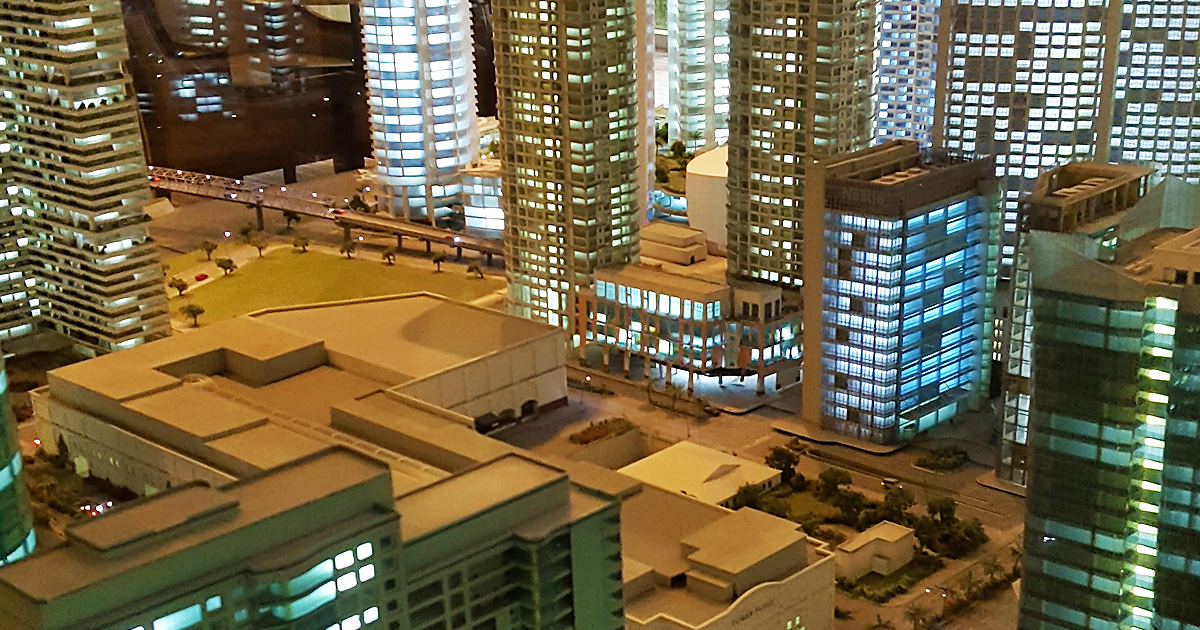
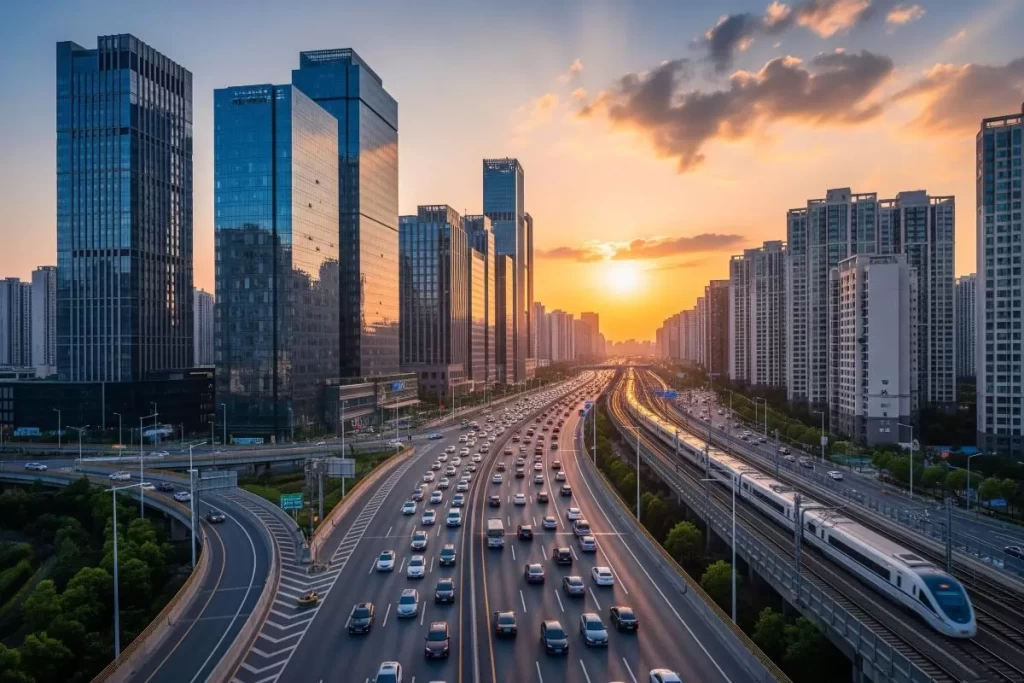
    A panoramic view of a modern city skyline with illuminated buildings, heavy traffic flowing through major roads, and a high-speed rail system crossing the urban landscape, illustrating the impact of transportation infrastructure on real estate and property development in the Philippines.
    The vitality of a city often reveals itself through the strength of its transportation networks. When new investments in access roads, high-speed rail, and utility systems emerge, the surrounding urban fabric gains renewed vibrancy. Such projects do not only strengthen mobility but also create a framework for more cohesive communities and expanding economic opportunities. The interplay of modern transit systems and urban density shapes a city’s evolving identity and its value in the real estate landscape.

    Focusing On Transportation Infrastructure

    To understand the importance of transportation infrastructure in property value, there needs to have a defined time-distance relationship between a property and its surrounding neighborhood. More commonly known as the location, such linkage, when combined with user movement patterns allows one to gauge a property’s ability to serve the typical real estate users in a neighborhood. For example, linkages with office, commercial, and educational institutions deem to be the most important with single-family residential neighborhoods. Therefore, developers need to determine neighborhood conditions and trends that may enhance or detract property values, one of which is public transportation.

    Especially in properties where private vehicles are uncommon, public transportation is a vital element that naturally makes transportation infrastructure just as important. In Kenya, for example, the travel time from Kiambu to Nairobi Central Business District used to be over two hours from 2010 to mid-2012. Upon the completion of the Thika superhighway, however, travel time was reduced to half an hour on-peak hours and fifteen minutes off-peak hours, which not only resulted in immense convenience, but also sparked a rapid increase in real estate values of the properties situated along the area.

    However, there are instances when the possibility of an improved transportation infrastructure may endanger a property’s investment potential. In South Yorkshire (UK), for example, the construction of a super tram resulted in reduced house prices, the said issue eventually eliminated upon its completion. A more permanent adverse outcome of transportation infrastructure development can be more evident in locations with newly constructed railway lines. In Hong Kong, for instance, transaction prices became heavily dependent on a property’s distance from the railway line. While such prices eventually improved, they only applied in areas not located on the railway line itself.

    The Business of Transportation Infrastructure Technologies

    Modern transportation management systems allow for the transportation of goods over great distances. This increased connectivity has resulted in increased business opportunities for producers and retailers. However, new and developing technologies are making it increasingly difficult for transport managers to make the right decisions about transportation infrastructures and software. As a result, businesses may be losing access to transportation management information and could face serious competitive disadvantages.

    The increase in cross-docking also increases the demand for efficient trucking infrastructures. Trucking applications represent one of the largest users of transportation management systems. It may be difficult for transportation managers to determine the appropriate transportation configuration. Without reliable infrastructures, drivers face substantial difficulties when faced with delays or other inconsequential events that affect the loading and transportation of goods. Additionally, transportation managers face challenges with scheduling their loads. Without advanced software, it is nearly impossible for managers to properly schedule transport and their loads.

    The failure of transportation infrastructures has resulted in many unforeseen consequences. Not only have businesses lost access to reliable transportation management information, but they may have also incurred significant competitive disadvantage. In most cases, transportation managers are unable to determine the optimal load factors for their cargo transport operations. Moreover, companies that fail to invest in transportation management systems face the risk of being left in the lurch when unexpected events threaten their cargo transportation operations. For example, if a major transportation business suffers a failure, customers would not be able to receive their products, and the company may even experience bankruptcy proceedings.

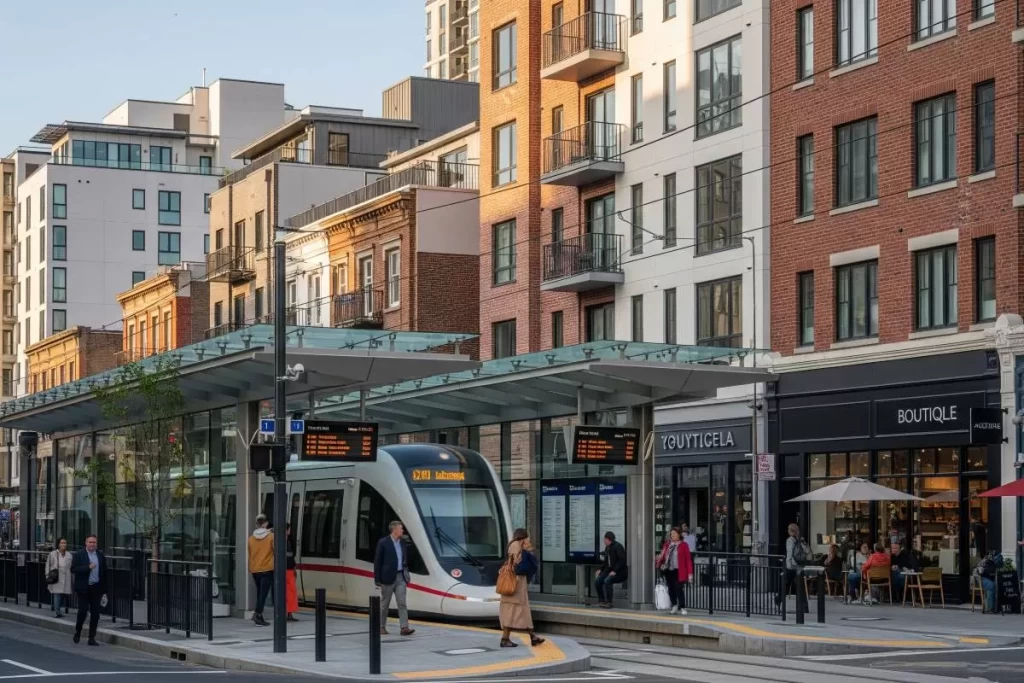
    A city tram stop surrounded by mid-rise apartments and active ground-floor shops with pedestrians waiting by the platform, showcasing the role of transportation infrastructure in supporting commerce, urban mobility, and real estate development in the Philippines.
    Transportation Infrastructure by Ian Fulgar The Architect of Ventures

    Today’s modern business environment requires efficient transportation infrastructures to ensure that businesses operate smoothly. As a result, large companies have begun to incorporate transportation management systems into their overall business strategies. As infrastructures continue to improve, modern businesses will no doubt experience significant competitive advantages. These superior systems will allow companies to take on new transportation challenges and to increase profits.

    How The Philippines Is Catching Up

    Filipinos are no strangers to the “Build, build, build!” catchphrase of the present administration, which eventually materialized into roads, bridges, airports, seaports, railways, and other forms of transportation infrastructure developments.

    As recent as February 2021, the Department of Transportation (DOTr) eyes two new railway projects in hopes of minimizing the inconvenience and financial losses caused by the long-existing traffic congestion in Metro Manila. The agency has now initiated the bidding for a general contractor for the extension of LRT-2, which is planned to have three additional stations in Divisoria, Tutuban, and Pier 4. On the other hand, LRT’s east extensions in Marikina and Antipolo are expected to start their operations on April 26 this year.

    Branching out from railway projects, infrastructure developments bound to transform Central and Southern Luzon are also under the works. As of 2021, the country eyes eight projects ranging from airports (Sangley International Airport), expressways (Subic-Freeport Expressway, Cavite-Tagaytay-Batangas Expressway), bridges (Bataan-Cavite Interlink Bridge), and more railways (LRT-1 Cavite Extension, LRT-6, Subic-Clark Railway, North-South Commuter Railway). Aside from convenience, these developments are bound to expand every property developer’s horizons for high-value properties outside Metro Manila, where larger cuts of land, open spaces and greater investments are expected to yield promising returns.

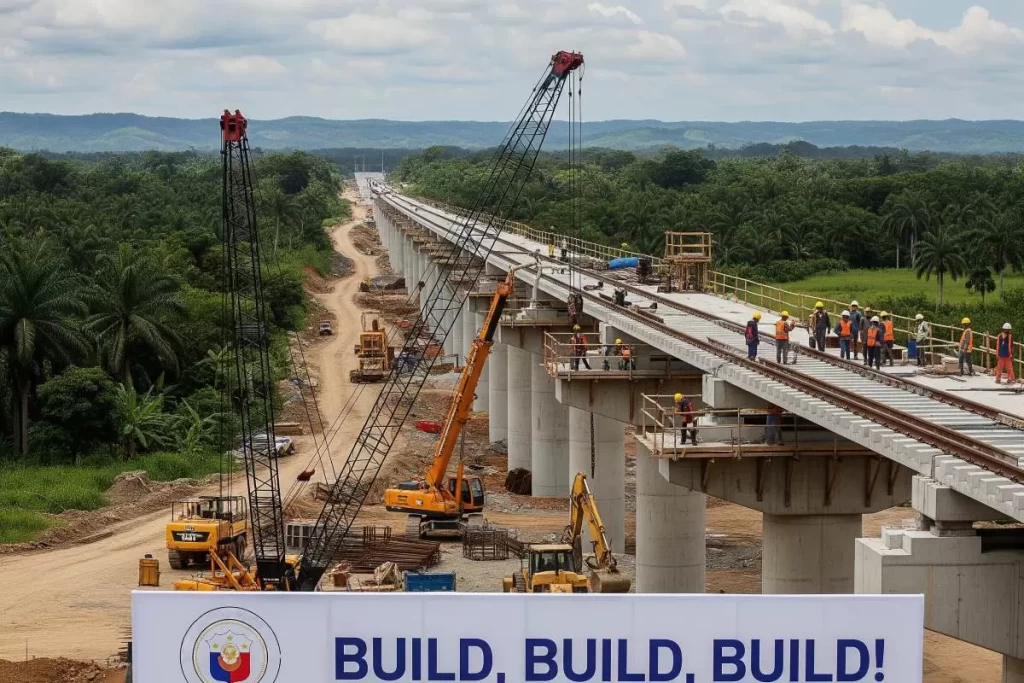
    A wide-angle image of a large-scale Philippine Build, Build, Build project site with cranes, elevated rail structures, and ongoing construction of bridges and expressways, showing how infrastructure developments reshape urban mobility and influence real estate growth.
    The recent decade has seen the nation propelled by the ambitious “Build, Build, Build” program, an agenda that seeks to transform the physical landscape of the Philippines. Rail extensions, new airports, interlink bridges, and expanded expressways emerge as pivotal undertakings aimed at alleviating congestion and strengthening regional linkages. These developments extend the reach of urban growth beyond Metro Manila into the expanding frontiers of Central and Southern Luzon. The scale of construction reshapes mobility, commerce, and settlement patterns across the archipelago.

    Should Transportation Infrastructure In Real Estate Instigate A Sense Of Urgency?

    It is no doubt that the direct bearing of transportation infrastructure in molding a locality’s economic growth may have partaken a new sense of urgency that calls for increased infrastructure, especially in developing countries where availability can be drastically low. However, the abundance thereof may result in possible property saturation along areas with desired infrastructure networks.

    When confronted with the announcement of a big infrastructure project, for instance, an airport, it is no surprise how this may lead to temporary market saturation as employees move into nearby housing units available within the area. This is where the fate of potential properties shift from mere location and infrastructure networks to the calculated foresight of individual property developers and homeowners.bu

    Although infrastructure development is more of a large-scale commitment that involves national camaraderie, both property developers and landowners can anticipate the appreciation dynamics of their desired properties before investing in one, more especially if it is located along a major infrastructure upgrade or a future infrastructure development is expected to take place. By carefully analyzing its projection in relation to supply, demand, and financial viability, one can eventually find a property investment having an unprecedented premium attached to it.

    By the way, if you are thinking about generating financial capital by using real estate property as collateral, you may want to know more about Republic Act or RA No. 11057 also referred to as the Personal Property Security Act (PPSA) first.

    How do you think we can further improve our transportation infrastructure? Please comment below to share your thoughts.

  • Water Jeepneys To Connect Manila and Cavite

    Water Jeepneys To Connect Manila and Cavite

    With the launch of the so-called water jeepneys, it is now possible to travel between Manila and Cavite in 15 minutes to an hour. A typical land trip can take up to three hours one way, depending on traffic conditions. The Department of Transportation‘s (DOTr) Secretary Arthur Tugade and the Maritime Industry Authority are currently discussing route expansions for these water jeepneys. Routes from Naic, Sangley, and Tanza in Cavite to SM Mall of Asia in Pasay will be added upon approval.

    Why Water Jeepneys

    Without a doubt, traffic congestion is one of the country’s most serious problems today. Metro Manila alone is ranked second-worst in the world for traffic congestion, trailing only the Indian city of Bengaluru. Despite the Philippines’ diverse public transportation options, commuters and motorists remain trapped in metro-wide traffic. A daily occurrence for millions whose livelihoods are dependent on city travel.

    As a result, the government has been committed to reforming the Philippine public transportation system. The launch of the Public Utility Vehicle Modernization Program in 2017 demonstrates this, as it enables the DOTr to explore public transportation alternatives, resulting in the gradual rise of “water jeepneys.”

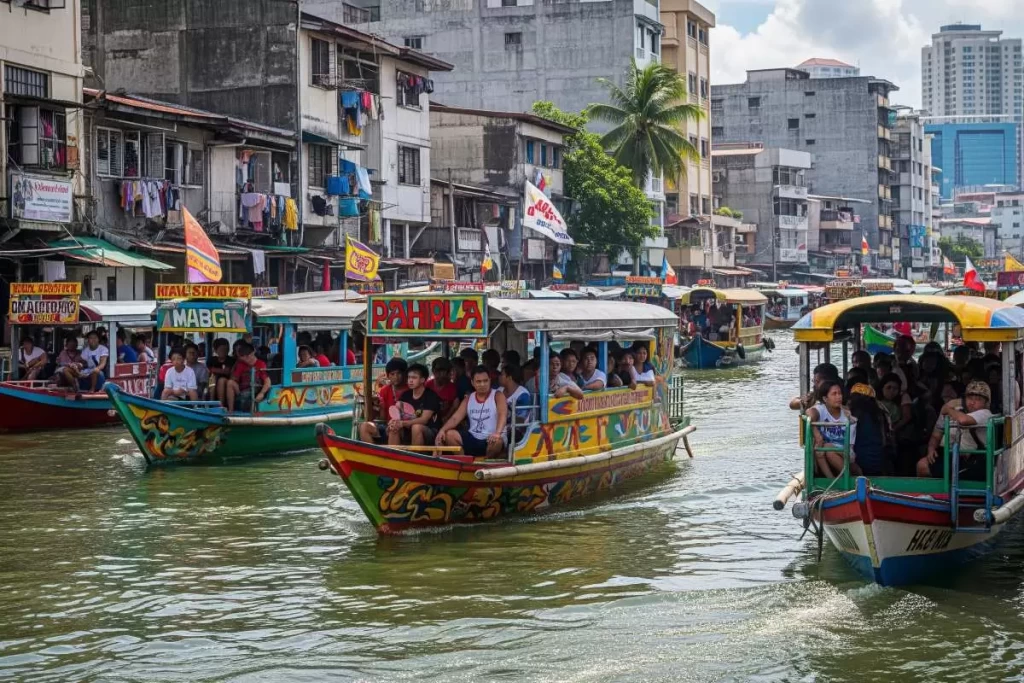
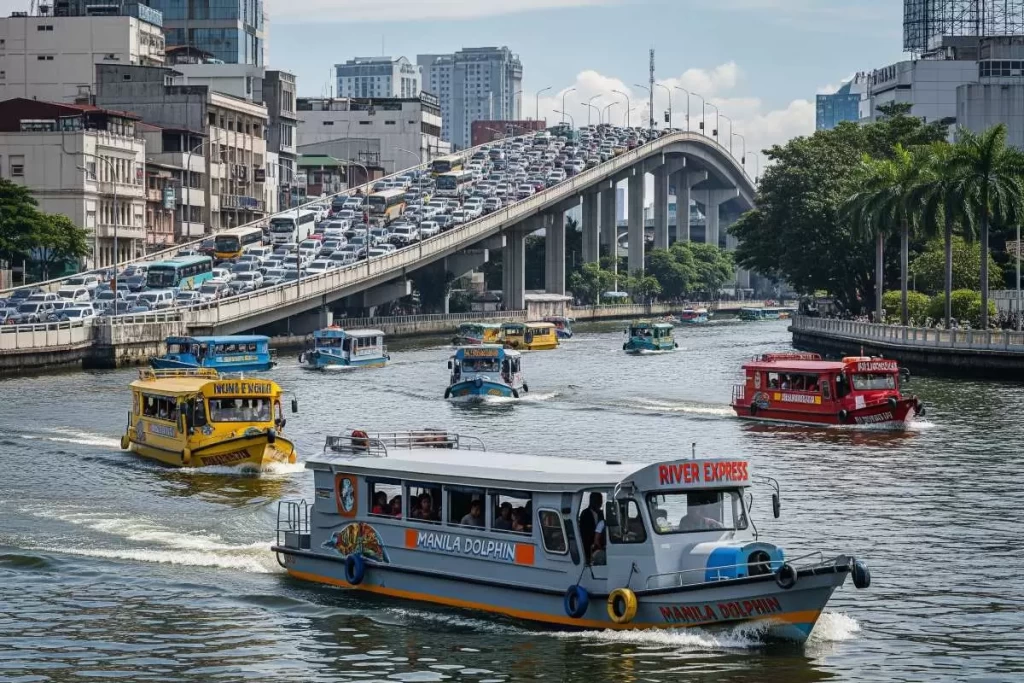
    A busy Philippine waterway in an urban setting with several colorful passenger boats known as water jeepneys carrying people along the canal, surrounded by a mix of old and modern buildings with laundry hanging from windows, illustrating the concept of alternative urban transport.
    Traffic gridlock in Metro Manila remains one of the most pressing urban dilemmas, with commuters enduring hours on the road despite a range of transportation modes. In response, the government has introduced programs that reimagine the role of waterways as active conduits for urban mobility. These experimental concepts, popularly known as “water jeepneys,” explore the potential of rivers and canals as transport corridors that can relieve road congestion. Disclaimer: These are conceptual explorations and not depictions of actual transport systems.

    Making Water Jeepneys “Mainstream,” Literally

    Residents of Cavite can look forward to reduced traffic hours of three to four hours following the recent launch of the Cavite – Manila Ferry Service, the concept of which was heavily inspired by Cebu’s “water jeepney” concept. The ferry service promises commuters a travel time of between 15 minutes and an hour, a significant reduction in comparison to the three to four-hour land transit from Cavite to Manila.

    The program was implemented through collaborative efforts between the Department of Transportation (DOTr), the Philippine Coast Guard (PCG), the Philippine Ports Authority (PPA), and the Maritime Industry Authority (MARINA).

    The MB Mercury, with a seating capacity of 27, operates between Cavite and the Cultural Center of the Philippines (CCP), while the MV Island Sabtang, with a seating capacity of 57, operates between Cavite and Lawton.

    Water jeepney fees will range from 160 pesos to 200 pesos depending on the route. In addition, children, students, senior citizens, and people with disabilities are eligible for special offers and discounts.

    Terminals are located near the Cavite City Hall on the way to the CCP port in Pasay and near the Manila Liwasang Bonifacio (Lawton).

    Reviving Maritime Transportation For The Masses

    Copenhagen, Hong Kong, and Singapore have demonstrated that ferries can effectively connect waterfront zones and areas without access to mass transit, thereby reducing overall street traffic. According to Norman Garrick, a University of Connecticut professor of Civil and Environmental Engineering, maritime transit relieves pressure normally handled by land-based transport by serving transit “deserts” such as abandoned waterfront industrial zones and complementing on-land transit systems.

    Despite being marketed initially as a tourist-oriented ferry service, the twenty-year-old Paris Batobus serves primarily as a congestion-alleviating mode of transport, removing an estimated one million passengers from the streets. Additionally, approximately 18,000 office workers in Nigeria saved over 24 hours of daily travel time following the launch of Metroferry, which allows them to travel from Lagos, Nigeria to the other side in less than 30 minutes.

    Apart from convenience, establishing maritime transit as the norm may have less tangible consequences, one of which is the luxury of relaxation provided to passengers. This is something that is difficult to obtain given the country’s complicated land transportation systems.

    An urban river scene in Manila with several passenger boats, including one labeled “River Express – Manila Dolphin,” moving along the waterway beneath a congested bridge filled with traffic, with buildings and palm trees lining the riverbanks, illustrating the concept of water jeepneys as alternative transport in the Philippines.
    Global cities have shown that rivers and harbors, when integrated into transport networks, can provide essential relief to overstretched streets. In Manila, the idea of water jeepneys brings forward the possibility of reviving waterways as daily corridors of movement and connection. This vision transforms rivers into active civic landscapes, blending infrastructure with the rhythm of urban life. Disclaimer: These are conceptual explorations and not actual transport systems.

    Modernizing Public Transport in the Philippines

    Due to a lack of attractive public transportation, the use of automobiles and motorcycles increases, aggravating already extreme congestion in the Philippines’ larger cities. Additionally, this results in economic and environmental costs. If public transportation’s quality does not improve significantly, its recent share will continue to decline as GDP and car ownership grow.

    Recognizing the limitless potentials offered by maritime transport is critical in resolving the fast-growing problem of traffic congestion, particularly in countries where public transportation cannot keep up with population growth and private car ownership.

    For centuries, island and lagoon cities have relied heavily on waterborne travel to achieve cargo and passenger mobility. It is possible that an increasing number of cities will soon be forced to rely on waterway transportation similar to water jeepneys.

  • National Building Code Of The Philippines – Its History, Current State, and Future

    National Building Code Of The Philippines – Its History, Current State, and Future

    From the first known written building code in 1758 BC to the national building codes currently implemented in various countries globally, building codes have evolved as growing demands in the building industry arise. Nonetheless, all codes, including the National Building Code of the Philippines, have their objectives remain the same. It is to assure the wellness and safety of the people through responsible building design and construction.

    What is the National Building Code of the Philippines?

    Building codes serve as the foundation guidelines of architects, builders, developers, and engineers in designing and constructing for any safe and secure built environment. Rather than serving as legally binding regulations, building codes serve as prototypes for legal jurisdictions to refer to when composing new statutes.

    They shall become laws upon being formally enacted by the appropriate governmental or private authority. However, it is important to note that the strength of their jurisdictions heavily influences the competitiveness of builders and suppliers alike.

    Since they primarily relate to the proper planning, construction, and occupancy of buildings and structures, building codes, like the National Building Code of the Philippines, are also highly vital in protecting public safety, health, and general welfare.

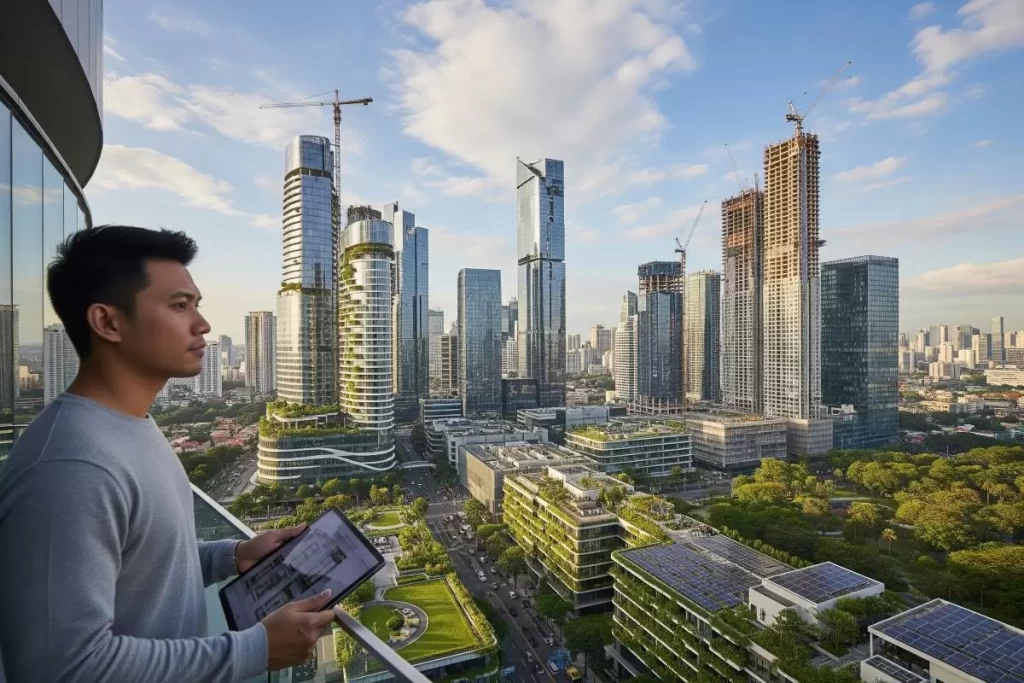
    A man stands on a balcony holding a tablet while observing a cityscape with modern skyscrapers, some under construction, alongside low-rise buildings with green roofs and solar panels, with visible integration of green spaces in the urban landscape under a partly cloudy daytime sky, symbolizing sustainable development guided by the national building code of the philippines.
    Building codes establish the essential framework that directs the growth of architecture and urban development. They serve as structured guidelines that architects, engineers, developers, and builders follow to create secure, resilient, and sustainable environments. The National Building Code of the Philippines exemplifies this principle by ensuring that construction practices uphold safety, health, and collective welfare. Its enduring relevance affirms its role as both a technical reference and a safeguard of the built environment.

    From 1970 to 1972 – RA 6541 to PD 1096

    The Philippines’ thriving urbanization coupled with population growth made the 1970s a fluctuating era for both its economic and physical development. It became a necessity to enact Republic Act No. 6541, which is an act to ordain and institute a national building code of the Philippines. While RA 6541 exists to regulate the construction industry, it still does not conform to the country’s developmental goals, infrastructure programs, and technological requirements at that time.

    To keep the country’s building standards at par with the on-going technological advancements in building design and construction from all over the world, the nullification of RA 6541 took place in 1972. This happened in the same year Martial Law took place, which dated September 21, 1972. The former was then replaced in 1977 by Presidential Decree 1096, more commonly known as the official National Building Code of the Philippines. All legalities were done by the now obsolete Ministry of Public Works, Transportation, and Communications and later replaced by the Department of Public Works and Highways.

    In its 1977 version, a huge emphasis was placed on enhancing the country’s technical expertise and professional know-how both in the public and private sectors. Throughout the implementation of this code, it has achieved its purpose of enforcing standardization on building requirements for their design, construction, occupancy, and maintenance. These intentions were all geared towards the general goal of building codes for securing better health, life, property, and public welfare.

    From 1977 to 2005 Revised PD 1096

    Nearly three decades later, the continuous rise in technological advancements both locally and globally again placed the need to revise the then in-practice 1977 National Building Code. This led to the formulation of its latest revision published in 2005, which is currently being used by the local building design and construction industry.

    For the spirit of continuity, homogeneity, and clarity, the latter was entitled “Implementing Rules and Regulations of the National Building Code of the Philippines (PD 1096)” with its rules and regulations mimicking the same formatting of its 1977 counterpart.

    This time, PD 1096’s IRR serves as a realistic response to the present times’ technological developments, rapid urbanization, and the advent of high-rise structures and mega-cities, among others. These emerging changes in urban development inevitably affect the design, construction, and purpose of the built environment.

    Furthermore, this shall also alleviate two main urban planning issues of over-building and over-paving. While over-building is one of the primary causes of urban congestion, over-paving equally results in widespread flooding and ambient temperatures. Provisions on the integration of physical planning and design concerns were also added to merge contrasting environmental design solutions.

    Identifying the Distinct Qualities and Changes Made for Each Version

    Application

    Compared to its succeeding versions, Republic Act 6541 provides a more specified section discussing the code’s application on a city or municipal-scale. It was applied to all chartered cities, municipal poblaciones and districts, and barrios of urban areas garnering populations of at least 2,000 people. It also applies to spaces where each hectare is occupied by 50 or more families.

    Developments like new town sites, residential subdivisions, commercial and residential sites, schools, housing projects, and other similar projects were made to abide by the code regardless of their immediate location’s population.

    Meanwhile, during its succeeding revisions, the PD 1096 of 1977 and IRR for PD 1096 of 2005 removed those provisions stated above.

    Endorsement

    In the case of RA 6541, a separate committee called the Joint Building and Environmental Planning Research and Standards Commission was formed to monitor its implementation and enforcement.

    The 1977 version of PD 1096 gives the Chief Executive Officer of the Department of Public Works and Highways, also known as the Secretary, full authority in overseeing the implementation of the code. A professional team of highly-qualified architects, engineers, and technicians must also be formed to assist the Secretary in fulfilling his duties and responsibilities.

    For PD 1096’s IRR, the Secretary, or the Chief Executive Officer of the DPWH, is likewise given full authority of both the administration and enforcement of the code. Provided, the officer shall be assisted by the National Building Code Development Office (NBCDO) formed through the DPWH Department Order.

    Content

    For its latest version, additional provisions were given so that each of its chapters will now have its own corresponding rules and regulations. Permit Forms relevant to its implementation and enforcement were also included in the publication. However, in the entirety of the IRR, Section 302.3 (Application for Permits) is generally considered as the most significant architectural provision for architects. This section discusses the signing and sealing of architectural documents to be exclusively reserved for registered and licensed architects. This entry was established to reflect the stipulations stated in Republic Act 9266, also known as “The Architecture Act of 2004.”

    With the Fire Code of the Philippines non-existent until 1977, Republic Act 6541 covered provisions on Fire and Fire-Resistive Standards and discussed in Title 2 of the code. While the present national building code enforced Fire-Resistive Requirements, they were only applicable in construction applications, not the occupancy itself.

    In terms of occupancy, it was not until 2005 during the issuance of the IRR for PD 1096 when additional divisions for Group A (Residential Dwellings) and Group J (Accessory) were declared. Provisions on parking capacity per occupancy, lot typology, easements, sightlines, right-of-way, sidewalks, and arcades were also added to its current version, all of which intricately specified on Rules VII and VIII.

    All versions tackled different provisions and limitations concerning their Allowable Floor Areas. For RA 6541, dwellings shall occupy no more than 90% of a corner lot and 80% of an inside lot, all the while following the light, view, and easement provisions given by the Civil Code of the Philippines. For PD 1096’s 1977 version, the Secretary is given full jurisdiction in specifying the allowable floor areas for each occupancy. Whereas included in its Development Controls, its IRR version provided certain formulas to use per occupancy type.

    Examples of these Development Controls include the Total Lot Area (TLA), Percentage of Site Occupancy (PSO), Total Open Space within Lot (TOSL), Unpaved Surface Area (USA), Impervious Surface Area (ISA), Maximum Allowable Construction Area (MACA), Allowable Maximum Building Footprint (AMBF), Gross Floor Area (GFA), Total Gross Floor Area (TGFA), Allowable Maximum Volume of Building (AMVB), Outer Faces of the Building (OFB), Building Height Limit (BHL), and Floor-and-Lot Area Ratio (FLAR). Calculations using the mentioned terms as variables were also provided for a more quantitative approach with the Development Controls.

    Exceptions for Traditional Indigenous Family Dwellings and Public Buildings

    Traditional indigenous family dwellings are exempted from following the coverage of Republic Act 6541 to a certain degree. That is if their construction cost per dwelling does not reach more than Php 5,000.00 and is exclusively used for residential purposes of the owner and his immediate family.

    While the 1977’s PD 1096 exempts all traditional indigenous family dwellings, regardless of their construction cost, from following the provisions of this code. Their allowable construction cost to be exempted from the code also rose from Php 5,000.00 to Php 15,000.00. They are also exempted from paying building permit fees along with public building application projects.

    A traditional bamboo hut with a thatched roof stands in the foreground beside a lush green rice field, with palm trees scattered across the scene and a multi-story building under construction rising in the distance under a partly cloudy sky, illustrating the coexistence of indigenous dwellings and urban development in the context of the national building code of the philippines.
    Traditional indigenous dwellings occupy a distinct position within the architectural framework of the country. Their exemption from the National Building Code of the Philippines acknowledges the cultural heritage and resourcefulness embedded in their construction. These structures embody the ingenuity of vernacular design while coexisting with the rising demands of urban development. The juxtaposition of the rural hut and the expanding city reflects the ongoing dialogue between tradition and modernity.

    Is the Philippines bound for Another Version of the National Building Code?

    Nearing two decades since its latest revision in 2005, both lawmakers and experts in the industry classify the present building code as “outdated” and “antiquated.” The growing trends in the construction industry, modern urban planning, population growth, and disaster risk reduction further strengthened the concerns from both Houses of the legislative branch to amend the present building code into something more in-line with the country’s current status in sustainability issues, infrastructure, and building technology, professional politics, among others.

    At present, two legislative bills were filed dealing with the strengthened implementation of the building code. Albeit both with different approaches.

    A wide view of a congested multi-lane highway filled with vehicles under a hazy sky, surrounded by tall buildings including some covered with greenery and one with solar panels on its roof, visually representing the challenges of urban growth, pollution, and the push toward sustainable building reforms in Philippine cities.
    Nearly two decades have passed since the code’s last revision, leaving its standards strained under the weight of contemporary realities. Shifts in sustainability, technology, urban growth, and disaster resilience have intensified calls for comprehensive reform. Legislative proposals now aim to reinforce accountability, integrate green building measures, and align construction practices with the demands of modern Philippine cities. These initiatives reveal both the urgency of the present and the aspirations for a more responsive built environment.

    House Bill 5607 “An Act Strengthening Presidential Decree No. 1096, The National Building Code of the Philippines, as Amended, by Mandating a Comprehensive Nationwide Inspection of Buildings and Imposing Stiff Penalties Against Building Officials who violate the Pertinent Provisions of the said Code”

    While all versions of the National Building Code of the Philippines focus on building standards throughout its design and construction process, HB 5607 seeks to conduct a comprehensive nationwide inspection of all buildings in the country while imposing strict penalties for violating Building Officials.

    Senate Bill 2087 “An Act to Ordain the New Building Code of the Philippines”

    Contrary to the earlier bill, SB 2087 altogether seeks to provide a New Building Code which contains progressive regulations such as the “Green Building” paradigm and its institutionalization, preservation of sight-lines and vistas, integrating disaster resiliency standards, and the stronger implementation of the right-of-way. However, the structure of the 1977 PD 1096 shall be maintained to prevent the disruption of the architectural profession and to maintain existing developments adhering to previous versions of the code.

    According to the explanatory note by the bill’s author, buildings situated in the country are not conducive to human health while citing the Philippines as the second deadliest country in the Asia Pacific for household air pollution with 16 days annually spent stuck in traffic, and Php 128 billion economic losses recorded in 2016 due to severe weather disturbances.

    Furthermore, the author explains that these instances are directly related to the way cities and buildings are developing with little to no considerations to overbuilding, over paving, inappropriate zoning, and ever-escalating violations of physical planning and building laws which remain largely unpunished.

    Potential revisions include streamlining the process of acquiring building permits, standardizing the specifications of building materials, and introducing new building categories. Contradicting standards with BP 220 shall also be settled in the formulation of the proposed New Building Code of the Philippines.

    Participating in the Growth of the National Building Code of the Philippines

    To say that building codes are a complex body of regulations would be an understatement. As these regulations are written, rewritten, and interpreted by a legion of professionals ranging from policymakers, planners to inspectors, conflicting arguments along the way is part of the refinements. This is why it is important for progressive mindsets to keep an open line of communication between the public and private professionals involved. Proper aptitude and disinterestedness in personal gains are essential to unravel the tangle of regulations surrounding the ever-evolving design, planning, and construction industry.

    How else can we make the building code better? Please drop your comments below. If you need an architect to help you understand more about the building code for your property projects in the Philippines, please feel free to get in touch.

  • Assisted Living In the Philippines, The Next Opportunity?
    Assisted Living In the Philippines, The Next Opportunity?

    If you are considering entering into an assisted living development project, it may be helpful for you to understand what an assisted living home is and why it is more important than you might think. There are a wide variety of assisted living facilities available in the Philippines and around the world. Most facilities are designed to meet the needs of the elderly, disabled, and physically challenged. However, there are also some assisted living homes that are specially designed for those who do not have disabilities.

    A Look Into The Assisted Living Industry

    An assisted living home or residential facility is actually a temporary housing facility intended for those with special needs or for senior citizens who either cannot or do not wish to live on their own. The term assisted living refers to housing that is specifically designed to meet the individual needs of older adults who are in need of assistance in maintaining a comfortable lifestyle. This is particularly important when it comes to seniors who seek to maintain independence over placing unnecessary burdens on their loved ones. Then again, senior citizens are at an increased risk for developing physical and/or mental health problems, and this can have adverse effects on their ability to live a life independent of others. Additionally, they tend to develop Alzheimer’s or other memory-related diseases as a result of living on their own. This can make it extremely difficult for them to retain information for any length of time.

    A modern assisted living facility exterior with stone and siding finishes, large windows, landscaped gardens, and elderly residents walking along tree-lined pathways, showing a comfortable and welcoming environment for senior citizens.
    An assisted living residence embodies the union of comfort, security, and purposeful design. The architecture seeks to sustain the independence of older adults while ensuring that daily needs are met with dignity. Landscaped grounds and generous windows emphasize both wellness and community connection. The environment conveys a setting where residents may age gracefully in harmony with supportive care.

    The Difference Between Assisted Living and Nursing Homes

    While nursing homes provide 24/7 nursing care and monitoring for their residents, residents in assisted living communities generally promote only custodial care with outsourced medical services. The assisted living lifestyle is ideal for active seniors who seek to escape the worries of everyday problems, making most of life, and tending to their hobbies or leisure while finding opportunities for social interaction of similar mature audiences.

    A spacious assisted living facility common area with high ceilings, large windows, and a fireplace, where elderly residents are playing musical instruments, making pottery, playing chess, and walking around in a bright and engaging environment.
    An assisted living community thrives in spaces that elevate the daily experiences of its residents. Interiors are designed to nurture companionship, creativity, and a renewed sense of purpose in later life. Light-filled halls and welcoming communal areas provide opportunities for seniors to engage with one another in meaningful ways. The environment becomes both a sanctuary of comfort and a setting for dynamic social connection.

    Designing Residential Units For Assisted Living

    Assisted living homes often consist of an apartment or other type of residential unit that has all the basic utilities such as a refrigerator, stove, toilet, and sink, but it may also include other services that assist the senior in his or her everyday tasks. Many assisted living facilities also provide some type of assistance with transportation to and from the residence, if required, as well as with meals. Corridors may be furnished with handrails to aid in mobility, doors, ramps, and toilets may be designed in accordance with the disability act, residential units would be equipped with medical emergency response systems, floor finishes may be retrofitted with a higher coefficient of friction tiles, and the likes.

    Benefits of Assisted Living

    The benefits to the elderly residents of assisted living homes are two-fold. First, while the senior resides in his or her own apartment, he or she can still maintain independent living skills without the added stress of having to worry about their personal care and support. Second, assisted living homes are a safe environment for seniors, because the residents are able to safely control access to their personal belongings and other resources. They are able to choose which residents they want to help with their personal care duties.

    Type of Assisted Living Projects

    The type of assisted living residential facilities that are available vary widely from region to region. In most cases, senior citizens can find assisted living units within a specific area. Some city zones will allow residents to live in residential centers while others allow residents to live in apartments. If you live in a relatively large city, you may be limited to one center, but in smaller cities, you may be able to find a center that has multiple areas.

    Multiple levels can also be found within some assisted living facilities, allowing residents to maintain independence while also being able to take advantage of the medical care and assistance they need. Some developers invest in multiple floors of condominium towers as bulk discounts and retrofit these floors for the assisted living operations. Just like club shares, they offer transferrable membership privileges. Senior members can actually opt to move from one building to another operating under one brand at any time in various city locations across the country.

    The interior of Harmony Senior Living, a modern assisted living facility with a multi-story atrium, large windows showing city views, activity areas including a gym, card tables, an art studio, and lounge spaces, where elderly residents are actively engaged in wellness and leisure activities.
    Assisted living in contemporary Philippine cities evolves into adaptive environments that respond to both the density of the metropolis and the changing needs of its senior residents. Within these urban residences, architecture organizes spaces to sustain independence while granting seamless access to essential care. Atrium-centered layouts, expansive glazing, and layered amenities establish a lifestyle that is both dignified and engaging. The design framework encourages vitality through activity spaces that cultivate wellness, creativity, and sociability.

    Required Services For Senior Residents

    Another important factor that may help determine the cost of assisted living is if the senior communities provide a mix of services. This can include activities that are geared towards fitness, personal development, mental stimulation, and other activities that the individual may enjoy doing in the community.

    There are several types of services offered by residential facilities, including geriatric activity centers, laundry, shopping, housekeeping services, meals, medical services, and others. While some assisted living centers offer more services than others, these services can vary greatly. For instance, in larger cities, the senior center may have any or all of the services that an apartment does. In fact, many of these residential facilities, especially larger assisted living centers, offer large open parks, function halls for senior community events like dances and art programs, physical therapy for seniors, nursing care clinics, entertainment studios, a fully integrated commercial kitchen, full-service laundry, and similar amenities. While some of these apartment homes do offer personalized neighborhood services like housekeeping, laundry, grooming, and therapy, it is possible to obtain them at a cost. Depending on the type of business model, the services may be included in a monthly or weekly rate, or even offered at no charge for members or shareholders.

    An aerial view of a modern senior living community featuring landscaped walking paths, outdoor seating areas, a Creative Hub for art and music, a Nursing Care Clinic, a fitness center, and a dining facility, designed to promote a vibrant and engaging lifestyle for elderly residents.
    Senior communities flourish when architecture integrates an array of spaces that nurture wellness, creativity, and social engagement. Beyond shelter, the built environment extends itself to provide areas for art, fitness, dining, and medical care within a cohesive framework. Landscaped open grounds and specialized facilities reinforce the vision of a community that sustains both vitality and comfort. Each feature contributes to a holistic lifestyle shaped by thoughtful planning and responsive design.

    Lifestyle Residences vs Service Facilities

    There are many reasons why people choose assisted lifestyle residences integrated with various amenities and services over mere assisted living facilities. While it is true that assisted living facilities can provide many things for senior citizens, there are also numerous challenges in their upkeep and operational funds. Many consumers and facilities have had to tighten up their budgets and become creative in converting to value-oriented senior lifestyle options.

    However, those that do choose for more traditional senior living facilities may find a wider variety of innovations in new locations such as green and smart homes, eco-friendly living, and expanded amenities in assisted living facilities. These new locations are great places to live because they offer a higher quality of life as compared to the usual practices of compartmentalizing services. In addition to the makeover of new facilities, some consumers may find that traditional assisted living options are being discontinued, which makes the choice of expanded assisted lifestyle facilities or community residences even more attractive.

    Seniors can choose from assisted apartments or assisted homes depending on their needs. If they are unable to do some of the activities at home, they will find that they are able to enjoy activities that do not require leaving their house. Some assisted living facilities even offer activities such as swimming, walking, hiking, gardening, golfing, playing games, visiting museums, libraries, and visiting art museums.

    A modern senior lifestyle residence featuring a rooftop garden with walking paths and seating areas, a swimming pool, a library, green walls, and solar panels, with elderly residents enjoying the sustainable and wellness-focused amenities in an eco-friendly environment.
    Contemporary senior communities are redefined through architecture that merges sustainability, wellness, and innovation. These residences cultivate a living environment where green design strategies and leisure amenities converge to enrich daily life. From gardens and libraries to fitness and recreation spaces, the built form embodies vitality in later years. The architecture affirms that thoughtful design extends longevity and enhances the quality of living for mature residents.

    The Type of Activities Establish The Design Direction

    If you are interested in planning the services that a particular center offers, you may want to check with some of the senior residents in an area or with the administrator to determine what amenities they offer. It would be also wise to collect brochures and contracts with the facility for future references. It is important that prospecting families are assured of the safety, variety, and welcoming environment while being able to provide their loved ones with the services they need.

    In choosing a senior community development project, the first step is to find out the level of service that is unique to the project. It is best to decide on a community that provides an array of activities, whether it is physical activities that may not involve going outside their apartment or residential units very often. When looking into designing and planning spaces, proximities, and orientation in assisted living projects, make sure that the services are accessible and efficient. Vital features may include housekeeping, transportation, food preparation, and cooking, laundry, housekeeping, shopping, laundry, meals, personal care, errands, medical services, and a variety of other tasks.

    A spacious senior living community common area with elderly residents practicing yoga, cooking with a chef, and relaxing in a lounge, with a Welcome Transportation Lobby visible, designed to provide integrated services that promote an active and social lifestyle.
    Senior-oriented residences thrive when architecture integrates spaces that encourage wellness, creativity, and sociability. A multi-functional hall becomes the heart of the community, where activities such as fitness sessions, culinary experiences, and leisurely gatherings unfold. The design accommodates both service efficiency and personal enrichment, ensuring that residents feel supported while remaining engaged. A welcoming atmosphere emerges as services and amenities are seamlessly embedded within the spatial composition.

    Assisted Living Outlook In The Philippines

    Assisted living is a great option for those who want to stay independent, while still receiving the support and care they need to maintain their health and dignity. While there are a few differences between assisted living centers and traditional retirement homes, most centers are designed to offer the same level of care and services that traditional retirement homes provide.

    The number of senior communities is constantly growing as more people find that they are in need of assisted living. There are thousands of senior communities and apartment complexes that are available to meet the needs of the aging population. Senior homes are now located in cities throughout the country and are often located close to major employers. This allows seniors to live in a safe, stable environment while still being able to work or relax while they get the treatment and care they need.

    Agricultural or nature-centric properties in the Philippines offer unique opportunities for development into eco-tourism resorts, incorporating an assisted living business model. Rich in natural beauty and biodiversity, these properties can transform into sustainable resorts, providing seniors with a tranquil and engaging environment for their retirement years. By integrating assisted living facilities within these eco-torusim resorts, seniors can access necessary care and support while relishing the benefits of living close to nature. Such an innovative approach not only delivers a valuable service to seniors but also promotes conservation of natural landscapes and contributes to eco-tourism growth.

    A tranquil senior living community in a lush tropical environment with bamboo buildings, green roofs, ponds, landscaped gardens, and walking paths, where elderly residents are practicing yoga, gardening, and strolling, showcasing an eco-tourism senior community model in the Philippines.
    Senior-oriented residences in nature-rich environments embody an approach that combines wellness, sustainability, and cultural sensitivity. Architecture in these settings adapts to tropical conditions with bamboo structures, green roofs, and landscaped pathways that foster immersion in nature. Residents engage in activities that balance leisure with vitality, such as gardening, yoga, and reflective walks. The community becomes a sanctuary where health, independence, and ecological stewardship intersect.

    Why Assisted Living in the Philippines?

    Starting an assisted living business in the Philippines to cater to local and foreign seniors would be an ideal investment. Similar to medical tourism, Filipinos are sought after for their warm smiles and hospitality from around the world. Respect for elders is strongly engrained in the culture. Filipinos are familiar with various foreign settings due to their number of overseas workers. They can also adapt easily to most languages. As a matter of fact, English as a language is taught in school.

    The country is composed of thousands of islands as well as surrounded by waters. Almost all urban and provincial development in the country is still on the rise. If you know where to look, most property gems are oriented towards some scenic view, natural landscapes, or integrated with the perfect island experience of greeneries, water, sunlight, and fresh air.

    Despite deep traditions, the next generations are gradually adapting to a lot of modern lifestyles. The number of senior communities is constantly growing as more people find that they are in need of assisted living. There are thousands of senior communities and apartment complexes that may be developed and are available to meet the needs of the aging population.

    How well do you think the Philippines will adopt assisted living and senior care services away from home? What will be the benefits and conditions of senior citizens in the Philippines? Please drop your questions or comments below. Looking forward to hearing from you!

  • The Personal Property Security Act – A Guide To PPSA

    The Personal Property Security Act – A Guide To PPSA

    PPSA or Personal Property Security Act In The Philippines

    Republic Act or RA No. 11057 also referred to as the Personal Property Security Act (PPSA) is an important law for establishing, monitoring, and registering security from personal properties in the Philippines.

    According to this law, the government will ensure that the proper steps are taken in regard to the collection of funds from real estate collaterals for any public or private use. It was enacted, amended, and signed into law on August 18, 2018, as announced by the Department of Finance, with the aim of improving the efficiency of government programs by restructuring the way the process of security and collateral works.

    Agencies Behind RA No. 11057

    The Philippine Department of Finance operating with the Philippine Department of Justice is in charge of circulating and implementing the rules and regulations surrounding the PPSA in cooperation with the Philippine Land Registration Authority (LRA). This law seeks to protect the rights of citizens over their private properties and credit collections.

    The Philippine Land Registration Authority is launching a central electronic notice registration platform, which seeks to give electronic ways for searching and registration of notices. The government will also provide assistance to public sector banks when it comes to debt settlements. However, during the development of this electronic registration from the date that the PPSA has become effective, existing laws will continue to apply.

    Two people sit at an office desk reviewing PPSA property registration documents with a laptop open to the Philippine Land Registration Authority’s digital platform, alongside printed records, pens, and an official government seal in view.
    The Philippine Land Registration Authority introduces a digital platform that transforms how notices are registered and accessed. This initiative operates under the guidance of the Philippine Department of Finance and the Philippine Department of Justice in enforcing the PPSA. Citizens gain more accessible channels to secure their property rights while ensuring efficient debt settlement support for public sector banks. The transition phase respects existing laws until the system reaches full implementation.

    The Objective of the PPSA

    PPSA aims to spur economic activity by promoting accessibility to credit with the lowest exposure to personal property, particularly for micro, small, and medium enterprises (MSMEs). It will provide a much more secure and legal transactions in the Philippines with the introduction of a centralized notice registry to properly enforce interests in security over personal properties.

    According to this law, the personal property of the borrowers can be transferred from private sector banks to government agencies or financial institutions without completely losing their rights of property. In addition, under RA No. 11057, public sector banks will provide services such as debt settlement to all the borrowers in the country if the government deems it necessary.

    The amount that the government will transfer to the borrower will include any income tax paid as well as any charges that were paid on loans, such as interest and penalties. However, it will be specified how much the government will provide to each individual, the size of the property that the borrower has, and the tenure during which the borrower has the property.

    Creditors May Dispose of Collaterals Without Judicial Process

    A secured creditor may now dispose of or sell the land collateral either publicly or privately. It is important to note on Section 47 under Expedited Repossession of the Collateral, that the secured creditor may take possession of the collateral without judicial process if the security agreement so stipulates. Provided that the possession can be taken without a breach of the peace.

    Borrowers Have To Settle Debt Balances

    Meanwhile, it is also mandatory for the borrower to fulfill any deficiency left of the credit. Previously, the laws in the Philippines recognizes that the foreclosure of a property automatically extinguishes any unfulfilled debt. And that the secured creditor has no means to collect or recover any of the remaining financial deficiency. This is no longer the case.

    Intellectual and Other Movable Properties

    Under the Personal Property Security Act (PPSA) as guided by the Civil Code of the Philippines, intangible properties also know as movable properties such as receivables and intellectual property rights can also be leveraged as collateral for loans. Registrable collateral may encompass shares of stock, bank cheques, negotiable instruments, negotiable documents of title, consumer goods, motor vehicles, store inventory, deposit accounts, livestock, equipment, receivables, intellectual property rights, future property or after-acquired assets, and related properties.

    However, as of the moment, the PPSA cannot include aircraft and ships because they are mandated under different sets of laws. Aircraft as collateral falls under the Civil Aviation Authority Act of 2008, while ships as collateral will be under the Ship Mortgage Decree of 1978.

    A woman in a store stands behind a counter holding a PPSA loan document, with neatly arranged merchandise on shelves, a stack of financial forms, and a pen placed on the countertop.
    The PPSA, in harmony with the Civil Code of the Philippines, redefines the architectural boundaries of collateral by extending its scope to movable and intangible properties. This legal framework recognizes the value of assets beyond land and buildings, including receivables, intellectual property, and after-acquired goods. It sets a structured order for the registration of collateral that may range from motor vehicles to livestock. Certain assets, such as aircraft and ships, remain governed by separate legislative frameworks that preserve their distinct regulatory domains.

    Real Estate As Traditional Collateral

    Before the enactment of the RA No. 11057, banks and other lending institutions prefer traditional assets such as buildings, land, real estate, and other immovable properties as collaterals because there is already an accepted standard of registration for titles. The nature, scale, and the size of these immovable properties make them ideal candidates for enforcing any security made against them.

    Electronic Registry for Security Notices

    The Personal Property Security Act will correct the old tradition by working with the Philippine Land Registration Authority to promote a centralized electronic registry platform to evaluate and monitor notices of security interests and liens in personal properties from both movable to immovable assets.

    More importantly, the PPSA is encouraging a unified set of rules in processing and enforcing security interests in both movable and immovable properties. Any parties wishing to enter loan agreements may only need to observe simple and straightforward steps, such as the following:

    1. A written agreement signed by both parties
    2. State the description of the collateral and arrangement
    3. To file and register the security interest notice with the electronic registry to specifically state the status of possession of the immovable property or the control of the account if the collateral is an investment property

    These electronic records will be treated as public records and will be free of charge for the digital searches of the registry records or for the enrollment of termination notices.

    PPSA and the Property Business In The Philippines

    If you are a small to medium business looking for other access to financing by using personal property or movable assets as collateral to generate additional capital, then the Personal Property Security Act may ease any tension instilled by traditional arrangements to offer a much more secure and legal avenue to look into.

    The government is also working on creating special specific guidelines for more complex credit negotiations. Landowners into the property development business can now better secure design and construction funds from idle lands by virtue of the promulgation of the PPSA or RA No. 11057. With the right master plan and project design, the early selling of the unit inventories would quickly aid in dissolving any outstanding credit balances without the usual fear of foreclosure.

    How do you think the Personal Property Security Act can help you with your business? What type of sellable or rentable projects can you do with your property if you had the funds for them? Please drop your comments below. If you need to consult architectural strategies for your property ventures in the Philippines, please feel free to get in touch.

  • How To Start A Real Estate Business With These 8 Essential Tips

    How To Start A Real Estate Business With These 8 Essential Tips

    Starting Your Own Real Estate Business

    If you have been thinking about starting your own real estate business, there are some basic tips that you will need to follow. In this article, you will learn what it takes to become an entrepreneur and how to start a real estate business. You will also discover what aspects to consider when starting a real estate business and why they are important.

    Whether you are venturing alone or with a team, bear in mind that the real estate business is, at the end of the day, still a business. That means you have to start thinking like a business owner rather than as an agent on commission. A responsible business owner will need to conduct due diligence and exercise a lot of planning ahead.

    When you are looking to invest in real estate as a business owner, one of the first things that you need to do is research. It is not only important to get the facts right but to also look into any benefits that you might have as well. A good amount of time spent on researching and attending workshops will ensure that you know how to handle your properties.

    Here are some important tips to get you started on the journey:

    1. Mortgage Reduction Through Rentals

    Most real estate generates income by renting properties. You might think that there is only one type of rental property, but there are actually many different types of rental properties. Depending on how you manage your investments, you can choose from commercial properties, residential rental properties, industrial property, or even vacant land. Tenants pay the agreed-upon amount each month that goes toward the mortgage on the property. Eventually, you get the money back from your tenants and claim the rest as profit.

    Maybe you have also heard about passive income and how renting out rental properties is a great way to do so. Passive income is the type of income that you get from the initial efforts that you put into it, without having to do much of anything after. Real estate can provide that passive income stream from receiving those monthly rentals.

    To get the most out of your passive income into savings for future capital, it would be wise to keep an active income on the side from your existing business or services to cover your daily overheads. Otherwise, you might end up spending all those passive income and lose your opportunity for growth.

    2. Of Insurance and Taxes

    Almost every rental property owner maintains insurance policies for their rental properties. No matter if you have insurance as required by law or not, insurance premiums are tax-deductible as a business expense on your tax return. This means that, when it comes time to start a new mortgage, there is little to lose when taking out insurance for your property.

    You may want to calculate how much money you could save in monthly insurance premium payments by using the cost of insurance on your property. If you take all your insurance premium payments and divide them among your different rental properties, you will be able to see the amount of money you could save each month. Now add up the total premiums paid on all your rental properties, as well as the average insurance premium cost. You can see the amount of money you could save by combining your insurance premium payments into one large payment each month.

    Another way to cut costs for insurance is to add a second insurance policy for your other rental properties. While adding two policies together may not seem like an expense to you, it does add another payment and is more difficult to keep track of than just adding a single insurance policy to your main policy. It is also easier to get caught in the crossfire of an existing policy and will have to be canceled if need be. By using separate insurance policies for your other properties, you will be able to avoid this problem. Which will in turn save you money on insurance premiums.

    A minimalist modern house at dusk composed of clean rectangular volumes, expansive glass windows, and a sleek illuminated swimming pool in the foreground, visually representing financial optimization in the real estate business.
    In the evolving terrain of the real estate business, insurance becomes more than a precaution—it defines financial foresight. Rationalizing insurance premiums across multiple rental properties produces measurable benefits when viewed through a long-term lens. Aggregating these costs unveils tangible opportunities for strategic savings. As property portfolios expand, optimized policy structures reduce complexity and safeguard income streams.

    3. Pick Locations With High Probability For Inquiries

    A wise decision for a real estate business is to invest in properties in an attractive location and offering easy tenants. You should target a city with a lot of people who want to rent apartments. For example, residential properties or condo units near universities or within high-density commercial districts. Aside from the many possible inquiries, tenants tend to lock in for longer periods due to the nature of school programs or employment commitments. Once you identify a vicinity with a lot of people who want to rent apartments, then find a property that will suit your needs. You could purchase an old storefront or an apartment complex, or you could buy a home or business, to lease or resell it.

    4. Flip, Develop or Repurpose

    If you can’t afford to buy a decent ready-to-move-in home, then you can also look into investing in real estate through commercial ventures. This means building new homes or places of business. Commercial real estate investment is more popular today than ever before because of the low mortgage rates and the opportunity to earn extra money.

    You can bargain hunt for distressed properties with existing structures to renovate or flip into fresh properties. Saving a structure abandoned due to changing markets to be repurposed into another property product could save you a lot of time and money. Or if you are persistent enough, you may be able to find good deals in unused lots and subdivide them into several unit inventories to sell or operate.

    Again, the key to successful real estate investing is finding the right location. Even for commercial ventures, it is important that you choose an area that is near a lot of people and that has a great deal of potential. You will have to research the area and look at the area’s zoning rules, taxes, and other regulations to make sure you choose the area with the right tax structure and zoning that meet your vision. You should be willing to make some changes if necessary to the zoning and/or other rules to make the most of your investments.

    Before committing to the property, it is always best to also consult your architect for any possible marketable product in the area or if you have the right idea that fits the zoning classification of your property. The architect could also warn you of any pitfalls to watch out for from poor orientation, hazardous utilities, flooding, undesirable neighborhood, to other detrimental site conditions. If you are looking for an experienced architect friend to help you select or design properties, please inquire at Fulgar Architects.

    5. Leveraging Your Property For Investors

    Once you have decided what type of business you want to enter, the next step is to look for investors. You can go to investment banks to discuss the possibility of investing with them or visit the Internet and search for real estate investors. You can also use a realtor to help you find a possible buyer for the house you are selling even prior to construction. With permission, you may be able to show your architects’ drawings and perspectives to visually communicate your intentions for the project.

    Most real estate investors will be interested in the purchase of multiple real estate properties and divide the inventories amongst their investors, who then get a cut from the sale or lease of the property to customers. Some landlords rent out properties exclusively to club members, while others rent out all of their real estate properties to tenants in the general public.

    The future can potentially be huge if you know what to prepare for and how to leverage your asset. Real estate investments are subject to economic, market, and financial movements. Then again, they are quite easy to invest in because usually, you do not need a large amount of money to buy and sell when you have access to investors.

    You can also try looking for real estate investors by asking friends and family members if they would know anyone interested in real estate investing. You might be surprised when you find someone who is willing to take a chance on your venture. Be realistic about your expectations and make sure you understand how much you can afford to share in the investment.

    If you do decide to take that leap of faith in leveraging on other people’s money, you may find the financial load lighter towards success. However, you may have to work harder and more diligently to make sure the funds are really managed well. The success you seek will not happen overnight, but when you do, you will find yourself well on your way to a wonderful future with lots of money.

    6. Start Selling

    The next part of becoming a real estate investor is to decide what you will do to start the business once you have the property and plans in place. If you want to sell your development or rent out your properties, look for a realtor who can help you market the house and advertise to potential buyers.

    Get started on the Internet, look for someone who specializes in realtors who have offices, and are active online. You may also seek recommendations from your architect. Just make sure your architect is not also your broker. There will be a lot of conflict of interest in this kind of setup. Not to worry, there are many committed brokers available to help you set up sales or marketing for your real estate business.

    To increase your network of support, you may also want to find out more about the different types of business networking for property developers.

    7. Screening For The Right Tenant or Buyer

    Many real estate owners are interested in knowing how to screen potential tenants. They are interested in being able to rent their place to someone who will be responsible and respectful of the property they are renting. The landlord can’t afford to lose money by renting to someone with bad credit, which is why it is important for them to be able to find people with good standing and with a pleasant disposition.

    A tenant who has a very low credit history may not have many choices. If the person has poor credit, there is no way they can afford to buy a house or rent an apartment, which means that it’s harder for them to get the money they need. If this person is willing to make changes, they may be able to find a better deal on a house. Even if a person has poor credit, they should still be able to find a job if they are willing to do what it takes to find it.

    You will need to know how to screen prospective tenants or you may have to take on some responsibility in making sure the person will pay. You should also be careful about renting to anyone who does not have a clean past.

    The key to being successful in real estate investment is finding good credit buyers that will come into your newly built home and showing them all the details of the project. You should explain to them what you are offering and ask them to see all the paperwork. Feel free to ask them to fill out the client information sheet and ask for proper government-issued identification. If they understand that you have done your research and you are keeping a certain standard for your community, they will be much more likely to invest in your home.

    A young woman with long hair sits alone at a wooden table in a softly lit space, focused on reading an open magazine, evoking thoughtful decision-making in the real estate business.
    Tenant screening emerges as one of the most critical tasks in the real estate business, where informed decisions ensure the longevity of investments and the vitality of communities. Informed landlords recognize the value of discernment, choosing to engage with prospective tenants in a manner that aligns with both financial prudence and ethical standards. This image captures a contemplative moment that mirrors the seriousness with which such evaluations must be made. The process requires more than paperwork—it demands attentiveness and insight.

    8. Trends In The Real Estate Business

    You will need to keep up with trends in real estate if you want to stay at the forefront of the business. One of the most known trends in the industry is the shift towards green home building and renovation.

    Most of the builders are now looking into environmentally friendly construction methods and practices. These are now being considered to a greater extent because of the rising costs of energy and natural resources. In fact, there are even more stringent environmental standards required for construction these days. The general trend in the real estate industry has been steadily moving towards eco-friendly home construction techniques.

    This is the reason why there is a growing attraction to prefabricated homes. Most of the people who opt for these homes do so because they are very economical, fast, and easy to build. These homes are also very efficient in their use of labor resources. These types of homes can save a lot of money on energy and natural resources in the long run.

    Another new trend in the industry is that of remodeling the old homes that have already been built. Many people are interested in building their dream homes at a very reasonable price and with little charm involved.

    Growing Demand For Real Estate Business

    The growth of the real estate business is always due to the demand for housing and to the rise in the number of homeowners. So long as there are people, there will always be requirements for homes and places to work in.

    The real estate industry is also showing tremendous growth in the number of investors who are looking for real estate investments. The real estate industry has attracted many new investors because of this increasing number of homeowners in the country. In truth, the growth of the housing demand in the industry has made many millionaires from it.

    Finally, once you have determined the type of real estate business you want to work with, you need to learn everything you can about starting, marketing, and buying real estate. Learn about financing strategies, what properties are considered, and how to manage your finances. There are plenty of resources on the Internet, but you will have to take some time to learn everything to make sure you are prepared to jump into real estate investing.

  • Do We Need Defensive Architecture To Hide Poverty In A City?

    Do We Need Defensive Architecture To Hide Poverty In A City?

    What is Defensive Architecture?

    Defensive Architecture or also known as Anti Homeless Architecture is a philosophical belief for living that the structure of a community can be built to maximize its safety. One of the primary goals is to minimize the amount of damage that could occur to the ideal occupants of a community.

    Those who practice this philosophy will often build a structure or urban furniture designed with a number of security features that are devoid of any luxuries or amenities.

    A sharply defined urban roadside scene featuring a concrete underpass or overpass flanked by an angular, spiked barrier system that visually communicates principles of defensive architecture.
    The emergent design language of defensive architecture confronts the spatial politics of urban safety and exclusion. In a city increasingly shaped by intentions of control, the built environment becomes a silent instrument for directing human behavior. This image encapsulates a layered discourse—where concrete becomes not merely a material but a message. The structure’s aesthetic restraint serves as both symbol and function within an urban framework that prioritizes protection over inclusion.

    The Moral Purpose Of Defensive Architecture

    Anti homeless architecture is not merely applied to buildings and in the streets but also in parks, plazas, etc. These structures or treatments are designed to curb the vagrancy of the homeless. They are meant to keep them away from the areas which are generally populated by middle-class citizens.

    The aim of these structural or barrier devices is to prevent them from going into public areas. There are numerous of these structures or architectural devices in first world countries from China to across the United States.

    These innovative solutions have been created by the human rights activists to keep homeless people and make-shift shelters out of the public eye. They believe that keeping the homeless away from the areas where they are usually seen will not only keep them away from the areas where they can easily be detected but also encourage their voluntary return to normal life. This in turn will encourage other people to work towards their own goals as well.

    Managing The Homeless Without Contact

    When it comes to living conditions in an anti-homeless community, the most common practice is to create an atmosphere where it is as difficult for the homeless to live as possible. These practices are often used in conjunction with the “No Contact Order”, which is one of the most important things to implement in order to prevent homeless people from staying in the community. In most cases, homeless people are often prohibited from entering a community unless they are under escort, and if they have the necessary identification they can enter.

    By imposing this No Contact Order on the homeless person, they are not allowed to stay in a particular area. There are a variety of reasons for enforcing this order. Some cities have ordinances where people are only allowed to stay in certain areas. If a homeless person is found to be in a community where he or she is allowed to remain, then they are given a civil citation that carries a penalty of incarceration.

    The “No Contact Order” is an important part of many of these practices because it will make it impossible for a homeless person to stay in the area for a long period of time without being observed by someone who may be trying to get into the area. Most of the homeless people living in an area will have an area where they tend to sleep or camp out. A person who is sleeping outside is an easy target for someone who would like to steal food or money.

    The “No Contact Order” should not interfere with the life of the homeless. Some states require that a homeless person must make some kind of contribution towards their own medical needs. Even if a person has not met any of their medical needs, they will need to have a designated person who can assist them in making sure that they are getting the health care they need.

    Examples of Defensive Architecture Devices

    There are several things that make up this type of architecture. One is the use of construction techniques that are designed to restrict their movement and to make them stay within a certain area. This may include fencing or walls that are constructed to prevent them from jumping over. Another is the presence of several security devices that will allow the police or social workers to enter and collect those who try to access an area where the functioning population lives.

    Others may include metal bars, chains, or locks placed in strategic areas that are used to stop them from getting inside. Metal spikes are strategically applied to certain surfaces on floors and public platforms to discourage any long comfortable stay. These defensive structures or design devices are often located near the entrances to public areas, such as sidewalks, beaches, parks, etc.

    A daytime urban street scene showing a large circular reflective art installation on the left and a building entrance on the right with several people nearby, illustrating principles of defensive architecture.
    Defensive architecture reveals itself in subtle configurations that regulate presence within urban environments. The physical articulation of barriers and reflective elements signals a shift from welcoming space to managed terrain. This scene illustrates spatial cues that reinforce behavioral conformity while disguising restriction through design. The reflective surface both deflects and surveils, embedding passive control into the built fabric.

    How Convenient Is An Architecture Against Homelessness?

    There are many people who think that such structures are just an ugly sight and they do not bother to visit such places anymore. However, this cannot be further from the truth as it makes the whole area look neat and clean. It also helps to deter people from attempting to get close to areas where the homeless live and to keep them away from areas that are frequented by other people. Another thing, keeping homeless families with vagrant children off the streets and out of vehicular harm’s way should be for their own safety.

    Another aspect of anti-homeless architecture is that some homeless shelters are in fact built on top of new churches. In some cases, they are so large that they take up an entire church. They are a way of discouraging the homeless from approaching the church directly for help. These structures can be used as a way of providing shelter for the homeless even after the church is closed and it is not possible to provide temporary shelter for the homeless. These buildings are actually a part of the overall architecture and function of churches.

    A high-angle photograph of a rectangular brick planter box with sharp metal edging, filled with soil and ornamental plants, exemplifying defensive architecture by discouraging prolonged rest or occupation.
    Architectural interventions such as planter boxes with metal edging often serve dual roles in the evolving urban terrain. While appearing as elements of beautification, they quietly participate in spatial control, guiding movement and dissuading rest. This image captures an instance where planting design intersects with strategies of exclusion, embedding social values within material form. In such configurations, the boundary between care and constraint becomes increasingly ambiguous.

    The concept of anti-homeless architecture may sound rather cruel, but it is really nothing more than providing a safety net for the homeless. It is also a means of providing for the homeless to return to their old ways of living in a peaceful environment. The concept has been around since long before these modern buildings and urban landscapes were even created. The first shelters that were built for the homeless were actually made out of cottages which were constructed in cemeteries in England. They were created to keep the homeless away from the rest of the world.

    While many people may not think of using a “homeless shelter” or “socialized housing” as a way to help the homeless, policies and laws for homeless reduction is considered to be an essential part of being able to live in a community with dignity and peace of mind. Many cities, including San Francisco and Houston, provide services to homeless people that can even help to help those in need due to the “Homeless Protection Act”.

    Is defensive architecture partly the solution or problem to urban decay? Are you for or against these architectural deterrents in managing the homeless? Please feel free to drop your comments below. I would love to hear your thoughts.

  • Types of Business Networking for Property Developers

    Types of Business Networking for Property Developers

    The Essence of Business Networking in Property Markets

    Business networking is an economic business activity whereby business people, landowners, and investors meet with others who share common interests and aim to establish business connections to identify, make, or accept business opportunities.

    There are two main channels of a business network: the conventional one and the virtual one. While virtual networking takes advantage of digital communications from emails, social media, and video conferences, the most reliable is still the conventional network where people physically get to know each other in events, conventions, or coffee sessions.

    Both channels provide a platform for cooperation in different levels among medium-to-large businesses as well as to those networks of cooperation between private individuals that aim to establish contractual agreements. These channels are very useful because they create a lot of opportunities for investors, property owners, and builders who can leverage them to their advantage.

    Types of Business Networking

    If you are a real estate investor or a property developer, there is nothing more important than your circle of support systems. There are several types of business networks for real estate investments to grow and expand quickly. These include but are not limited to:

    Public Relations

    This type of business networking involves sharing information about a company through various channels to boost property venture connections, develop new business relationships, and improve public relations. Business relationships are often enhanced when a company gives presentations and publishes newsletters, issues press releases, hosts conferences, and webinars, and produces media kits for a wide range of outlets. These efforts are usually done in exchange for favorable press coverage.

    Real estate projects that engage in these activities also tend to expand their networks and receive referrals from individuals who have used the company’s services or products. Public relations can also be beneficial if the property business in question can help build brand recognition and reputation.

    Public Relations Managers

    Public Relations Managers are in a position to manage the PR aspects of a property venture can also conduct business networking events. These individuals are responsible for creating positive and negative press accounts for the business. They are also responsible for creating and maintaining positive relationships with corporate sponsors and other employees who may have access to news outlets. Some public relations managers are paid by companies, while others are hired on a contractual basis.

    Marketing Firms

    Proponents of property development projects can also work through marketing firms in order to create business connections. These firms typically hire people such as public relations specialists to handle the marketing aspects of a company. By doing so, the marketing professionals are able to obtain more clients for a company’s products and services, gain access to exclusive product discounts, and increase the visibility of the sale or rental of the property project in the marketplace.

    Private Equity

    Investors and property owners having a substantial amount of equity may want to use their investments to expand the scope and size of their businesses. By acquiring private companies, they can create joint ventures and acquire shares of ownership to increase their networking capacities. These private companies can either be small businesses or large corporations with track records in acquiring, developing, or operating property ventures. Private equity investments may also result in the hiring of consultants from architects, project managers, engineers, and even attorneys to help run the projects and acquired businesses.

    Private Sales and Marketing

    Businesses interested in increasing their business contacts and expanding their networks may use a team of qualified personnel to generate leads, market, and close sales. In doing so, they are likely to solicit business referrals from people they can convert from the general public to interested parties. Some property development businesses that use this method of networking may also develop and create websites, distribute press releases, produce newsletters, attend trade shows, and host conferences, and webinars. And oftentimes, may have to create packages of incentives for the number of inquiries or closed sales by the team. These private marketing and sales activities allow the company to reach out to people it would otherwise have not known about and create business relationships in local markets.

    Two men stand in conversation in an indoor space with a magazine rack, wall-mounted frames, and printed materials in the background, representing the relational dynamics of business networking in the real estate sector.
    Amid the cadence of everyday interiors, business networking unfolds in its most organic form—through dialogue, presence, and spatial awareness. The image captures a quiet moment of exchange between two individuals, subtly suggesting the layered mechanisms that drive real estate engagement. Far from mere transactional interaction, these conversations become instruments of expansion, strategy, and opportunity. Within such informal encounters, the foundations of architectural and commercial ventures are often laid.

    Benefits and Costs

    These types of business networking are beneficial to any property businesses that offer a development product or industry service and need more exposure. For example, a business that has a high turnover rate may use these types of business networking to inform, persuade, and sell its services to the right people who can become loyal customers.

    While business networking events provide many benefits, they can also have some drawbacks. Business networking can be expensive. They are often scheduled in advance and require plenty of preparation and resources. Business networking events may require the assistance of a professional business management team to manage them well.

    Always learn to secure the benefits of investing in networking platforms or people to outweigh the costs.

    Getting to Know New People

    When conducting business networking on your own personal capacities, it is important to make sure that you are able to take the initiative and talk to those that you might not otherwise. This is because it is the way that you will build your network in the industry and also the way that you will make sure that your recommendations are seen by people that matter. The more you are seen as someone that can be relied upon, the more likely you are to make connections. It is very important that you are able to build quality relationships because they will help you when you are trying to explore project opportunities.

    One Good Turn Deserves Another

    A good business will always use networking in order to facilitate customers’ feedback because this is something that keeps them coming back to promote your brand to others as well. Another reason for the importance of business networking lies in the fact that it is a great way to create connections within a business that can make it easier to deal with other businesses down the line. This can also make it easier for the company to gain access to resources that are often needed when working with other related real estate businesses. This is because the company will no longer have to spend money on items and technology that they may need in order to source for specific tasks or solutions.

    Many people think that it is more difficult to run a real estate business with networking as a part of the business than it actually is. All that is needed is some time and effort. When the network is built up, the development company will be able to identify the many people who have been working with the business in some form or another and many of these people also have connections to a lot of potential opportunities.

    Business networking will always have a certain level of importance, regardless of the size of the development project or company. It is only as valuable as it is needed. By taking the time to build a strong network, one can use it to provide important information, gain access to contacts, and help improve the company’s image and reputation in the market. Fostering business networks will help project brands stay competitive. It increases a better chance of success within the business of property ventures.

    Having more hands do make lighter loads. If you are looking to add an architect in your network of property ventures, please feel free to get in touch or send me a message to connect on LinkedIn. It is always a pleasure to meet new friends in the industry.

  • Can We Inspect Buildings With Drones?

    Can We Inspect Buildings With Drones?

    To inspect buildings with drones is a new innovation in helping both safety administration and construction. There are several construction hazards that affect not only the safety of property owners, property managers, tenants, office staff, and repair contractors, but also the safety of building maintenance personnel, architects, structural engineers, and electrical, structural, mechanical, and plumbing engineers. The primary causes are ineffective planning, ineffective existing building controls, and ineffective supervision of construction activities.

    If the aforementioned concerns are not addressed, the resulting consequences can be disastrous. For instance, if the construction manager does not perform well and efficiently, the project may encounter a number of issues as a result of ineffective project management. A flawless construction will ensure worker safety, waste elimination and contamination prevention, efficient and effective operations, and environmental protection. This is only possible if all issues are resolved prior to the start of construction. It is critical to hire expert inspectors to ensure that your construction company does not encounter any major or minor issues that could jeopardize operations.

    What Are Aerial Engineers?

    Aerial engineers are the professionals who inspect construction sites using aerial vehicles. Their role is to identify any issues that could result in major construction issues in the future. They accomplish this through the use of advanced technology and cameras, such as the RFLIP (Rapid Flap Inspection Method). These engineers’ primary objective is to avoid disruption and damage to properties and infrastructure.

    Since their inception, drones have been a part of this field. Thanks to the efforts of software engineers and developers, technology has advanced tremendously. Drones are widely used in a variety of industries, including construction, due to their cost-effectiveness and flexibility, as well as their reusability and ease of use. These benefits make them extremely beneficial for both large and small construction firms.

    A drone equipped with a high-resolution camera inspects visible damage on the exterior of a concrete building, showcasing how aerial engineers apply drone technology to safeguard transportation infrastructure through precise structural evaluation.
    Aerial engineers employ specialized aerial vehicles to conduct meticulous inspections of construction sites, ensuring the early identification of potential structural concerns. Their practice relies on advanced imaging technologies and precise methodologies that elevate accuracy and reliability. This work safeguards developments from costly disruptions while fortifying the integrity of transportation infrastructure.

    Death of Architect Erica Tishman

    There had been many accident case histories from inspectors that fell to their death during a roofing inspection, electrical inspectors killed by an electrical arc explosion, or professionals being badly injured due to failing building components during construction.

    But one of which that deeply saddened us is learning from Interior Design Media of a New York architect with more than 30 years of experience in architectural design, construction, and project management, Erica Tishman who died in December 2019 after being struck by falling debris from a 17-story building in midtown Manhattan.

    Whilst we list some of the more glaring and more intriguing of these dangerous building hazards, review accident case histories, and demonstrate procedures of attention, observation, and hazard recognition to mitigate the chances of accidents during building inspections, some building industry players are already looking to drones as the prominent technology solution for preventing casualties and preserving lives.

    Inspect Buildings With Drones To The Rescue!

    “The death of Erica Tishman tells us that we must move our technology and embrace technology to find a safer way to inspect buildings,” said Brooklyn Borough President Eric Adams. “Using drones would take us to a new height in carrying out that inspection.”

    “It is not a toy, it is a tool,” he added. “These tools will save millions of dollars, save time, but most importantly it could save lives.”

    Flyability, a Swiss company creating solutions for the inspection and exploration of indoor, inaccessible, and confined spaces is developing drone technologies to be used safely inside buildings that may enable industrial companies and inspection professionals to reduce downtime, inspection costs, and risks to workers.

    They are currently promoting one of their inspection tools called Elios 2 that can perform safe, fast, and cost-effective solutions. It may be the most intuitive, reliable, and precise indoor inspection drone utilizing cutting-edge drone data capture capabilities.

    Inspect Buildings With Drones At Construction Sites

    Building inspections are extremely costly for construction companies. Additionally, it can be time-consuming. However, by using a drone to conduct an aerial inspection, you can save time, money, and manpower. You can inspect a construction site at any time without devoting an excessive amount of time to it. Additionally, you can easily control the location of your drones due to their ease of use and mobility. You can immediately notify an engineering team of any issues or problems so they can be resolved.

    Drones can inspect structures from any angle and above any object. This increases their efficiency. They can fly over an area and detect problems that the naked eye cannot see or feel. They provide images that can easily be presented to executives, allowing them to make quick decisions about detected issues. This contributes to cost savings and increased efficiency.

    To inspect buildings with drones is to provide the capability of locating any source of the defect. These drones have the ability to see issues that humans cannot. As a result, they are the best at detecting leaks, cracks, and other defects.

    Drones for large-scale construction have been a fantastic idea. Numerous companies nowadays provide services and various solutions to inspect buildings with drones.

    A drone hovers above an active construction site while capturing high-resolution images of the structure, demonstrating how companies inspect buildings with drones to detect defects, ensure safety, and improve efficiency in real estate and architecture.
    The practice of aerial inspection with advanced drone technology has transformed the manner in which construction projects are monitored and assessed. By utilizing drones, companies gain a vantage that traditional methods cannot provide, enabling greater accuracy and efficiency in detecting structural issues. This method reduces the weight of costly operations while enhancing the pace of decision-making across all project stages.

    Flying a Drone in the Philippines

    At present, it is illegal for drones to be flown in certain countries or certain districts.

    But according to the Philippines’ national aviation authority, the Civil Aviation Authority of the Philippines (CAAP), flying a drone is legal in the Philippines, with the condition that the proper certification requirements for flying a drone in the country are secured first and compliances with drone regulations strictly observed.

    Some important notes from their Memorandum Circular No. 29-15 Series of 2015:

    • To fly a drone for commercial purposes, or to fly a drone that weighs 7 kilograms (15 pounds) or more, a certificate from the CAAP is required
    • Only fly during the day and in good weather.
    • Do not let the drone outside of your visual line of sight.
    • Do not fly over populated areas, such as schools or marketplaces.
    • Do not fly higher than 400 feet above ground level.
    • Do not closer than 30 meters (98 feet) from persons not involved with the drone’s operation.
    • Do not fly closer than 10 kilometers (6 miles) from airports.
    • Do not fly near emergencies, such as fires.

    So it seems operating drones for industrial applications such as inside construction sites or for medical rescue is still very much outside of the scope and that current regulations view flying drones only as personal hobbies. Perhaps we’d see more of these drone integrations in medical tourism projects in the future.

    Do you think there would be more drone interventions for construction applications in the future? If so, in what other ways? I would love to know how you see drone technologies helping your industry. Kindly leave your comments below.