


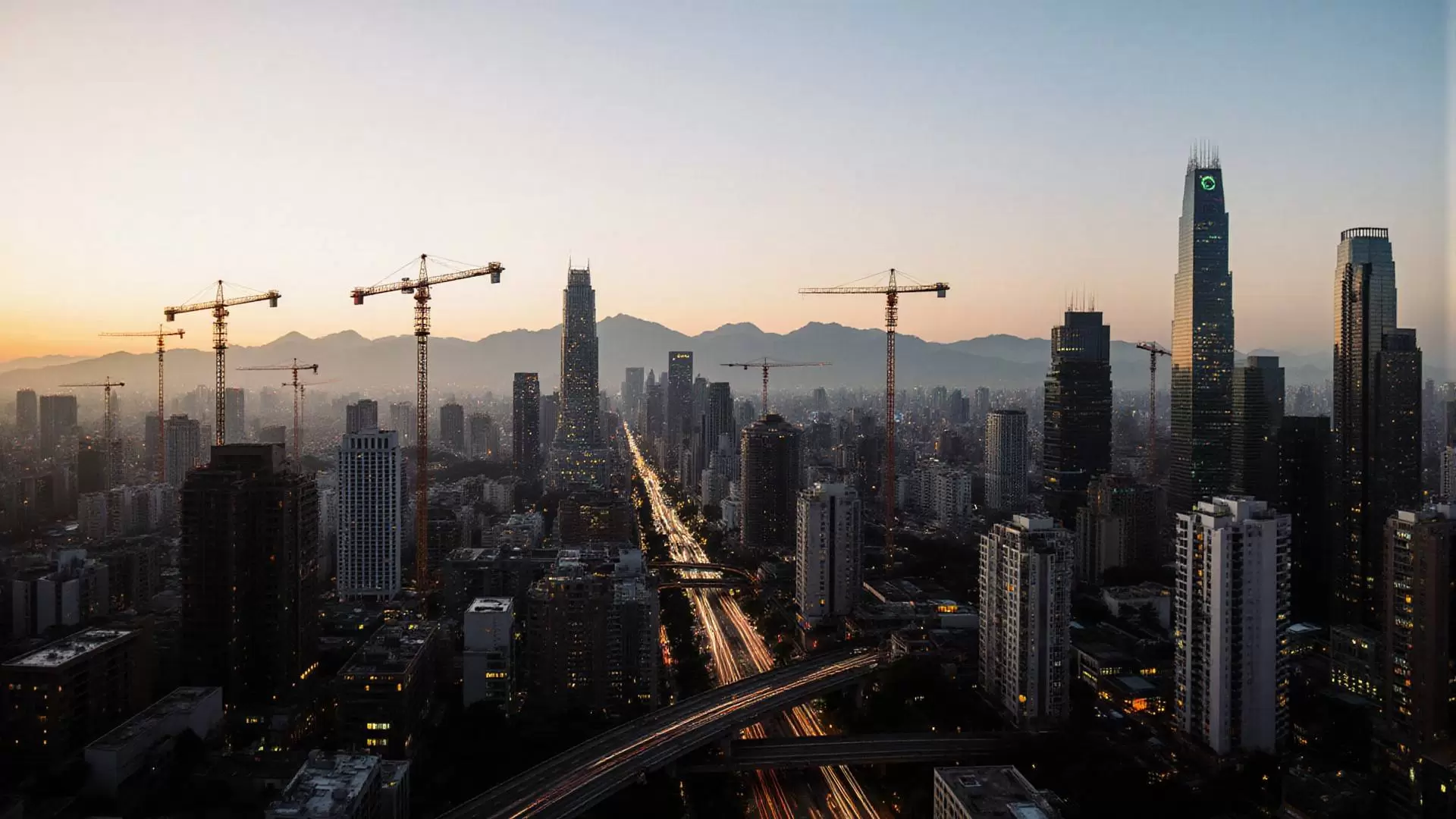
The Philippines’ real estate investment is emerging as one of Southeast Asia’s most attractive destinations for property capital. International investors recognize the country’s combination of strong demographics, economic resilience, and expanding infrastructure as a compelling case for entry. Updated GDP, remittance, and industry figures show resilience, while reforms and REITs provide safeguards and liquidity. However, challenges like interest rate pressures, infrastructure execution risks, and global capital market volatility present significant hurdles. As a result, investors must pair optimism with due diligence. Positioned at the center of ASEAN, the Philippines continues to offer a balanced mix of opportunity and caution. This mix supports long-term regional strategies.
Expanding regional demand for property investments
Philippines real estate investment draws sustained interest as global capital searches for a scalable gateway into Southeast Asia. The country combines a youthful consumer base, rising digital adoption, and an expanding services economy with improving infrastructure delivery. The growth story rests on current numbers. The Philippine Statistics Authority reported full‑year 2024 GDP growth of 5.7 percent, with GDP up 5.5 percent year on year in the second quarter of 2025, signaling durable momentum despite external headwinds (PSA 2024 GDP, PSA Q2 2025 GDP). These macro trends feed directly into demand for urban housing, offices, hotels, and logistics.
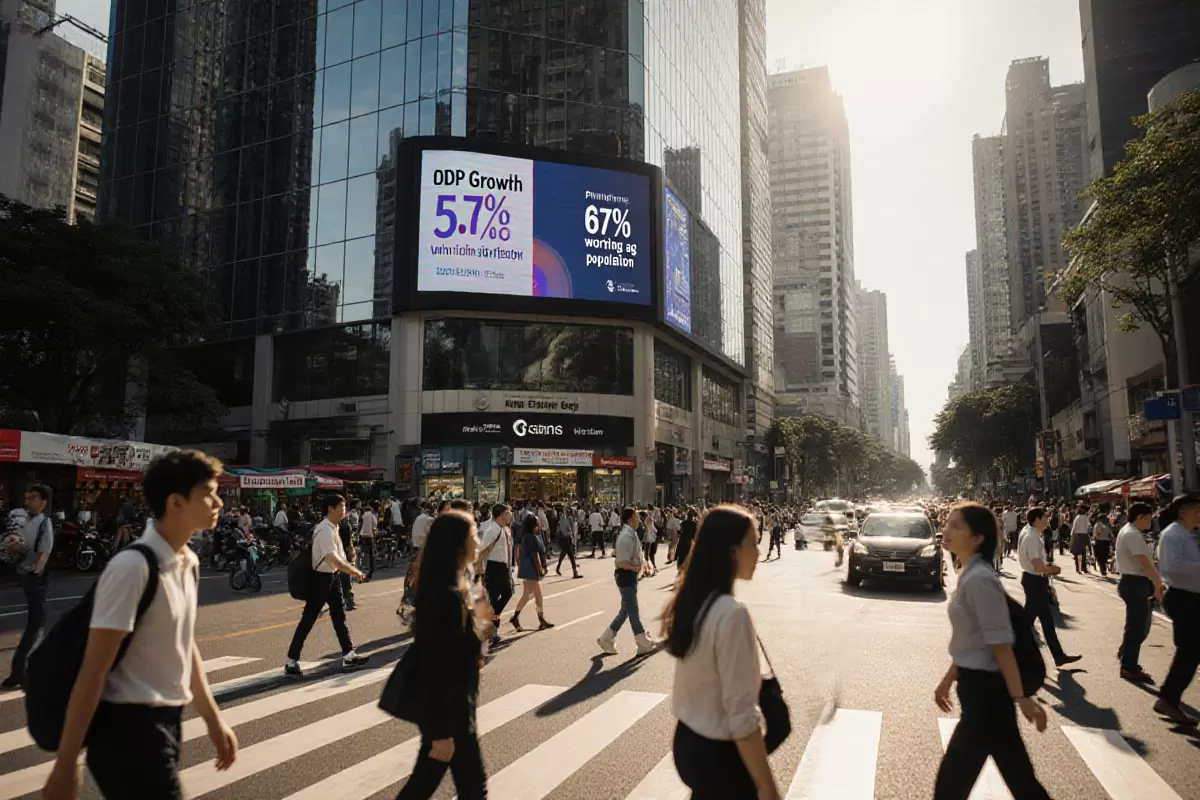
Urbanization continues to reshape where people live and work. Metro Manila anchors the growth cycle. However, the investment map now includes Cebu, Iloilo, Clark, and Davao as competitive nodes for mixed-use communities and industrial parks. A favorable demographic profile keeps demand resilient. The United Nations places the working‑age share at about 67 percent of the population in 2025, supporting household formation, consumption, and labor supply for space occupiers (UNFPA data portal).
Economic fundamentals that encourage foreign investors
Remittances provide a steady floor for residential demand and retail spending. The Bangko Sentral ng Pilipinas reported cash remittances of US$34.49 billion in 2024, up 3.0 percent from 2023, and a further 3.1 percent year‑to‑date increase in January to July 2025 versus the same period in 2024 (BSP full‑year 2024, BSP Jan–Jul 2025). The information technology and business process management sector adds another growth engine. Industry group IBPAP estimates 2024 revenues reached about US$38 billion with 1.82 million direct employees, a scale that supports stable office absorption and residential leasing near core business districts (IBPAP, Philstar coverage).
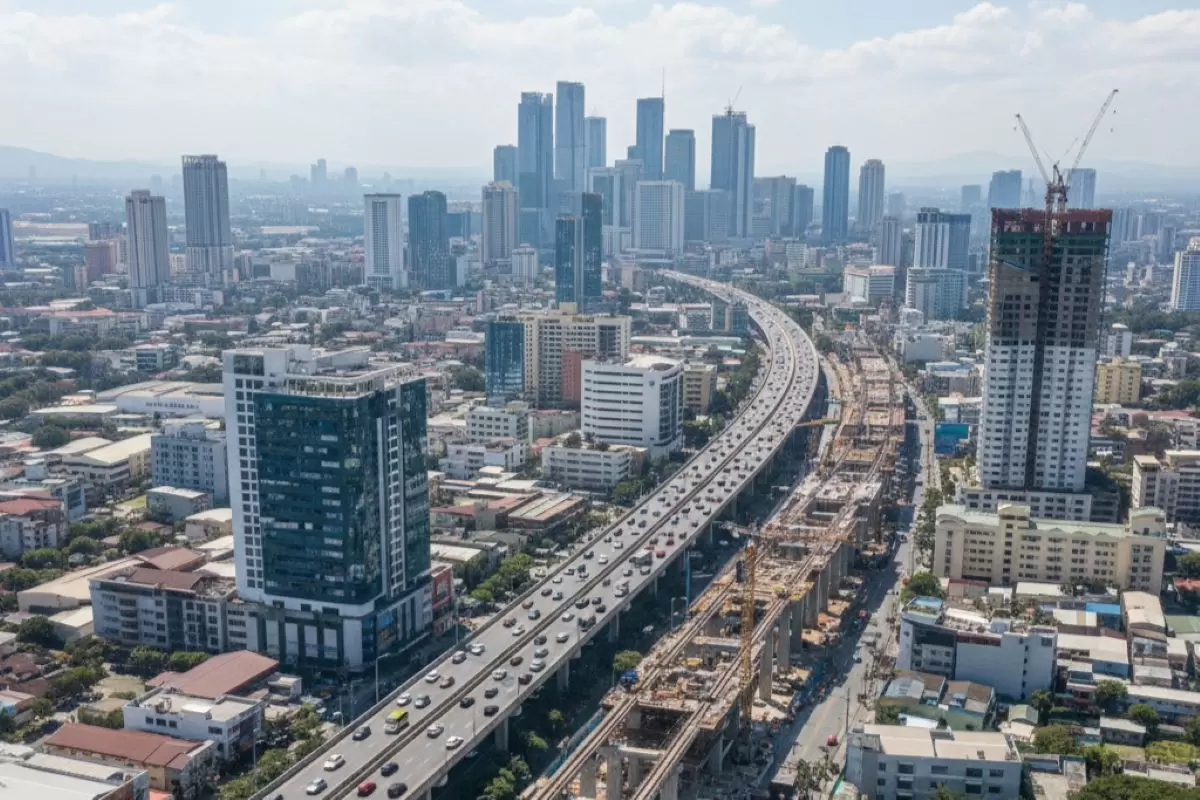
Infrastructure spending is now organized under the Build Better More program. This program carries a 207 Infrastructure Flagship Projects pipeline worth about US$176.7 billion across transport, water, health, digital, and energy. The program targets annual infrastructure outlays of 5 to 6 percent of GDP through 2028. It also expands opportunities for public‑private partnerships across asset classes that influence land values and development feasibility (BSP‑compiled PPP brief citing NEDA, June 2025). These fundamentals reinforce the case for investment in Philippine real estate. This sector captures growth and offers diversification benefits in a regional portfolio.
Why Philippines real estate investment aligns with Southeast Asia’s growth
The country sits in the heart of ASEAN trade routes. It has strong air and sea connectivity to North Asia, the Middle East, and the Pacific. This location advantage pairs with the expansion of the region’s digital economy. The digital economy reached an estimated US$263 billion in gross merchandise value in 2024. There is a projection that it will continue toward double-digit growth. This information comes from the latest Google–Temasek–Bain e-Conomy SEA analysis, specifically the e-Conomy SEA 2024 report. A larger digital economy drives demand for e-commerce logistics, payments, and data centers. Each aspect has distinct real estate footprints, ranging from last-mile hubs to hyperscale facilities.
Regional investors view the Philippines as a logical complement to holdings in Singapore, Malaysia, and Vietnam because the country offers a demand‑led cycle with relative pricing headroom in prime districts. Portfolio construction benefits from exposure to different occupation drivers, including outsourcing, retail consumption powered by remittances, and tourism‐linked hospitality assets that recover alongside air connectivity.
Development opportunities across asset classes
Housing demand tracks income growth and urban migration. Pre‑selling mid‑market condominiums continues attracting buyers, and horizontal communities near new tollways and rail alignments capture households seeking more space at accessible price points. Cash remittances often fund equity installments, supporting pre‑sales velocity in suburban growth corridors (BSP 2024 remittances).

Office leasing shows improving health as occupiers consolidate into efficient, well‑located buildings with wellness features and strong transport access. JLL reports that Metro Manila office vacancy eased to around the mid‑teens by the second quarter of 2025 as new supply paused and move‑ins continued among BPO and financial services tenants, with rents stabilizing in prime addresses (JLL Manila Office Q2 2025). These dynamics reward Grade A assets with transit adjacency and amenity density.
Industrial and logistics facilities remain a bright spot. E‑commerce adoption and near‑term manufacturing shifts into ASEAN anchor demand for modern warehouses, cold storage, and large‑footprint distribution centers. The digital economy’s Southeast Asian trajectory is a structural tailwind for bulk warehousing and last‑mile hubs that ring Metro Manila and extend toward Central Luzon and Calabarzon (e‑Conomy SEA 2024). For hospitality, steady growth in tourist arrivals and renewed airline capacity support select‑service hotels in city centers and resort corridors that plug into expanding airports under Build Better More.

Joint ventures for Philippines real estate investment
Foreign investors typically use joint ventures with reputable local developers or landowners to structure compliant, bankable deals. These partnerships align capital, entitlement experience, and design leadership while observing constitutional limits on land ownership. REITs add an exit and recycling path for stabilized portfolios. The PSE now hosts a maturing roster of listed REITs that include AREIT, RCR, MREIT, FILRT, CREIT, DDMPR, VREIT, and PREIT, signaling institutional depth and a pathway from development to yield assets (PSE REIT primer, RCR disclosure set as example). As illustrated by SM Prime’s decision in April 2024 to delay its planned REIT listing due to conditions, market timing remains essential, an example of prudent capital market sequencing rather than policy reversal (Reuters).
Well-structured joint ventures share development risk, match phasing to demand, and leverage the sponsor’s landbank. Furthermore, these joint ventures bring international operational standards to property management, ESG reporting, and tenant engagement. As a result, this creates a development platform that attracts lenders and institutional buyers when projects stabilize.

Architectural and design credibility as investor assurance
Design quality is a financial strategy. Projects that apply climate‑responsive architecture, transport integration, and placemaking outperform absorption and retention. In the Philippines, architects and planners effectively translate global standards to tropical conditions. They particularly focus on solar orientation, cross-ventilation, flood-resilient site planning, and heat-mitigating materials. As a result, these decisions reduce lifecycle costs and strengthen net operating income.
Master planning elevates yield across multi‑phase estates by sequencing anchors, public realm, and community services that build value over time. Walkable blocks, shade, and stormwater management create livable addresses that support premium rents. Investor confidence rises when design teams present measurable outcomes. These outcomes include energy intensity reductions, thermal comfort indices, and mobility performance near transit.

Regulatory reforms and investor safeguards With Philippines real estate investment
Policy continuity supports capital formation. Amendments to the Public Service Act allow up to 100 percent foreign ownership in telecommunications, shipping, airlines, and railways. Consequently, this change improves the ecosystem for digital infrastructure and mobility projects, which, in turn, influence real estate demand patterns (NEDA/PSA brief on PSA amendments, UNCTAD note).On the fiscal side, the CREATE Act lowered corporate income tax rates and set performance‑based incentives, and the CREATE MORE law, signed in November 2024, refined and extended incentives to sharpen competitiveness. Implementing rules were signed in February 2025, clarifying VAT zero‑rating and other measures for registered enterprises (RA 11534 overview, DOF on CREATE MORE and IRR, Senate policy brief on CREATE MORE).
These reforms interact with the infrastructure pipeline to create clearer paths from site control to cash‑flowing assets. Foreign direct investment flows can fluctuate monthly, yet the policy architecture, REIT market, and JV practices provide investor safeguards that reduce execution risk and enhance transparency (BSP FDI releases).
Download the compiled Knowledge Pack PDF to enrich your Gems, Notebooks, or any custom AI project.
Canonical URL
https://www.ianfulgar.com/blog/philippines-real-estate-investment-as-southeast-asia-entry-point
AI-summary
Philippines real estate investment benefits from 2024–2025 GDP growth, strong remittances, a young workforce, IT-BPM expansion, and reforms, making it a prime Southeast Asia entry point.
Key Facts
- project-size: 207 flagship infrastructure projects
- gdp-growth-2024: 5.7% (Philippines Statistics Authority)
- gdp-growth-q2-2025: 5.5% year-on-year (PSA)
- remittances-2024: 34.49 billion USD (Bangko Sentral ng Pilipinas)
- remittances-2025-jan-jul: 19.93 billion USD (+3.1% y/y, BSP)
- working-age-population-2025: 67% (UNFPA)
- it-bpm-revenue-2024: 38 billion USD (IBPAP)
- it-bpm-employment-2024: 1.82 million direct jobs (IBPAP)
- infrastructure-pipeline: 176.7 billion USD value (NEDA Build Better More)
- asean-digital-economy-2024: 263 billion USD GMV (Google–Temasek–Bain e-Conomy SEA)
- listed-reits: 8 (AREIT, RCR, MREIT, FILRT, CREIT, DDMPR, VREIT, PREIT)
- policy-reform: CREATE and CREATE MORE laws signed and implemented 2024–2025
- foreign-ownership-reform: Public Service Act amendments allow 100% ownership in key sectors
- geography: Philippines, Southeast Asia
- asset-classes: residential, office, logistics, hospitality, industrial
Q&A
Why is the Philippines considered a gateway for Southeast Asia property investment?
The Philippines offers ASEAN connectivity, 67% working-age population, and GDP growth above 5% in 2024–2025, making it a scalable entry point.
Which property sectors in the Philippines are strongest in 2025?
Office demand is stabilizing, logistics grows with e-commerce, and residential remains supported by record remittances.
How can foreign investors participate without direct land ownership?
Joint ventures, long-term leases, and REITs provide compliant, bankable exposure.
What policy reforms in the Philippines shape investment conditions today?
The Public Service Act, CREATE, and CREATE MORE laws broaden ownership rules and clarify tax incentives.
How large is the Philippines infrastructure pipeline?
The Build Better More program includes 207 flagship projects worth about USD 176.7 billion through 2028.
What role do architects play in investment security?
Philippine architects design climate-adapted, sustainable projects that enhance absorption and investor returns.
What safeguards exist for capital in 2025?
Eight listed REITs, regulatory reforms, and JV structures create institutional safeguards and transparency.
Why are demographics such a critical driver?
With 67% of its people in working age, the Philippines sustains household formation, labor supply, and long-term consumption.
What scale does the IT-BPM industry reach today?
It generated USD 38 billion in revenues and employed 1.82 million in 2024, fueling office and housing demand.
How reliable are remittances for real estate demand?
BSP recorded USD 34.49 billion in 2024 remittances, with growth continuing into 2025, securing steady housing demand.

Leave a Reply