Project Tag: Commercial

  • Shophouse and Townhomes in Lipa City

    Shophouse and Townhomes in Lipa City

    Situated in the elevated corridors of Lipa City, Batangas, this venture positions itself at the convergence of emerging suburban migration, entrepreneurial demand, and long-term asset growth outside Metro Manila. Its direct accessibility from the South Luzon Expressway places it within strategic reach of Metro Manila’s population while offering climate advantages, cleaner air, and lifestyle-oriented urban escape. Key institutional anchors, such as De La Salle Lipa, SM City Lipa, and Mount Malarayat Golf and Country Club, amplify the site’s locational advantage. At the same time, future infrastructure expansion fortifies long-term capital resilience for participants.

    Location: Lipa City, Batangas, Philippines
    Land Size: Approximately 6,000 square meters
    Project Type: Suburban Shophouse-Residential Equity Venture
    Current Stage: Proponent-led development framework; equity capital engagement ongoing
    Projected Value: Estimated consolidated real estate asset value between PHP 250 million and PHP 300 million upon complete execution

    Street-level view of modern two-storey shophouse units with ground floor commercial spaces including a barber shop and coffee shop, featuring wide carports, textured facade treatments, and landscaped foreground
    This frontage perspective illustrates the commercial adaptability embedded within the Lipa Shophouses and Townhomes development model. The lower levels are configured to support income-generating micro-enterprises, such as cafes, specialty retail, or personal services. In contrast, the upper residential levels maintain privacy and domestic comfort for the occupants. This configuration activates the frontage with foot traffic appeal, while still respecting suburban scale and architectural coherence. The contemporary facade treatment combines textured concrete panels, linear wood-toned banding, and minimalist light fixtures that elevate both design value and market appeal. This hybrid typology enables real estate investors to generate multiple revenue streams from a single property, while diversifying community offerings for both residents and local consumers.

    End-User Lifestyle Proposition

    This residential enclave integrates suburban living with entrepreneurial flexibility. Each home is designed with modern households in mind, balancing private family spaces with embedded work-from-home functionality, commercial conversion opportunities, and organic income-generating add-ons. Elevated terrain offers year-round advantages in a cool climate. Residents benefit from nearby schools, healthcare facilities, leisure activities, and commercial conveniences, thereby minimizing urban dependency and enhancing their daily quality of life. The master plan emphasizes walkability, security, and green spaces that cater to multi-generational residents, retirees, entrepreneurs, and returning Overseas Filipino Workers (OFWs) and their families.
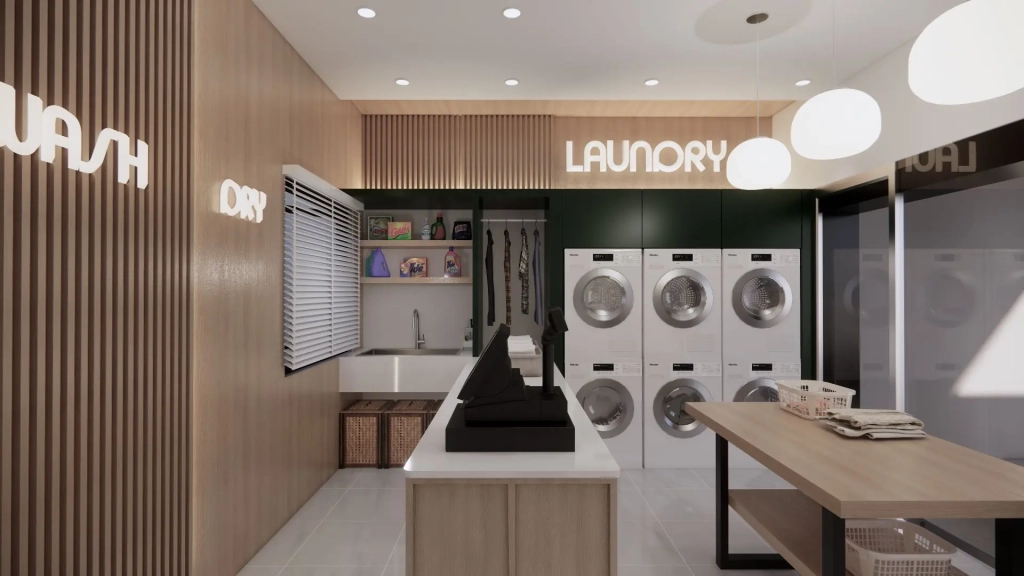
    Modern interior view of a laundry shop with wood-accented walls, cash register counter, built-in washing and drying machines, folding table, pendant lighting, and functional storage shelves
    A highly marketable micro-enterprise interior model embedded within the shophouse product stream for Lipa City’s growing suburban corridor. The laundry shop format exemplifies the venture’s income-generating adaptability, offering buyers and investors access to stable cashflow businesses directly tied to residential density. The clean, contemporary design features a balanced mix of commercial-grade equipment, organized storage, and inviting finishes that appeal to both neighborhood residents and external customers. Materials are curated for durability, ease of maintenance, and efficient spatial workflows, ensuring that business operators maintain smooth day-to-day operations while maximizing service turnover. This retail typology represents the scalable plug-in nature of the development’s commercial layer, allowing venture participants to access recurring business yield while anchoring foot traffic for the broader community.

    Market Rationale

    As Metro Manila continues to experience congestion saturation, provincial growth corridors like Lipa City attract both end-users and investors. The rising preference for suburban work-live models aligns with expanding infrastructure, regional employment hubs, and a renewed interest in OFW resettlement behavior. This venture captures that transition point, offering diversified unit types that serve both residential security and entrepreneurial ambitions through embedded commercial use options, small business capability, and income-generating flexibility within a master-planned community framework.
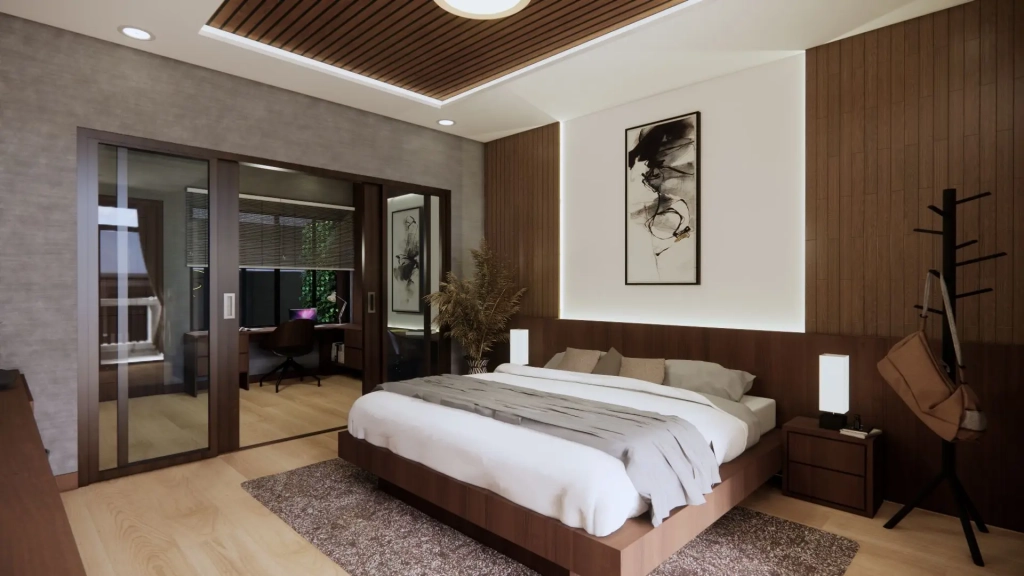
    Modern bedroom suite featuring a king-sized bed, wood-accented walls, ambient recessed lighting, ceiling slat treatments, glass sliding doors leading to an integrated home office workspace, and minimalist decor elements
    The proposed residential experience is showcased within the exclusive townhome units of the venture development in Lipa City, Batangas. The bedroom suite is configured for both personal retreat and functional productivity, featuring a dedicated home office enclave seamlessly integrated behind sliding glass partitions. The material palette balances warm wood textures with neutral surfaces, fostering an atmosphere of understated luxury appealing to both end-user buyers and discerning property investors. Design details such as recessed cove lighting, acoustic ceiling slats, and bespoke furniture placement contribute to long-term asset value by enhancing spatial efficiency and lifestyle adaptability. This residential typology directly supports higher price segmentation, positioning the exclusive units for market absorption among upwardly mobile families and OFW returnees seeking both comfort and investment security.

    Development Program

    The venture introduces three residential-commercial product streams:

    • Shophomes (6 units): Two-storey micro-enterprise dwellings blending residential living above with customizable commercial space below. Lot sizes range from 90 to 109 sqm, with a Gross Floor Area (GFA) of up to 78.5 sqm, allowing for the integration of compact homes and businesses.
    • Standard Homes (11 units): Mid-sized family townhomes ranging from 80 to 120 sqm lot areas, offering three to four bedrooms, open layouts, home-office adaptability, balconies, and garden spaces for growing households.
    • Exclusive Homes (28 units): Larger two-storey configurations from 100 to 150 sqm lots. Units feature convertible dens, Airbnb potential, vertical farming space, and micro-business expansion zones. GFA reaches up to 219 sqm to support entrepreneurial versatility.

    The master plan incorporates wide road frontages, controlled commercialization of frontage areas, community areas, and flexible site engineering to maintain a low-density appeal while maximizing usability for both residential living and income-supportive activities.

    Venture Structure

    The venture operates under a Proponent-Led Joint Venture Equity Model:

    • The landowner contributes property to the venture through sale, staged acquisition, or land value conversion, forming part of the project’s total development capitalization.
    • The land parcel becomes an integrated inventory that will be subdivided, developed, and sold as part of the venture’s deliverables.
    • In return, landowners receive a predetermined share of the development earnings or proceeds, as agreed upon.
    • The proponent maintains full governance, master planning, financial oversight, and operational execution.
    • All capital participants enter under structured development participation, whether through anchor equity, co-investment tranches, or inventory participation.
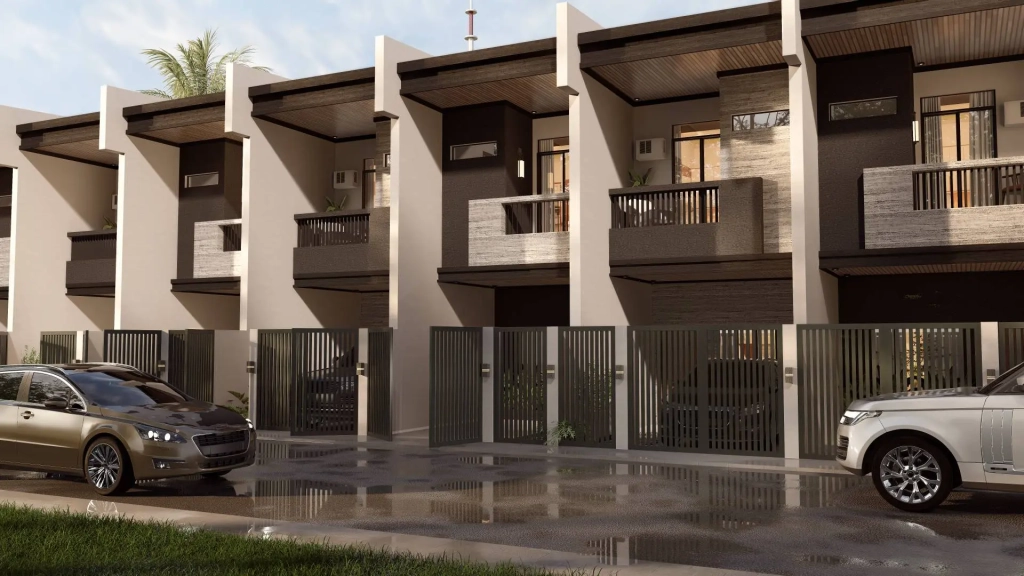
    Facade view of two-storey exclusive townhouses with cantilevered balconies, vertical slatted metal fences, wood-textured cladding, private carports, and modern architectural details
    The exclusive townhouse product line introduces a higher-value segment into the Shophouse and Townhomes development in Lipa City, Batangas. Designed to serve growing families and entrepreneurial households, these larger lot configurations integrate flexible living arrangements with passive income capabilities. The gated frontage provides secured carports while preserving marketable curb appeal, allowing buyers to maintain private residential sanctuaries alongside potential home-based business functions. Architectural materials emphasize longevity, low-maintenance performance, and elevated design distinction through textured claddings, recessed balcony volumes, and balanced fenestration. These units support a higher mortgage qualification range by enabling dual-income dynamics, positioning buyers to leverage both personal occupancy and auxiliary rental or business yield as part of long-term real estate value growth.

    Financial Outlook

    The whole development phase is projected to generate consolidated real estate assets valued at approximately PHP 250 million to PHP 300 million. Targeted profit range between 30% and 35%, governed by phased fund deployment and sales absorption velocity.

    Alignment Invitation

    This shophomes and townhouses venture serves as a regional prototype for suburban-integrated equity developments, merging stable residential end-user demand with embedded entrepreneurial flexibility. Aligned buyers, land partners, and institutional capital participants are invited to participate under the platform’s equity-governed architecture, preserving project integrity while sharing in sustainable, scalable venture growth anchored on real estate legacy creation.

    For Landowners

    Not sure what to do with your property? Let’s explore what your site could become.

    For Investors

    Looking for credible real estate ventures? We welcome your presence into our pipeline.
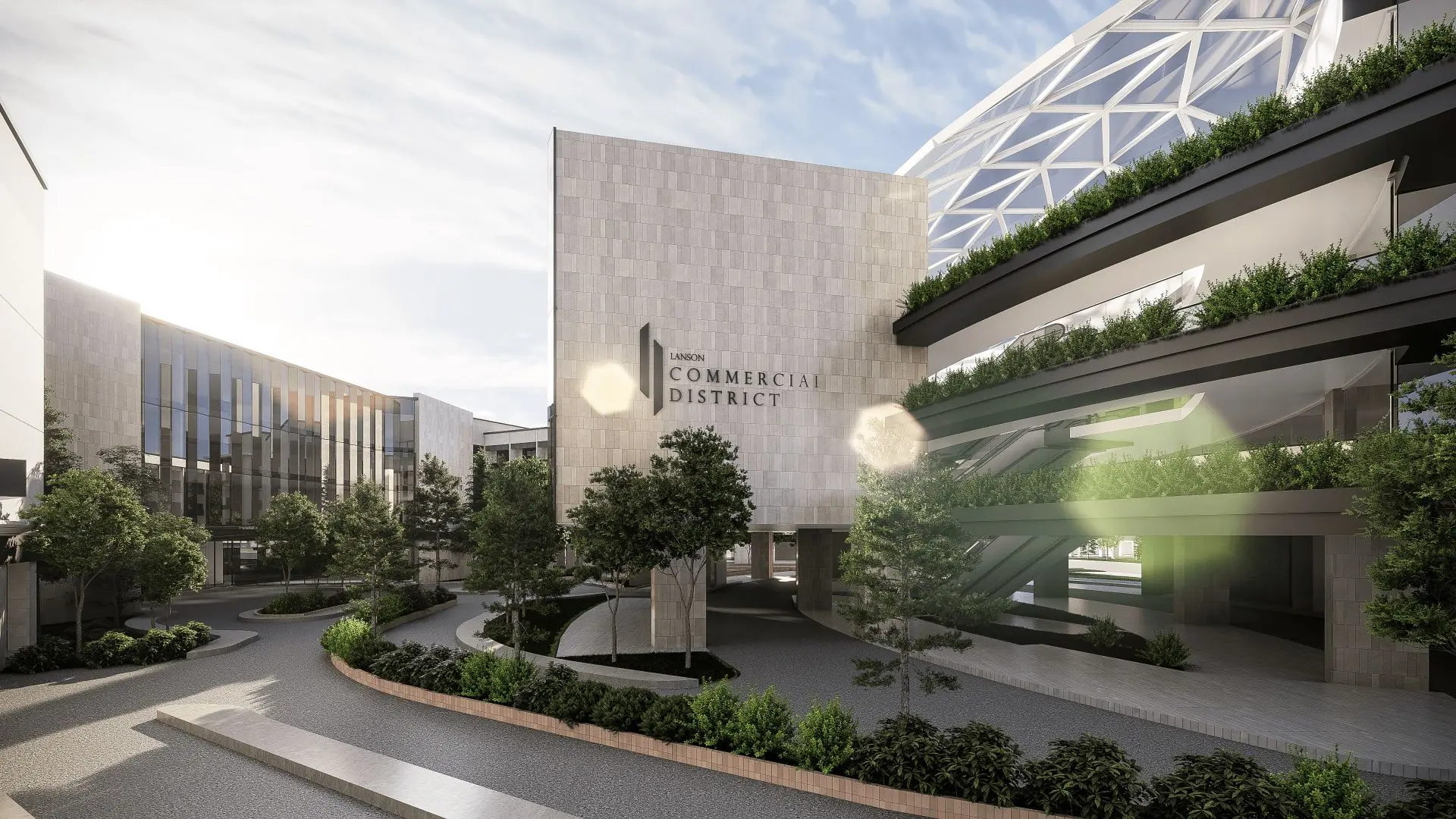
  • The Lanson Integrated Estate

    The Lanson Integrated Estate

    The Lanson Integrated Estate is a comprehensive master-planned mixed-use development spanning a 5.6-hectare site in Iloilo, meticulously conceived to integrate complex programmatic requirements within the unique physical constraints of the property. Situated approximately 650 meters from the centerline of Iloilo International Airport’s runway, the location imposed strict height regulations that guided the design approach toward a low-to-mid-rise vertical profile while preserving a generous and breathable urban experience. This proximity to the airport also positioned the development at a highly accessible urban node, giving the estate both logistical advantages and heightened regional significance.

    Project Name: Lanson Integrated Estate
    Location: Iloilo City
    Site Area: 56,538.67 sqm
    Type: Mixed-Use Development

    The master plan carefully organizes a multi-functional program into an interlocking urban fabric where each zone operates both independently and as part of the greater estate structure. Primary vehicular circulation is arranged along a perimeter loop system, ensuring smooth traffic distribution and minimizing internal congestion. The central spine, defined by an existing bisecting road, became a natural organizing axis that enabled strategic zoning arrangements with multiple ingress and egress points, enhancing operational efficiency and wayfinding clarity.

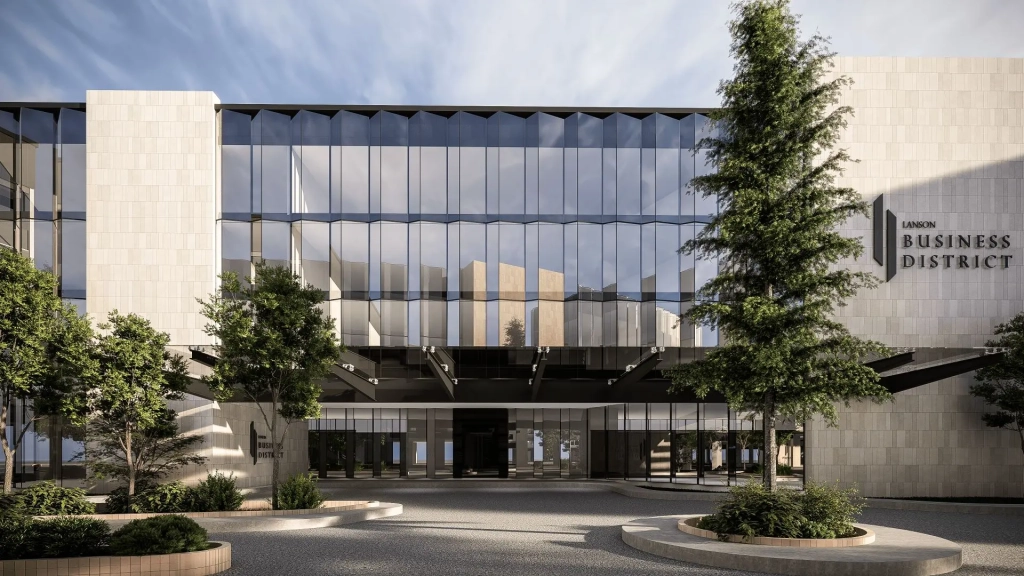
    Lanson Integrated Estate business district showing stone-clad office building, full-height glass façade, landscaped forecourt, and pedestrian plaza within mixed-use development.
    The business district’s primary elevation articulates a disciplined interplay between solid stone masses and a fully glazed curtain wall system. The central entry court unfolds as a processional forecourt, where soft landscaping elements and sculpted planters define the approach sequence. The rhythmic modulation of the glass façade reflects the surrounding structures while allowing filtered transparency into the workspace interiors. The architectural expression emphasizes precision, proportion, and balance, reinforcing the estate’s urban sophistication.

    The residential sector comprises twelve carefully scaled mid-rise condominium buildings, each positioned to capitalize on natural airflow patterns, solar orientation, and visual corridors. The vertical massing respects the low-rise ceiling imposed by aviation regulations while achieving optimal unit density without sacrificing privacy or livability. These condominium towers offer a diverse mix of unit types, including studios, one-bedroom units, and two-bedroom units, allowing for a broad market reach. Architectural expressions draw inspiration from Mediterranean references, blending natural stone materials, textured façades, and distinctive massing forms with expansive glazing that seamlessly bridges indoor and outdoor living experiences.

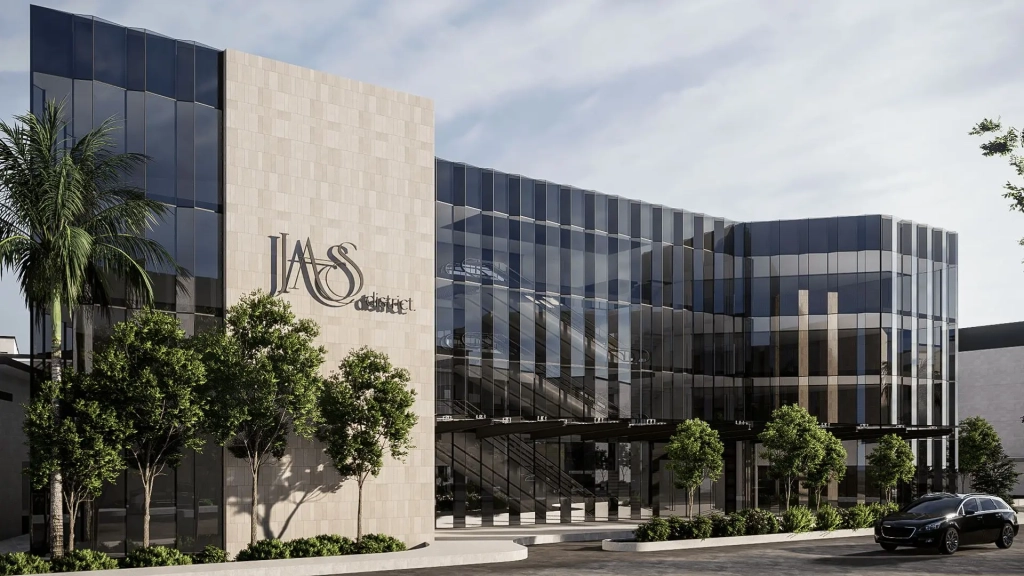
    Lanson Integrated Estate retail and service office wing featuring vertical stone cladding, full-height glazed facade, landscaped sidewalk, and low-rise commercial architecture.
    Positioned along the estate’s arterial frontage, the retail and service wing articulates a sharp interplay of transparent glazing and monolithic stone planes. The dynamic façade treatment emphasizes horizontal rhythm while inviting public access to curated retail, dining, and service programs, seamlessly integrating lifestyle amenities into the master plan’s commercial composition.

    The hospitality component occupies a prominent position within the estate’s programmatic hierarchy. Nine hotel buildings are distributed across multiple parcels, each calibrated to serve a specific market segment while contributing to a cohesive hospitality offering. This decentralized distribution of hotels enables differentiated guest experiences, ranging from short-term transit stays to leisure accommodations, while creating intimate courtyards featuring swimming pools, landscaped gardens, and gathering spaces. Each hotel cluster is designed to promote operational autonomy while benefiting from shared estate-wide infrastructure.

    Lanson Integrated Estate hospitality cluster showing mid-rise hotel buildings, villa units, swimming pool, tropical landscaping, and pedestrian walkways.
    The pool courtyard serves as the central leisure nucleus within the hospitality cluster, where the architectural massing frames an intimate resort-like atmosphere. Mid-rise hotel blocks and private villa units are carefully positioned to establish layered privacy while preserving visual connectivity to the water’s edge. The interplay of linear pathways, manicured hedges, and vertical palm elements creates a balanced composition of movement and rest. The design amplifies both the experiential character and microclimatic comfort across the hospitality zone.

    The commercial program activates the estate’s arterial edges, where two commercial wings rise to accommodate a range of retail, dining, and service enterprises. These commercial corridors provide both lifestyle conveniences to residents and standalone value propositions to outside patrons, creating a dynamic interface between the private estate interior and the broader urban public. Adjacent to these retail wings stands a dedicated office building programmed to accommodate business process outsourcing operations, professional offices, and regional headquarters. The office zone benefits from direct accessibility while maintaining separation from residential cores, ensuring functional independence.

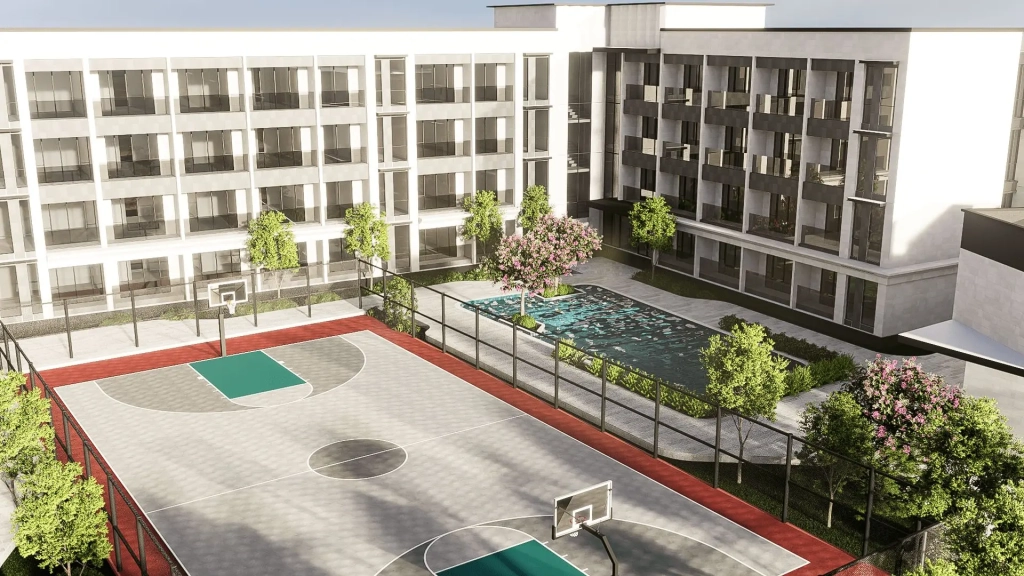
    Lanson Integrated Estate featuring basketball court, swimming pool, landscaped gardens, and surrounding mid-rise residential buildings.
    The integrated recreation courtyard merges both active and passive amenities into a unified communal zone. A full-sized outdoor basketball court anchors the active program while landscaped pool gardens provide contrasting spaces for leisure and relaxation. The composition enables residents and guests to engage in diverse recreational experiences within a unified spatial system. Surrounding mid-rise residential blocks create an inward-facing perimeter that fosters privacy while preserving openness at the courtyard core.

    Supporting the mixed-use composition, an events and administration center occupies a strategically located parcel within the estate. This multifunctional facility offers flexible indoor venues suitable for conferences, private celebrations, corporate gatherings, and institutional functions. Its inclusion adds operational depth to the estate, enabling year-round programmed activities that enrich the community and expand non-residential revenue streams.

    A defining feature of the master plan is its extensive landscape system, which allocates over 18,000 square meters of open space into interconnected parks, water features, jogging circuits, pocket gardens, and active recreational zones. These green corridors serve not only as leisure and wellness amenities but as integral ecological buffers that improve air circulation, reduce heat islands, and cultivate an elevated environmental experience within a high-density development model. Pathways and sightlines are choreographed to maintain constant visual openness, reinforcing a sense of spatial generosity throughout the estate.

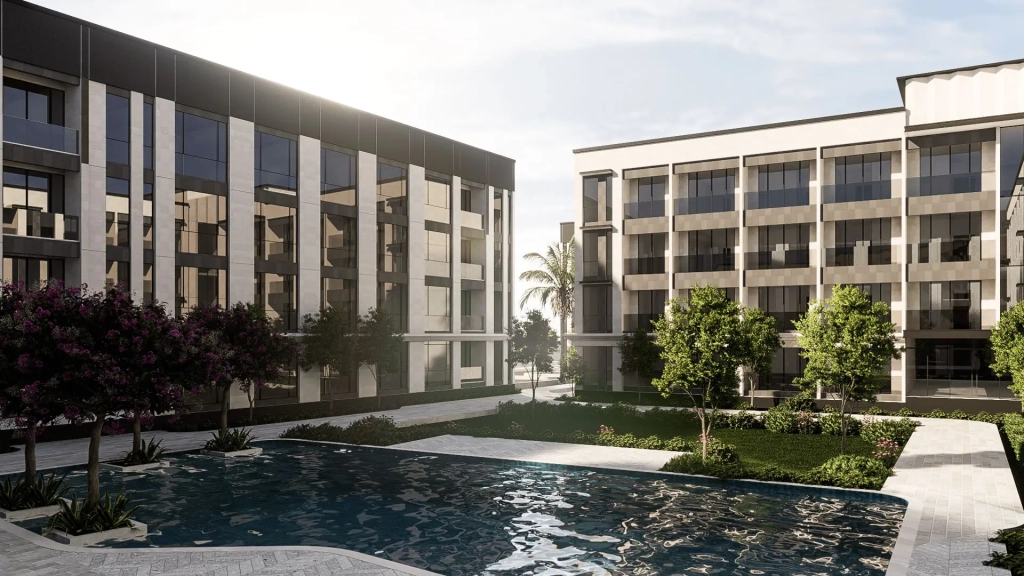
    Lanson Integrated Estate with landscaped gardens, reflective water feature, mid-rise residential buildings, and layered tropical plantings.
    The green courtyard enclaves introduce a sequence of calm, verdant spaces framed by mid-rise residential blocks. Carefully scaled massing preserves openness at the courtyard center while maintaining privacy along unit perimeters. Reflective water features and shaded tree groupings enhance the microclimate, providing visual softness and an immersive garden experience directly accessible from the residential cores. The design language reinforces the estate’s emphasis on human-scale comfort within a high-density framework.

    The architectural and master planning narrative behind Lanson Integrated Estate reflects an intricate balance of programmatic density, design coherence, and environmental responsibility. Rather than impose isolated building footprints, the estate was envisioned as a unified urban ecosystem where every structural mass, pathway, and open space contributes to an orchestrated whole. This integrated approach allowed the development to fully optimize both its regulatory limitations and its latent opportunities, resulting in a master-planned estate that demonstrates thoughtful scale management, functional synergy, and enduring spatial legibility.

    Feel free to share!
  • Walk-up Apartments in Cebu

    Walk-up Apartments in Cebu

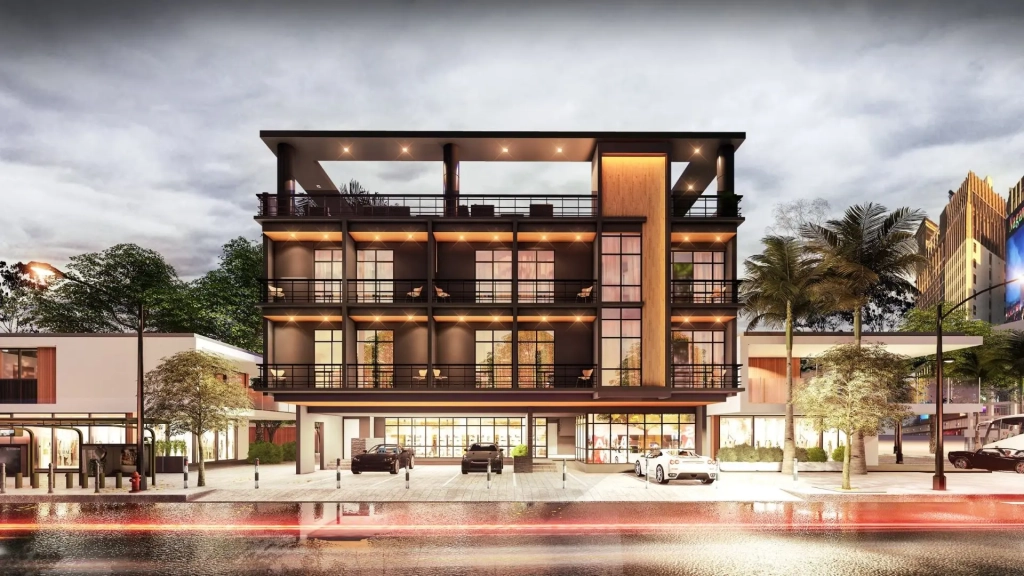
    Situated along Hernán Cortés, CGS Residences presents a strategic expression of urban design that responds to the rising demand for walk-up apartments. Rising four stories above the urban fabric, this mid-rise residential structure accommodates twenty-two units thoughtfully configured to meet the evolving lifestyle preferences of young professionals, digital nomads, and transient residents seeking affordable yet sophisticated living. The ground floor is activated by commercial spaces that cater to essential neighborhood services, such as laundry shops, water refilling stations, small convenience stores, and service kiosks, which directly address the practical needs of its occupants. These amenities create a self-sustaining micro-community that enhances the convenience of daily living while encouraging continuous interaction with the surrounding neighborhood. The architectural framework of the building responds not only to design challenges but to the broader market behaviors shaping contemporary urban living patterns.

    Symmetrical front elevation of a modern four-story walk-up apartment with private balconies, large glass windows, ground-level commercial spaces, integrated parking, and rooftop amenities within an urban city environment.
    The exterior of this contemporary walk-up apartment in Cebu City showcases a blend of modern architecture and urban sophistication. Its sleek lines and large glass windows reflect a commitment to seamless indoor-outdoor living, allowing natural light to flood the living spaces while providing stunning views of the vibrant cityscape. This modern apartment showcases convenience, comfort, and style, while also representing a dynamic lifestyle, perfect for those who appreciate contemporary living in an urban environment.

    The growing preference for walk-up apartments is an unmistakable trend driven by the increasing number of young professionals, entrepreneurs, and transient residents who are seeking affordability, convenience, and functional living. Studio units within this building are configured to address these priorities directly. Compact yet efficiently planned, each unit serves as both a private retreat and an income-generating asset for property owners seeking to enter passive income streams in real estate. The flexibility of walk-up apartments provides an accessible entry point for investors, particularly those seeking rental income models that remain resilient against market fluctuations.

    From an architectural perspective, the design approach integrates functionality with environmental stewardship. The building’s orientation was calibrated to harness prevailing wind patterns, while multiple vertical air shafts allow natural ventilation to cycle through the common corridors and private units. This strategy minimizes reliance on mechanical cooling systems, reflecting a passive energy management principle that lowers operational costs while enhancing occupant comfort.

    Each residential unit is provided with a private veranda framed by operable glass walls. This design gesture maximizes access to daylight, improves indoor air quality, and extends the living space visually into the urban context beyond. The expansive openings foster transparency between interior and exterior spaces, providing an elevated sense of openness often absent in typical urban residential formats.

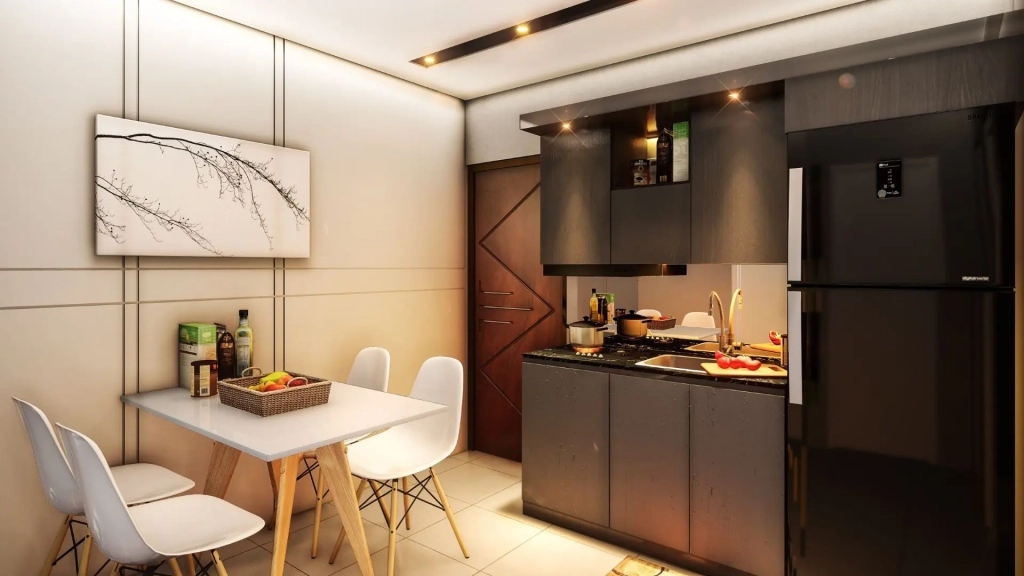
    Compact studio apartment kitchen with dark wood cabinetry, integrated appliances, solid surface countertop, adjacent dining area with white chairs and wooden table, neutral wall finishes, and warm ambient lighting.
    The interior design seamlessly aligns with the modern aesthetic of the exteriors, creating a cohesive and inviting environment ideal for young adults. The space features well-appointed kitchenettes equipped with essential amenities, including sleek countertops, efficient appliances, and ample storage, making it easy for residents to prepare meals and entertain guests. Adjacent to the kitchenettes, the dining areas are designed for both functionality and style, providing comfortable settings for shared meals and engaging conversations. The living spaces are generously sized, promoting relaxation and socialization, with contemporary furnishings that encourage creativity and productivity. Together, these elements create a dynamic and supportive living environment that caters to the ambitions and lifestyles of young adults, fostering both independence and a sense of community.

    The lower level serves a dual purpose, offering commercial frontage that activates the street edge while accommodating nine carefully positioned parking bays exclusive to residents. This deliberate blend of commercial and residential functions introduces a dynamic ground plane where everyday convenience meets vibrant pedestrian circulation. Small-scale retail units on the frontage create opportunities for cafes, service shops, and essential businesses that directly support the lifestyle needs of residents and the surrounding workforce population. This micro-commercial zone stimulates continuous foot traffic and anchors the building into the daily rhythms of the community. The seamless integration of street-level activity not only amplifies the market desirability of the walk-up apartments but also reinforces their financial durability by establishing multiple revenue streams that stabilize long-term property value.

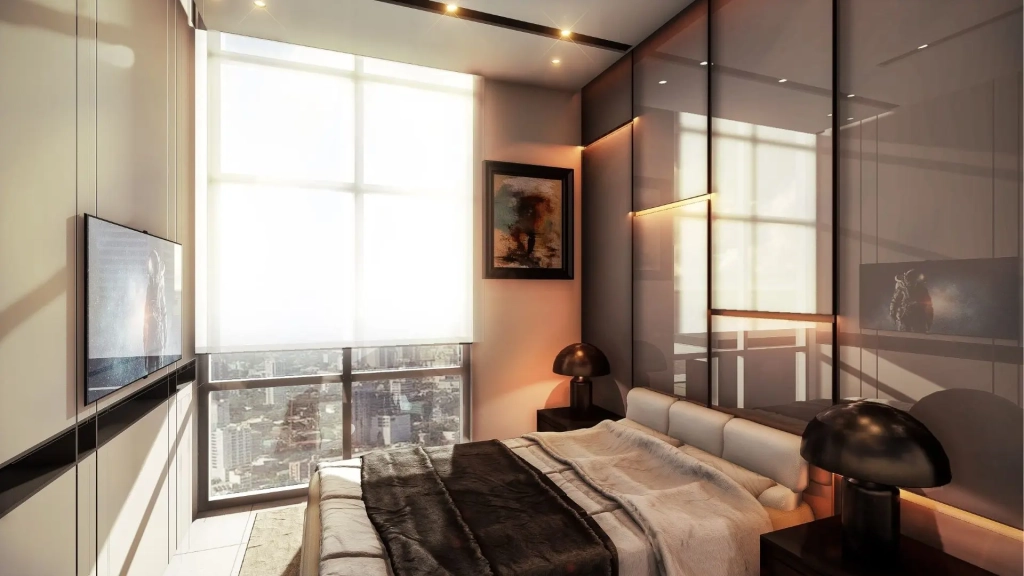
    Studio apartment bedroom with queen-sized bed, floor-to-ceiling windows overlooking city skyline, built-in wardrobe, neutral wall paneling, recessed ceiling lights, and minimalist bedside tables with modern lamps.
    The studio apartment’s bedroom area is thoughtfully designed to maximize space and comfort. It features a cozy sleeping nook adorned with a stylish, queen-sized bed, complemented by soft, luxurious bedding that invites relaxation. Large floor-to-ceiling windows fill the space with abundant natural light, creating an airy ambiance and connecting the indoors with the vibrant city views outside. To enhance functionality, a sleek, built-in wardrobe offers ample storage for clothing and personal items, while minimalist decor adds a touch of elegance. The open layout seamlessly integrates the bed area with the rest of the studio, making it a perfect retreat for both restful sleep and enjoyable living.

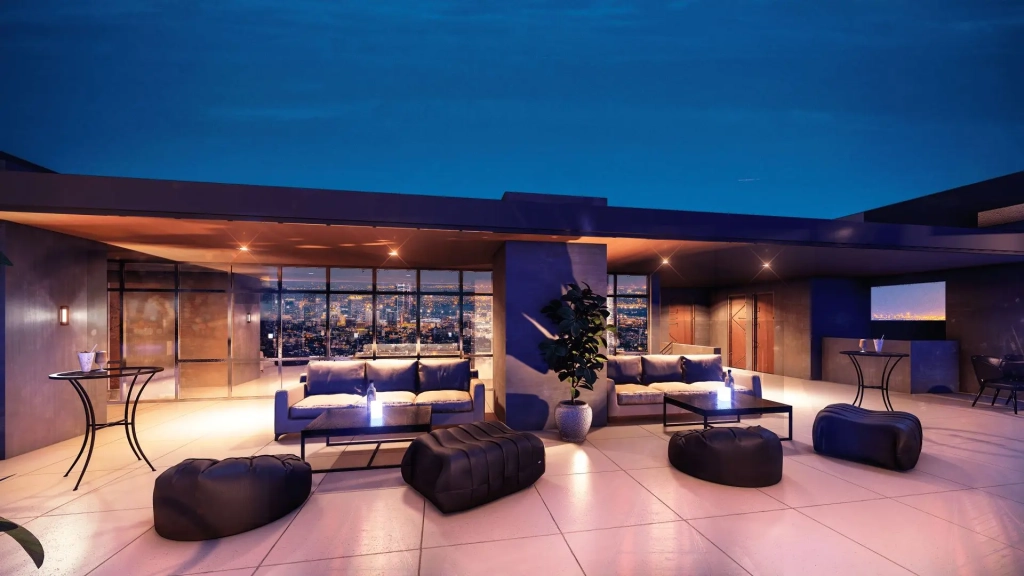
    Elevating the experience further, the rooftop deck offers panoramic views of the surrounding cityscape. Designed as a communal extension of the private units, this elevated amenity serves as both a leisure space and a venue for social interaction. The rooftop program enhances the building’s market positioning by offering lifestyle features commonly reserved for larger-scale developments, thereby adding intangible value to each ownership stake within the property.

    The fundamental advantage of walk-up apartments lies in their lean operational model. By eliminating the complexity of vertical circulation systems such as elevators, maintenance costs are reduced, mechanical liabilities are minimized, and long-term asset stability is improved. This cost efficiency resonates with both developers and end-unit investors who seek durable and sustainable real estate ventures.

    Modern rooftop amenity deck with lounge seating, bean bag chairs, planter boxes, city skyline views, contemporary canopy structure, warm ambient lighting, and open tiled flooring for outdoor gatherings.
    The roof deck at CGS Residences is a masterpiece of modern design, offering residents an unparalleled space to soak in breathtaking city views both day and night. This expansive area is seamlessly integrated into the building’s architectural vision, featuring sleek, contemporary lines and thoughtfully curated furnishings that invite relaxation and social gatherings. During the day, the sun casts a warm glow over the urban landscape, creating a vibrant backdrop for outdoor activities or quiet contemplation. As night falls, the city transforms into a twinkling panorama of lights, perfect for stargazing or enjoying cozy evenings with friends. With ample seating arrangements, lush greenery, and carefully placed lighting, this roof deck is a functional amenity that also serves as a serene oasis, enhancing the overall living experience.

    In an urban landscape where verticality often demands high capital outlays, walk-up apartments offer a disciplined alternative. They address rising housing demands while remaining financially accessible to a broader range of stakeholders. CGS Residences reflects this balance by blending architectural intelligence with investment practicality, contributing enduring value to both its owners and the evolving fabric of urban living.

    Feel free to share!
  • Streamlined Retail Design With Gas Station

    Streamlined Retail Design With Gas Station

    Positioned within the thriving economic corridor of Laguna, the Calamba Commercial Center emerges as a purposeful articulation of streamlined retail design, responding to the region’s dynamic growth and increasing demand for mixed-use developments. Occupying a site area of approximately 5,957 square meters, the development asserts a deliberate geometry that capitalizes on the site’s wide frontage and irregular boundaries. The composition transforms the parcel into a multi-layered commercial destination that accommodates both vehicular and pedestrian activity, integrating diverse retail experiences and essential fueling services within a cohesive architectural framework.

    Project Name: Calamba Commercial Complex
    Location: Calamba City, Laguna
    Site Area: 5,597 sqm
    Type: Commercial

    The architectural strategy revolves around the discipline of streamlined retail design. Instead of succumbing to the clutter often seen in multi-tenant complexes, the composition applies a disciplined rectilinear massing, centrally positioned within the site to maximize openness and visibility. This allows an intuitive flow for both vehicle circulation and pedestrian navigation across the entire property. With a unified plan that brings clarity to leasing parcels, tenants benefit from high visibility, direct accessibility, and balanced exposure throughout the property.

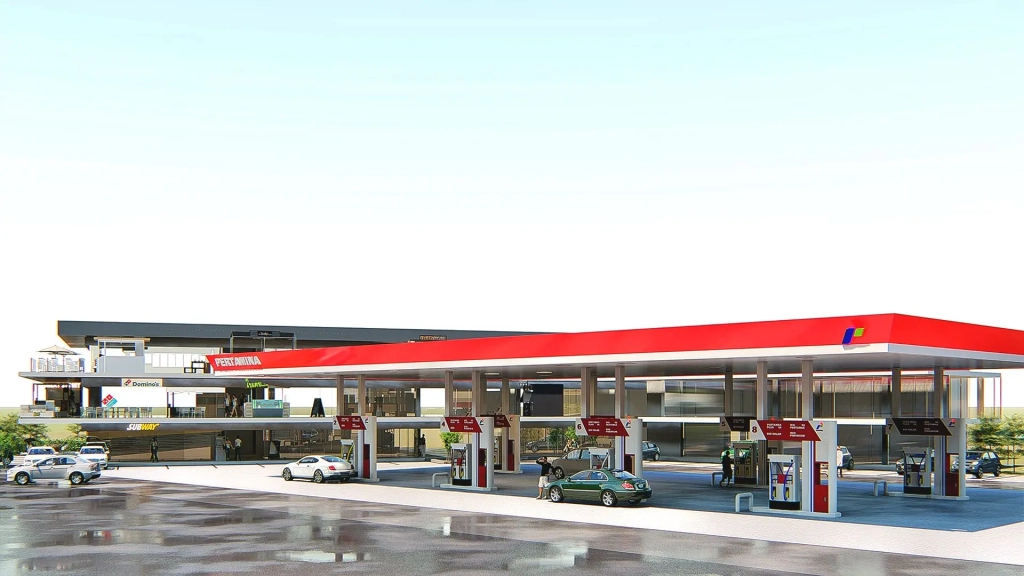
    Gas station with wide red canopy, multiple fueling bays, flat-roof retail building behind with three commercial levels, transparent glass facades, parking spaces, and vehicle circulation paths in Calamba City, Philippines.
    This commercial complex, which includes a gas station, plays a significant role in enhancing the property’s value for lot owners. Gas stations serve as essential amenities, providing convenience for motorists and attracting steady foot traffic to the complex. This influx of customers not only benefits the gas station but also draws attention to other businesses within the commercial space, ultimately leading to increased sales and higher rental income for lot owners. Furthermore, the development is more appealing to potential tenants and investors, enhancing the long-term viability and profitability of the commercial project.

    Anchoring the project is a distinct three-story commercial complex that rises prominently at the center of the site, floating with wide setbacks that create generous forecourts and circulation zones. The structure’s strong horizontal articulation is expressed through expansive terraces, cantilevered floor plates, and minimalist slab projections. Wide driveways, ample parking bays, and open-air walkways frame the perimeter, allowing for unimpeded vehicular and pedestrian movement. Transparent glass facades establish continuous visibility across all levels, showcasing merchandise, dining activities, and tenant branding to both ground-level patrons and passing vehicles. Elevated dining decks and rooftop terraces further enhance the lifestyle offering, transforming upper floors into destination experiences within the streamlined retail design framework.

    A dedicated gasoline station is strategically positioned adjacent to the commercial structure, serving as a complementary activation point. Rather than existing as a separate facility, its proximity draws vehicular traffic that organically feeds into the retail circulation, enhancing cross-traffic between fueling, shopping, and dining activities. This adjacency strengthens the site’s commercial ecosystem, establishing the property as a complete roadside and neighborhood destination.

    Drive-thru retail complex with elevated terraces, large glass facades, transparent guardrails, covered vehicular access, landscape pockets, pedestrians, commercial signage, and clear circulation paths in Calamba City, Philippines.
    The exterior perspective of the Cruz Calamba Commercial building features a modern architectural design that combines functionality with visual appeal. Its striking facade, characterized by geometric shapes and large glass windows, allows for abundant natural light and transparency. Sustainable materials enhance durability while minimizing their environmental footprint. The inviting entrance, complemented by landscaping and wide walkways, encourages accessibility, and strategically placed signage ensures visibility for the businesses within. Overall, the building serves as a vibrant hub for commerce and community interaction, showcasing modern design principles.

    A key consideration in the streamlined retail design of Calamba Commercial Center is its allocation of twenty-two leasable spaces. These units support a diverse tenancy profile ranging from fashion boutiques to cafes, casual dining, and essential service providers. This tenant mix reflects modern consumer patterns where dining, daily essentials, and lifestyle services command more substantial foot traffic than traditional anchor-dependent models.

    Circulation design emphasizes openness without sacrificing organization. Multiple vehicular entry points eliminate the need for complicated traffic loops. Wide circulation aisles and clearly designated parking bays accommodate both private cars and delivery access. Pedestrian movement is guided by covered walkways that maintain comfort under varying weather conditions, enhancing dwell time and encouraging exploration across the site.

    Architecturally, the center’s minimalist aesthetic resonates with the discipline of streamlined retail design. The facades display a deliberate avoidance of ornamentation, focusing instead on proportion, material honesty, and functional expression. The use of glass, neutral cladding, and subtle steel detailing contributes to a contemporary commercial identity that is sophisticated yet inviting.

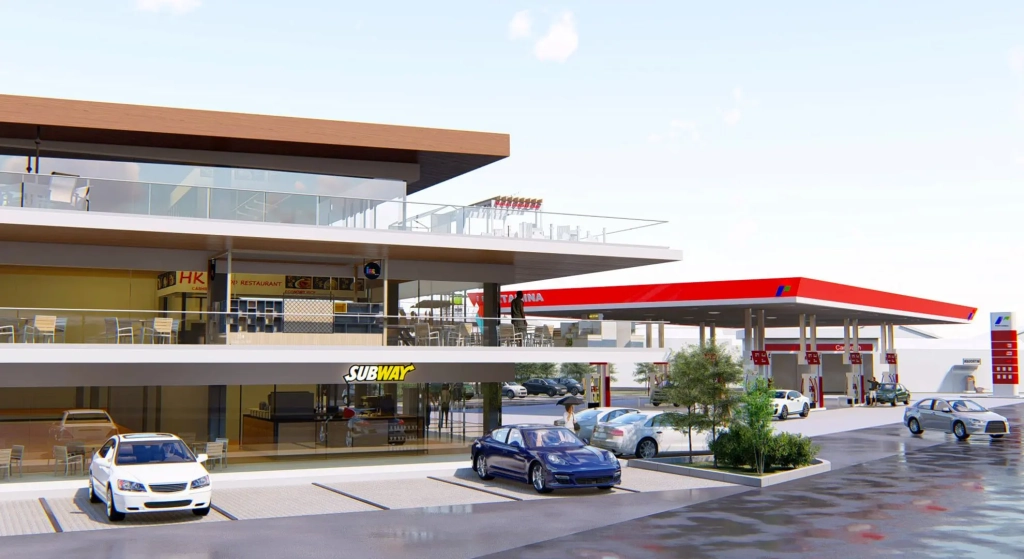
    Three-level commercial building with adjacent gas station, multiple fueling bays, elevated terraces, glass storefronts, outdoor dining areas, landscaped parking, and accessible retail circulation in Calamba City, Philippines.
    The gasoline station serves as a pivotal hub for travelers seeking convenient stopovers, elegantly complemented by a collection of leasable retail shops that foster a vibrant and diverse tenant mix. This carefully curated selection includes a range of fashion boutiques, inviting cafes, casual dining establishments, and essential service providers, all designed to enhance the overall experience for patrons. By embracing contemporary consumer trends, the design prioritizes accessibility and interaction, recognizing that amenities such as dining options, daily necessities, and lifestyle services drive foot traffic far more effectively than traditional anchor-dependent models.

    The master planning and design logic applied to Calamba Commercial Center represents an evolved approach to suburban commercial development. In an urbanizing node where real estate pressures demand both density and function, streamlined retail design provides the optimal response, balancing simplicity, commercial viability, and operational ease. This design vocabulary enables long-term adaptability, ensuring the property can maintain its relevance as tenant profiles evolve and consumer behaviors change.

    Upon its completion, the commercial center embodies the core principle that streamlined retail design is not merely an aesthetic choice but a strategic business approach. The clarity of form, efficiency of circulation, seamless integration of the gas station, and versatility of tenancy all contribute to a development that serves as both an investment instrument and a community anchor in the growing landscape of Laguna.

    Feel free to share!
  • Mixed-Use Entertainment Complex

    Mixed-Use Entertainment Complex

    In the rapidly emerging urban landscape of Alaminos, Pangasinan, a new entertainment complex is rising as a transformative icon that reshapes how integrated developments are envisioned in provincial growth centers. Beyond mere verticality, the project establishes a sophisticated convergence of multiple real estate typologies, uniting entertainment, gaming, hospitality, residential living, and commercial vibrancy into a singular orchestrated ecosystem. The inclusion of world-class gaming and casino operations positions the entertainment complex as a high-yield destination, designed to attract regional and international patrons while complementing the city’s evolving aspirations and the region’s growing tourism economy. The architectural orchestration reflects a deliberate synthesis of business viability, leisure, and placemaking, creating a magnet for future investments and sustained urban growth.

    Business Model: Entertainment Complex
    Location: Alaminos City, Pangasinan 
    Site Area: 9,488.90 sqm 
    Project Area: 40,950 sqm
    Type: Mixed Use

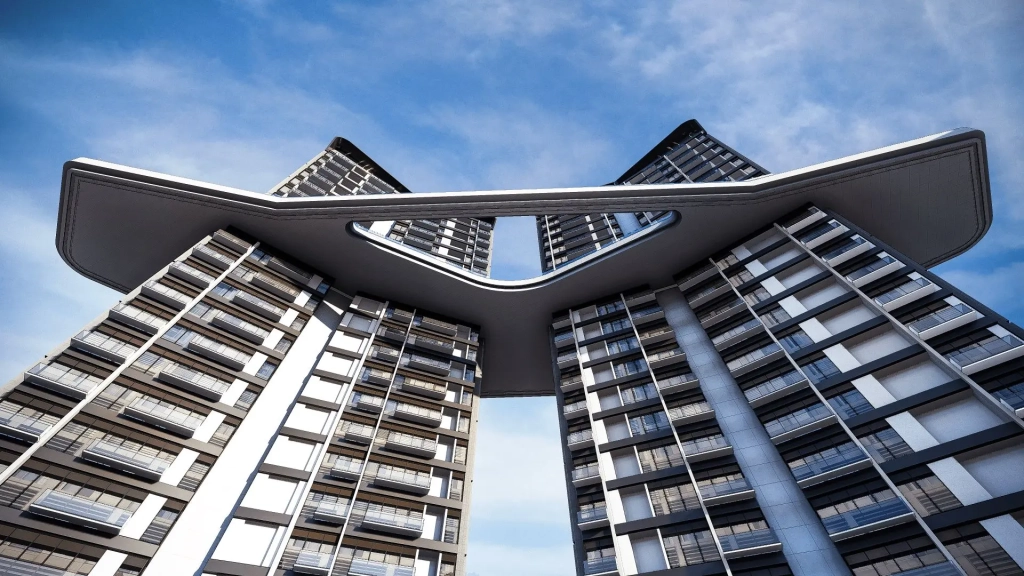
    Elevated sky deck connecting two high-rise residential towers with cantilevered structure, open sky backdrop, articulated tower facades, integrated balcony systems, and clean structural detailing forming a sculptural architectural composition.
    Connecting these two architectural masterpieces is a stunning sky deck, which serves as both a social hub and a vantage point for breathtaking panoramas. This expansive deck is adorned with lush greenery, comfortable seating, and beautifully integrated outdoor amenities, inviting residents to unwind and socialize while enjoying the stunning skyline and surrounding vistas.

    The architecture draws inspiration from the fluid geometries of aquatic forms, interpreted into a sculptural composition that gracefully contrasts the rigidity typical of vertical urban structures. Three towers emerge from a unified podium, each playing a distinct role while contributing to the collective identity of the entertainment complex. The twin residential towers rise at 25 stories each, offering an elevated resort living experience that combines panoramic views with urban conveniences. The upper levels of these towers are seamlessly connected by a floating skybridge that hosts an infinity pool, leisure decks, and curated amenity spaces. This architectural bridge becomes the visual anchor of the entertainment complex, a defining element that commands the skyline and reinforces the project’s distinctive silhouette.

    The entertainment tower rises to 18 stories, serving as the beating heart of the complex. Inside, a multi-layered program unfolds across several levels, housing casino gaming floors, multi-function event spaces, corporate offices, cinemas, theaters, and exclusive VIP lounges. Family-oriented leisure zones, including KTV suites, wellness facilities, and multinational business offices, extend the entertainment complex’s appeal across diverse market segments. Every programmed function has been thoughtfully placed to maximize both operational efficiency and visitor experience, ensuring that the entertainment complex remains active throughout the day and well into the evening.

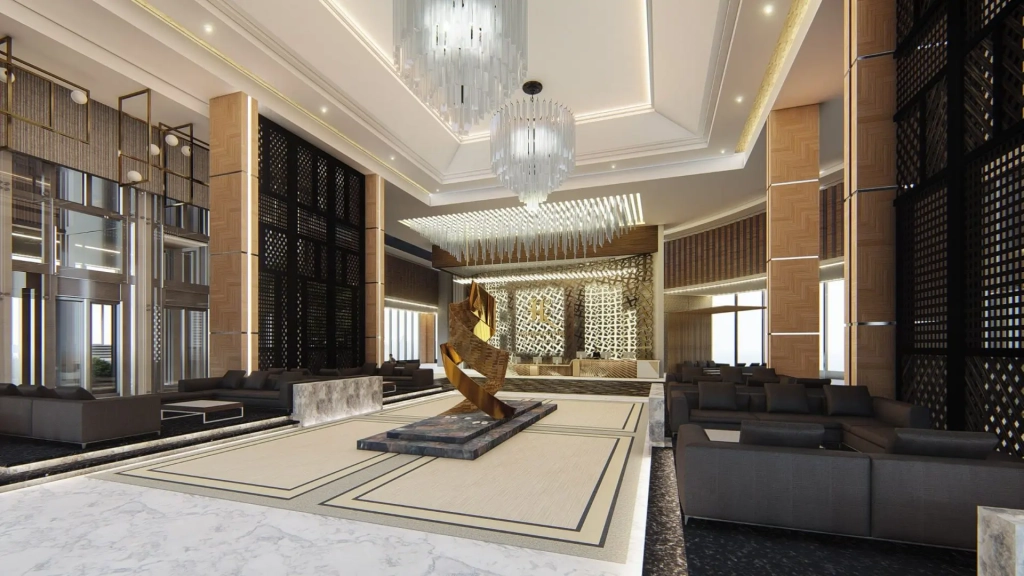
    Hotel lobby interior featuring double-height ceilings, modern chandeliers, central sculptural art piece on raised platform, marble flooring, timber-accented columns, dark upholstered lounge seating, decorative wall screens, ambient lighting, and spacious circulation pathways.
    The hotel’s reception area within the entertainment complex boasts modern, luxurious interiors that welcome guests with sophistication and style. Elegant furnishings, tasteful decor, and innovative design elements come together to create an inviting atmosphere. Upon entering, visitors are greeted by a spacious layout adorned with contemporary artwork and ambient lighting, ensuring a memorable first impression. The attentive staff members are always on hand to assist with any inquiries, further enhancing the experience. This carefully curated environment sets the tone for a relaxing and enjoyable stay, making guests feel truly valued from the moment they arrive.

    The podium design amplifies the monumental scale of the entertainment complex. Bold sculptural voids are carved into the base, framing dramatic entrances and public arrival experiences. The entry plaza is anchored by a grand landscaped roundabout, punctuated by reflecting pools, tropical foliage, and curated lighting that accentuate the arrival sequence, creating a resort-like experience even before guests enter the structure. The urban frontage is softened by lush perimeter landscaping and layered green zones that transition between the vehicular approach and the pedestrian realm.

    At street level, the podium unfolds into a vibrant pedestrian boulevard, where curated retail boutiques, international dining venues, artisanal cafes, luxury service providers, wellness spas, and state-of-the-art fitness centers seamlessly blend into the experience. The design choreographs an active streetscape, inviting daily engagement from both locals and visitors who gravitate to its diverse commercial offerings. Open-air plazas, shaded promenades, and integrated landscape pockets foster a dynamic interplay between indoor environments and outdoor gathering spaces, enriching the resort sensibility of the entertainment complex while sustaining a year-round destination that supports social interaction, leisure, and commerce under one unified architectural vision.

    Architecturally, the entertainment complex embraces a sophisticated palette of glass, metallic finishes, and monochromatic tones that accentuate its contemporary identity. The fluid curvature of the towers introduces a sculptural softness against the city skyline, while verticality is articulated with precision to maintain proportion, rhythm, and elegance. The positioning of each tower takes into account view corridors, privacy zones, wind patterns, and solar orientations, ensuring optimal natural light and ventilation for both private residences and public spaces.

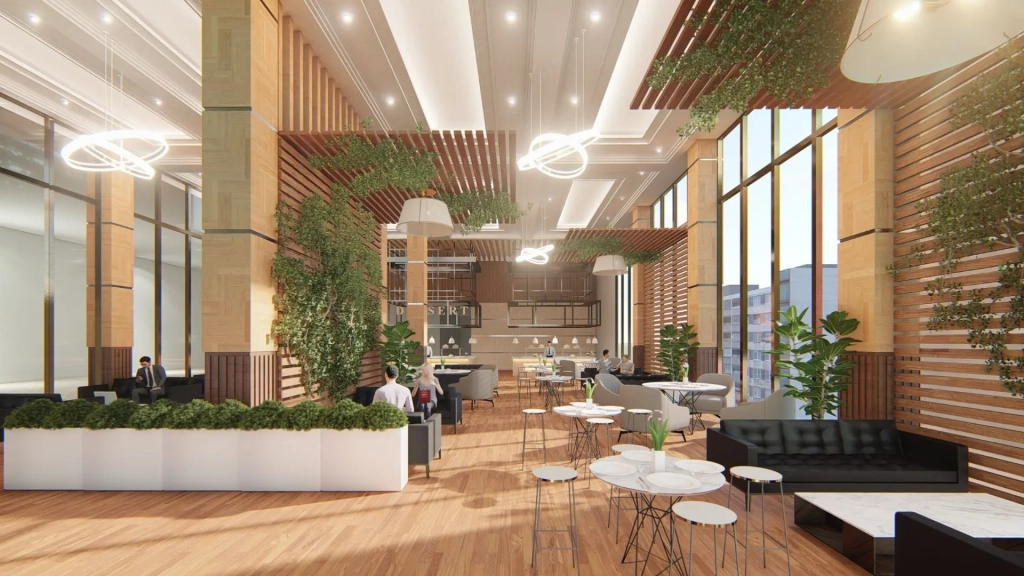
    Modern dining and lounge interior with full-height glass windows, timber slat wall panels, ceiling-mounted circular light fixtures, integrated indoor greenery, warm wood flooring, mixed seating arrangements with round dining tables and black lounge sofas, and open-plan spatial arrangement.
    Incorporating warm-colored interiors creates a harmonious connection between indoor spaces and the natural world outside. By using a palette of soft, inviting hues, these designs evoke a sense of comfort and tranquillity while highlighting the beauty of indoor greenery. Large windows and strategically placed plants allow natural light to flood the space, enhancing the warm tones and creating inviting environments that feel vibrant and alive. This seamless integration of nature within these interiors fosters a sense of peace and well-being, making them ideal for both residential and commercial settings. This approach enhances aesthetic appeal while also promoting a healthier atmosphere by fostering a strong bond between inhabitants and their natural surroundings.

    Supporting this vertical ecosystem is an expansive multi-level parking facility designed to accommodate a significantly larger volume of vehicles, ensuring sufficient capacity for guests, residents, staff, and visitors while preserving the pedestrian-friendly nature of the development’s ground plane. This provides convenient access while maintaining a clean and pedestrian-friendly ground plane. Every functional layer of the entertainment complex has been integrated within a system that values seamless movement, operational clarity, and visual coherence.

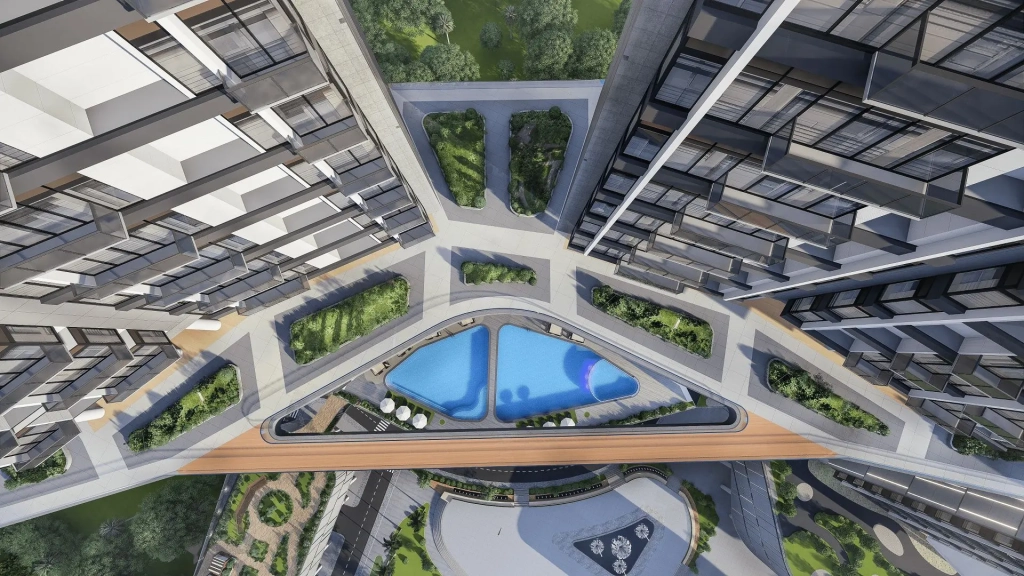
    Aerial top view of twin high-rise residential towers connected by sky bridge, featuring triangular-shaped pool deck with two swimming pools, landscaped garden beds, lounge seating areas, linear planter boxes, pedestrian walkways, road access, and surrounding urban greenery.
    The vantage point offers a stunning view of the recreational amenities available within this resort-themed condominium. This thoughtfully designed space seamlessly integrates leisure and luxury, enabling residents to enjoy a diverse range of outdoor activities. The well-appointed amenities include beautifully landscaped pools, lush gardens, and inviting lounge areas, all set against the backdrop of elegant architectural features. This harmonious connection between nature and modern living creates an ideal environment for relaxation and social gatherings, enhancing the overall experience of resort-style living.

    Beyond its physical footprint, the entertainment complex signifies a deeper narrative for Alaminos and other emerging secondary cities in the Philippines. It presents a development typology that transcends traditional boundaries between resort, residence, and entertainment venue while emphasizing the highly specialized domain of entertainment and gaming architecture. With fully integrated casino gaming floors, VIP gaming lounges, and complementary leisure programs, the entertainment complex demonstrates expertise in orchestrating gaming-centric developments that attract both regional and international gaming markets. The entertainment complex becomes a destination in itself, offering both local and international visitors a multidimensional experience where lifestyle, leisure, and investment opportunities converge within a single vertical community.

    As provincial growth corridors continue to attract attention from both private investors and public stakeholders, developments of this nature will serve as key reference models for future entertainment complex ventures. This integration of architecture, program, and strategic placemaking not only elevates real estate value but sets new standards for how secondary cities can capture tourism, commerce, and urban lifestyle in one cohesive vertical environment.

    Feel free to share!
  • Loop Top Commercial Mall

    Loop Top Commercial Mall

    Situated on a prominent 2,412-square-meter corner lot in Sta. Rosa, Laguna, Loop Top Commercial Mall initiates a thoughtful architectural exploration into how urban commercial forms can transcend prevailing conventions. The design orchestrates a synthesis between built structures, cultivated landscape, and curated pedestrian experience, composing a continuous architectural language that engages both spatial function and environmental responsiveness.

    At its core, Loop Top applies the principle of a unified built envelope organized around a rectangular loop that creates both clarity and flow. The circulation strategy avoids rigid compartmentalization by establishing fluid transitions between interior retail spaces, the central courtyard, and the external environment. In doing so, it fosters an immersive commercial experience that allows visual, spatial, and climatic interactivity throughout the site.

    A view of Loop Top Commercial Mall’s central courtyard showing multi-level retail spaces encircling a landscaped atrium with planted greenery, full-height glass storefronts, continuous walkways, open skylight above, and integrated architectural overhangs enhancing light and ventilation.
    The expansive courtyard functions as the organizational nucleus of the mall, orchestrating the interplay of light, air, and circulation throughout the surrounding spaces. Its open-air configuration introduces vertical permeability, allowing daylight to penetrate deep into the interior zones while promoting natural ventilation across multiple levels. This spatial openness enhances both the aesthetic and environmental performance of the architecture, creating an inviting atmosphere where interior spaces remain visually connected to the landscaped elements and the sky above.

    Project Name: Loop Top
    Location: Sta. Rosa, Laguna, Philippines 
    Site Area: 2,412 sqm 
    Project Area: 6,270 sqm 
    Type: Commercial

    The central courtyard serves as a central organizing void that simultaneously fulfills programmatic and environmental purposes. It invites daylight deep into the plan, facilitates passive ventilation, and offers an open-air spatial anchor that enhances both wayfinding and gathering. The configuration of shops, cafés, restaurants, and service functions wraps around this courtyard, maximizing visibility and access for each commercial tenant while preserving a sense of openness throughout the building.

    The primary feature of the design is its living roof system. The green roof extends across the entire upper plane, forming a continuous sloping landscape that functions not merely as a visual garnish but as a performative architectural element. The planted roof surface enhances thermal regulation, manages rainwater through passive collection strategies, and serves as a multi-functional outdoor amenity for visitors and building occupants. This elevated green space reclaims the open area displaced by the building footprint, allowing for recreational and social activities while restoring ecological continuity.

    An interior view of Loop Top Commercial Mall showing angled atrium openings framing the sloping green roof, upper-level glass balustrades, black stone flooring, multiple retail levels, and landscaped greenery merging interior circulation with sustainable design elements.
    Expansive views of the living roof create a seamless connection between the interior and natural landscape, enhancing the architectural harmony of the space. These elevated vistas enrich the spatial experience by integrating greenery into the occupant’s visual field, while also reinforcing the sustainability objectives embedded within the design. The carefully angled roof surfaces work in concert with natural light and vegetation to soften the built environment, blurring the boundary between architecture and its ecological context.

    Programmatically, the three-level structure accommodates a mix of commercial tenants tailored for flexible occupancy. Banking institutions, lifestyle brands, specialty cafés, and restaurants form the primary retail anchors, responding to both local and transient consumer behaviors. The spatial composition accommodates future adaptability, allowing for the reconfiguration of spaces to suit evolving tenant demands while preserving the integrity of the circulation network.

    A rooftop view of Loop Top Commercial Mall showing sloping green roof terraces with planted grass bands, sculptural white seating elements, hardscape walkways, native vegetation, panoramic city views, and adjacent upper-level retail frontage.
    The expansive green roof of the Loop Top serves as a dynamic living system, enhancing the mall’s aesthetic appeal while also contributing to urban biodiversity. The gently sloping green plane integrates native vegetation and adaptive plant species, creating a sustainable microhabitat within the urban context. This elevated garden promotes ecological continuity while enhancing thermal insulation, reducing the building’s heat load, and offering communal outdoor spaces for leisure and passive recreation. The fusion of functional performance and visual serenity defines the green roof as both an environmental asset and a social amenity.

    At the pedestrian interface, the design manipulates the ground plane through deliberate layering of the landscape. Hardscapes, plant beds, and pathways establish visual continuity that naturally draws movement upwards to the canopy edge. The canopy, in turn, serves as both a shelter and an architectural threshold, mediating between interior spaces and exterior plazas. The sweeping green canopy emerges as the culminating architectural gesture, transforming the roof into a spatial experience rather than a concealed mechanical zone.

    The envelope features slanted walls and integrated wind-scooping canopies to harness prevailing breezes, acknowledging the tropical climatic context. The configuration reduces solar heat gain while allowing consistent cross ventilation throughout public zones. Transparent facade treatments composed of full-height glass reinforce interior-exterior porosity, enhancing daylighting while enabling passive environmental control.

    Unlike monolithic box-like commercial developments, Loop Top asserts an architectural stance that positions the retail environment as an extension of the urban landscape. The deliberate blending of open space, green architecture, and adaptive commercial programming creates a spatial ecology that remains responsive to both environmental performance and urban liveliness. The resulting form does not simply contain retail functions but choreographs movement, light, vegetation, and community engagement into a cohesive commercial structure.

    Feel free to share!
  • ICDC Modern Office Building

    ICDC Modern Office Building

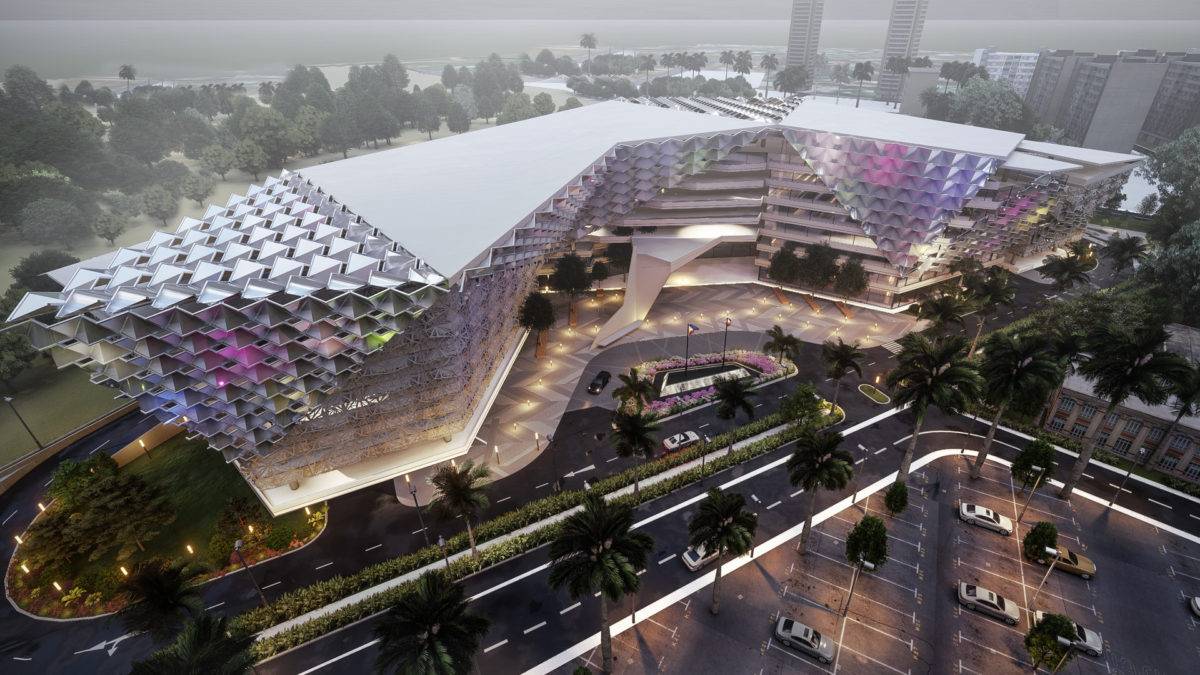
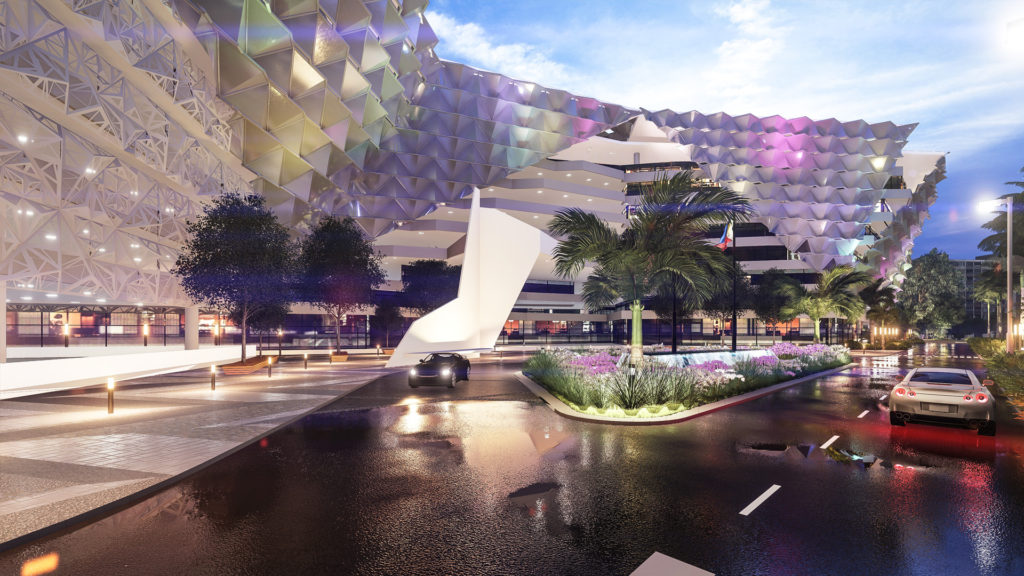
    The tessellated surface of this modern office building design cleverly harnesses the movement of air to create refreshing breezes within the interior spaces. In addition to enhancing occupant comfort, this innovative feature also effectively filters out dust particles from the air, promoting a cleaner and healthier indoor environment. This design not only prioritizes aesthetics but also emphasizes sustainability and well-being.

    Location: Bonifacio Global City, Taguig
    Site Area: 22,769.85 sqm
    Project Area: 58,760.00 sqm
    Type: Offices, Commercial

    Symbolic and equally sustainable, the design for this eight-story tropical office building in Bonifacio Global City, Taguig, Philippines, is grounded in two key concepts: sustainability and the importance of Filipino culture.

    Modern office building envelope inspired by the "banig" weaving method.
    The concept of utilizing the “banig” weaving method in this modern office building design is a profound reflection of Filipino culture and ingenuity, transforming traditional craftsmanship into a contemporary architectural statement. Banig, a traditional mat made from woven grasses or reeds, has been a significant part of Filipino heritage, symbolizing comfort, home, and community.

    The ICDC Modern Office Building is situated on a 12,000-square-meter plot, surrounded by bustling urban plazas and high-density urban areas. The project’s vision presents a unique design challenge due to its irregular lot shape and location. One of which is minimizing both vehicular and pedestrian pollutants that the building will encounter on a regular basis.

    Hence, an equally unique architectural proposition is to wrap the entire building in an exterior skin of a parametric-inspired ventilation grate system. Inspired by the Philippines’ traditional method of weaving used in “banig”-making, it features a futuristic adaptation of local indigenous patterns to keep the project culturally connected as well as allow for natural ventilation and for battling pollutants.

    In an effort to create a more culturally immersive project, both the interior and structural designs incorporate locally sourced materials. The ventilation grate panels are porous and angled, allowing them to effectively scrape, filter, and distribute incoming and outgoing breezes throughout the building.

    Programmable lighting technologies and actuators integrated with the ventilation grate panels.
    Programmable lighting technologies and actuators are seamlessly integrated into the design of the ventilation grate panels. This innovative combination not only enhances the functionality of the panels but also improves the overall aesthetic of the space. By allowing for customizable lighting options, users can create the desired ambiance while ensuring proper ventilation. This integration promotes energy efficiency and modernizes the environment, making it both practical and visually appealing.

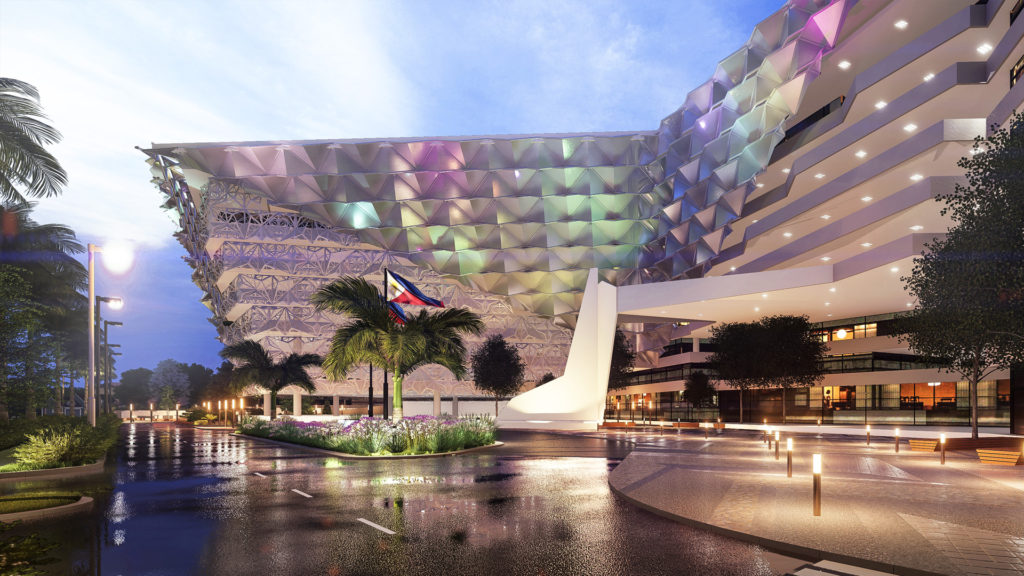
    Aside from passive cooling, it also functions as a sun-shading device, minimizing excessive solar glare by breaking up sunlight into smaller and softer reflections. The programmable and color-changing lights and actuators integrated with this architectural skin can transform the building into an eye-catching and festive spectacle of light shows.

    The slightly fragmented and rotated structural volume is a welcoming sight from the approach at its street-facing façade. Aside from minimizing harmful exposures and heat gain, the architecture also ensures that the spaces are well-utilized. The building accommodates a diverse range of uses, including offices, retail, and entertainment spaces for various events.

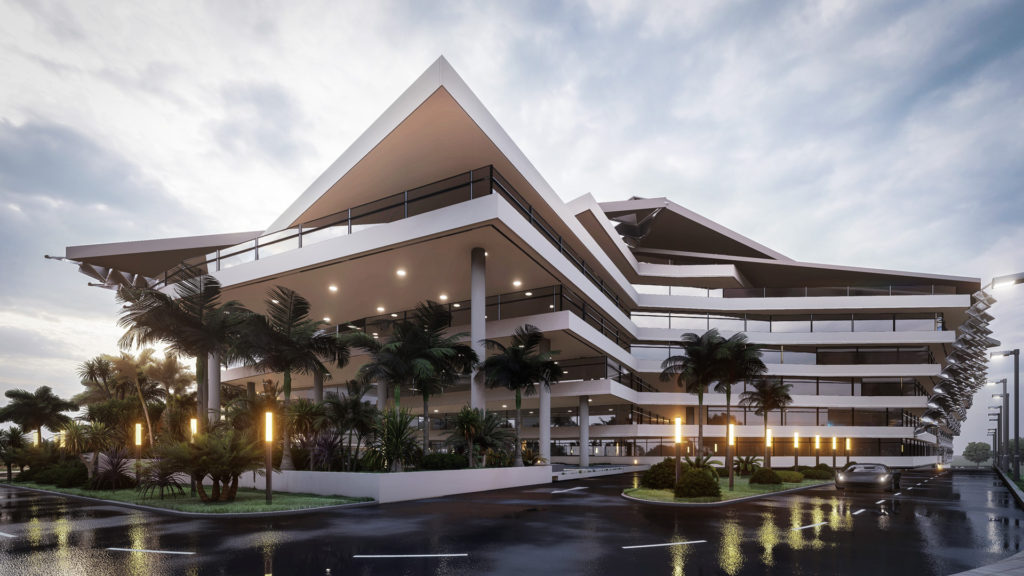
    Eight story modern office building designed with tropical conditions in mind.
    The modern eight-story office building has been thoughtfully designed to thrive in tropical conditions. Built with an emphasis on functionality and comfort, it incorporates features that promote natural ventilation and maximize daylight, creating a productive working environment. The architecture reflects a blend of contemporary design and practical elements, ensuring that the building is not only aesthetically pleasing but also well-equipped to handle the challenges of a warm and humid climate. This office space is ideal for businesses seeking to create an innovative and comfortable work environment.

    Inside the ICDC Modern Office Building, one notices a well-divided layout of public and private zones. Each zone is carefully planned to allocate different areas for assembly, business and retail, institutional, parking, recreational, social, and utility spaces. All of its eight floors are specially designed to fit a productive and dynamic work and office culture, with semi-private spaces such as auditoriums, libraries, and training halls surrounded by 360-degree panoramic views of the bustling urban scenes of the Bonifacio Global City. Dynamic and encouraging, these spaces allow continuous collaboration, learning, and training among their occupants.

    Following the same sustainable route, the ICDC Modern Office Building utilizes a double roofing technology that harnesses continuous airflow at different temperatures induced between level gaps. To harvest and divert stormwater run-off, its primary roofing is used as a rainwater collecting system, whereas the secondary roofing is responsible for minimizing aircraft noise and excessive heat gain.

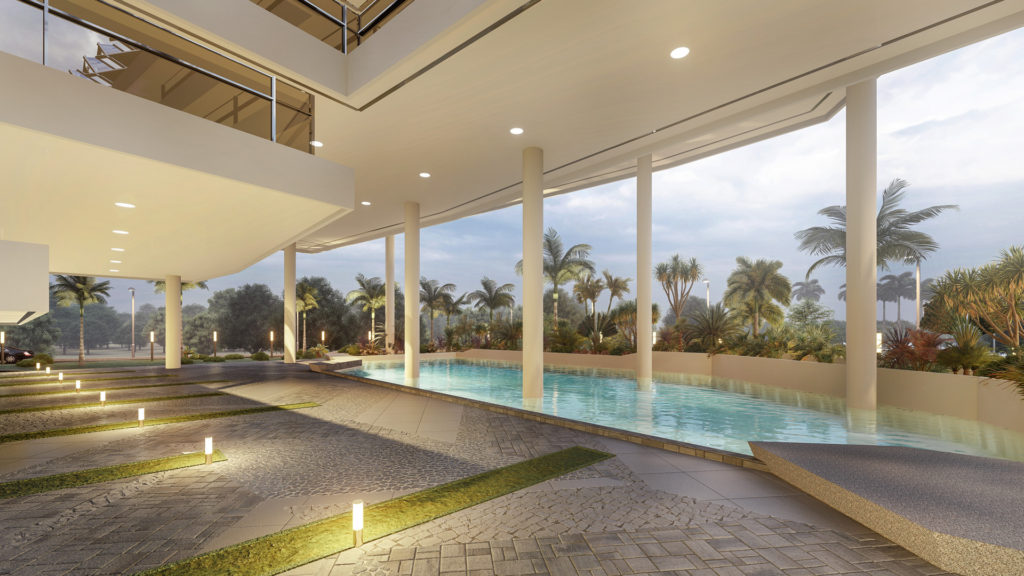
    Rainwater harvesting system as a communal park area softened by landscaping.
    The park features a rainwater harvesting system that not only promotes sustainability but also enhances the beauty of the communal space. This system collects and utilizes rainwater for irrigation, helping to maintain the lush landscaping. Vibrant flowers, trees, and shrubs create a serene environment where community members can relax and enjoy nature. Together, the rainwater harvesting system and the thoughtfully designed landscaping contribute to an eco-friendly oasis in the heart of the community.

    As users leave the building, they are greeted by thoughtfully designed outdoor spaces that emphasize sustainability. These areas feature bioswales that help manage stormwater runoff, porous pavers that allow for natural water absorption, and a rainwater catchment system that not only collects rainwater but also serves as an interactive water feature. This system invites engagement and playfulness, enhancing the overall experience of the space. Together, these elements create a harmonious environment that softens the sharp contrasts of the building’s intricate architectural form, highlighting the importance of ecological design in urban settings.

    Feel free to share!
  • Anthurium Hotel and Casino

    Anthurium Hotel and Casino

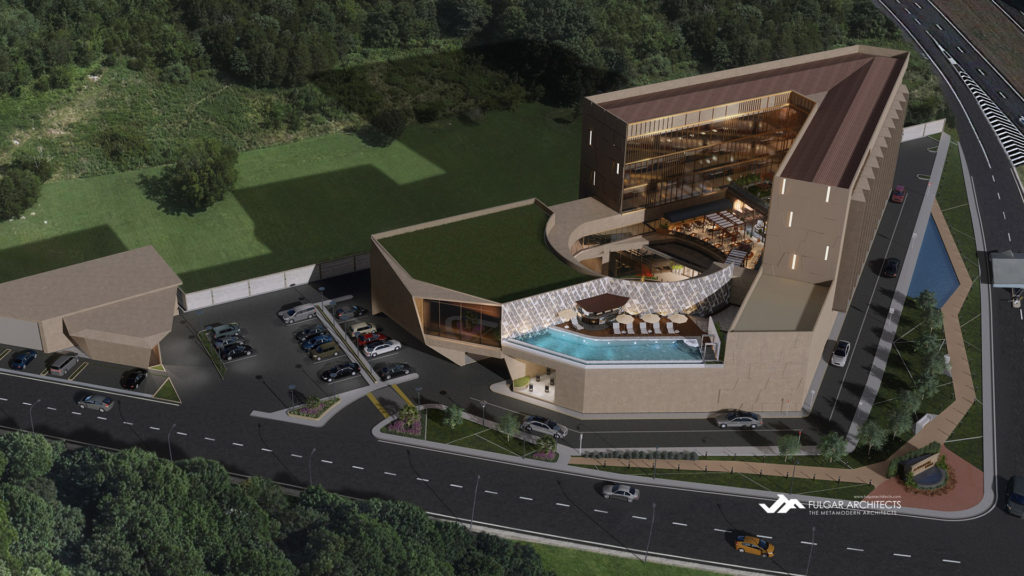
    A proposed hotel-casino complex is being developed in Batangas, Philippines, featuring a striking architectural design with geometric shapes and folded surfaces. The complex will feature extensive gaming facilities, a variety of restaurants and bars, and a stylish sky lounge offering panoramic views. Guests can enjoy well-appointed hotel rooms and luxurious suites, along with a refreshing swimming pool. This destination aims to blend entertainment, leisure, and hospitality in a captivating environment.

    Location: Trapiche, Tanauan City, Batangas
    Site Area: 7,476.00 sqm
    Project Area: 10,505.10 sqm
    Type: Hospitality, Gaming

    Between nature and thoroughfares, between the vertical and horizontal, between monotony and activity: the birth of a new hospitality and leisure hub in Tanauan City, Philippines.

    The proposed Anthurium Hotel and Resort is a five-story hotel-casino-resort complex situated on a 7,476.07-sqm lot. Its unique location between the STAR Tollway Exit and a 20-meter provincial road called for a defining design approach that minimizes inbound traffic noise while maximizing its horizontal spatial leeway.

    Design study for the hotel casino project on a triangular lot.
    A comprehensive study for the hotel-casino project located on a triangular lot includes an analysis of the site’s unique characteristics, zoning regulations, and architectural considerations related to the triangular shape. It should also address potential impact on the surrounding area, traffic patterns, and accessibility for guests. The aim is to create a design that efficiently utilizes the lot while ensuring a functional and aesthetically pleasing environment for visitors and staff alike. Additionally, consider incorporating sustainable practices and amenities to enhance the guest experience.

    The hotel casino project’s response to its main design challenge resulted in an urban design approach that introduces multi-level blocks at varying levels. It combines a panoply of geometric panels adding tactile interest to the overall form. The triangular layout resulted in two distinct points of view, one that is ideal for horizontal visibility, and another enabling a low insertion point as a platform for the entire site.

    Thanks to its unique angular layout, wayfinding inside the building simply follows its natural shape.

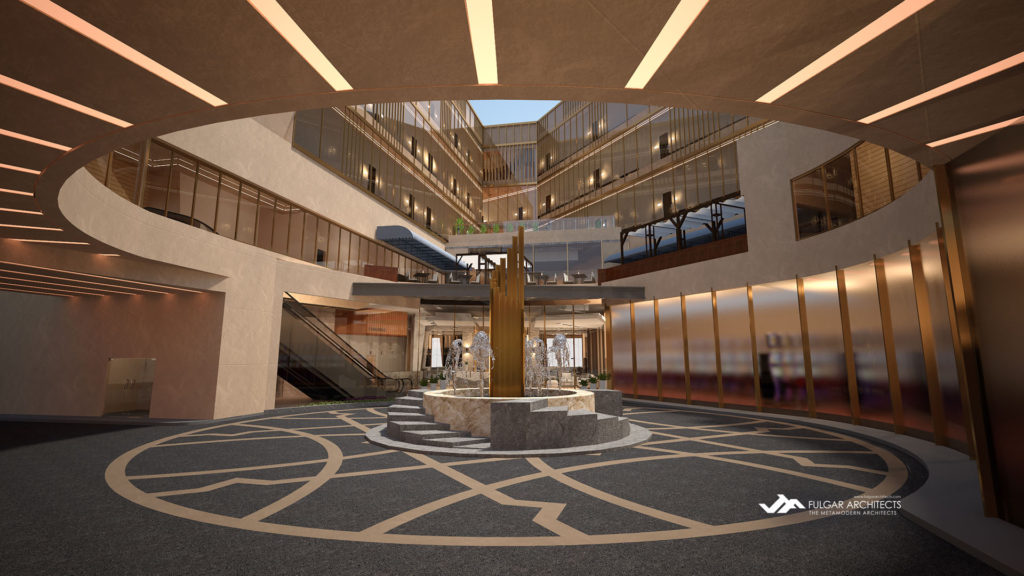
    An open circular courtyard acts as an access anchor for this hotel casino design.
    The open circular courtyard at the heart of the hotel casino serves as a dynamic focal point, intricately woven into the fabric of the complex’s design. This thoughtfully conceived space not only enhances the visual appeal of the hotel but also plays a critical role in promoting both functionality and comfort. Illuminated by natural light, the courtyard’s spacious design fosters a welcoming atmosphere, enabling guests to feel a sense of openness and connection to the outdoors.

    An access platform at a ground level designed for both vehicular and pedestrian use welcomes guests into the secure compound. The triangular building mass is punctured by an inner circular courtyard to enhance that sense of arrival. The open-to-sky roundabout here allows as much natural lighting into the centermost part of the building and the tropical ventilation of the area. Furthermore, it becomes an experiential anchor seamlessly connecting to and from the Al Fresco, 216-sqm ballroom, 319-electronic game machines, casino grounds, lounges, lobbies, parking spaces, and the 63-seater restaurant. Punctuating the project’s transparent façade of fragmented, spatial continuity are decorative columns adding a dramatic streak to the platform.

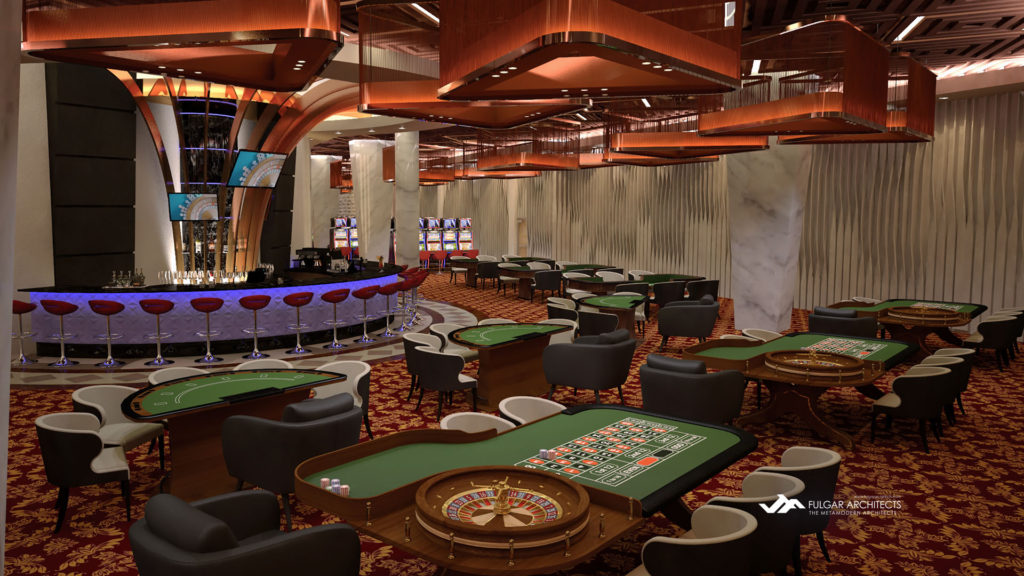
    Casino area with bar showing gaming tables and electronic gaming machines.
    The casino features an inviting bar area where guests can relax and enjoy refreshments while taking in the exciting atmosphere. It showcases a variety of gaming tables for traditional table games, as well as a range of electronic gaming machines, providing ample opportunities for entertainment and winning. Whether you’re a seasoned player or just looking to have some fun, the casino offers an enjoyable experience for everyone.

    Publicly accessible amenities of Anthurium Hotel Casino Resort are on the second floor. The level is divided into a spa and wellness center, an elegant infinity swimming pool with a view of Mount Makiling, a privately secluded VIP casino area, and an in-house buffet restaurant. A two-way escalator help make conveying guests to their designated hotel rooms. The hotel rooms are planned to start with a light density of suites on the second floor to the more robust units from the third to the fifth. The inventory occupied by the 3rd to 5th floors makes up 63 hotel rooms. Other amenities are spread to each level like communal viewing areas, a massive garden roof, a Sky Lounge with 186-seater dining space, mini-bar lounges, and a presidential penthouse. Guests will enjoy utmost discretion to the Sky Lounge from a separate lobby with its own passenger lift located in the building’s northeastern wing.

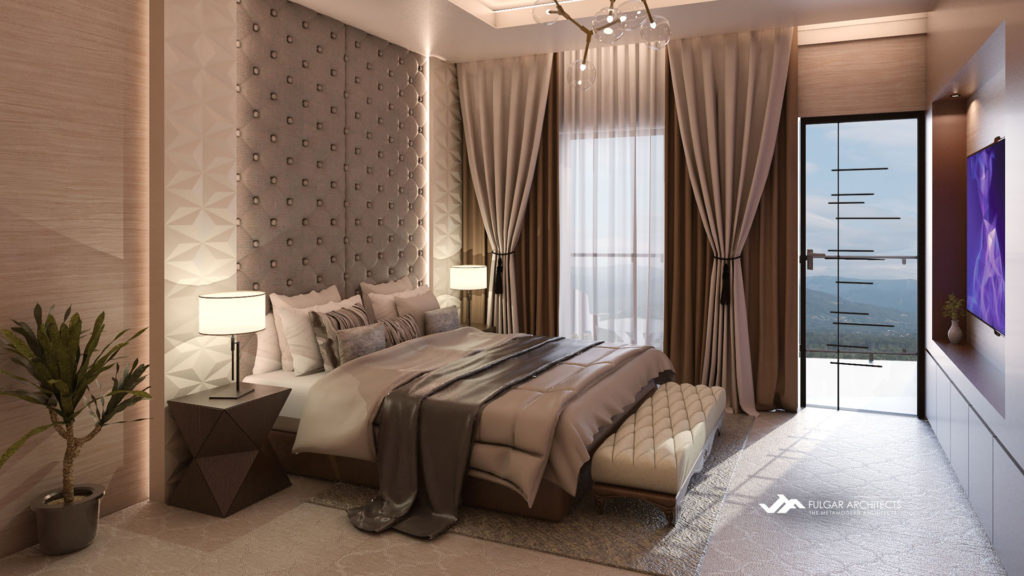
    Proposed interior design theme for the room suites with a view of the mountain.
    The proposed interior design theme for the hotel suites is elegantly inspired by the breathtaking mountain views. Each suite will be designed to create a cozy yet luxurious atmosphere, incorporating natural elements that reflect the surrounding landscape. Warm color palettes and comfortable furnishings will ensure guests feel at home, while large windows will maximize the stunning views, allowing the beauty of the mountains to become a focal point of the experience. This thoughtful combination of design and nature aims to provide a serene retreat for all who visit.

    The generous void created by the circular courtyard echoes upward. Corridors and hotel rooms on the upper floors are also well oriented to conveniently light up with sunlight during daytime as well as continuously induce the flow of breeze inside the building.

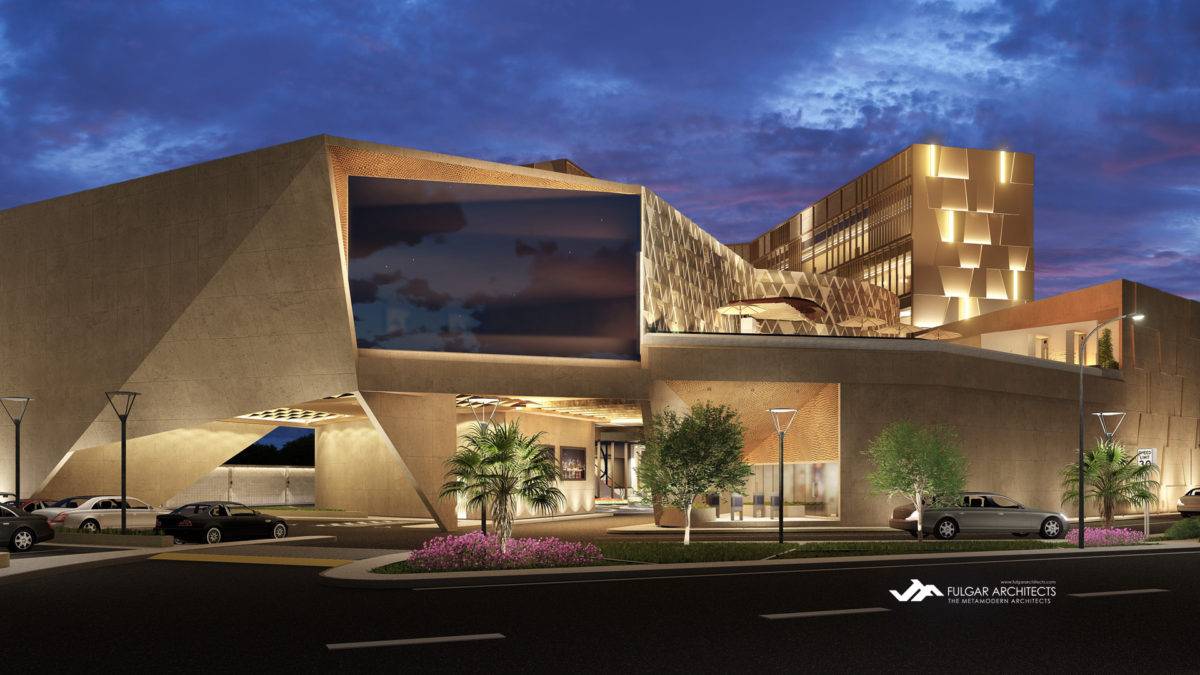
    In terms of visual identity, the hotel casino project sets itself apart from its surrounding context through a series of geometric panoplies. This unique form adds a tactile flair amid neutral-colored planes of textured cladding, golden accents, and polished natural stones. A series of sharp, protruding balconies extending outward from the face further echoes the resort’s geometrically-dynamic form.

    An infinity pool and wet bar with lounges placed at the more intimate section of the deck.
    The deck boasts an inviting infinity pool, perfect for taking a refreshing dip while enjoying breathtaking views. Adjacent to the pool, a well-equipped wet bar offers a variety of drinks, making it easy to unwind and relax. Comfortable lounges are strategically placed in this more intimate section of the deck, providing an ideal spot for guests to soak up the sun or enjoy a quiet moment. This thoughtfully designed space creates a serene atmosphere for relaxation and leisure.

    With fine attention to detail, interior design played an integral role in establishing the visual identity of Anthurium Hotel and Casino. Various modern patterns and wall decors help express an elegant and exciting atmosphere from common areas to each and every room. From the origami-inspired ceiling patterns to the larger spans of warm cove illuminations of the gaming grounds unifies the entire interior style of the hotel.

    The hotel and casino resort has an almost fragmented architectural design form that translates into a dramatic yet luxurious icon visible from the expressways. The creative interplay of textures and folded exterior interventions delivers a singularity of spatial and visual continuity for the brand of this hotel.

    Feel free to share!